Peripherals Hacks

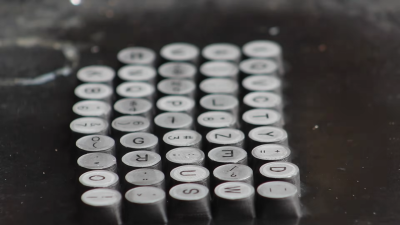
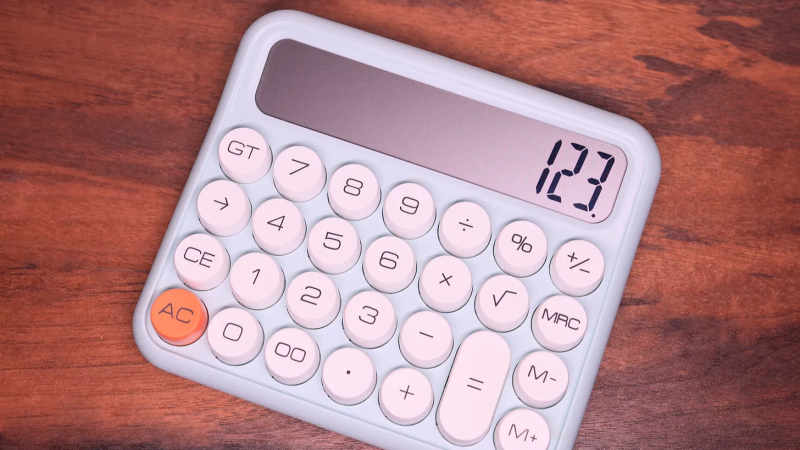
Custom peripheral projects are among the most rewarding. Especially if you’re like me and you sit at the computer eight hours per day, anything that you can use on a daily basis is super satisfying. This topic of DIY peripherals came up on the podcast while chatting with Kristina, who is no stranger to odd inputs herself.

We were talking about a trackball that had been modified to read twisting gestures, by a clever hijacking of the twin mouse sensors inside. If you do a lot of 3D modeling, you can absolutely get by with just a mouse and shift-ctrl-alt as modifiers, but it’s so much more immediate to use a dedicated 3D input device. (I’ve got an ancient serial Space Mouse just under my left hand as I type this.)

My old favorite, which I haven’t used in ages, is the guts of a 5” hard-drive platter stack that I turned into a scroll wheel. Unfortunately, I don’t have space for it on my desk anymore, but it was just so pleasing to scroll through a document with something that had some real chonky momentum to it.

And it’s easier than ever to make your own. The classic blocky macropad is a great introduction, but as long as you’re doing the design yourself, why not extend it, or at least make it fit your hand? Or take your flights of fancy even further away from the mainstream. Consider the Bluetooth mouse ring, for instance.

Point is, the software side of almost any peripheral device you can imagine is sorted out already, and interfacing with the hardware is equally simple. Peripheral hacks have such a low barrier to entry, but afford so many creative hardware possibilities. And nothing says “Jedi” like building your own lightsaber.

Adapting A 100-Year-Old Lens To A Modern Camera

You can get all kinds of fancy lenses for modern cameras, with all sorts of mechanical and electronic wizardly to make them shoot better images. But what if you paired a vintage lens with a modern camera? It would take some work, as [Mathieu] found out, but you’d also get some interesting results.

The optic in question is a 100-year old lens—a Foth 50 mm f2.5 to be precise, originally used with a folding film camera. It was sourced from a market for just 3 euros. Notably, the lens was not designed for modern cameras, and so lacks an aperture and focusing mechanism. [Mathieu] thus had to fabricate something to fit the lens to a Sony FX3. A first attempt used an aperture adapter from Amazon and an elcoid adapter, but there were vignetting problems due to the lens placement in this case. Ultimately, [Mathieu] went with a special macro adapter that allowed him to control focus and tuck in an ND filter behind the lens, which made up for the lack of an aperture.

The vintage glass isn’t the sharpest lens out there, but that’s kind of what’s fantastic about it. The center of the frame is certainly focused, but it fades out softly towards the edges of the image, giving a cinematic, dreamlike effect. The bokeh in the background are particularly charming, too. As far as 3 euro lenses go, this one was a hit.

You can slap just about any lens on anything if you get creative with how you do it. Video after the break.

Continue reading “Adapting A 100-Year-Old Lens To A Modern Camera”

Analog Circuitry Lets You Blow This LED Out

LED candles are neat, but they’re very suboptimal for wish-making: you can’t blow them out. Unless you take the circuit from [Andrea Console]’s latest project that lets you do just that, using only analog electronics— no microcontroller in sight.

He’s using the known temperature-voltage behaviour of the LED for control here– sort of like the project we saw in last year’s Component Abuse Challenge that let you illuminate the LED with a butane lighter. Here it’s a bit less dramatic, relying only on the small cooling effect your breath has on the LED.

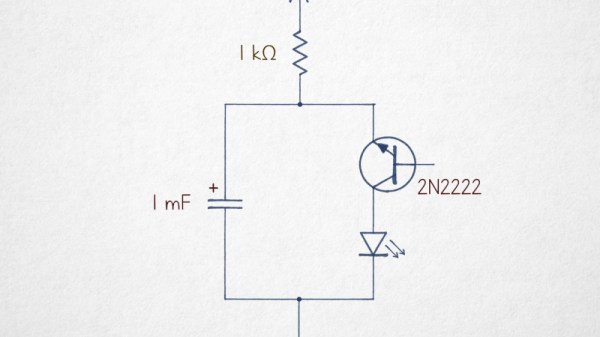
There are two parts to the circuit, really– a latching section to turn the thing on from a single button press, and breath-detecting section. The breath-detecting section relies on an op-amp acting as a comparator, comparing the voltage across the LED’s current-limiting resistor, and a reference stored in a 100 µF capacitor. Blowing on the candle spikes the voltage on the LED, and thus the current-limiting resistor too fast for the capacitor’s voltage to change, so the comparator flips, triggering a reset of the latching circuit. Could you do it with an Arduino? No doubt, but the fact is you don’t have to and this is a more elegant solution than just another microcontroller.Check it out in action with the video embedded below.

It reminds us of the sort of circuit we’d have found in a project book, back in the day. [Andrea] seems to have a knack for that sort of thing, as seen with the half crystal/half regenerative radio we saw previously. Continue reading “Analog Circuitry Lets You Blow This LED Out”

A Tale Of Cheap Hard Drives And Expensive Lessons

When it comes to electronic gadgets, I’m a sucker for a good deal. If it’s got a circuit board on the inside and a low enough price tag on the outside, you can be pretty sure I’ll be taking it home with me. So a few years ago, when I saw USB external hard drives on the shelf of a national discount chain for just $10, I couldn’t resist picking one up. What I didn’t realize at the time however, was that I’d be getting more in the bargain than just some extra storage space.

It’s a story that I actually hadn’t thought of for some time — it only came to mind recently after reading about how the rising cost of computer components has pushed more users to the secondhand market than ever before. That makes the lessons from this experience, for both the buyer and the seller, particularly relevant.

What’s in the Box?

It wasn’t just the low price that attracted me to these hard drives, it was also the stated capacity. They were listed as 80 GB, which is an unusually low figure to see on a box in 2026. Obviously nobody is making 80 GB drives these days, so given the price, my first thought was that it would contain a jerry-rigged USB flash drive. But if that was the case, you would expect the capacity to be some power of two.

Upon opening up the case, what I found inside was somehow both surprising and incredibly obvious. The last thing I expected to see was an actual spinning hard drive, but only because I lacked the imagination of whoever put this product together. I was thinking in terms of newly manufactured, modern, hardware. Instead, this drive was nearly 20 years old, and must have been available for pennies on the dollar since they were presumably just collecting dust in a warehouse somewhere.

Or at least, that’s what I assumed. After all, surely nobody would have the audacity to take a take a bunch of ancient used hard drives and repackage them as new products…right?

Continue reading “A Tale Of Cheap Hard Drives And Expensive Lessons”

Need A Reactalyser?

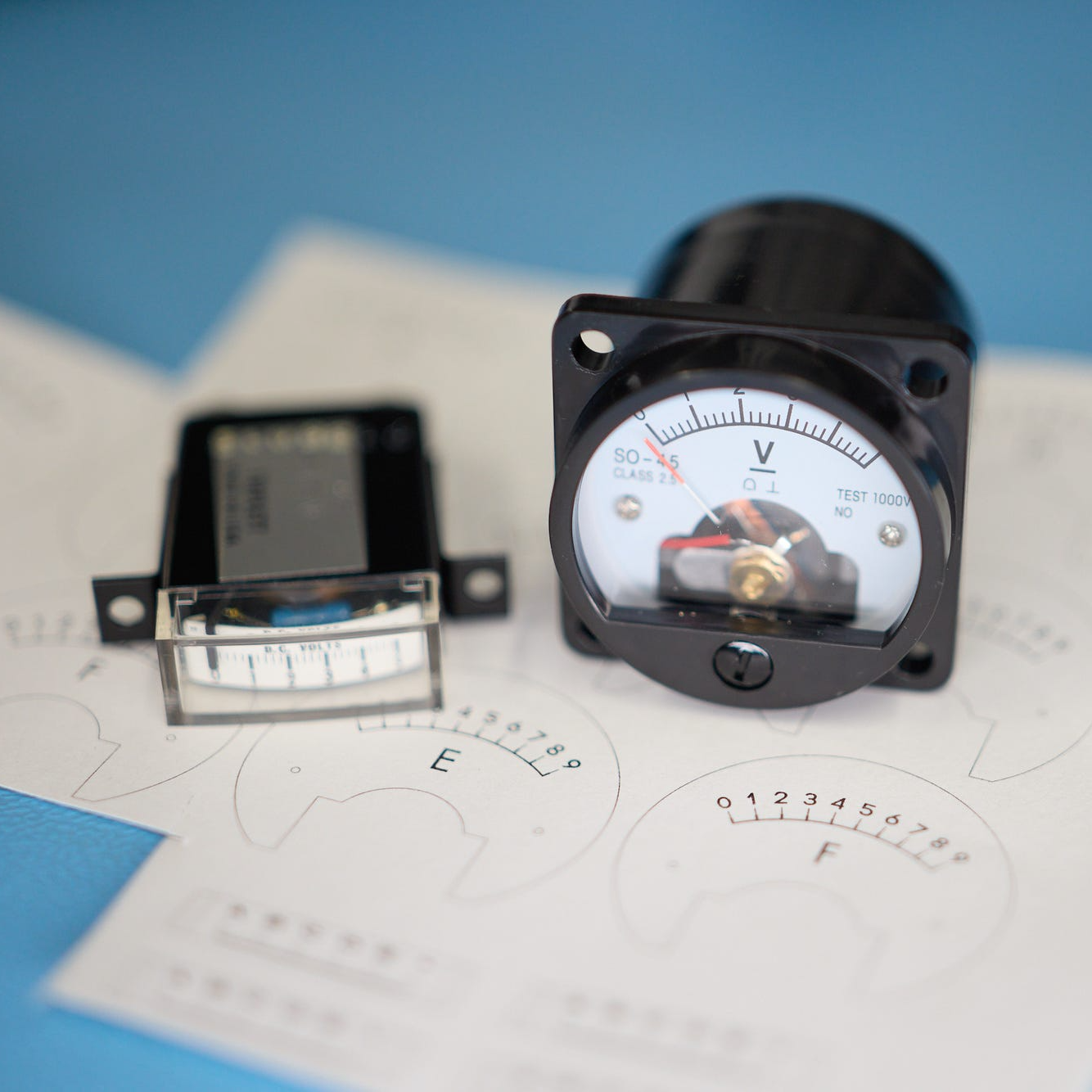
We’ve noticed a recent surge in people recreating old projects from vintage electronics magazines, and we approve. After all, parts and PCBs are easier to get than ever, so other than replacing obsolete parts, it is usually much easier to build these projects now compared to when they first appeared. The latest one we’ve noticed was [Anthony Francis-Jones’] build of the “Reactalyser” from a 1968 edition of Practical Electronics. Check it out in the video below.

You may ask yourself what a reactalyser could be. We did too. Our guess was extremely far off, since we thought it might have to do with reactance.

We liked the retro-look radio that [Anthony] used as a case. He changed the circuit to use an OC71 PNP transistor and replaced a mechanical part of the device with more electronics. So this isn’t a totally faithful reproduction, but it does keep the spirit of the device.

This might seem like an odd circuit for something that would be totally trivial to make with a microcontroller. However, these kinds of circuits were very common prior to simple-to-use computers.

If you like these old retro builds, check out some of the ones we’ve featured from [Bettina Neumryr]. We need a name for this activity. We’ll suggest retromagging. Give us your entry in the comments. Continue reading “Need A Reactalyser?”

Thermostat? Do It With A 555!

It is a running gag around here that whenever a project posts, someone will inevitably point out that it could have been done with a 555 timer IC. [Stephen Woodward] went the opposite way and built a simple thermostat using the ubiquitous chip.

To be fair, this isn’t some sophisticated PID controller — it’s basically a bang-bang controller. Since the device has a comparator and the circuits use a thermistor, it seems like a clever but simple idea on the surface. However, there are some neat tricks. For example, if you tie the 555 threshold pin to Vdd, then the trigger pin acts as an inverting analog comparator. Another nice feature: the setpoint depends on a resistance ratio, so there is no need for a precise input voltage reference.

A simple circuit change can switch the circuit to power a heater or a cooler. The chip can handle a surprising amount of power, but for some applications, you may need some output drive circuitry. The simple circuit even has hysteresis, which you can set with a different resistor. Pretty impressive for a cheap chip, two resistors, a thermistor, and a battery.

We’ve seen a lot of strange 555 circuits in our contests. We even had a 555 Timer Contest.

Burning Wood To Brew Wood To Preserve Wood : Pine Tar

Before there was pressure-treated wood, before modern paints, there was pine tar. Everything from tool handles to wagons to ships were made of wood preserved with pine tar, once upon a time, and [woodbrew] wants to show you how to make it, how to use it, and why you might put it on your skin.

It starts with, you guessed it, pine! In the first part of the video, [woodbrew] creates a skin salve with pine resin and food-safe oil. The pine resin–which is the sticky goop that dries around wounds on evergreen trees–is highly antiseptic and has been used in wound salves since the stone age. The process is easy: melt it in a double boiler, then mix with equal parts oil. [woodbrew] also adds a touch of beeswax to firm it up, an a little eucalyptus extract for extra germ-killing power, and a nice smell to boot.

That’ll preserve your hands, but what about preserving wood?  That starts at about 9 minutes in, and for that you’re going to need a lot more resin, so picking it off wounded trees like he does at the start of the video won’t work. [woodbrew] suggests starting with dead-or-dying pines, and harvesting the crooks of their branches for “fatwood” — wood with the highest resin content. He also suggests the center of stumps, again of trees that died or were severely injured before being cut down. Then it’s a matter of cooking those fine organic molecules out. This is where we burn the wood to save the wood. Well, to save other wood. Wood we didn’t burn, obviously.

The distillation process [woodbrew] uses it fairly traditional, and consists of a couple of buckets. One bucket is buried and collects the pine tar; the other, with holes in the bottom to allow the tar to drip out, is filled with fatwood and covered tightly before being surrounded by firewood which is set alight. You could use an alternate source of heat here, but if you just cut down a pine tree for its fatwood, well, you’d have the rest of the tree to work with. Inside the fatwood bucket, the heat of the fire cooks off the volatile compounds that make pine tar, while the lack of oxygen from being closed up keeps it from burning. Burying the collection bucket keeps it from getting so hot the volatiles all boil off.

If this sounds like the process for making charcoal or woodgas, that’s because it is! He’s letting the gas fraction flare off here, but you could probably capture it– though a true gasifier brakes the tar down into gaseous compounds as well. The charcoal of course stays in the bucket as a bonus.

To make it usable as a wood finish, [woodbrew] mixes his homemade pine tar 50:50 with linseed oil, thining it to a spreadable consistency that helps it penetrate deep into the wood. By filling the voids in the wood, this mixture will help keep moisture out, and the antiseptic properties of the organic soup that is pine tar will help keep fungi at bay for potentially decades to come.

Thanks to [Keith Olson] for the tip!

Continue reading “Burning Wood To Brew Wood To Preserve Wood : Pine Tar”