Founding A Company In Shenzhen For Eight Days

Nadya Peek is one of the hackers that should require no introduction for the regular Hackaday reader. She is a postdoc at the Center for Bits and Atoms at the MIT Media Lab. She’s responsible for Popfab, a CNC machine that fits in a suitcase and one of the first implementations of a Core XY stage we’ve seen. Nadya has joined the ranks of Rudolf Diesel, Nikola Tesla, Mikhail Kalashnikov, and George W.G. Ferris by having a very tiny piece of the Novena laptop bear her name. She’s built cardboard CNC machines, and taken the idea of simple, easy to build printers, routers, and drawbots worldwide.  She just defended her thesis, the gist of which is, ‘How to rapidly prototype rapid prototyping machines.’ She’s also one of this year’s Hackaday Prize judges, for which we have the utmost appreciation.

This year, the organizers of the Fab 12 conference on digital fabrication in Shenzhen turned to Nadya and her team to bring their amazing experience to conference attendees. A workshop was in order, but Nadya didn’t have time to organize the logistics. The conference organizers made a deal: the Center for Bits and Atoms would teach a workshop, but getting all the materials and electronics was the responsibility of the organizers.

Upon arriving at the Shenzhen Sheridan, Nadya found the organizers didn’t hold up their end of the bargain. The cardboard, motors, electronics, and glue were nowhere to be found. A “rider” doesn’t quite translate from English, it seems. This is Shenzhen, though, where you can buy all the cardboard, motors, electronics, and iPhone clones you could imagine. What was the solution to this problem? Founding a company in Shenzhen for eight days.

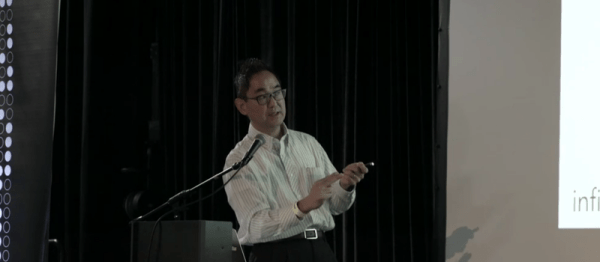
Half a tourist’s guide to Shenzhen and half a deconstruction of what goes into cardboard CNC, Nadya’s talk for the 2016 Hackaday SuperConference covers what happens when you have a week to build a company that will build machines that build machines.

Continue reading “Founding A Company In Shenzhen For Eight Days”

Awarding The 2016 Hackaday Prize

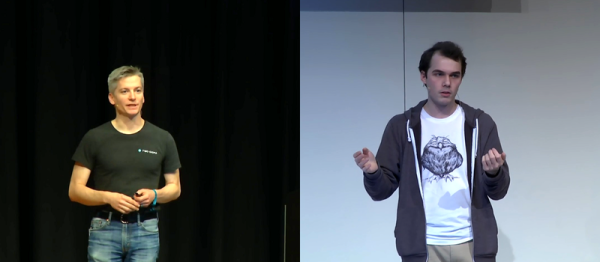
Saturday evening at the Hackaday SuperConference is reserved for the Hackaday Prize Party. Our engineering initiative each year, The Hackaday Prize, starts in the spring and ends in the fall. What happens in between is magic: thousands of engineers and engineering enthusiasts focus their skills on building something that matters. The top entries take home some pretty amazing prizes. At this year’s prize ceremony (seen below) we announced the five top entries which took home $200,000 in addition to the $100,000 already awarded to 100 final projects.

Check out the presentation which includes appearances by several of our amazing judges, then join us after the break for a bit more about this year’s Hackaday Prize.

Continue reading “Awarding The 2016 Hackaday Prize”

Tiniest Game Boy Hides In Your Pocket

This is likely the world’s smallest fully-functional Game Boy Color, able to play all of the games using the tiny direction pad and buttons, with onboard display and battery and in the original form factor. This is an incredible hack which presents a tour de force in hardware and software. This will easily rank in the top five hacks you’ve seen this year.

keychain-redactedI’m sure that many of you have fond memories of your first handheld games. This will be Game Boy for most, and we admit they had fairly decent portability and battery life that puts many smart phones to shame. Despite this, Sprite_TM always dreamed of an eminently more portable version and to his adolescent delight he discovered a key chain version of the Game Boy. Unfortunately, he was duped. The keychain looked like a Game Boy but only functioned as a clock.

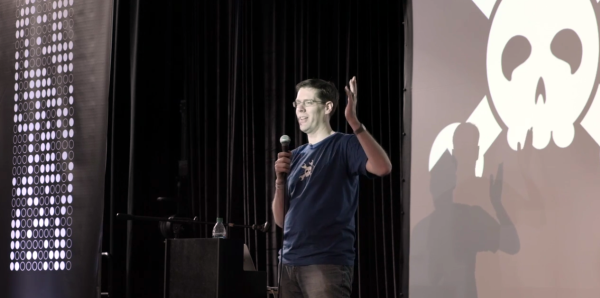
But now, decades later, technology has progressed as have his own skills. For his talk at the 2016 Hackaday SuperConference, Sprite_TM actually built his childhood dream.

Continue reading “Tiniest Game Boy Hides In Your Pocket”

Showing Off The Badge Hacks From SuperCon

Since the Beginning of Time* humans have been irresistibly attracted to the blinking of an LED. At first there was one LED and it was good, but eventually there were many working in unison and the matrix was formed. Badge hacking at the Hackaday SuperConference challenged everyone to do something interesting with the display matrix and other yummy hardware on this year’s badge and we were in awe of what people managed to pull off.

We named three winners, and recognized the first hacker to solve the Crypto Challenge. Check out the presentations in the video below and then join us after the break for a close look at each winning hack. Three winners received $256 and the crypto challenge winner received $512; two of them told Hackaday they plan to donate their prize to charity.

*we of course mark the beginning of time as the Unix Epoch

Continue reading “Showing Off The Badge Hacks From SuperCon”

Vintage Computer Festival Switzerland This Weekend

This weekend marks the Vintage Computer Festival Europe – Switzerland, a two-day extravaganza of vintage hardware held in Zurich, Switzerland.

Of interest for this VCF will be an LGP-30 replica (a computer without RAM or ROM released in 1956), an IBM System/360 front panel, lots of blinkenlights, Swiss computers, and [Oscarv], creator of the very successful PiDP-8/I project on Hackaday.io, will be there with his minified PiDP-11/70. If you don’t have one of [Oscar]’s PiDP8 machines sitting on your desk yet, don’t worry — the 11/70 is the one you really want. It is beautiful.

As you would expect from a Vintage Computer Festival, all the standards will be there. The flea market is open, soldering stations are present, talks will be held, and very old and very rare hardware will be blinking. From our experience with Vintage Computer Festivals, Europe does it right. Last year’s festival in Munich was a blast, and this year’s celebration in Zurich looks like it will be as well.

Solving Hackaday’s Crypto Challenge

Although I’ve been to several DEF CONs over the past few years, I’ve never found time to devote to solving the badge. The legendary status of all the puzzles within are somewhat daunting to me. Likewise, I haven’t yet given DefCon DarkNet a try either — a real shame as the solder-your-own-badge nature of that challenge is right up my alley.

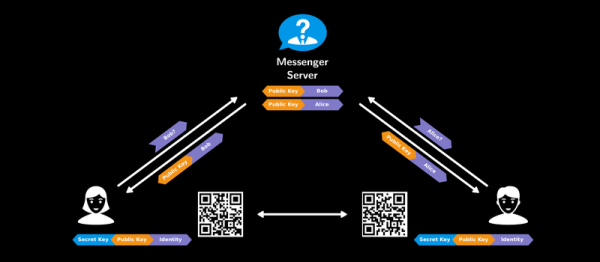
But at the Hackaday SuperCon I finally got my feet wet with the crypto challenge created by [Marko Antonic]. The challenge was built into a secondary firmware which anyone could easily flash to their conference badge (it enumerates as a USB thumb drive so just copy it over). This turned it into a five-puzzle challenge meant to take two days to solve, and it worked perfectly.

If you were at the con and didn’t try it out, now’s the time (you won’t be the only one late to the game). But even if you weren’t there’s still fun to be had.

Thar’ be spoilers below. I won’t explicitly spill the answers, but I will be discussing how each puzzle is presented and the different methods people were using to finish the quest. Choose now if you want to continue or wait until you’ve solved the challenge on your own.

Continue reading “Solving Hackaday’s Crypto Challenge”