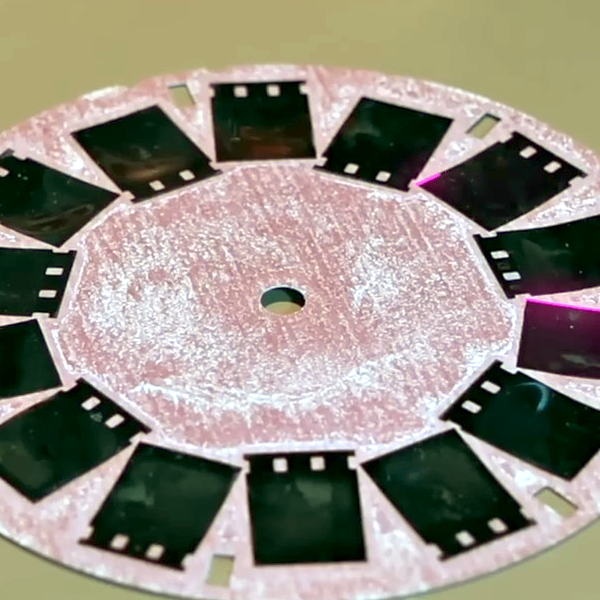
Retrotechtacular: How Old Is The Remote?

A few weeks ago we covered a (probably) bogus post about controlling a TV with the IR from a flame. That got us thinking about what the real origin of the remote control was. We knew a story about the 38 kHz frequency commonly used to modulate the IR. We’ve heard that it was from sonar crystals used in earlier sonic versions of remotes. Was that true? Or just an urban myth? We set out to find out.

Surprise! Remotes are Old!

If you are a younger reader, you might assume TVs have always had remotes. But for many of us, remotes seem like a new invention. If you grew up in the middle part of the last century it is a good bet you were your dad’s idea of a remote control: “Get up and turn the channel!” Turns out remotes have been around for a long time, though. They just weren’t common for a long time.

If you really want to stretch back, [Oliver Lodge] used a radio to move a beam of light in 1894. In 1896, [Marconi] and some others made a bell ring by remote control. [Tesla] famously showed a radio-controlled boat in 1898. But none of these were really remote controls like we think of for a television.
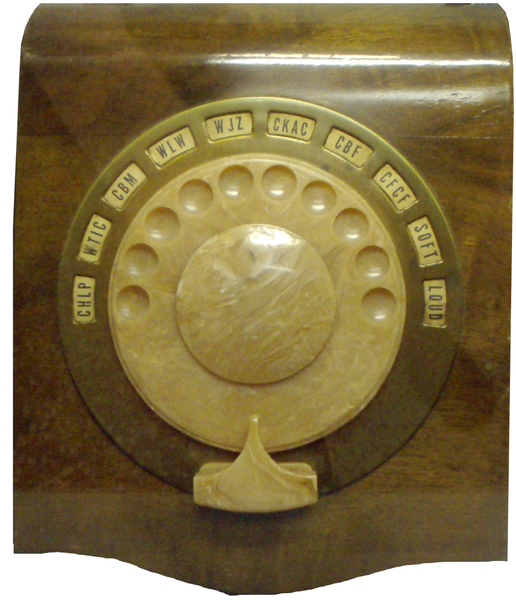
mysteryOf course, TV wouldn’t be around for a while, but by the 1930’s many radio manufacturers had wired remotes for radios. People didn’t like the wires, so Philco introduced the Mystery Control in 1939. This used digital pulse coding and a radio transmitter. That’s a fancy way of saying it had a dial like an old telephone. As far as we can tell, this was the first wireless remote for a piece of consumer equipment.

Continue reading “Retrotechtacular: How Old Is The Remote?”

Two Bits A Gander: Of Premature Babies, Incubators, And Coney Island Sideshows

Newborn humans are both amazingly resilient and frighteningly fragile creatures. A child born with 40 full weeks of gestation has pretty good odds of surviving the neonatal period these days, and even if he or she comes along a few weeks early, things usually go smoothly. But those babies that can’t wait to get out and meet the world can run into trouble, and the earlier they’re born, the greater the intervention needed to save them.

We’ve all seen pictures of remarkably tiny babies in incubators, seemingly dwarfed by the gloved hands of an anxious parent who just wants that first magical touch of their baby’s skin. As common as such an intervention is now and as technologically advanced as neonatology is, care for premature infants as a medical discipline has a long and interesting history of technical and social hacks that’s worth looking at.

Continue reading “Two Bits A Gander: Of Premature Babies, Incubators, And Coney Island Sideshows”

The Inventions Of Arthur Paul Pedrick

We hear a lot about patent portfolios when we scan our morning dose of tech news stories. Rarely a day passes without news of yet another legal clash between shady lawyers or Silicon Valley behemoths, either settling spats between multinationals or the questionable activities of patent trolls.

These huge and well-heeled organisations hold many patents, which they gather either through their staff putting in the hard work to make the inventions, or by acquisition of patents from other inventors. It is not often that a large quantity of patents are amassed by any other means, for example by an individual.

There is one prolific individual inventor and holder of many patents though. He achieved notoriety not through his inventions being successful, but through their seeming impracticability while conforming to the rules of the patent system. His name was [Arthur Paul Pedrick], and he was a retired British patent examiner who filed a vast number of eccentric patents from the early 1960s until his death in the mid 1970s, all of which stretched the boundaries of practicality.

His subject matter was varied, but included a significant number of transport inventions as well as innovations in the field of energy and nuclear physics. We wish there was room to feature them all on these pages, but sadly they are so numerous that it is difficult even to pick the selection we can show you. So sit down, and enjoy the weird and wonderful world of [Pedrick] innovations.

Continue reading “The Inventions Of Arthur Paul Pedrick”

Retrotechtacular: The Last Main Line

If you were to nominate a technology from the 19th century that most defined it and which had the greatest effect in shaping it, you might well settle upon the railway. Over the century what had started as horse-drawn mining tramways evolved into a global network of high-speed transport that meant travel times to almost anywhere in the world on land shrank from months or weeks to days or hours.

For Brits, by the end of the century a comprehensive network connected almost all but the very smallest towns and villages. There had been many railway companies formed over the years to build railways of all sizes, but these had largely conglomerated into a series of competing companies with a regional focus. Each one had its own main line, all of which radiated out from London to the regions like the spokes of a wheel.

A Ruston steam navvy excavating near Wembley, London. S.W.A.Newton/Leicestershire County Council (Fair use)

By the 1890s there was only one large and ambitious railway company left that had not built a London main line. The Great Central Railway’s heartlands lay in the North Midlands and the North of England, yet had never extended southwards. In the 1890s they launched their ambitious scheme to build  their London connection, an entirely new line from their existing Nottingham station to a new terminus at Marylebone, in London.

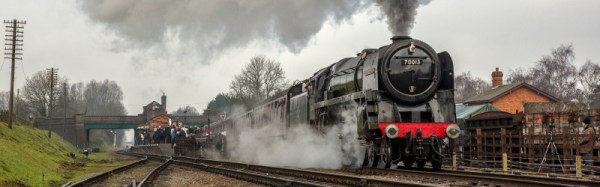
Since this was the last of the great British main lines, and built many decades after its rivals, it saw the benefit of the century’s technological advancement. Gone were the thousands of navvies (construction workers, from “Navigational”) digging and moving soil and rock by hand, and in their place the excavation was performed using the latest steam shovels. The latest standards were used in its design, too, with shallow curves and gradients, no level crossings, and a wider Continental loading gauge in anticipation of a future channel tunnel to France This was a high-speed railway built sixty years before modern high-speed trains, and nearly ninety years before the Channel Tunnel was opened.

Continue reading “Retrotechtacular: The Last Main Line”

Do You Know Oleg Losev? An Engineer Tragically Ahead Of His Time

It is so often the case with a particular technological advance, that it will be invented almost simultaneously by more than one engineer or scientist. People seem to like a convenient tale of a single inventor, so one such person is remembered while the work of all the others who trod the same path is more obscure. Sometimes the name we are familiar with simply managed to reach a patent office first, maybe they were the inventor whose side won their war, or even they could have been a better self-publicist.

When there are close competitors for the crown of inventor then you might just have heard of them, after all they will often feature in the story that grows up around the invention. But what about someone whose work happened decades before the unrelated engineer who replicated it and who the world knows as the inventor? They are simply forgotten, waiting in an archive for someone to perhaps discover them and set the record straight.

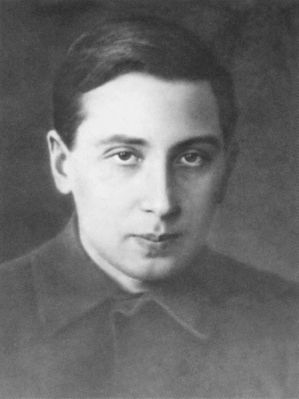
Oleg Losev (Public domain)
[Oleg Losev] (Public domain)
Meet [Oleg Losev]. He created the first practical light-emitting diodes and the first semiconductor amplifiers in 1920s Russia, and published his results. Yet the world has never heard of him and knows the work of unrelated American scientists in the period after the Second World War as the inventors of those technologies. His misfortune was to born in the wrong time and place, and to be the victim of some of the early twentieth century’s more turbulent history.

[Oleg Losev] was born in 1903, the son of a retired Russian Imperial Army officer. After the Russian Revolution he was denied the chance of a university education, so worked as a technician first at the Nizhny Novgorod Radio laboratory, and later at the Central Radio Laboratory in Leningrad. There despite his  relatively lowly position he was able to pursue his research interest in semiconductors, and to make his discoveries.

Continue reading “Do You Know Oleg Losev? An Engineer Tragically Ahead Of His Time”

Origin Of Wireless Security: The Marconi Radio Hack Of 1903

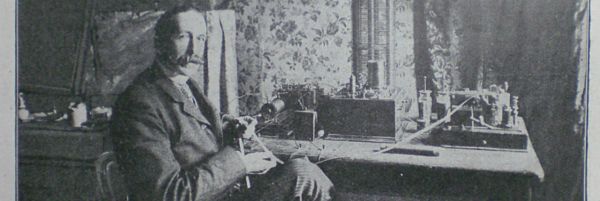
The place is the historic lecture theater of the Royal Institution in London. The date is the 4th of June 1903, and the inventor, Guglielmo Marconi, is about to demonstrate his new wireless system, which he claims can securely send messages over a long distance, without interference by tuning the signal.

The inventor himself was over 300 miles away in Cornwall, preparing to send the messages to his colleague Professor Fleming in the theater. Towards the end of Professor Flemings lecture, the receiver sparks into life, and the morse code printer started printing out one word repeatedly: “Rats”. It then spelled out an insulting limerick: “There was a young man from Italy, who diddled the public quite prettily”. Marconi’s supposedly secure system had been hacked.

Continue reading “Origin Of Wireless Security: The Marconi Radio Hack Of 1903”

Acoustic Mirrors: How To Find Planes Without RADAR

A lot of science museums and parks feature something called an acoustic mirror. The one at Houston’s Discovery Green park is called the listening vessels. [Doug Hollis] created two acoustic mirrors 70 feet apart, pointing at each other. If you stand or sit near one of the vessels, you can hear a whisper from someone near the other vessel. The limestone installations (see right) are concave and focus sound like a parabolic mirror will focus light.

mirrorJust a science curiosity, right? Maybe today, but not always. The story of these devices runs through World War II and is an object lesson in how new technology requires new ways of thinking about things.



Continue reading “Acoustic Mirrors: How To Find Planes Without RADAR”