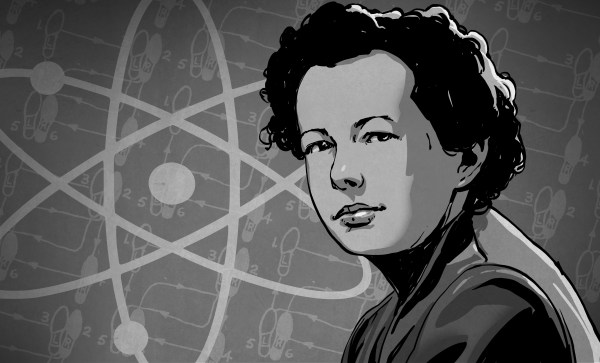
Maria Goeppert-Mayer was one of only two women to win the Nobel prize for physics thus far, the other being Marie Curie. And yet her name isn’t anywhere near as well known as Marie Curie’s. She also worked on the Manhattan Project and spent time during her long career with Enrico Fermi, Max Born, Edward Teller, and many other physics luminaries.
She was “other” in another way too. She followed her husband from university to university, and due to prevailing rules against hiring both husband and wife, often had to take a non-faculty position, sometimes even with no salary. Yet being the other, or plus-one, seemed to give her what every pure scientist desires, the freedom to explore. And explore she did, widely. She was always on the cutting edge, and all the time working with the leading luminaries of physics. For a scientist, her story reads like it’s too good to be true, which is what makes it so delightful to read about.
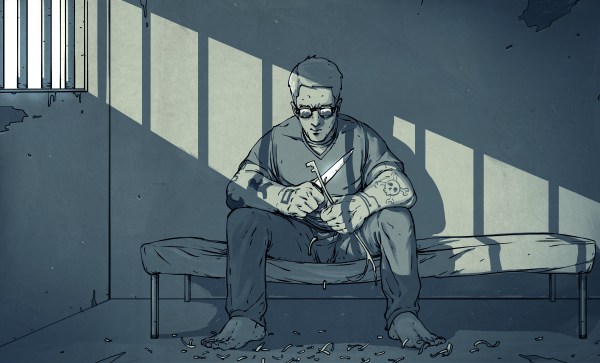
In 1978, Tim Jenkin was a man living on borrowed time, and he knew it. A white South African in his late 20s, he had been born into the apartheid system of brutally enforced racial segregation. By his own admission, he didn’t even realize in his youth that apartheid existed — it was just a part of his world. But while traveling abroad in the early 1970s he began to see the injustice of the South African political system, and spurred on by what he learned, he became an activist in the anti-apartheid underground.
Intent on righting the wrongs he saw in his homeland, he embarked on a year of training in London. He returned to South Africa as a propaganda agent with the mission to spread anti-apartheid news and information to black South Africans. His group’s distribution method of choice was a leaflet bomb, which used a small explosive charge to disperse African National Congress propaganda in public places. Given that the ANC was a banned organization, and that they were setting off explosives in a public place, even though they only had a few grams of gunpowder, it was inevitable that Jenkin would be caught. He and cohort Steven Lee were arrested, tried and convicted; Jenkin was sentenced to 12 years in prison, while Lee got eight.
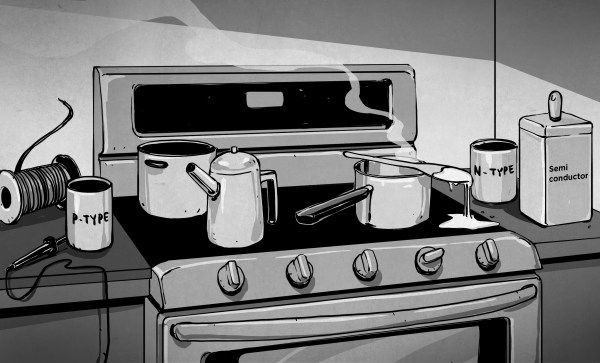
As the saying goes, hindsight is 20/20. It may surprise you that the microchip that we all know and love today was far from an obvious idea. Some of the paths that were being explored back then to cram more components into a smaller area seem odd now. But who hasn’t experienced hindsight of that sort, even on our own bench tops.
Let’s start the story of the microchip like any good engineering challenge should be started, by diving into the problem that existed at the time with the skyrocketing complexity of computing machines.
In an era where we can watch rockets land on their tails Buck Rogers-style live on YouTube, it’s difficult to imagine a time when even the most basic concepts of rocketry were hotly debated. At the time, many argued that the very concept of a liquid fueled rocket was impossible, and that any work towards designing practical rocket powered vehicles was a waste of time and money. Manned spacecraft, satellite communications, to say nothing of landing on other worlds; all considered nothing more than entertainment for children or particularly fanciful adults.
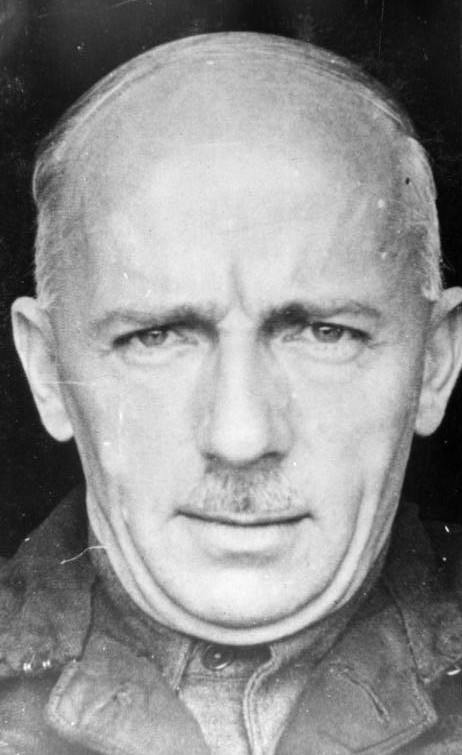
Walter Dornberger (Bundesarchiv, Bild 146-1980-009-33 / CC-BY-SA 3.0)
This is the world in which V-2, written by the head of the German rocket development program Walter Dornberger, takes place. The entire history of the A-4/V-2 rocket program is laid out in this book, from the very early days when Dornberger and his team were launching rockets with little more than matches, all the way up to Germany’s frantic attempts to mobilize the still incomplete V-2 rocket in face of increasingly certain defeat at the end of World War II.
For those fascinated with early space exploration and the development of the V-2 rocket like myself, this book is essentially unparalleled. It’s written completely in the first person, through Dornberger’s own eyes, and reads in most places like a personal tour of his rocket development site at the Peenemünde Army Research Center. Dornberger walks through the laboratories and factories of Peenemünde, describing the research being done and the engineers at work in a personal detail that you simply don’t get anywhere else.
But this book is not only a personal account of how the world’s first man-made object to reach space was created, it’s also a realistic case study of how engineers and the management that pays the bills often clash with disastrous results. Dornberger and his team wanted to create a vehicle to someday allow man to reach space, while the Nazi government had a much more nefarious and immediate goal. But this isn’t a book about the war — the only battles you’ll read about in V-2 take place in meeting rooms, where the engineers who understood the immense difficulty of their task tried in vain to explain why the timetables and production numbers the German military wanted simply couldn’t be met.
Bill Shockley brought the transistor to a pasture in Palo Alto, but he didn’t land there by chance. There was already a plot afoot which had nothing to do with silicon, and it had already been a happening place for some time by then.
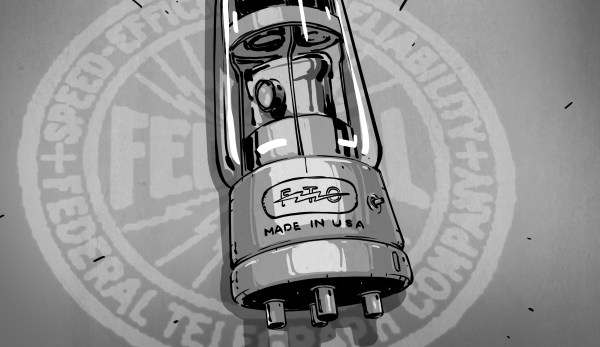
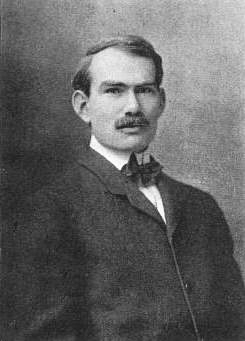
Often overshadowed by Edison and Menlo Park or Western Electric and its Bell Labs, people forget that the practical beginning of modern radio and telecommunications began unsuspectingly in the Bay Area on the shoestring-budgeted work benches of Lee de Forest at Federal Telegraph.
As the first decade of the 20th century passed, Lee de Forest was already a controversial figure. He had founded a company in New York to develop his early vacuum tubes as detectors for radio, but he was not very good at business. Some of the officers of the company decided that progress was not being made fast enough and drained the company of assets while de Forest was away. This led to years of legal troubles and the arrest of many involved due to fraud and loss of investors’ money.
When we think of role models, it’s easy to categorize them narrowly on the basis of their skill set. We might say that he’s a great mathematician, or that she is an excellent chemist. Some role models are admirable on a deeper, human level. These are the kinds of heroes who obliterate all the obstacles dropped in front of them to tirelessly pursue their interests and devote their lives to doing the kind of stuff that makes the world better for everyone.
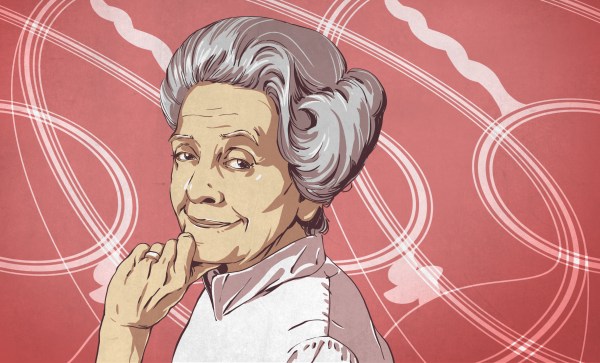
Italian Nobel Laureate Rita Levi-Montalcini is this kind of role model. Her scientific curiosity and unconventional thinking led her to discover nerve growth factor (NGF), a naturally occurring protein which we now know is responsible for nerve growth and regulation. Rita’s discovery provided great insight into the way the nervous system develops. The discoveries that she made underlie much of modern research into neurologically degenerative diseases like Alzheimer’s and cancer, and NGF is used experimentally the treatment of both.
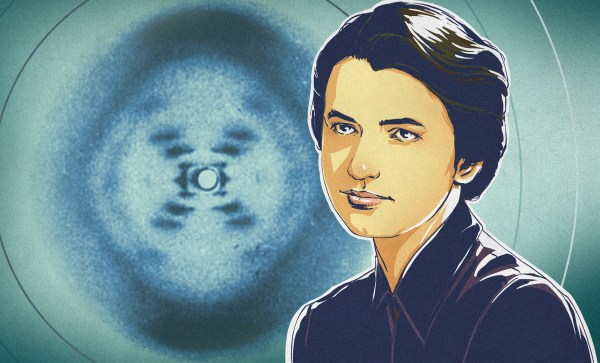
It’s a standard science trivia question: Who discovered the structure of DNA? With the basic concepts of molecular biology now taught at a fairly detailed level in grade school, and with DNA being so easy to isolate that it makes a good demonstration project for school or home, everyone knows the names of Watson and Crick. But not many people know the story behind one of the greatest scientific achievements of the 20th century, or the name of the scientist without whose data Watson and Crick were working blind: Rosalind Franklin.