Retrotechtacular: Horseless Farming With The Ford Model B

Does everyone watch a load of videos on YouTube that are somewhat on the unadmissibly geeky side? In my case I might not care to admit that I have a lot of videos featuring tractors in my timeline. The mighty Russian Kirovets hauling loads through the impossible terrain of the taiga, tiny overloaded 2WD tractors in India pulling wheelies, and JCB Fastracs tearing around the British Fenland. You can take the girl off the farm, but you can’t take the farm out of the girl.

Tractor versus Tractor; a guilty pleasure but not Retrotechtacular

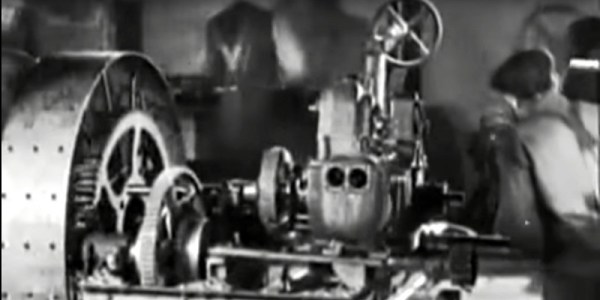
So my recommendations have something of an agricultural flavor. Like the video below the break, a 1917 silent film promoting the Ford Model B tractor. This one was eye-catching because it was a machine I’d not seen before, a rather unusual three-wheeler design with two driving wheels at the front and a single rear steering wheel.

During the early years of the twentieth century the shape of the modern tractor was beginning to evolve, this must have been a late attempt at an alternative. Speaking from the viewpoint of someone who has operated a few tractors in her time it does not look the easiest machine to control, that cloud of exhaust smoke surrounding the driver would not be pleasant, and the operating position hanging over the implement coupling at the rear does not look particularly comfortable or safe.

The film has a charming period feel, and tells the tale of a farmer’s son who tires of the drudgery of manual farm labor, and leaves for the city. He finds a job at the tractor factory and eventually becomes a tractor salesman, along the way meeting and marrying the daughter of a satisfied customer. He returns home with his bride, and a shiny new tractor to release his father from ceaseless labor. Along the way we gain a fascinating look at agriculture on the brink of mass mechanization, as well as the inside of a tractor factory of the time with an assembly sequence in which they appear to use no fasteners.

[Image Source: Tractor Industry Fraud on Farm Collector]
[Image Source: Tractor Industry Fraud on Farm Collector]
All of this is very interesting, but the real nugget in the story lies with its manufacturer. This is a Ford Model B tractor. But it’s not a Ford Model B. Confused? So, it seems were the customers. The Ford we all know is the Michigan-based motor company of Henry Ford, who were already very much a big name in 1917. This Ford however comes from the Ford Tractor Co, of South Dakota, an enterprise set up by a shady businessman to cash in on the Ford brand, manufacturing an already outdated and inferior machine backed up by dubious claims of its capabilities.

On the staff was an engineer called Ford who lent his name to the company, but he bore no relation to Henry Ford. The company didn’t last long, collapsing soon after the date of this film, and very few of its products survived. It did have one legacy though, the awful quality of one of its tractors is reputed to have been the impetus behind the founding of the Nebraska Tractor Test Laboratory, the place where if you sell a tractor in the USA, you’ll have to have it tested to ensure it performs as it should. In their museum they house one of the few surviving Ford Model B tractors.

Meanwhile the Ford in Michigan produced their own very successful line of tractors, and their Fordson Model F from the same year is a visible ancestor of today’s machines. But as the video below shows, there’s nothing new about a fake.

Continue reading “Retrotechtacular: Horseless Farming With The Ford Model B”
The BASIC Issue With Retro Computers

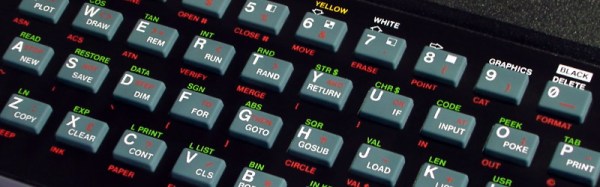
If you are interested in how a computer works at the hardware grass-roots level, past all the hardware and software abstractions intended to make them easier to use, you can sometimes find yourself frustrated in your investigations. Desktop and laptop computers are black boxes both physically and figuratively, and microcontrollers have retreated into their packages behind all the built-in peripherals that make them into systems-on-chips.
Continue reading “The BASIC Issue With Retro Computers”

Grace Hopper, Margaret Hamilton, Richard Garwin Named For Medal Of Freedom

Somewhat hidden among athletes, actors, and musicians, three giants of technology have been aptly named as 2016 Presidential Medal of Freedom recipients. Grace Hopper, Margaret Hamilton, and Richard Garwin all made significant contributions to the technology that envelops our lives and embody the quest for knowledge and life-long self learning that we’d like to see in everyone.

Commodore Grace M. Hopper, USN (covered).

Rear Admiral Grace Hopper’s legacy lies with the origins of computer science. She wrote the first compiler. In a time when computers were seen more as calculating machines than easily adaptable frameworks she looked to the future and made it happen. She continued to make huge contributions with lasting effect in developing COBOL, unit testing methods for programmers, and in education. We have long loved her explanation of a nanosecond (and why software engineers shouldn’t waste cycles) and was one of the first to program on the Harvard Mark I which can still be seen in the lobby of the school’s engineering building.

margaret_hamilton_1995As Director of Apollo Flight Computer Programming, Margaret Hamilton is the driving force behind the software of Apollo. When the program started, she was Director of Software Engineering at MIT Instrumentation Laboratory. Originally there wasn’t a plan or budget for software in the space program. Hamilton built the program and led the team who wrote the software and turned it into punch cards to be fed into the computer. We enjoyed reading about some of her adventures during the Apollo project, her drive to develop pristine code is palpable. Over the past year we’ve marveled at the rope memory of the Apollo Guidance Computer and delighted when a hardcopy of AGC software showed up at a party. Her legacy at having written the code for the first portable computer — one that happened to land on the moon and return home safely — is incredible.
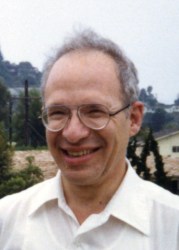
richardgarwin1980Physicist Richard Garwin’s name is most associated with the first hydrogen bomb design. But another part of his work is more likely to have directly touched your life: his research into spin-echo magnetic resonance helped lead to the development of Magnetic Resonance Imaging. MRIs have of course become a fundamental tool in medicine. Garwin studied under Fermi during his doctoral work — you may remember Fermi from our look at the Fermiac analog computer last year.

Congratulations to these three recipients, their recognition is incredibly well deserved. We’d love to hear about some of your own technology heroes. Let us know on the tips line so that we may help celebrate their accomplishment and inspire the next generation of giants.

Image Credits:

Medium Over Message: A CD-ROM Multimedia Bubble Survivor’s Tale

Sometimes in the never-ending progression of technology, people take wrong turns. They pursue dead-ends they believe represent a bright future, often in spite of obvious indications to the contrary. IBM doggedly insisting Micro Channel Architecture was the future of PC hardware, for example, or Nokia’s seeming inability to recognise that the mobile phone experience had changed for ever when the first iPhones and Android devices appeared.

Every once in a while, that collective delusion grips an entire industry. All the players in a particular market nail their colours to a technology, seemingly without heed to what seems with hindsight to have been a completely obvious threat from the alternative that sidelined them. It is a tale of personal experience that prompts this line of thought, for the industry that tempted me away from hardware to a career in electronic publishing in the early 1990s was CD-ROM multimedia.

Continue reading “Medium Over Message: A CD-ROM Multimedia Bubble Survivor’s Tale”

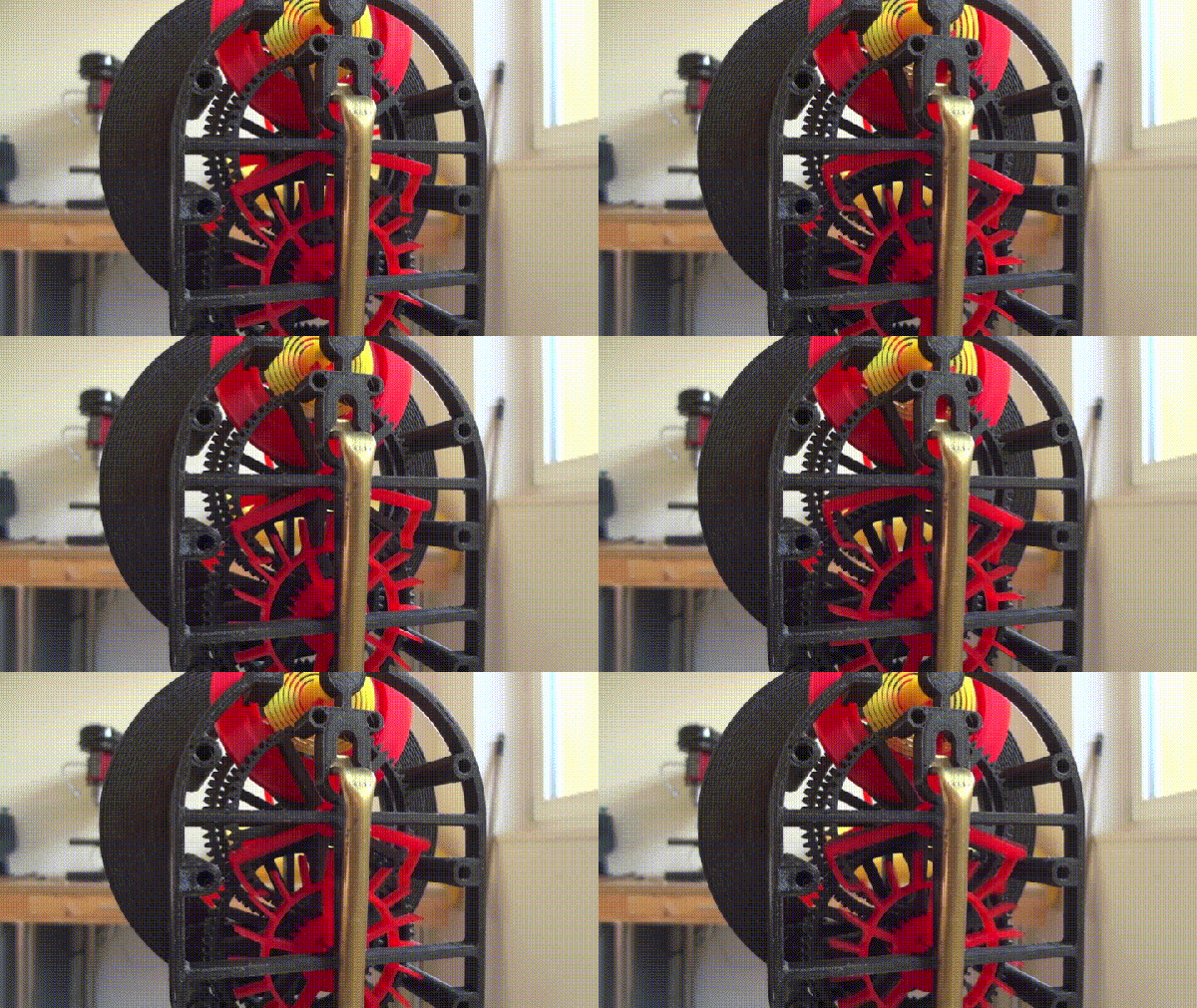
The Little Mechanism That Made Precise Time-keeping Possible

There are few things to which we pay as much attention as the passage of time. We don’t want to be late for work, or a date. Even more importantly, we don’t want to age and die. Good time keeping is an all important human activity, and we started to worry about it as soon as we abandoned our hunter-gatherer lifestyle and agriculture and commerce emerged.

By de:Benutzer:Flyout - own work, http://de.wikipedia.org/wiki/Bild:Kerzenuhr.jpg, CC BY-SA 3.0, https://commons.wikimedia.org/w/index.php?curid=1783765
A candle clock

Measuring time needs two things: a repetitive process to mark equal increments of time, and a way of tracking and displaying the result. The first timekeeping devices relied of course on the movement of the sun. Ancient Egyptians, around 3500 BC, built obelisks that, by casting a shadow on the ground at different positions, gave an approximate idea of the time. Next came the use of some medium that was consumed at a regular pace: candle, incense, water and sand clocks are examples. A great advancement came with the advent of the mechanical clock, and here is where the escapement mechanism appears.

Continue reading “The Little Mechanism That Made Precise Time-keeping Possible”

Retrotechtacular: The Golden Book Of Chemistry Experiments

Back in “the old days” (that is, when I was a kid), kids led lives of danger and excitement. We rode bikes with no protective gear. We stayed out roaming the streets after dark without adult supervision. We had toy guns that looked like real ones. Dentists gave us mercury to play with. We also blew things up and did other dangerous science experiments.

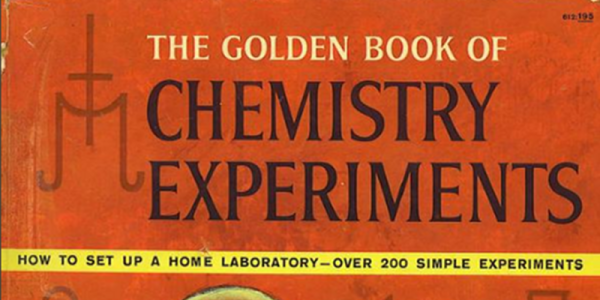
If you want a taste of what that was like, you might enjoy The Golden Book of Chemistry Experiments. The book, first published in 1960, offers to show you how to set up a home laboratory and provides 200 experiments. The colorfully illustrated book shows you how to do some basic lab work as well as offering some science history and terminology.

Want to make oxygen? There’s several methods on page 27. Page 28 covers making hydrogen. To test the hydrogen for purity, the suggest you collect a test tube full, invert it, and stick a match up to the tube. If the hydrogen is pure it will burn with a pop noise. If air is mixed it, it will explode. Yeah, that sound safe to us.

Continue reading “Retrotechtacular: The Golden Book Of Chemistry Experiments”

Resurrection — Pressing WW2 Radio Equipment Back Into Service

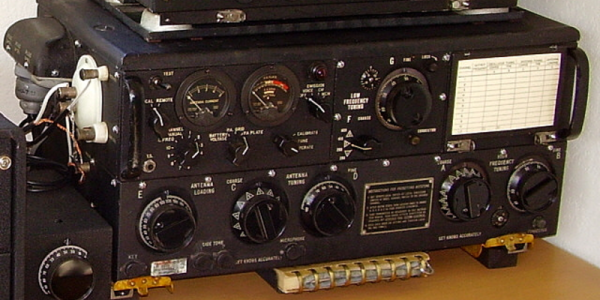
Mass production was key to survival during the Second World War. So much stuff was made that there continues to be volumes of new unpacked stuff left over and tons of used equipment for sale at reasonable prices. Availability of this war surplus provided experimenters in the mid 20th century with access to high performance test equipment, radio equipment, and high quality components for the first time.

Even today this old stuff continues to motivate and inspire the young generations because of its high build quality, unique electro-mechanical approaches, and overall innovative designs which continue to be relevant into the 21st century. In this post we will show you how to get started in the hobby of resurrecting WW2 radio equipment and putting it back on the air.

Continue reading “Resurrection — Pressing WW2 Radio Equipment Back Into Service”