So far in the $50 Ham series, I’ve concentrated mainly on the VHF and UHF bands. The reason for this has to do mainly with FCC rules, which largely restrict Technician-level licensees to those bands. But there’s a financial component to it, too; high-frequency (HF) band privileges come both at the price of learning enough about radio to pass the General license test, as well as the need for gear that can be orders of magnitude more expensive than a $30 handy-talkie radio.
But while HF gear can be expensive, not everything needed to get on the air has to be so. And since it’s often the antenna that makes or breaks an amateur radio operator’s ability to make contacts, we’ll look at a simple but versatile antenna design that can be adapted to support everything from a big, powerful base station to portable QRP (low-power) activations in the field: the end-fed half-wave antenna.
The United Kingdom is somewhat unique in the world for requiring those households which view broadcast television to purchase a licence for the privilege. Initially coming into being with the Wireless Telegraphy Act in 1923, the licence was required for anyone receiving broadcast radio, before being expanded to cover television in 1946. The funds generated from this endeavour are used as the primary funding for the British Broadcasting Corporation.
Of course, it’s all well and good to require a licence, but without some manner of enforcement, the measure doesn’t have any teeth. Among other measures, the BBC have gone as far as employing special vans to hunt down illegally operating televisions and protect its precious income.
The Van Is Coming For You
To ensure a regular income, the BBC runs enforcement operations under the TV Licencing trade name, the entity which is responsible for administering the system. Records are kept of licences and their expiry dates, and investigations are made into households suspected of owning a television who have not paid the requisite fees. To encourage compliance, TV Licencing regularly sends sternly worded letters to those who have let their licence lapse or have not purchased one. In the event this fails, they may arrange a visit from enforcement officers. These officers aren’t empowered to forcibly enter homes, so in the event a homeowner declines to cooperate with an investigation, TV Licencing will apply for a search warrant. This may be on the basis of evidence such as a satellite dish or antenna spotted on the roof of a dwelling, or a remote spied on a couch cushion through a window.
Alternatively, a search warrant may be granted on the basis of evidence gleaned from a TV detector van. Outfitted with equipment to detect a TV set in use, the vans roam the streets of the United Kingdom, often dispatched to addresses with lapsed or absent TV licences. If the van detects that a set may be operating and receiving broadcast signals, TV Licencing can apply to the court for the requisite warrant to take the investigation further. The vans are almost solely used to support warrant applications; the detection van evidence is rarely if ever used in court to prosecute a licence evader. With a warrant in hand, officers will use direct evidence such as a television found plugged into an aerial to bring an evader to justice through the courts.
The history of storage devices is quite literally a race between the medium and the computing power as the bottleneck of preserving billions of ones and zeros stands in the way of computing nirvana. The most recent player is the Non-Volatile Memory Express (NVMe), something of a hybrid of what has come before.
The first generations of home computers used floppy disk and compact cassette-based storage, but gradually, larger and faster storage became important as personal computers grew in capabilities. By the 1990s hard drive-based storage had become commonplace, allowing many megabytes and ultimately gigabytes of data to be stored. This would drive up the need for a faster link between storage and the rest of the system, which up to that point had largely used the ATA interface in Programmed Input-Output (PIO) mode.
This led to the use of DMA-based transfers (UDMA interface, also called Ultra ATA and Parallel ATA), along with DMA-based SCSI interfaces over on the Apple and mostly server side of the computer fence. Ultimately Parallel ATA became Serial ATA (SATA) and Parallel SCSI became Serial Attached SCSI (SAS), with SATA being used primarily in laptops and desktop systems until the arrival of NVMe along with solid-state storage.
All of these interfaces were designed to keep up with the attached storage devices, yet NVMe is a bit of an odd duck considering the way it is integrated in the system. NVMe is also different for not being bound to a single interface or connector, which can be confusing. Who can keep M.2 and U.2 apart, let alone which protocol the interface speaks, be it SATA or NVMe?
Let’s take an in-depth look at the wonderful and wacky world of NVMe, shall we?
Once upon a time, bailing out of a plane involved popping open the roof or door, and hopping out with your parachute, hoping that you’d maintained enough altitude to slow down before you hit the ground. As flying speeds increased and aircraft designs changed, such escape became largely impossible.
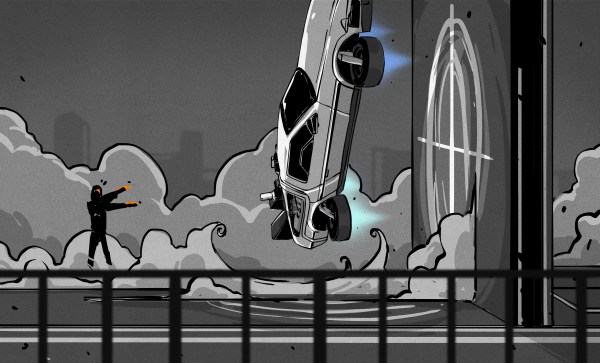
Ejector seats were the solution to this problem, with the first models entering service in the late 1940s. Around this time, the United Kingdom began development of a new fleet of bombers, intended to deliver its nuclear deterrent threat over the coming decades. The Vickers Valiant, the Handley Page Victor, and the Avro Vulcan were all selected to make up the force, entering service in 1955 through 1957 respectively. Each bomber featured ejector seats for the pilot and co-pilot, who sat at the front of the aircraft. The remaining three crew members who sat further back in the fuselage were provided with an escape hatch in the rear section of the aircraft with which to bail out in the event of an emergency.
Drifting is a hugely popular motorsport unlike any other, focusing on style and getting sideways rather than the pursuit of the fastest time between two points. It’s a challenge that places great demands on car and driver, and proper attention to setup to truly succeed. Here’s a guide to get your first drift build coming together.
Getting Sideways (And Back Again)
Drift cars are specialised beasts, and like any motorsport discipline, the demands of the sport shape the vehicle to suit. If you’re looking to drift, you’ll want to choose a project car with a front-engined, rear-wheel drive layout. While it’s somewhat possible to drift with other layouts, the act of kicking out the tail and holding a slide at speed is best achieved with the handling characteristics of such a vehicle. It all comes down to weight transfer and breaking traction at will. Of course, over the years, certain cars have become expensive on the second-hand market due to their drift prowess, so you may have to get creative if your first choice isn’t available at your budget. It pays to talk to the drifters down at your local track to get an idea of which cars in your area are the best bet for a drift build. Once you’ve got yourself a car, you can get down to installing mods!
NASA is always keen to highlight the space agency’s many successes, and rightly so — those who pay for these expensive projects have a right to know what they’re getting for their money. And so the news was recently sprinkled with stories of the discovery of electron bursts beyond the edge of our solar system, caused by shock waves from coronal mass ejection (CME) from our Sun reflecting and accelerating electrons in interstellar plasmas. It’s a novel mechanism and an exciting discovery that changes a lot of assumptions about what happens out in the lonely space outside of the Sun’s influence.
The recent discovery is impressive in its own right, but it’s even more stunning when you dig into the details of how it was made: by the 43-year-old Voyager spacecraft, each now about 17 light-hours away from Earth, and each carrying an instrument so simple and efficient that they’re still working all after this time — and which very nearly were left out of the mission’s science payload.
On November 8th, 2020 the Sun exploded. Well, that’s a bit dramatic (it explodes a lot) — but a particularly large sunspot named AR2781 produced a C5-class solar flare which is a medium-sized explosion even for the Sun. Flares range from A, B, C, M, and X with a zero to nine scale in each category (or even higher for giant X flares). So a C5 is just about dead center of the scale. You might not have noticed, but if you lived in Australia or around the Indian Ocean and you were using radio frequencies below 10 MHz, you would have noticed since the flare caused a 20-minute-long radio blackout at those frequencies.
According to NOAA’s Space Weather Prediction Center, the sunspot has the energy to produce M-class flares which are an order of magnitude more powerful. NOAA also has a scale for radio disruptions ranging from R1 (an M1 flare) to R5 (an X20 flare). The sunspot in question is facing Earth for the moment, so any new flares will cause more problems. That led us to ask ourselves: What if there were a major radio disruption?