Retrotechtacular: Radio To Listen To When You Duck And Cover

CONELRAD may sound like the name of a fictional android, but it is actually an acronym for control of electronic radiation. This was a system put in place by the United States at the height of the cold war (from 1951 to 1963) with two purposes: One was to disseminate civil defense information to the population and, also, to eliminate radio signals as homing beacons for enemy pilots.

Continue reading “Retrotechtacular: Radio To Listen To When You Duck And Cover”

LEGO-compatible Electronics Kits Everywhere!

Within the last few years, a lot of companies have started with the aim to disrupt the educational electronics industry using their LEGO-compatible sets. Now they’re ubiquitous, and fighting each other for their slice of space in your child’s box of bricks. What’s going on here?

Raison D’Être

The main reason for LEGO-compatibility is familiarity. Parents and children get LEGO. They have used it. They already have a bunch. When it comes to leveling up and learning about electronics, it makes sense to do that by adding on to a thing they already know and understand, and it means they can continue to play with and get more use from their existing sets. The parent choosing between something that’s LEGO-compatible and a completely separate ecosystem like littleBits (or Capsela) sees having to set aside all the LEGO and buy all new plastic parts and learn the new ecosystem, which is a significant re-investment. littleBits eventually caught on and started offering adapter plates, and that fact demonstrates how much demand there is to stick with the studs.

Continue reading “LEGO-compatible Electronics Kits Everywhere!”

Building The Hackaday Superconference Badge

The best hardware conference is just a few weeks away. This is the Hackaday Superconference, and it’s two days of talks, an extra day of festivities, soldering irons, and an epic hardware badge. We’ve been working on this badge for a while now, and it’s finally time to share some early details. This is an awesome badge and a great example of how to manufacture electronics on an extremely compressed timetable. This is badgelife, the hardware demoscene of electronic conference badges.

So, what does this badge do? It’s a camera. It has games, and it’s designed by [Mike Harrison] of Mike’s Electric Stuff. He designed and prototyped this badge in a single weekend. On board is a PIC32 microcontroller, an OV9650 camera module, and a bright, crisp 128×128 resolution color OLED display. Tie everything together with a few buttons, and you have a badge that’s really incredible.

So, how do you get one? You’ve got to come to the Hackaday Superconference. This year we’re doing things a bit differently and opening the doors a day early to get the hacker village started with badge hacking topped off by a party that evening and everyone coming to Supercon is invited! This is a badge full of games, puzzles, and video capture and isn’t something to miss. We have less than 30 tickets left so grab your ticket now and read on.

Continue reading “Building The Hackaday Superconference Badge”

The Bane Of Aftermarket Car Alarms

The humble car alarm has been around almost as long as the car itself, first being developed by an unknown prisoner in Denver, circa 1913. To the security-conscious motorist, they make a lot of sense. The noise of a car alarm draws attention which is the last thing a would-be thief wants, and the in-built immobilizers generally stop the car being moved at all without a time-consuming workaround. Both are a great deterrent to theft.

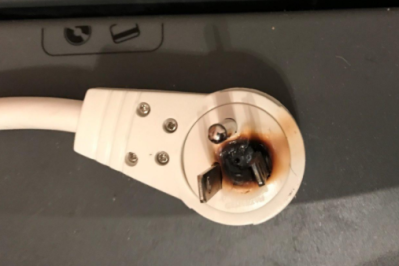
It may then surprise you to know that I, dear readers, consider the aftermarket car alarm to be one of the most heinous devices ever fitted to the modern automobile. Combining the unholy trifecta of being poorly designed, cheaply made, and fitted by only the most untalented or uncaring people to wield a soldering iron, they are a blight that I myself refuse to accept.

It was my very own Mazda that suffered at the hands of a car alarm system. Two days after purchasing the car, the keyfob died, and thus the car would no longer start. My other car was already out of action due to bent valves, and I needed to get to work, so I figured as a competent hacker, I’d be able to quickly disable it.

Continue reading “The Bane Of Aftermarket Car Alarms”

Happy Ada Lovelace Day!

Today is Ada Lovelace Day, a day to celebrate and encourage women in the fields of science and technology. The day is named after Augusta Ada King-Noel, Countess of Lovelace, born Byron. (You can see why we just call her Ada Lovelace.) She was a brilliant mathematician, and the writer of what’s probably the first real computer program — it computed the Bernoulli series. At least according Charles Babbage, in correspondence to Michael Faraday, she was an “enchanted math fairy”. Not only a proto-coder, she wrote almost all of the existing documentation about Babbage’s computation engine. She’s a stellar example of a brilliant and unique individual. If you were looking for a superhero to represent women in science and tech, Ada’s a good pick.

In our minds, she gets stiff competition from Marie Curie. Curie did fundamental research on radioactivity, is one of two people with Nobel Prizes in two different sciences, and got to name the two elements that she discovered. 2011 was the Year of Marie Curie in France and Poland. She has her own year in addition to her own unit. Even Spiderman doesn’t have those radioactive super powers!

Don’t Need Another Hero?

But on a day dedicated to getting more women into the technical arts, it’s also a little bit daunting to pick Lovelace or Curie as a symbol. Are you ever going to have something that equals “first computer program” or “two Nobel Prizes” on your résumé? We aren’t. It’s great to have heroes, but maybe we need more than just heroes — we also need mentors.

Continue reading “Happy Ada Lovelace Day!”

Our Reactions To The Treatment Of Robots

Most of us have seen employees of Boston Dynamics kicking their robots, and many of us instinctively react with horror. More recently I’ve watched my own robots being petted, applauded for their achievements, and yes, even kicked.

Why do people react the way they do when mechanical creations are treated as if they were people, pets, or worse? There are some very interesting things to learn about ourselves when considering the treatment of robots as subhuman. But it’s equally interesting to consider the ramifications of treating them as human.

The Boston Dynamics Syndrome

Shown here are two snapshots of Boston Dynamics robots taken from their videos about Spot and Atlas. Why do scenes like this create the empathic reactions they do? Two possible reasons come to mind. One is that the we anthropomorphize the human-shaped one, meaning we think of it as human. That’s easy to do since not only is it human-shaped but the video shows it carrying a box using human-like movements. The second snapshot perhaps evokes the strongest reactions in anyone who owns a dog, though its similarity to any four-legged animal will usually do.

Is it wrong for Boston Dynamics, or anyone else, to treat robots in this way? Being an electronic and mechanical wizard, you might have an emotional reaction and then catch yourself with the reminder that these machines aren’t conscious and don’t feel emotional pain. But it may be wrong for one very good reason.

Continue reading “Our Reactions To The Treatment Of Robots”

Retrotechtacular: Hacking Wartime Mail

I’m guessing you got quite a few e-mails today. But have you ever had a v-mail? That sounds like some new term for video e-mail, but it actually dates back to World War II. If you are in Europe, the term was Airgraph — not much more descriptive.

If you make a study of war, you’ll find one thing. Over the long term, the winning side is almost always the side that can keep their troops supplied. Many historians think World War II was not won by weapons but won by manufacturing capability. That might not be totally true, but supplies are critical to a combat force. Other factors like tactics, doctrine, training, and sheer will come into play as well.

On the other hand, morale on the front line and the home front is important, too. Few things boost morale as much as a positive letter from home. But there’s a problem.

While today’s warfighter might have access to a variety of options to communicate with those back home, in World War II, communications typically meant written letters. The problem is ships going from the United States to Europe needed to be full of materials and soldiers, not mailbags. With almost two million U.S. soldiers in the European Theater of Operations, handling mail from home was a major concern.

British Mail Hack

The British already figured out the mail problem in the 1930s. Eastman Kodak and Imperial Airways (which would later become British Airways) developed the Airgraph system to save weight on mail-carrying aircraft.  Airgraph allowed people to write soldiers on a special form. The form was microfilmed and sent to the field. On the receiving end, the microfilm was printed and delivered as regular mail.

Continue reading “Retrotechtacular: Hacking Wartime Mail”