Bicycle Racing In Space Could Be A Thing

It’s 2100 AD, and hackers and normals live together in mile-long habitats in the Earth-Moon system. The habitat is spun up so that the gravity inside is that of Earth, and for exercise, the normals cycle around on bike paths. But the hackers do their cycling outside, in the vacuum of space.

How so? With ion thrusters, rocketing out xenon gas as the propellant. And the source of power? Ultimately that’s the hackers’ legs, pedaling away at a drive system that turns two large Wimshurst machines.

Those Wimshurst machines then produce the high voltage needed for the thruster’s ionization as well as the charge flow. They’re also what gives the space bike it’s distinctly bicycle-like appearance. And based on the calculations below, this may someday work!

Continue reading “Bicycle Racing In Space Could Be A Thing”

Horns Across America: The AT&T Long Lines Network

A bewildering amount of engineering was thrown at the various challenges presented to the United States by the end of World War II and the beginning of the Cold War. From the Interstate Highway System to the population shift from cities to suburbs, infrastructure of all types was being constructed at a rapid pace, fueled by reasonable assessments of extant and future threats seasoned with a dash of paranoia, and funded by bulging federal coffers due to post-war prosperity and booming populations. No project seemed too big, and each pushed the bleeding edge of technology at the time.

Some of these critical infrastructure projects have gone the way of the dodo, supplanted by newer technologies that rendered them obsolete. Relics of these projects still dot the American landscape today, and are easy to find if you know where to look. One that always fascinated me was the network of microwave radio relay stations that once stitched the country together. From mountaintop to mountaintop, they stand silent and largely unattended, but they once buzzed with the business of a nation. Here’s how they came to be, and how they eventually made themselves relics.

Continue reading “Horns Across America: The AT&T Long Lines Network”

Sort Out Chemical Storage For Your Shop

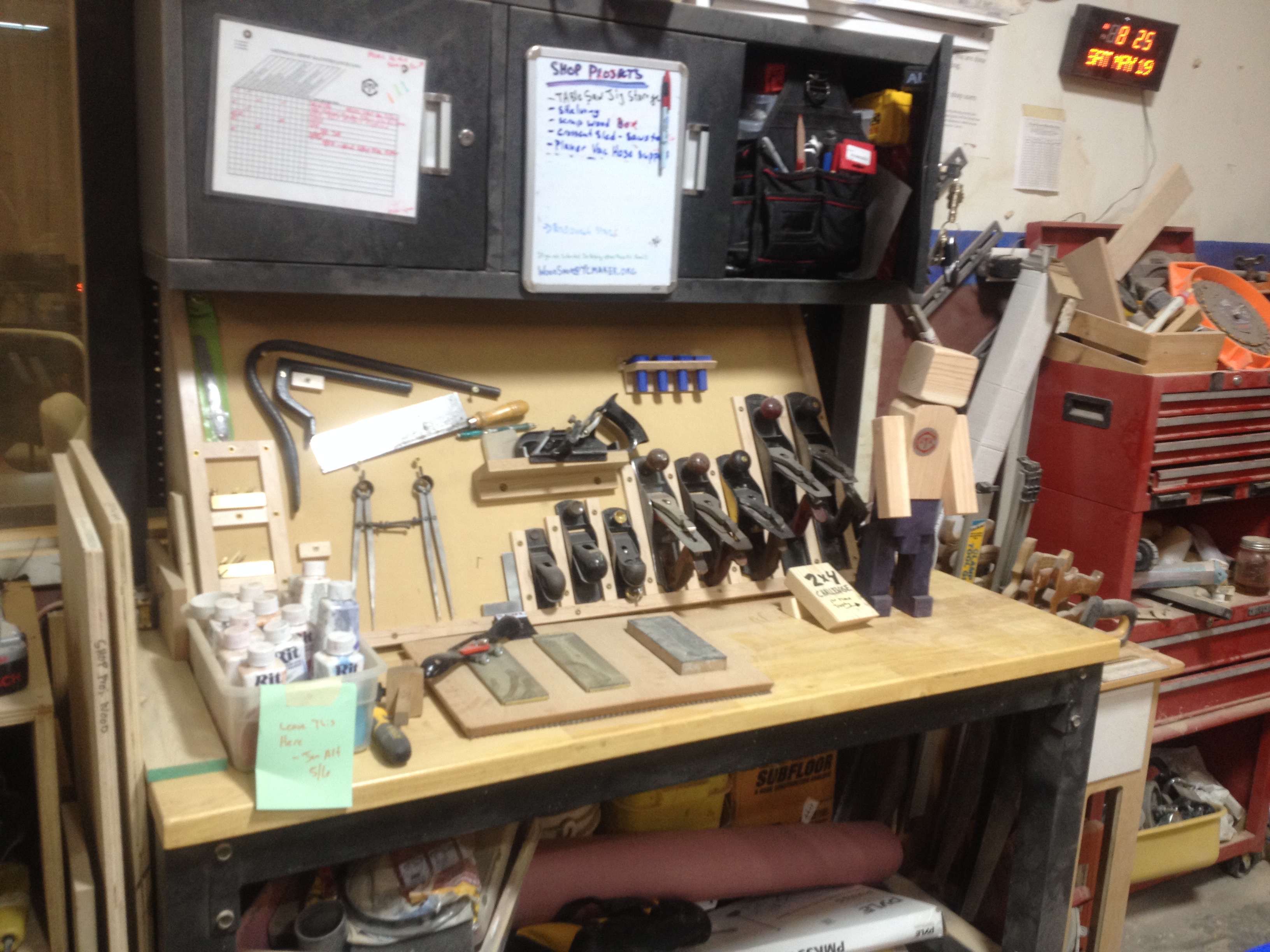
There is one constant in the world of hardware hacker’s workshops, be they a private workshop in your garage or a public hackspace, and it goes something like this:

Everybody’s a safety expert in whatever it is they are working with, right up until the accident.

In other words, it is very tempting to harbour a cavalier attitude to something that either you are familiar with or the hazards of which you do not understand, and this breeds an environment in which mishaps become a distinct possibility.

As hardware people, we are familiar with basic tool safety or electrical safety. The chances are that we’ve had it drummed into us at some time in our growing up, by a lab supervisor, a workshop teacher, or a parent. That you as readers and I as writer have survived this long is testament enough to the success of that education. But what about those areas in which we may not have received such an education, those things which we either encounter rarely or seem harmless enough that their safety needn’t be our concern? Chemicals, for example: everything from glue through solvents and soldering consumables to PCB chemicals and even paint. It all seems safe enough, what could possibly go wrong? The answer to that question is probably something most of us would prefer never to find out, so it’s worth looking in to how a well-run workshop can manage its chemicals in as safe a manner as possible.

Continue reading “Sort Out Chemical Storage For Your Shop”

Linux-Fu: Running Commands

One of the things that makes Linux and Unix-like systems both powerful and frustrating is that there are many ways to accomplish any particular goal. Take something simple like running a bunch of commands in sequence as an example. The obvious way is to write a shell script which offers a tremendous amount of flexibility. But what if you just want some set of commands to run? It sounds simple, but there are a lot of ways to issue a sequence of commands ranging from just typing them in, to scheduling them, to monitoring them the way a mainframe computer might monitor batch jobs.

Let’s jump in and take a look at a few ways you can execute sequences from bash (and many other Linux shells). This is cover the cron and at commands along with a batch processing system called task spooler. Like most things in Linux, this isn’t even close to a complete list, but it should give you some ideas on ways to control sequences of execution.

Continue reading “Linux-Fu: Running Commands”

LCaaS – Lawn Care As A Service?

As often happens while engaged in a mundane task, my mind wandered while I was mowing my small suburban plot of green this weekend. “Why, in 2017, am I still mowing the lawn?” In a lot of ways we’re living in the future  — we walk around with fantastically powerful computers in our pockets, some of us have semi-autonomous cars, and almost anything can be purchased at the touch of a finger and delivered the next day or sooner. We even have robots that can vacuum the floor, so why not a robot lawnmower?

It turns out we do have robotic lawnmowers, but unfortunately, they kind of suck: Continue reading “LCaaS – Lawn Care As A Service?”

Gyrators: The Fifth Element

A few years ago, there was a stir about a new fundamental component called a memristor. That wasn’t the first time a new component type was theorized though. In 1948 [Bernard Tellegen] postulated the gyrator. While you can’t buy one as a component, you can build one using other components. In fact, they are very necessary for some types of design. Put simply, a gyrator is a two-terminal device that inverts the current-voltage characteristic of an electrical component. Therefore, you can use a gyrator to convert a capacitor into an inductor or vice versa.

Keep in mind, the conversion is simply the electrical properties. Normally, current leads voltage in a capacitor and lags it in an inductor, and that’s what a gyrator changes. If you use a gyrator and a capacitor to make a virtual inductor, that inductor won’t magnetically couple to another inductor, real or simulated. There’s no magnetic field to do so. You also don’t get big voltage spikes caused by back EMF, which depending on your application could be a plus or a minus. But if you need an ungainly inductor in a circuit for its phase response, a gyrator may be just the ticket.

Continue reading “Gyrators: The Fifth Element”

Book Review: The Art Of The Patent

In bringing suitable illustrations to our articles, we Hackaday scribes use a variety of sources that offer images featuring permissive licences. Among the usual free image libraries there is one particularly rich source, the line drawings contained within the huge archives of patents granted by the various countries around the world. These are the illustrations used as part of the patent itself to describe the working of the patent being claimed. We use them because though the items they depict are legally protected from copying by the patents they are part of, they as part of the patents themselves are in the public domain. Thus we can easily find detailed hand drawn pictures of all kinds of technical innovations from the last couple of hundred years or so, and from time to time you as our readers reap the benefit.

The beauty in hand-rendered fonts from patent artwork, collected within the book.

If you spend a while browsing old patents through a search engine such as Google Patents, you can quickly become engrossed in these beautiful images of inventions past. Though their purpose is a functional one to convey the workings of an invention, the anonymous artists have often poured all of their skill into rendering them as considerably more than mere draughtsmanship. In those dusty Government archives lurk masterpieces, just waiting to be found.

It seems we here at Hackaday are not alone in sharing a fascination with these images, for a US patent agent, [Kevin Prince], wrote a fascinating exploration of the medium in his book, The Art of the Patent. Continue reading “Book Review: The Art Of The Patent”