The types of steps and missteps the Wright brothers took in developing the first practical airplane should be familiar to hackers. They started with a simple kite design and painstakingly added only a few features at a time, testing each, and discarding some. The airfoil data they had was wrong and they had to make their own wind tunnel to produce their own data. Unable to find motor manufacturers willing to do a one-off to their specifications, they had to make their own.
Sound familiar? Here’s a trip through the Wright brothers development of the first practical airplane.
What does a Hackaday writer do when a couple of days after Christmas she’s having a beer or two with a long-term friend from her university days who’s made a career in the technical side of digital broadcasting? Pick his brains about the transmission scheme and write it all down of course, for behind the consumer’s shiny digital radio lies a wealth of interesting technology to try to squeeze the most from the available resources.
In the UK, our digital broadcast radio uses a system called DAB, for Digital Audio Broadcasting. There are a variety of standards used around the world for digital radio, and it’s fair to say that DAB as one of the older ones is not necessarily the best in today’s marketplace. This aside there is still a lot to be learned from its transmission scheme, and from how some of its shortcomings were addressed in later standards. Continue reading “Anatomy Of A Digital Broadcast Radio System”→
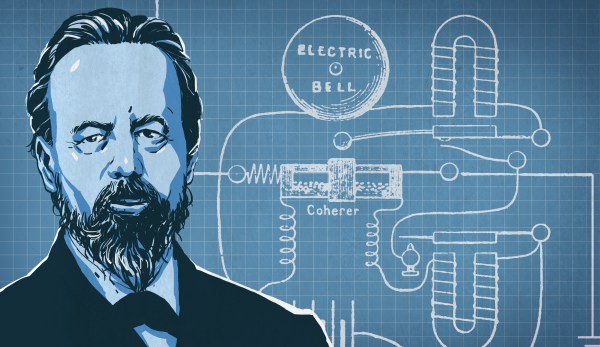
It is said that “success has many fathers, but failure is an orphan.” Given the world-changing success of radio in the late 19th and early 20th centuries, it’s no wonder that so many scientists, physicists, and engineers have been credited with its invention. The fact that electromagnetic radiation is a natural phenomenon that no one can reasonably claim to have invented sometimes seems lost in the shuffle to claim the prize.
But it was exactly through the study of natural phenomena that one of the earliest pioneers in radio research came to have a reasonable claim to at least be the inventor of the radio receiver, well before anyone had learned how to reliably produce electromagnetic waves. This is the story of how a Russian physicist harnessed the power of lightning and became one of the many fathers of radio.
This is the continuation of a series of posts where I create a schematic and PCB in various EDA tools. Already, we’ve looked at Eagle CAD, KiCad, and took a walk down memory lane with one of the first PCB design tools for the IBM PC with Protel Autotrax. One of the more controversial of these tutorials was my post on Fritzing. Fritzing is a terrible tool that you should not use, but before I get to that, I need to back up and explain what this series of posts is all about.
The introduction to this series of posts laid it out pretty bare. For each post in this series, I will take a reference schematic for a small, USB-enabled ATtiny85 development board. I recreate the schematic, recreate the board, and build a new symbol and footprint in each piece of software. That last part — making a new symbol and footprint — is a point of contention for Fritzing users. You cannot create a completely new part in Fritzing. That’s a quote straight from the devs. For a PCB design tool, it’s a baffling decision, and I don’t know if I can call Fritzing a PCB design tool now.
Normally, when something explodes it tends to be a bad day for all involved. But not every explosion is intended to maim or kill. Plenty of explosions are designed to save lives every day, from the highway to the cockpit to the power grid. Let’s look at some of these pyrotechnic wonders and how they keep us safe.
Explosive Bolts
The first I can recall hearing the term explosive bolts was in relation to the saturation TV coverage of the Apollo launches in the late 60s and early 70s. Explosive bolts seemed to be everywhere, releasing umbilicals and restraining the Saturn V launch stack on the pad. Young me pictured literal bolts machined from solid blocks of explosive and secretly hoped there was a section for them in the hardware store so I could have a little fun.
Pyrotechnic fasteners are mechanical fasteners (bolts, studs, nuts, etc.) that are designed to fail in a predictable fashion due to the detonation of an associated pyrotechnic device. Not only must they fail predictably, but they also have to be strong enough to resist the forces they will experience before failure is initiated. Failure is also typically rapid and clean, meaning that no debris is left to interfere with the parts that were previously held together by the fastener. And finally, the explosive failure can’t cause any collateral damage to the fastened parts or nearby structures.
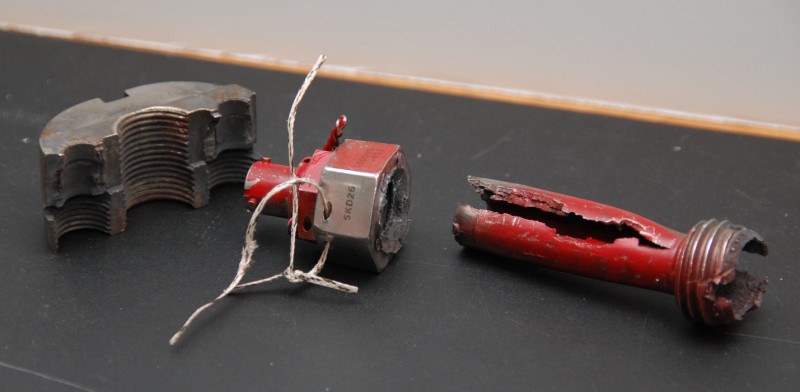
Pyrotechnic fasteners fall into two broad categories. Explosive bolts look much like regular bolts, and are machined out of the same materials you’d expect to find any bolt made of. The explosive charge is usually internal to the shank of the bolt with an initiating device of some sort in the head. To ensure clean, predictable separation, there’s a groove machined into the bolt to create a shear plane.
Frangible nuts are another type of pyrotechnic fastener. These tend to be used for larger load applications, like holding down rockets. Frangible nuts usually have two smaller threaded holes adjacent to the main fastener thread; pyrotechnic booster charges split the nut across the plane formed by the threaded holes to release the fastener cleanly.
“Eject! Eject! Eject!”
Holding back missiles is one thing, but where pyrotechnic fasteners save the most lives might be in the cockpits of fighter jets around the world. When things go wrong in a fighter, pilots need to get out in a hurry. Strapping into a fighter cockpit is literally sitting on top of a rocket and being surrounded by explosives. Most current seats are zero-zero designs — usable at zero airspeed and zero altitude — that propel the seat and pilot out of the aircraft on a small rocket high enough that the parachute can deploy before the pilot hits the surface. Dozens of explosive charges take care of ripping the aircraft canopy apart, deploying the chute, and cutting the seat free from the parachuting pilot, typically unconscious and a couple of inches shorter from spinal disc compression after his one second rocket ride.
There’s little doubt that airbags have saved countless lives since they’ve become standard equipment in cars and trucks. When you get into a modern vehicle, you are literally surrounded by airbags — steering wheel, dashboard, knee bolsters, side curtains, seatbelt bags, and even the rear seat passenger bags. And each one of these devices is a small bomb waiting to explode to save your life.
When we think of explosives we tend to think of substances that can undergo rapid oxidation with subsequent expansion of hot gasses. By this definition, airbag inflators aren’t really explosives, since they are powered by the rapid chemical decomposition of nitrogenous compounds, commonly sodium azide in the presence of potassium nitrate and silicon dioxide. But the difference is purely academic; anyone who has ever had an airbag deploy in front of them or watched any of the “hold my beer and watch this” airbag prank video compilations will attest to the explosive power held in that disc of chemicals.
When a collision is detected by sensors connected to the airbag control unit (ACU), current is applied to an electric match, similar to the engine igniters used in model rocketry, buried within the inflator module. The match reaches 300°C within a few milliseconds, causing the sodium azide to rapidly decompose into nitrogen gas and sodium. Subsequent reactions mop up the reactive byproducts to produce inert silicate glasses and add a little more nitrogen to the mix. The entire reaction is complete in about 40 milliseconds, and the airbags inflate fully within 80 milliseconds, only to deflate again almost instantly through vent holes in the back of the bag. By the time you perceive that you were in an accident, the bag hangs limply from the steering wheel and with any luck, you get to walk away from the accident.
Grid Down
We’ve covered a little about utility poles and all the fascinating bits of gear that hang off them. One of the pieces of safety gear that lives in the “supply space” at the top of the poles is the fuse cutout, or explosive disconnector. This too is a place where a small explosion can save lives — not only by protecting line workers but also by preventing a short circuit from causing a fire.
Cutouts are more than just fuses, though. Given the nature of the AC transmission and distribution grid, the lines that cutouts protect are at pretty high voltages of 11 kV or more. That much voltage means the potential for sustained arcing if contacts aren’t rapidly separated; the resulting plasma can do just as much if not more damage than the short circuit. So a small explosive cartridge is used to rapidly kick the fuse body of a cutout out of the frame and break the circuit as quickly as possible. Arc suppression features are also built into the cutout to interrupt the arc before it gets a chance to form.
[Big Clive] recently did a teardown of another piece of line safety gear, an 11 kV lightning arrestor with an explosive disconnector. With a Dremel tool and a good dose of liquid courage, he liberated a carbon slug from within the disconnector, which when heated by a line fault ignites a .22 caliber charge similar to those used with powder actuated fastener tools. The rapid expansion of gasses ruptures the cases of the disconnector and rapidly breaks the circuit.
Conclusion
We’ve covered a few of the many ways that the power of expanding gas can be used in life safety applications. There are other ways, too — snuffing out oil field fires comes to mind, as does controlled demolition of buildings. But the number of explosives protecting us from more common accidents is quite amazing, all the more so when you realize how well engineered they are. After all, these everyday bombs aren’t generally blowing up without good reason.
Phased array antenna systems are at the cusp of ubiquity. We now see Multiple-Input Multiple-Output (MIMO) antenna systems on WiFi routers. Soon phased array weather radar systems will help to predict the weather and keep air travel safe, and phased array base stations will be the backbone of 5G which is the next generation of wireless data communication. But what is a phased array antenna system? How do they work? With the help of 1024 LEDs we’ll show you.
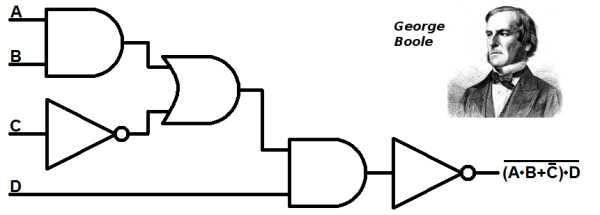
Logic gates are the bricks and mortar of digital electronics, implementing a logical operation on one or more binary inputs to produce a single output. These operations are what make all computations possible in every device you own, whether it is your cell phone, computer, gaming console etc. There are myriad ways of implementing logic gates; mechanically, electronically, virtually (think Minecraft), etc. Let’s take a look at what it takes to create some fun, out-of-the-ordinary gate implementations.