At a time when [Elon Musk], [President Obama], and Google are all touting self-driving cars to be the solution to human error behind the wheel, it’s more than a little bold to be arguing the opposite case in public, but the numbers just don’t add up. Self-driving cars are probably not as safe as a good sober driver yet, but there just isn’t the required amount of data available to say this with much confidence. However, one certainly cannot say that they’re demonstrably safer.
Last time, I talked about how my storage situation and my cheap nature led me to build an RC joystick controller with a cell phone app and an ESP8266. The key to making this easy was to use the GUI builder called Blynk to make a user interface for an Android or Apple phone. Blynk can communicate with the ESP8266 and makes the project relatively simple.
ESP8266 and Arduino IDE
The ESP8266 Blynk code is straightforward. You do need to set up the Arduino IDE to build for the ESP8266. That can vary by board, but here’s the instructions for the board I was using (from Adafruit; see below).
Depending on the type of ESP8266 device you are using, you may need a 3.3 V serial cable or some other means of getting the firmware into the device. For the Adafruit device I had, it has a 5 V-tolerant serial connection so a standard USB to serial dongle plugs right in. There’s also two switches on my device. To get into bootload mode, you have to push the one button down, hold it, and then press the reset button. Once you release the reset button you can release the other button. The red LED half-glows and the device is then waiting for a download. Continue reading “Blynk With Joy”→
“Chapter 5; Horowitz and Hill”. University students of all subjects will each have their standard texts of which everyone will own a copy. It will be so familiar to them as to be referred to by its author as a shorthand, and depending on the subject and the tome in question it will be either universally loathed or held onto and treasured as a lifetime work of reference.
For electronic engineers the work that most exemplifies this is [Paul Horowitz] and [Winfield Hill]’s The Art Of Electronics. It definitely falls into the latter category of course books, being both a mine of information and presented in an extremely accessible style. It’s now available in its third edition, but the copy in front of me is a first edition printed some time in the mid 1980s.
The Art of Electronics, on regulators.
Chapter 5 probably made most of an impression on the late-teenage me, because it explains voltage regulation and power supplies both linear and switching. Though there is nothing spectacularly challenging about a power supply from the perspective of experience, having them explained as a nineteen-year-old by a book that made sense because it told you all the stuff you needed to know rather than just what a school exam syllabus demanded you should know was a revelation.
On the first page of my Art of Electronics chapter 5, they dive straight in to the μA723 linear voltage regulator. This is pretty old; a design from the legendary [Bob Widlar], master of analogue integrated circuits, which first made it to market in 1967. [Horowitz] and [Hill] say “Although you might not choose it for a new design nowadays, it is worth looking at in some detail, since more recent regulators work on the same principles“. It was 13 years old when they wrote that sentence and now it is nearly 50 years old, yet judging by the fact that Texas Instruments still lists it as an active product without any of those ominous warnings about end-of-life it seems plenty of designers have not heeded those words.
So why is a 50-year-old regulator chip still an active product? There is a huge range of better regulators, probably cheaper and more efficient regulators that make its 14-pin DIP seem very dated indeed. The answer is that it’s an incredibly useful part because it does not present you with a regulator as such, instead it’s a kit of all the parts required to make a regulator of almost any description. Thus it is both an astonishingly versatile device for a designer and the ideal platform for anyone wanting to learn about or experiment with a regulator. Continue reading “Get To Know Voltage Regulators With A 723”→
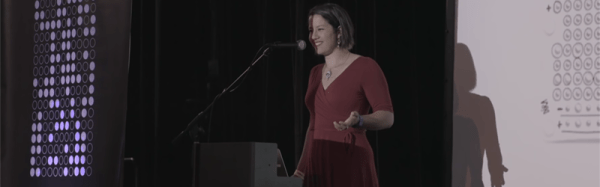
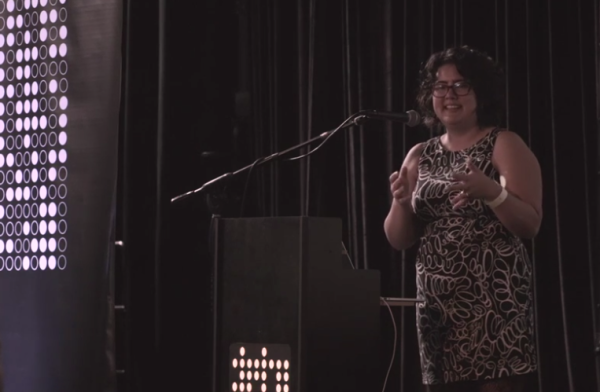
Ben Krasnow is one of those people no one has a bad opinion of. He’s part of the team at Verily (Google’s Life Science Alphabit), where he’s busy curing cancer. He co-founded Valve’s hardware division and his YouTube channel, Applied Science, is an exploration of building very high-tech tools very quickly and on a very low budget. Ben has built everything from an electron microscope to a liquid nitrogen generator to a robot that makes individual chocolate chip cookies with ingredients in different proportions. He’s curing cancer and finding the perfect chocolate chip cookie recipe.
The focus of Ben’s talk at this year’s Hackaday SuperConference is building low-cost scientific apparatus quickly. From Applied Science, Ben has cemented his position as a wizard who can find anything either on eBay or at a surplus store. The real trick, Ben tells us, is getting his boss and accounting to understand this rapid prototyping mindset.
The late 1950s and early 1960s were a tumultuous time in world history. The Cold War between the East and the West was in full-swing, driving the new fields of nuclear weapons and space exploration and giving the period its dual monikers of “Atomic Age” and “Space Age.”
Changes in these fields often went hand in glove, with developments in one requiring responses in the other. In 1958, the US conducted nuclear tests in the Pacific that effectively destroyed the ionosphere over the test site and shut down high-frequency communications to places like Hawaii and New Zealand. The strategic implications of this were clear, and the US began looking for ways for the military to reduce its reliance on HF communications and ionospheric skip by using space-based assets to communicate at much higher frequencies.
Regular Hackaday readers will be familiar with our convention of putting the name, nickname, or handle of a person in square brackets. We do this to avoid ambiguity as sometimes names and particularly nicknames can take unfamiliar forms that might be confused with other entities referred to in the text. So for example you might see them around [Bart Simpson], or [El Barto]. and occasionally within those brackets you’ll also see a capitalised string of letters and numbers after a name. For example the electronic music pioneer [Bob Moog, K2AMH], which most of you will recognise as an amateur radio callsign.
Every licenced radio amateur is issued one by their country’s radio authority as a unique identifier, think of it as similar to a car licence plate. From within the amateur radio bubble those letters and numbers can convey a significant amount of information about where in the world its user is located, when they received their licence, and even what type of licence they hold, but to outsiders they remain a mysterious and seemingly random string. We’ll now attempt to shed some light on that information, so you too can look at a callsign in a Hackaday piece or anywhere else and have some idea as to its meaning.
I believe higher quality learning happens from sharing failure than from sharing stories of success. If you have set your mind to living on contract, I present this cheat sheet of some of the most simple and effective ways to muck it all up that have surprisingly little or nothing to do with your technical skill, knowledge, or even deliverables.
The previous installment of Life on Contract discussed how one might find clients as an engineering contractor or consultant while also taking a bit of time to pull apart the idea of whether life on contract is appropriate as opposed to, for example, bootstrapping a business instead. Assuming you are set on working as a contractor, let’s talk about what happens after you have found a prospective client (or perhaps more likely: after they have found you.)
WARNING: this article features an utter lack of success tips and tricks. Partly because those can be found in any seminar or business self-help book, but mostly because I do not have a foolproof recipe for success, and cheat codes to unlock easy mode still elude me. But I have witnessed (or committed) and reflected on many excellent ways to fail at contracting; or at the very least succeed in not being invited back.
Just because I won’t be sharing success stories doesn’t mean success has no learning value. Got a success story, or a better way to fail? Tell us about it in the comments!