Trinket EDC Contest Drawing #3 Results

We’ve held our third drawing for the Trinket Everyday Carry Contest. Once again we’ve used a Pro Trinket to pick the random winner. This week’s winner is [Scissorfeind] with his project Stylin’ safety jacket

jacket3In true hack style, [Scissorfeind] went into this project with two goals: A jacket that will be visible at night, and keep him “looking f*cking sick”. The jacket itself is a faux leather affair from a thrift store. [Scissorfeind] added some studs for bling, and he’s working on adding a ton of electronics for light.

The Pro Trinket will be driving a series of LED matrices, which [Scissorfeind] is working on turning into POV displays. The matrices come from an LED clock which [Scissorfeind] saved from the landfill. In fact, most of the parts in the jacket are upcycled from e-waste. The jacket is just starting to come together. We can’t wait to see the final results!

buspirate2

We hope that [Scissorfeind] enjoys his Bus Pirate V3.6  from The Hackaday Store. The Bus Pirate was designed by former Hackaday writer [Ian Lesnet] as a Swiss Army knife of electronic communications. If you’re trying to connect to a circuit with  SPI, I²C, JTAG, or UART, the Bus Pirate has you covered. It can do plenty more though – from reading analog data to programming components. Check out [Brian Benchoff’s] full review on the Bus Pirate V3.6 product page!

trinket-prize-cordwoodIf the pseudo random number gods didn’t smile on you this week, don’t worry, there are still two more chances to win a random drawing! Our next drawing will be on 12/23/2014 at 9pm EST. The prize will once again be a Cordwood Puzzle! To be eligible you need to submit your project as an official entry and publish at least one project log during the week.

The main contest entry window closes on January 2, 2015 – but don’t wait for the last minute! Hit the contest page and build some awesome wearable or pocketable electronics!

Trinket EDC Contest Entry: Shame On You!

[BDM] is helping others keep WiFi safe with “Shame On You!“, his entry in Hackaday’s Trinket Everyday Carry Contest. We all have that family member, friend, or neighbor who just can’t seem to get their WiFi locked down. Shame On You will show them how easy it is to detect such a hotspot, which hopefully will motivate them to correct the issue. [BDM] was a bit worried when he learned that Adafriut already has an open WiFi detector as one of their Pro Trinket example projects. However, we think he has added more than enough features to make his project stand out.

shame2Shame On You is using a Pro Trinket running at 3.3 volts, along with an ESP8266 WiFi module. Power comes from a LiPo battery and is handled by an Adafruit LiPo backpack. Like several other EDC contest entries, Shame On You is using a cell phone shell as a case. The display is a 1.27″ color OLED with an SD card. A disc style vibrator motor will also help get the user’s attention.

[BDM] hasn’t made much progress this last week, as he’s been battling some Christmas light cutting bandits. Logging each week’s work doesn’t always have to be technical, sometimes life intervenes!

We’re heading into our third week here in the Trinket Everyday Carry Contest, but there is still plenty of time to enter! The main contest runs until January 2, but we’re having random drawings every week! Don’t forget to write a project log before the next drawing at 9pm EDT on Tuesday, December 16th. You and all of the other entrants have a chance to win a BusPirate 3.6 from The Hackaday Store!


We’re Hiring A Full-Time Hackaday Prize Mythical Creature

On occasion we advertise jobs for Hackaday but this time around is an exceptionally big deal. The Hackaday Prize was an amazing adventure this year, and we’re already hard at work on the plans for the 2015 Hackaday Prize. To realize our vision for the movement we need someone who will live and breathe THP. We need to find the Hackaday Prize Mythical Creature.

This person will hold in their mind all things Hackaday Prize. The HPMC will gallivant across the land (both digital and real) heralding the message of grass-roots, high-level hardware development. Obviously this involves recruiting highly skilled Hackers, Designers, and Engineers to compete for the prize. But the HPMC will also make sure that the amazing creations competing for the Prize get the widespread recognition they deserve.

There are a lot of nuts and bolts to the job. The HPMC will lead the planning of all live events. The many talents of the Hackaday and Supplyframe crews will be fully and efficiently tapped thanks to the legendary organizational and people skills wielded by the HPMC. Can you see why we’re calling this job candidate a Mythical Creature?

The point is, we are going to accomplish great things in 2015 and beyond. We need the perfect person to make sure it happens smoothly. Mythical Creatures, sharpen your CV’s and apply now.

EDC CONTEST ROUNDUP: Musician’s Assistant AND BitMasher!

We’re getting all sorts of entries in the Trinket Everyday Carry Contest! Today we’re featuring just a couple of the awesome entries dedicated to creating music!

ma[johnowhitaker] is hard at work on A Musician’s Assistant. [John] is creating a device that does anything a practicing musician might need on the go. The Musician’s Assistant will include a metronome, tap/temp counter, and tuner. He’s hoping to also give it the ability to play back arbitrary notes using the Pro Trinket’s on-board ATmega328. [John] is trying to do all this with just LEDs and buttons as a user interface, though he is willing to go to an LCD or OLED if he needs to.

masher[Michele Perla] is working on BitMasher, portable lo-fi music sequencer. The BitMasher will allow a musician on the go to create music anywhere. [Michele] began with a SID based sequencer in mind, but he’s currently trying to do it all on the Pro Trinket. He’s already got [Roman’s] BTc Sound Compression Algorithm working on an Arduino Leonardo. Lo-Fi for sure, but that’s what makes BitMasher fun! [Michele] envisions the song entry to be similar to that of the classic Roland TR-808.  The primary user interface will be an Adafruit Trellis 4×4 button+LED driver board.

Don’t forget that our second random drawing will be held on Tuesday, December 9th, at 9pm EST.  To be eligible you need to submit your project as an official entry and publish at least one project log during the week. This week’s prize is a Cordwood Puzzle from The Hackaday Store. Check out the contest page for the full details!

Announcing The Trinket Everyday Carry Contest

Now that we’ve recovered from our Munich party and the awarding of The Hackaday Prize, we’re ready to announce our latest contest. We’ve been having a lot of fun with our Trinket Pro boards, both the 10th anniversary edition and the new Hackaday.io branded models.  While we were soldering, compiling, and downloading, a contest idea took root. Trinket Pro really excels when used in small projects, the kind which would fit in a pocket. To that end we’re holding the Trinket Everyday Carry Contest, a showcase for small, pocketable projects which are useful everyday. ‘Useful everyday’ is a bit of a broad term, and we intended it that way. Tools are useful of course , but so are jewelry pieces. It’s all in the eye of the builder and users. We’re sure our readers will take this and run with it, as they have with our previous contests.

There are some great prizes in store for the entrants, including a brand new Rigol DS1054Z  oscilloscope! The top 50 entrants will get custom Trinket Everyday Carry Contest T-shirts. Check out the contest page for a full list. 

submit-project-to-trinket-edcWe know you all love to procrastinate with your entries, so we’re going to be offering a few perks to those who enter early and update often. Each week, we’ll throw all the entrants who have published at least one project log full of details into a drawing for a special prize from The Hackaday Store. To be considered you must officially submit your project which is accomplished through a drop-down list on the left side of your project page.

Remember, the contest isn’t just about winning a scope, a meter, or any of the other prizes. It’s about creating new Open Hardware designs that nearly anyone can build. So grab those soldering irons, load up those copies of the Arduino IDE, AVR-GCC, or WinAVR, and get hacking!

You can view the all of the contest entries in this list.

Direct Digital Synthesis (DDS)

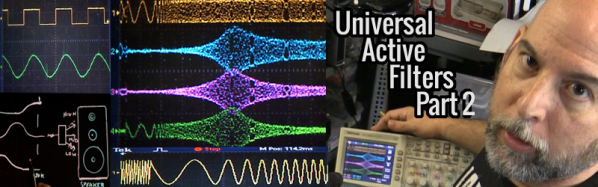
Direct Digital Synthesis (DDS) Explained By [Bil Herd]

One of the acronyms you may hear thrown around is DDS which stands for Direct Digital Synthesis. DDS can be as simple as taking a digital value — a collection of ones and zeroes — and processing it through a Digital to Analog Converter (DAC) circuit. For example, if the digital source is the output of a counter that counts up to a maximum value and resets then the output of the DAC would be a ramp (analog signal) that increases in voltage until it resets back to its starting voltage.

This concept can be very useful for creating signals for use in a project or as a poor-man’s version of a signal or function generator. With this in mind I set out here to demonstrate some basic waveforms using programmable logic for flexibility, and a small collection of resistors to act as a cheap DAC. In the end I will also demonstrate an off-the-shelf and inexpensive DDS chip that can be used with any of the popular micro-controller boards available that support SPI serial communication.

All of the topics covered in the video are also discussed further after the break.

Continue reading “Direct Digital Synthesis (DDS) Explained By [Bil Herd]”

We’re Hiring

The Hackaday crew has done some amazing things this year, and we’re finding ourselves a bit stretched. Want to lend a hand while making some extra dough to plow back into your projects? This is a work-from-home (or wherever you like) position that affords you the opportunity to guide what we cover on Hackaday.com. We hire writers for their judgement, which helps keep our subject matter fresh. But don’t worry, we do have a very active tips line from which many of our story leads come.

Contributors are hired as private contractors and paid for each post. You should have the technical expertise to understand the projects you write about, and a passion for the wide range of topics we feature. If you’re interested, please email our jobs line and include:

  • Details about your background (education, employment, etc.) that make you a valuable addition to the team
  • Links to your blog/project posts/etc. which have been published on the Internet
  • One example post written in the voice of Hackaday. Include a banner image, 150 words, the link to the project, and any in-links to related and relevant Hackaday features.

Words of encouragement

First off, we won’t be discussing compensation publicly. Want to know what we pay? Send in a successful application and we’ll talk about it.

Secondly, don’t pass up this opportunity. I watched one of these posts go by and waited another year before I saw the next one and applied. Now I’m running the place. Our team is made up of avid readers. If you’re passionate about the stuff you read here and you have a few hours each week to do some writing you need to apply now!

So what are you waiting for? Ladies and Gentlemen, start your applications!