There have been all kinds of wild ideas to get spacecraft into orbit. Everything from firing huge cannons to spinning craft at rapid speed has been posited, explored, or in some cases, even tested to some degree. And yet, good ol’ flaming rockets continue to dominate all, because they actually get the job done.
Rockets, fuel, and all their supporting infrastructure remain expensive, so the search for an alternative goes on. One daring idea involves using airships to loft payloads into orbit. What if you could simply float up into space?
As our climate changes, we fear that warmer temperatures and drier conditions could make life hard for us. In most locations, it’s a future concern that feels uncomfortably near, but for some locations, it’s already very real. Take the Sahara desert, for example, and the degraded landscapes to the south in the Sahel. These arid regions are so dry that they struggle to support life at all, and temperatures there are rising faster than almost anywhere else on the planet.
In the face of this escalating threat, one of the most visionary initiatives underway is the Great Green Wall of Africa. It’s a mega-sized project that aims to restore life to barren terrain.
When things started getting iffy over at Twitter, Mastodon rose as a popular alternative to the traditional microblogging platfrom. In contrast to the walled gardens of other social media channels, it uses an open protocol that runs on distributed servers that loosely join together, forming the “Fediverse”.
The beauty of the Fediverse isn’t just in its server structure, though. It’s also in the variety of clients available for accessing the network. Where Twitter is now super-strict about which apps can hook into the network, the Fediverse welcomes all comers to the platform! And although Mastodon is certainly the largest player, it’s absolutely not the only elephant in the room.
Today, we’ll look at a bunch of alternative clients for the platform, ranging from mobile apps to web clients. They offer unique features and interfaces that cater to different user preferences and needs. We’ll look at the most notable examples—each of which brings a different flavor to your Fediverse experience.
Selling your hardware hacks is a great way to multiply your project’s impact, get your creations into others’ hands, and contribute to your hacking-related budget while at it. If you’re good at it, your store begins to grow. From receiving a couple orders a year, to getting one almost every day – if you don’t optimize the process of mailing orders out, it might just start taking a toll on you.
That is not to say that you should worry – it’s merely a matter of optimization, and, now you have a veritable resource to refer to. At Supercon 2023, [MakeItHackin]/[Andrew] has graced us with his extensive experience scaling up your sales and making your shipping process as seamless as it could be. His experience is multifaceted, and he’s working with entire four platforms – Tindie, Lectronz, Etsy and Shopify, which makes his talk all that more valuable.
[MakeItHackin] tells us how he started out selling hardware, how his stores grew, and what pushed him to automate the shipping process to a formidable extent. Not just that – he’s developed a codebase for making the shipping experience as smooth as possible, and he’s sharing it all with us.
After more than four decades in space and having traveled a combined 44 billion kilometers, it’s no secret that the Voyager spacecraft are closing in on the end of their extended interstellar mission. Battered and worn, the twin spacecraft are speeding along through the void, far outside the Sun’s influence now, their radioactive fuel decaying, their signals becoming ever fainter as the time needed to cross the chasm of space gets longer by the day.
But still, they soldier on, humanity’s furthest-flung outposts and testaments to the power of good engineering. And no small measure of good luck, too, given the number of nearly mission-ending events which have accumulated in almost half a century of travel. The number of “glitches” and “anomalies” suffered by both Voyagers seems to be on the uptick, too, contributing to the sense that someday, soon perhaps, we’ll hear no more from them.
That day has thankfully not come yet, in no small part due to the computers that the Voyager spacecraft were, in a way, designed around. Voyager was to be a mission unlike any ever undertaken, a Grand Tour of the outer planets that offered a once-in-a-lifetime chance to push science far out into the solar system. Getting the computers right was absolutely essential to delivering on that promise, a task made all the more challenging by the conditions under which they’d be required to operate, the complexity of the spacecraft they’d be running, and the torrent of data streaming through them. Forty-six years later, it’s safe to say that the designers nailed it, and it’s worth taking a look at how they pulled it off.
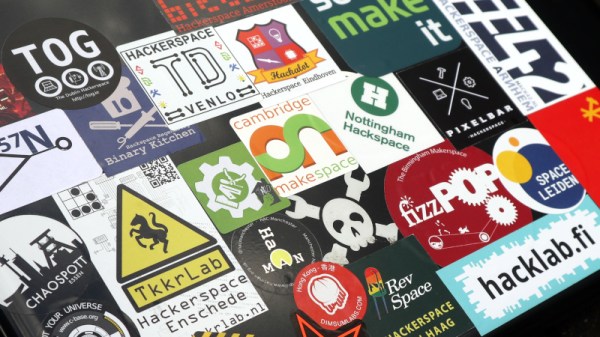
If I could name one thing which has been the most transformative for our community over the last couple of decades, it would have to be the proliferation of hackerspaces. Ostensibly a place which provides access to tools and machinery, these organisations have become so much more. They bring together like-minded people, and from such a meeting of minds have come a plethora of high quality projects, events, and other good things.
Just What Is A Hackerspace?
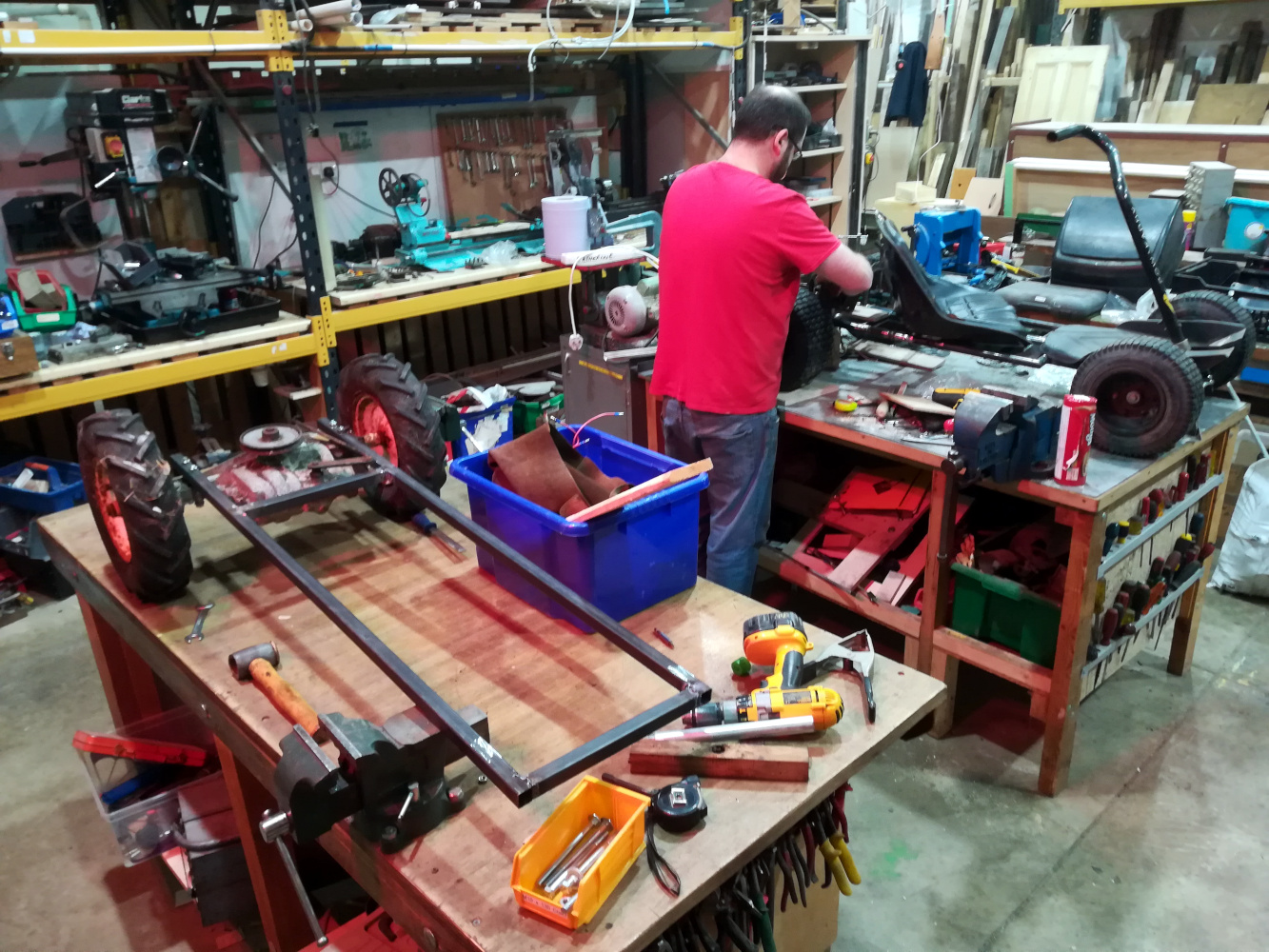
A Hacky Racer takes shape in the MK Makerspace workshop
Hackerspaces loosely come in many forms, from co-working spaces or libraries who have invested in a 3D printer and imagine themselves to be a hackerspace, through to anarchist collectives in abandoned warehouses who support their city’s alternative communities with technology. For me, hackerspaces must be community organisations rather than for-profit ones, so for the purposes of this article I’m not referring to closely-allied commercial spaces such as FabLabs.
So a good hackerspace for me is a group of tech enthusiasts who’ve come together, probably formed a non-profit association, and rented a dilapidated basement or industrial unit somewhere. The tools and machines inside aren’t shiny and new but they mostly work, and round that fridge stocked with Club-Mate you’ll find a community of friends, people who don’t think it’s odd to always want to know how things work. In a good hackerspace you’ll have found your place, and you can be much more than you would have been alone.
I visit plenty of hackerspaces across Europe as I wander the continent on an Interrail pass. I’m a member of three of them at the moment, though my main home in the UK is at Milton Keynes Makerspace. I’ve sat on recycled sofas drinking caffeinated beverages in more cities than I can count, and along the way I’ve seen close-up the many different ways a hackerspace can be run. I’ve seen spaces falling apart at the seams, I’ve seen ones a little too regimented for my taste, and others with too much of an emphasis on radical ideology, but mostly I’ve seen spaces that get it about right and I feel at home in. So perhaps it’s time to sit down and talk about what I think makes a good hackerspace. What is my space?
A little while ago, we talked about the concept of timezones and the Moon. It’s a complicated issue, because on Earth, time is all about the Sun and our local relationship with it. The Moon and the Sun have their own weird thing going on, so time there doesn’t really line up well with our terrestrial conception of it.
Nevertheless, as humanity gets serious about doing Moon things again, the issue needs to be solved. To that end, NASA has now officially been tasked with setting up Moon time – just a few short weeks after we last talked about it! (Does the President read Hackaday?) Only problem is, physics is going to make it a damn sight more complicated!