New Part Day: The ESP32 Has Been Released

A few years ago, a strange little chip showed up on Seeed Studio one day. It was the ESP8266, originally sold as a serial to WiFi adapter. Since then, the microcontroller in this wee WiFi module was discovered, and the ESP8266 has been the breakout module for hundreds of Internet of Thing modules, and other wireless baubles.

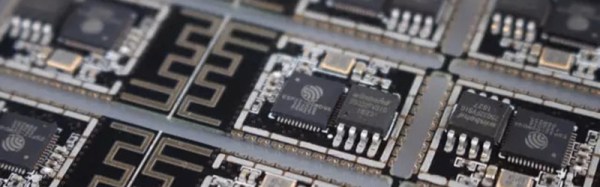
The company behind the ESP8266, Espressif, wasn’t sitting on their laurels for the last few years. They’ve been working on a followup to the ESP8266. It’s the ESP32, and it’s faster, has more peripherals, better WiFi, and Bluetooth LE. Since Christmas, we’ve been ogling this chip. Now, it’s finally out. You can buy an ESP32 right now. Consider the ESP32 released.

Almost exactly two years ago, the forerunner of the ESP32 was released, allowing anyone to blink a LED from the Internet for five dollars. There was a catch with the release of the ESP8266, and that was documentation. Documentation in English did not exist, and it took Espressif a while to realize the hit they had on their hands. Even now, with a proper English datasheet from Espressif, we don’t know if the ESP8266 has 5V tolerant pins. Documentation was an issue for the ESP8266, but it didn’t really matter because someone on the Internet figured it out.

History doesn’t repeat itself, but it is the franchise with the most reboots. There’s some documentation for the ESP32, but it’s far from complete. There’s a CAN bus peripheral in the ESP32, but no one knows what pins it’s attached to. There are some secrets hidden away, but no one is at liberty to discuss them. No one outside Espressif has any idea if the specs are real. This will, of course, change in the next month or so, but only due to the tireless work of electronics enthusiasts the world over.

Right now, there are several listings on the usual online outlets including Espressif’s Taobao shop and Seeed Studio offering either bare ESP32 chips or modules based on this WiFi Bluetooth wonder. These modules include the ESP-Wroom-32 (PDF) that is seemingly based on the ESP31 test modules released late last year and the ESP3212, a module based on the popular ESP8266-12. There are also bare chips floating about.

As far as any new information regarding the ESP32 is concerned, don’t expect much. It’s released, though, and in a month or so the work of documenting this supposed wonderchip will begin.

Although they’re not available to everyone quite yet, we have two ESP-32 modules in hand, and [Elliot] is currently slogging through installing the toolchain and getting everything working. Watch this space, because we’re going to have an Introduction to the ESP-32 post up shortly.

Retrotechtacular: Home Video Recording

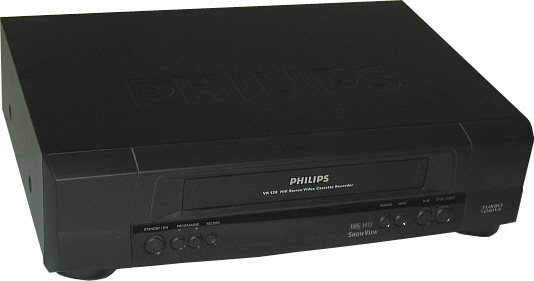
The news has been full of reports that the last company manufacturing consumer VCRs will cease making them this year. I think most of us are surprised that the event is only happening now. After all, these days, video recording is likely to be on a hard drive, a USB stick, or on a server somewhere. Even recording to DVDs seems a bit quaint these days.

VCR-03Back before there were web sites, people had to get information from magazines like Popular Electronics, Radio Electronics, and a few others. In the late 1960s and early 1970s, it was common to see these magazines predict that this would be the year of the home video recording system. For example, in 1971, [Lou Garner] wrote: “…they [Sony] hope will put home videotape playing in the same living room as conventional high-fidelity sound systems.” You should know that the video cassette he was talking about was 8 inches wide by 5 inches deep (a big larger than a VHS tape) and contained 3/4 inch magnetic tape (VHS used 1/2 inch tape). The 32-pound player had a retail price of about $350 (about $2,000 in today’s dollars; remember gas was $0.36 a gallon and eggs were $0.53 a dozen). It would be several years before VHS and Betamax would duke it out for home supremacy.

Continue reading “Retrotechtacular: Home Video Recording”

Software USB On The ESP8266

A while back, [cnlohr] needed a USB keyboard and mouse. His box ‘o junk didn’t hold this particular treasure, and instead of hopping on Amazon like a normal geek or venturing into the outside realm on a mid-level ‘store’ quest like a normal person, [cnlohr] decided to turn an ESP8266 into a USB keyboard and mouse. How hard could it be? The ESP doesn’t support USB, but bitbanging hasn’t stopped him before. The end result is a USB stack running on the ESP8266 WiFI module.

[cnlohr] has been working for about a month on this USB implementation for the ESP, beginning with a logic analyzer, Wireshark, Xtensa assembly, and a lot of iteration. The end result of this hardware hacking is a board based on the ESP8285 – an 8286 with integrated Flash – that fits snugly inside a USB socket.

This tiny board emulates low-speed USB (1.5 Mbps), and isn’t really fast enough for storage, serial, or any of the fancier things USB does, but it is good enough for a keyboard and mouse. Right now, [cnlohr]’s ESP USB device is hosting a webpage, and by loading this webpage on his phone, he has a virtual keyboard and mouse on a handheld touchscreen.

If you’re keeping track, [cnlohr] has now brought Ethernet and USB to a tiny microcontroller that can be bought for a few bucks through the usual online outlets. If you’d like to build your own ESP USB stick, all the files are over on the Gits.

Thanks [lageos] for the tip.

Continue reading “Software USB On The ESP8266”

Tour De Force Battery Hacking

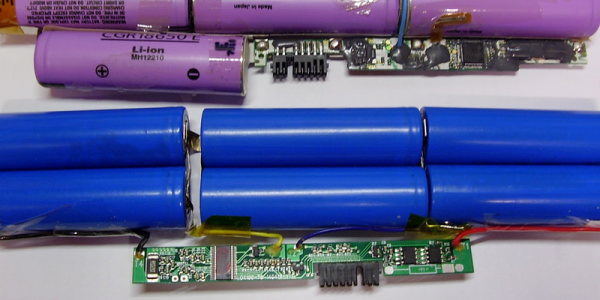
Lithium-Ion batteries are finicky little beasts. They can’t be overcharged, overdischarged, overheated, or even looked at funny without bursting into flames. Inside any laptop battery pack, a battery charge controller keeps watch over all the little cells, and prevents them from getting damaged.

Of course, any “smart” device will sometimes make the wrong choices, and then it’s up to us to dig inside its brains and fix it. When [Viktor] got a perfectly good battery pack with a controller that refused to charge the batteries, he started off on what would become an epic journey into battery controllers, and the result is not just a fixed battery, but a controller-reprogramming tool, software, and three reversed controller chips so far.

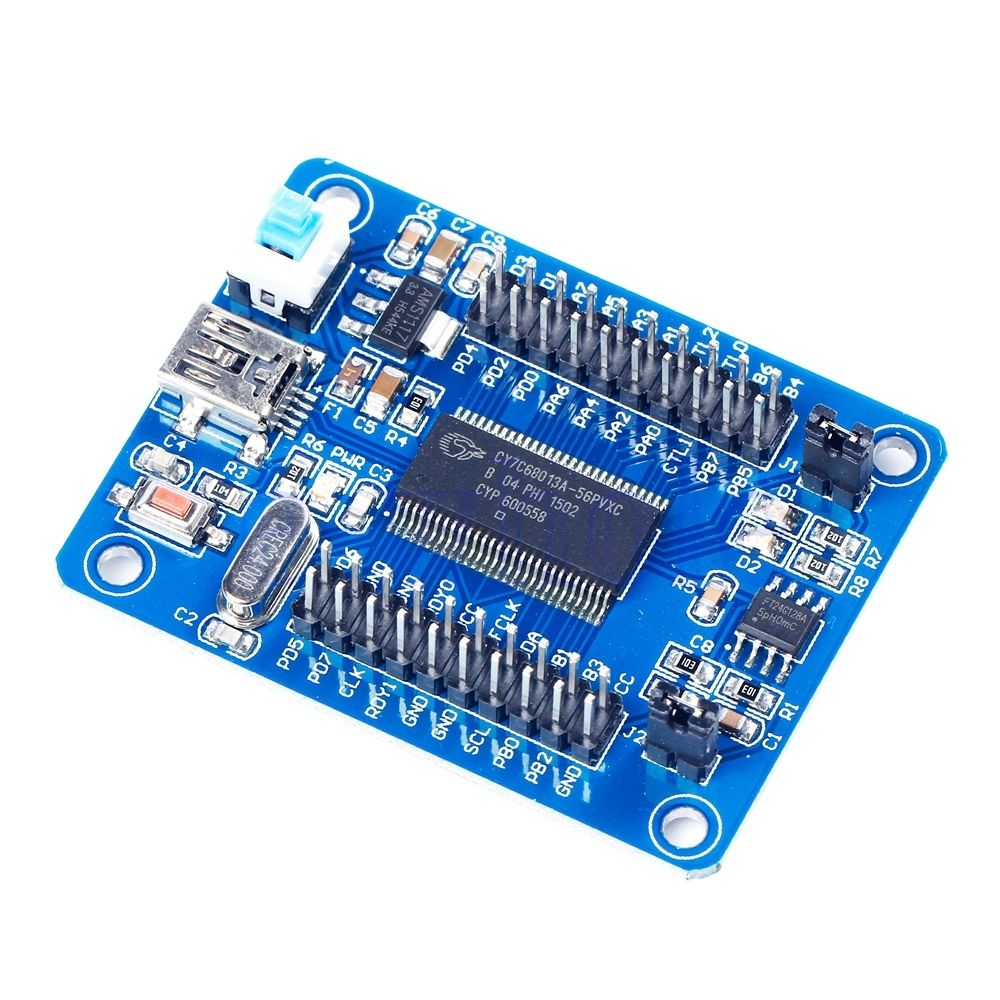
devbBattery controller chips speak SMBus, and [Viktor] started out by building a USB-SMBus tool. It’s a clever use of a cheap eBay development board for a Cypress CY7C68013A USB microcontroller. Flashed with [Viktor]’s firmware and running his software on the host computer, a SMBus scan is child’s play.

The rest of the story is good old-fashioned hacking: looking for datasheets, reading industry powerpoints, taking wild guesses, googling for passwords, and toggling the no-connect pins while booting the controllers up. We’re not going to argue with results: the bq8030, R2J240, and M37512 controllers have all given up their secrets, and tools to program them have been integrated into [Viktor]’s SMBusb tool.

In short, this is one of the nicest hard-core hacks we’ve seen in a while. Kudos [Viktor]! And thanks for the SMBus tool.

How To Use Docker To Cross Compile For Raspberry Pi (and More)

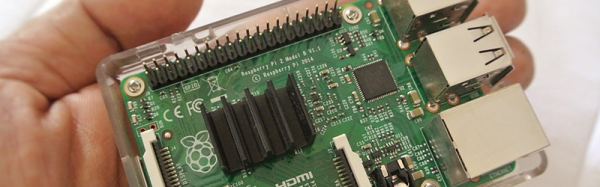
It used to be tedious to set up a cross compile environment. Sure you can compile on the Raspberry Pi itself, but sometimes you want to use your big computer — and you can use it when your Pi is not on hand like when on an airplane with a laptop. It can be tricky to set up a cross compiler for any build tools, but if you go through one simple step, it becomes super easy regardless of what your real computer looks like. That one step is to install Docker.

Docker is available for Linux, Windows, and Mac OS. It allows developers to build images that are essentially preconfigured Linux environments that run some service. Like a virtual machine, these images can run together without interfering with each other. Unlike a virtual machine, Docker containers (the running software) are lightweight because they share the same underlying kernel and hardware of the computer.

The reality is, setting up the Raspberry Pi build environment isn’t any easier. It is just that with Docker, someone else has already done the work for you and you can automatically grab their setup and keep it up to date. If you are already running Linux, your package manager probably makes the process pretty easy too (see [Rud Merriam’s] post on that process). However, the nice thing about the images is it is a complete isolated environment that can move from machine to machine and from platform to platform (the Windows and Mac platforms use a variety of techniques to run the Linux software, but it is done transparently).

Continue reading “How To Use Docker To Cross Compile For Raspberry Pi (and More)”

How The Human Brain Stores Data

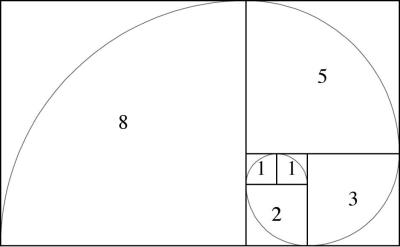
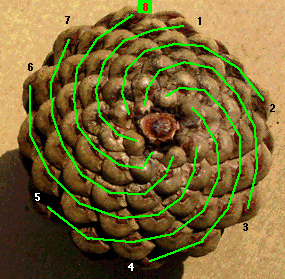
Evolution is one clever fellow. Next time you’re strolling about outdoors, pick up a pine cone and take a look at the layout of the bract scales. You’ll find an unmistakable geometric structure. In fact, this same structure can be seen in the petals of a rose, the seeds of a sunflower and even the cochlea bone in your inner ear. Look closely enough, and you’ll find this spiraling structure everywhere. It’s based on a series of integers called the Fibonacci sequence. Leonardo Bonacci discovered the sequence while trying to figure out how many rabbits he could make starting with just two. It’s quite simple — add the right most integer to the previous one to get the next one in the sequence. Starting from zero, this would give you 0-1-1-2-3-5-8-13-21 and so on. If one was to look at this sequence in the form of geometric shapes, they can create square tiles whose sides are the length of the value in the sequence. If you connect the diagonal corners of these tiles with an infinite curve, you end up with the spiral that you saw in the pine cone and other natural objects.

fib_01
Source via Geocaching

So how did mother nature discover this geometric structure? Surely it does not know math. How then can it come up with intricate and sophisticated structures? It turns out that this Fibonacci spiral is the most efficient way of squeezing the most amount of stuff in the least amount of space. And if one takes natural selection seriously, this makes perfect sense. Eons of trial and error to make the most copies of itself has stumbled upon a mathematical principle that permeates life on earth.

fb_02
Source via John Simmons

The homo sapiens brain is the product of this same evolutionary process, and has been evolving for an estimated 7 million years. It would be foolish to think that this same type of efficiency natural selection has stumbled across would not be present in the current homo sapiens brain. I want to impress upon you this idea of efficiency. Natural selection discovered the Fibonacci sequence solely because it is the most efficient way to do a particular task. If the brain has a task of storing information, it is perfectly reasonable that millions of years of evolution has honed it so that it does this in the most efficient way possible as well. In this article, we shall explore this idea of efficiency in data storage, and leave you to ponder its applications in the computer sciences.

Continue reading “How The Human Brain Stores Data”

NES Light Gun Fires Awesome Laser Effect

[Seb Lee-Delisle]’s NES lightgun gave us pause as the effect is so cool we couldn’t quite figure out how he was doing it at first. When he pulls the trigger there erupts the beam of light Sci Fi has trained us to expect, then it explodes in a precision sunburst of laserlight at the other end as smoke gently trails from the end of the barrel. This is a masterpiece of hardware and trickery.

seb-lee-delisle-nes-zapper-trick-thumb
Demo video posted by @seb_ly

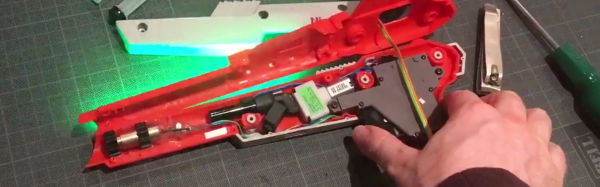
The gun itself is a gutted Nintendo accessory. It looks like gun’s added bits consist of two LED strips, a laser module (cleverly centered with two round heatsinks), a vape module from an e-cigarette, a tiny blower, and a Teensy.  When he pulls the trigger a cascade happens: green light runs down the side using the LEDs and the vape module forms a cloud of smoke in a burst pushed by the motor. Finally the laser fires as the LEDs finish their travel, creating the illusion.

More impressively, a camera, computer, and 4W Laser are waiting and watching. When they see the gun fire they estimate its position and angle. Then they draw a laser sunburst on the wall where the laser hits. Very cool! [Seb] is well known for doing incredible things with high-powered lasers. He gave a fantastic talk on his work during the Hackaday Belgrade conference in April. Check that out after the break.

So what does he have planned for this laser zapper? Laser Duck Hunt anyone? He has a show in a month called Hacked On Classics where this build will be featured as part of the Brighton Digital Festival.

Continue reading “NES Light Gun Fires Awesome Laser Effect”