Sad news in the tech world this week as Intel co-founder Gordon Moore passed away in Hawaii at the age of 94. Along with Robert Noyce in 1968, Moore founded NM Electronics, the company that would later go on to become Intel Corporation and give the world the first commercially available microprocessor, the 4004, in 1971. The four-bit microprocessor would be joined a few years later by the 8008 and 8080, chips that paved the way for the PC revolution to come. Surprisingly, Moore was not an electrical engineer but a chemist, earning his Ph.D. from the California Institute of Technology in 1954 before his postdoctoral research at the prestigious Applied Physics Lab at Johns Hopkins. He briefly worked alongside Nobel laureate and transistor co-inventor William Shockley before jumping ship with Noyce and others to found Fairchild Semiconductor, which is where he made the observation that integrated circuit component density doubled roughly every two years. This calculation would go on to be known as “Moore’s Law.”
Hackaday Columns4720 Articles
This excellent content from the Hackaday writing crew highlights recurring topics and popular series like Linux-Fu, 3D-Printering, Hackaday Links, This Week in Security, Inputs of Interest, Profiles in Science, Retrotechtacular, Ask Hackaday, Teardowns, Reviews, and many more.
Hackaday Podcast 211: Pocket Sundial, Origami Llama, PCB Spacemouse
This week, Editor-in-Chief Elliot Williams and Contributor Emeritus Kristina Panos chewed the fat about the coolest hacks of the previous week. But first, a bit of news — our Low Power Challenge fizzled out this week, and boy did we have a lot of entries at the last minute. We love to see it though, and we’re going to get judging ASAP.
Don’t forget, this weekend is Hackaday Berlin! Livestreaming for this one may be iffy, but we’ll have the talks up for you eventually, so don’t fret too much if you can’t make it in the flesh this time.
Kristina definitely got What’s That Sound this week, but her answer will of course be bleeped out. Then it’s on to the hacks, beginning with a 6-DoF controller that does everything in interesting ways and a printed shredder that eats like a goat. From there we cover bolt dispensers, coffee grinders with Bluetooth weighing, camera calibration, and a $50 pen plotter that’s definitely a hack. Finally, we discuss the virtues of physicality when it comes to SIM cards and recorded music.
Check out the links below if you want to follow along, and as always, tell us what you think about this episode in the comments!
And/or download it and listen offline.
Continue reading “Hackaday Podcast 211: Pocket Sundial, Origami Llama, PCB Spacemouse”
This Week In Security: USB Boom! Acropalypse, And A Bitcoin Heist
We’ve covered a lot of sketchy USB devices over the years. And surely you know by now, if you find a USB drive, don’t plug it in to your computer. There’s more that could go wrong than just a malicious executable. We’ve covered creative and destructive ideas here on Hackaday, from creative firmware to capacitors that fry a machine when plugged in. But what happened to a handful of Ecuadorian journalists was quite the surprise. These drives went out with a bang.
That is, they literally exploded. The drives each reportedly contained a pellet of RDX, a popular explosive in use by militaries since the second World War. There have been five of these hyperactive USB devices located so far, and only one actually detonated. It seems that one only managed to trigger half of its RDX payload. Because of this, and the small overall size of a USB drive, the explosion was more comparable to a firecracker than a bomb. Continue reading “This Week In Security: USB Boom! Acropalypse, And A Bitcoin Heist”
PCIe For Hackers: Link Anatomy
Last time, we looked over diffpairs, their basics, routing rules and the notorious tolerances of PCIe when it comes to diffpairs. Now, let’s take a look at the exact signals that make PCIe tick, as well as give you an overview of which sockets you can get PCIe on.
I separate PCIe sockets into two categories – desktop sockets, which are the usual 1x, 16x, or perhaps x4 PCIe sockets we see on desktop motherboards — and mobile sockets: mPCIe and M.2. There are also sockets like ExpressCard that are still found on some older laptops, but they have definitely fallen out of relevance. On mobile, M.2 is the way forward when it comes to PCIe – if you’re interested, I’ve written a short series talking about everything M.2 before.
On these sockets, most signals will be optional and some signals will be socket-specific, but there are some signals required in any PCIe device. Of course, the first group of required signals is the PCIe diffpairs themselves.
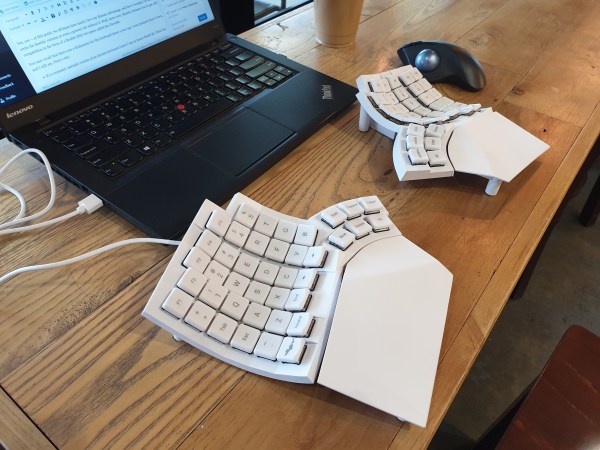
Glove80 Keyboard Sure Fits Like One
If you’re what one might call unlucky, there comes a point in your life when you need to switch to a keyboard that’s more ergonomic than your average rectangle. A little prevention goes a long way, though, and there’s no time like the present to go ergo. Why not? You have everything to gain, from long-lasting comfort to satisfying key presses.
The only problem is that most severely ergonomic keyboards just aren’t portable. At this point, we all know how much I love my Kinesis Advantage, and how I wouldn’t be able to write the Keebin’ column or even a grocery list without it. I have two now, and I take the ugly, yellowed, sticker-bombed one with me out into the world. But as much as I love it, I would really dig a a slimmed-down version that’s just as comfortable, perhaps more so. Well, move over, Kinesis, because you’ve got stiff competition in the form of a flexible little two-piece called the Glove80.
You may recall that there was a Kickstarter for this keyboard about a year ago. I was pumped about it then, and I still am. Here’s why:
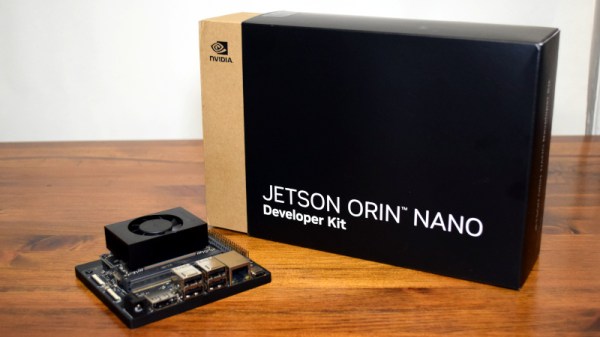
Hands-On: NVIDIA Jetson Orin Nano Developer Kit
NVIDIA’s Jetson line of single-board computers are doing something different in a vast sea of relatively similar Linux SBCs. Designed for edge computing applications, such as a robot that needs to perform high-speed computer vision while out in the field, they provide exceptional performance in a board that’s of comparable size and weight to other SBCs on the market. The only difference, as you might expect, is that they tend to cost a lot more: the current top of the line Jetson AGX Orin Developer Kit is $1999 USD

Luckily for hackers and makers like us, NVIDIA realized they needed an affordable gateway into their ecosystem, so they introduced the $99 Jetson Nano in 2019. The product proved so popular that just a year later the company refreshed it with a streamlined carrier board that dropped the cost of the kit down to an incredible $59. Looking to expand on that success even further, today NVIDIA announced a new upmarket entry into the Nano family that lies somewhere in the middle.
While the $499 price tag of the Jetson Orin Nano Developer Kit may be a bit steep for hobbyists, there’s no question that you get a lot for your money. Capable of performing 40 trillion operations per second (TOPS), NVIDIA estimates the Orin Nano is a staggering 80X as powerful as the previous Nano. It’s a level of performance that, admittedly, not every Hackaday reader needs on their workbench. But the allure of a palm-sized supercomputer is very real, and anyone with an interest in experimenting with machine learning would do well to weigh (literally, and figuratively) the Orin Nano against a desktop computer with a comparable NVIDIA graphics card.
We were provided with one of the very first Jetson Orin Nano Developer Kits before their official unveiling during NVIDIA GTC (GPU Technology Conference), and I’ve spent the last few days getting up close and personal with the hardware and software. After coming to terms with the fact that this tiny board is considerably more powerful than the computer I’m currently writing this on, I’m left excited to see what the community can accomplish with the incredible performance offered by this pint-sized system.
Continue reading “Hands-On: NVIDIA Jetson Orin Nano Developer Kit”
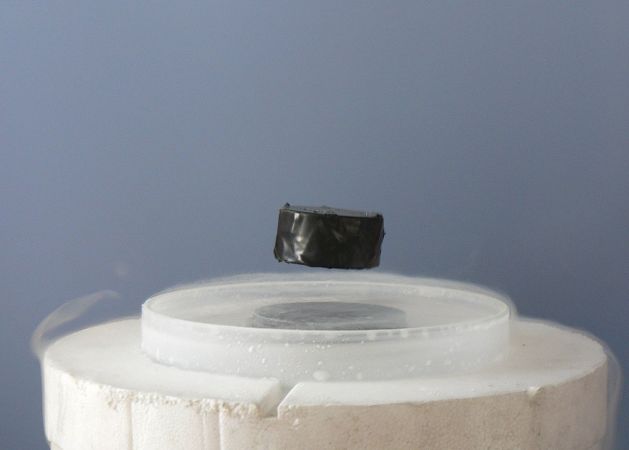
Another Room-Temperature Superconductivity Claim And Questions Of Scientific Integrity
In early March of 2023, a paper was published in Nature, with the researchers claiming that they had observed superconductivity at room temperature in a conductive alloy, at near-ambient pressure. While normally this would be cause for excitement, what mars this occasion is that this is not the first time that such claims have been made by these same researchers. Last year their previous paper in Nature on the topic was retracted after numerous issues were raised by other researchers regarding their data and the interpretation of this that led them to conclude that they had observed superconductivity.
According to an interview with one of the lead authors at the University of Rochester – Ranga Dias – the retracted paper has since been revised to incorporate the received feedback, with the research team purportedly having invited colleagues to vet their data and experimental setup. Of note, the newly released paper reports improvements over the previous results by requiring even lower pressures.
Depending on one’s perspective, this may either seem incredibly suspicious, or merely a sign that the scientific peer review system is working as it should. For the lay person this does however make it rather hard to answer the simple question of whether room-temperature superconductors are right around the corner. What does this effectively mean?