Retrotechtacular: How Not To Design With Transistors

Consider the plight of a mid-career or even freshly minted electrical engineer in 1960. He or she was perched precariously between two worlds – the proven, practical, and well-supported world of vacuum tube electronics, and the exciting, new but as yet unproven world of the transistor. The solid-state devices had only started making inroads into electronic products relatively recently, and mass production techniques were starting to drive the cost per unit down enough to start including them in your designs. But, your company has a long history with hot glass and no experience with flecks of silicon. What to do?

To answer that question, you might have turned to this helpful guide, “Tubes and Transistors: A Comparative Guide” (PDF link). The fancy booklet, with a great graphic design that our own [Joe Kim] would absolutely love, was the product of the Electron Tube Information Council, an apparently defunct group representing the interests of the vacuum tube manufacturers. Just reading the introduction of this propaganda piece reveals just how worried companies like RCA, General Electric, and Westinghouse must have been as the 1950s turned into the 1960s. The booklet was clearly aimed directly at engineers and sought to persuade them of the vacuum tube’s continued relevance and long-term viability. They helpfully explain that tubes are a reliable, proven technology that had powered decades of designs, and that innovations such as heaterless cathodes and miniaturization were just around the corner. Transistors, we’re told, suffer from “spread of characteristics” that correctly describes the state of materials engineering of silicon and germanium at the time, a thornier problem than dealing with glass and wires but that they had to know would be solved within a few years.

With cherry-picked facts and figures, the booklet makes what was probably in 1960 a persuasive case for sticking with tubes. But the Electron Tube Information Council was fighting a losing battle, and within a decade of swamping engineers with this book, the industry had largely shifted to the transistor. Careers were disrupted, jobs disappeared, and fortunes were lost, but the industry pressed forward as it always does. Still, it’s understandable why they tried so hard to stem the tide with a book like this. The whole PDF is worth a look, and we’d love to have a hard copy just for nostalgia’s sake.

Thanks to [David Gustafik] for the tip.

Badge.Team: Badges Get A Platform

Electronic conference badges are now an accepted part of the lifeblood of our community, with even the simplest of events now sporting a fully functional computer as an eye-catching PCB on a lanyard. Event schedules and applications are shipped on them, and the more sophisticated ones have app libraries and support development communities of their own.

The trouble is that so often those badges fail to live up to their promise, and one reason behind that stems from the enormity of the task facing a badge team when it comes to firmware for a modern badge. There is some fascinating news from the Netherlands  that might reduce some of those firmware woes though, badge.team is a freshly-launched project that provides a ready-made badge firmware with the promise of both stability and long-term support. If you’re making a badge, or even a one-off device using the ESP32, this is a project worth checking out.

Continue reading “Badge.Team: Badges Get A Platform”

Ask Hackaday: Is There A Legit Use For Operator Precedence?

Computing is really all about order. If you can take data, apply an operation to it, and get the same result every single time, then you have a stable and reliable computing system.

So it makes total sense that there is Operator Precedence. This is also called Order of Operations, and it dictates which computations will be performed first, and which will be performed last. To get the same results every time, you must perform addition, multiplication, power functions, bitwise math, and all other calculations in a codified order.

The question I’ve had on my mind lately is, does this matter to us or just the compiler?

Continue reading “Ask Hackaday: Is There A Legit Use For Operator Precedence?”

Electron Microscopes Are Awesome: Everything You Didn’t Know You Wanted To Know

Electron microscopes were once the turf of research laboratories that could foot the hefty bill of procuring and maintaining such equipment. But old models have been finding their way into the hands of eager individuals who are giving us an inside look at the rare equipment. Before you start scouring Craigslist, go on a crash course of what you need to know with Adam McComb’s Hacker’s Guide to Electron Microscopy. He presented the talk at the 2018 Hackaday Superconference and the recording was just published, you’ll find it below.

Continue reading “Electron Microscopes Are Awesome: Everything You Didn’t Know You Wanted To Know”

X-Rays And High Voltage Hack Chat

Join us on Wednesday at noon Pacific time for the X-rays and high-voltage Hack Chat!

Fran Piernas likes to push the envelope a bit with projects that others might shy away from. A quick glance at his Hackaday.io profile reveals a few of the exciting projects he’s been working on recently, including a DIY X-ray machine and the high-voltage driver needed to run it. Not only that, he’s recently taken his home-brew X-ray rig to the next level – a computed tomography (CT) scanner. His YouTube channel also has some exciting stuff using potentially lethal voltages and ionizing radiation.

Please join us for this Hack Chat, in which we’ll cover:

  • How one safely works with high voltage and ionizing radiation;
  • Sourcing uncommon components like X-ray tubes;
  • How Fran decided to start playing at the edge of the danger zone; and
  • What sort of experiments he has in mind for the future.

You are, of course, encouraged to add your own questions to the discussion. You can do that by leaving a comment on the X-rays and high-voltage Hack Chat and we’ll put that in the queue for the Hack Chat discussion.

join-hack-chatOur Hack Chats are live community events on the Hackaday.io Hack Chat group messaging. This week we’ll be sitting down on Wednesday, February 20, at noon, Pacific time. If time zones have got you down, we have a handy time zone converter.

Click that speech bubble to the right, and you’ll be taken directly to the Hack Chat group on Hackaday.io. You don’t have to wait until Wednesday; join whenever you want and you can see what the community is talking about.


Hackaday Links Column Banner

Hackaday Links: February 17, 2019

There is a population of retrocomputing enthusiasts out there, whose basements, garages, and attics have been taken over by machines of years past. Most of the time, these people concentrate on one make; you’re an Apple guy, or you’re a Commodore guy, or you’re a Ford guy, or you’re a Chevy guy. The weirdos drive around with an MSX in the trunk of an RX7. This is the auction for nobody. NASA’s JPL Lab is getting rid of several tons of computer equipment, all from various manufacturers, and not very ‘vintage’ at all. Check out the list. There are CRT monitors from 2003, which means they’re great monitors that weigh as much as a person. There’s a lot of Sun equipment. If you’ve ever felt like cleaning up a whole bunch of trash for JPL, this is your chance. Grab me one of those sweet CRTs, though.

Last week, we published something on the ‘impossible’ tech behind SpaceX’s new engine. It was reasonably popular — actually significantly popular — and got picked up on Hacker News and one of the Elon-worshiping subreddits. Open that link in one tab. Now, open this link in another. Read along as a computer voice reads Hackaday words, all while soaking up YouTube ad revenue. What is our recourse? Does this constitute copyright infringement? I dunno; we don’t monetize videos on YouTube. Thanks to [MSeifert] for finding this.

Wanna see something funny? Check out the people in the comments below who are angry at a random YouTuber stealing Hackaday content, while they have an ad blocker on.

Teenage Engineering’s OP-1 is back in production. What is it and why does it matter? The OP-1 is a new class of synthesizer and sampler that kinda, sorta looks like an 80s Casio keyboard, but packed to the gills with audio capability. At one point, you could pick one of these up for $800. Now, prices are at about $1300, simply because production stopped for a while (for retooling, we’re guessing) and the rumor mill started spinning. The OP-1 is now back in production with a price tag of $1300. Wait. What? Yes, it’s another case study in marketing: the best way to find where the supply and demand curves cross is to stop production for a while, wait for the used resellers to do their thing, and then start production again with a new price tag that people are willing to pay. This is Galaxy Brain-level business management, people.

What made nerds angry this week? Before we get to that, we’re gonna have to back track a bit. In 2016, Motherboard published a piece that said PC Gaming Is Still Way Too Hard, because you have to build a PC. Those of us in the know realize that building a PC is as simple as buying parts and snapping them together like an expensive Lego set. It’s no big deal. A tech blog, named Motherboard, said building a PC was too hard. It isn’t even a crack at the author of the piece at this point: this is editorial decay.

And here we are today. This week, the Internet reacted to a video from The Verge on how to build a PC. The original video has been taken down, but the reaction videos are still up: here’s a good one, and here’s another. Now, there’s a lot wrong with the Verge video. They suggest using a Swiss army knife for the assembly, hopefully one with a Philips head screwdriver. Philips head screwdrivers still exist, by the way. Dual channel RAM was completely ignored, and way too much thermal compound was applied to the CPU. The cable management was a complete joke. Basically, a dozen people at The Verge don’t know how to build a PC. Are the criticisms of incompetence fair? Is this like saying [Doug DeMuro]’s car reviews are invalid because he can’t build a transmission or engine, from scratch, starting from a block of steel? Ehhh… we’re pretty sure [Doug] can change his own oil, at least. And he knows to use a screwdriver, instead of a Swiss army knife with a Philips head. In any event, here’s how you build a PC.

Hackaday writers to be replaced with AI. Thank you [Tegwyn] for the headline. OpenAI, a Musk and Theil-backed startup, is pitching a machine learning application that is aimed at replacing journalists. There’s a lot to unpack here, but first off: this already exists. There are companies that sell articles to outlets, and these articles are produced by ‘AI’. These articles are mostly in the sports pages. Sports recaps are a great application for ML and natural language processing; the raw data (the sports scores) are already classified, and you’re not looking for Pulitzer material in the sports pages anyway. China has AI news anchors, but Japan has Miku and artificial pop stars. Is this the beginning of the end of journalism as a profession, with all the work being taken over by machine learning algorithms? By vocation, I’m obligated to say no, but I have a different take on it. Humans can write better than AI, and the good ones are nearly as fast. Whether or not the readers care if a story is accurate or well-written is another story entirely. It will be market forces that determine if AI journalists take over, and if you haven’t been paying attention, no one cares if a news story is accurate or well written, only if it caters to their preexisting biases and tickles their confirmation bias.

Of course, you, dear reader, are too smart to be duped by such a simplistic view of media engagement. You’re better than that. You’re better than most people, in fact. You’re smart enough to see that most media is just placating your own ego and capitalizing on confirmation bias. That’s why you, dear reader, are the best audience. Please like, share, and subscribe for more of the best journalism on the planet.


Understanding Math Rather Than Merely Learning It

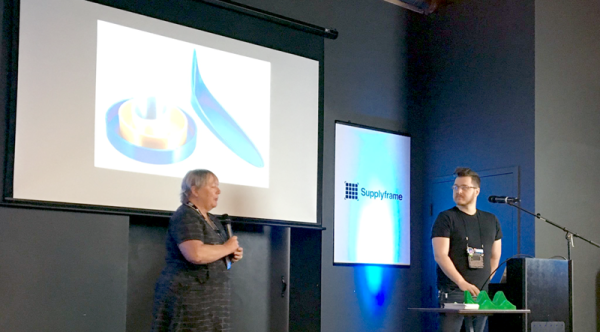
There’s a line from the original Star Trek where Khan says, “Improve a mechanical device and you may double productivity, but improve man and you gain a thousandfold.” Joan Horvath and Rich Cameron have the same idea about improving education, particularly autodidacticism or self-learning. They share what they’ve learned about acquiring an intuitive understanding of difficult math at the Hackaday Superconference and you can watch the newly published video below.

The start of this was the pair’s collaboration on a book about 3D printing science projects. Joan has a traditional education from MIT and Rich is a self-taught guy. This gave them a unique perspective from both sides of the street. They started looking at calculus — a subject that scares a lot of people but is really integral (no pun intended) to a lot of serious science and engineering.

You probably know that Newton and Leibniz struck on the fundamentals of calculus about the same time. The original papers, however, were decidedly different. Newton’s approach was more physical and less mathematical. Leibniz used formal logic and algebra. Although both share credit, the Leibniz notation won out and is what we use today.

Continue reading “Understanding Math Rather Than Merely Learning It”