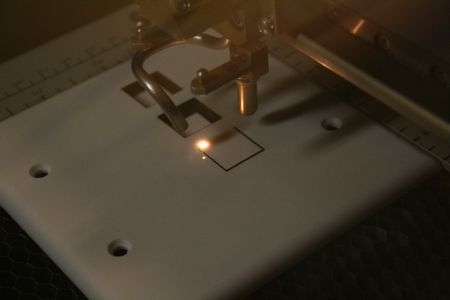
How-To: Etch A Single Sided PCB

Making a PCB is very simple; it does not consume a lot of time and the results look professional. After reading this How-To and watching the step by step video, you will be able to make your own PCB in your workshop using just a few inexpensive materials.

Many people use protoboard and point-to-point wire everything, but needing multiple copies of the same circuit is the reason that forces many away from using protoboard. After making your first circuit board, you might not point-to-point wire anything again!

Continue reading “How-To: Etch A Single Sided PCB”

How-To: Make An RGB Combination Door Lock (Part 2)


In part 1 we showed you how to build your own prototype RGB keypad. Today we’ll show off some new ideas we worked on to create the project and turn it from prototype to fully functional battle station er door lock.

Continue reading “How-To: Make An RGB Combination Door Lock (Part 2)”

How-To: Make An RGB Combination Door Lock (Part 1)


Part 2 can be found here

Putting a custom designed electronic lock on your space seems like a geek right of passage. For our latest workspace, we decided to skip the boring numbered keypad and build a custom RGB backlit keypad powered by an Arduino. Instead of typing in numbers, your password is a unique set of colors. In today’s How-To, we’ll show you how to build your own and give you the code to make it all work.

Continue reading “How-To: Make An RGB Combination Door Lock (Part 1)”

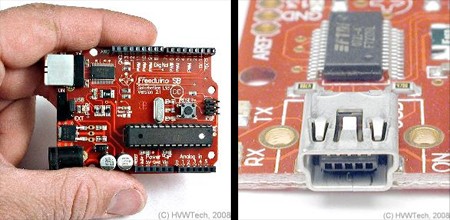
How-To: Binary Clock Using A Freeduino SB 2.1


Solarbotics recently released its own version of the Arduino microcontroller development board. They based their board on the Freeduino design. We thought this would be a good opportunity to review the new board as well as present a How-To about building a simple binary clock. Along the way we’ll cover some basics on attaching LEDs and switches to a microcontroller.

Continue reading “How-To: Binary Clock Using A Freeduino SB 2.1”

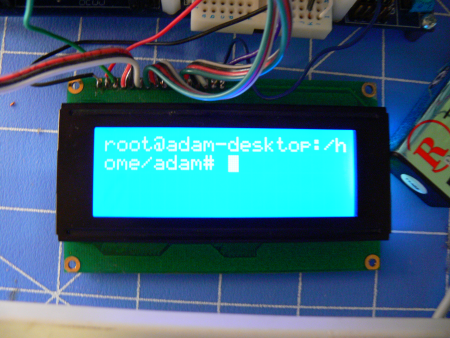
How-To: Super Simple Serial Terminal

This hack shows how to make a dumb terminal out of a keyboard, LCD screen, and an 8-bit microcontroller. From time to time, a portable dumb terminal can be handy for when you have to rescue a headless server that’s acting up or if you are building a minicomputer out of a WRT, or if you just want to learn how to run a keyboard and LCD screen with a microcontroller. This super simple serial terminal will use RS-232 to control a headless linux system. Additionally, you might want to check into some of the command line interface programs that allow web browsing, AIM and IRC chatting and more directly from the terminal, but nothing beats being able to track your pizzas with this device.

The Linux system in question here will be Linux Mint. It’s a young distro based on Ubuntu that’s gaining a lot of attention lately, though the principles can be used for other Linux distros.

Continue reading “How-To: Super Simple Serial Terminal”

How-To: Expand Your Camera With CHDK

As anyone who has lusted over the technical specifications for Canon’s new Digital Rebel XSi knows, the capabilities of the average point and shoot camera are severely limited. Using the CHDK firmware hack, the features of Canon point and shoot cameras can be significantly expanded, allowing for ultra-high speed photography, very long exposures, time lapse photography, and RAW capture. This How-To provides a guide to our experiences using the CHDK firmware, and shows just how easy it is to get more out of a point and shoot than ever thought possible.

Continue reading “How-To: Expand Your Camera With CHDK”

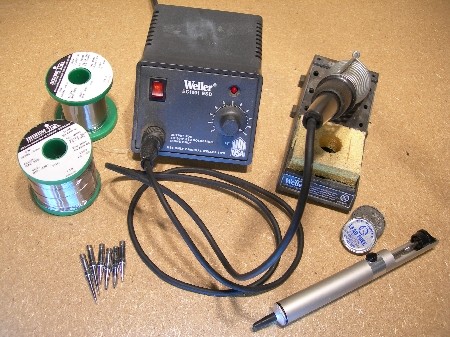
How-To: Go Green With Lead Free Solder

We covered many of [Jason Rollette]’s personal projects in the past and are happy to welcome him as our newest Hack-A-Day contributor.

The electronics industry has shifted to lead free compliance, but most hobbyists haven’t even considered the personal impact of using lead. Today’s How-To will cover what it takes to switch from tin/lead solder to completely lead free. Our previous posts Introduction to soldering and the follow-up still apply to lead free. You may have never considered switching to lead free before, but we hope to help you make an informed decision.

Continue reading “How-To: Go Green With Lead Free Solder”