
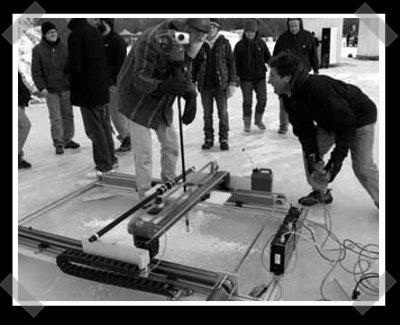
[Bruce] and [Jesse] put together an ice carving robot a while back. For the most part, it’s a CNC machine that is placed on top of the ice. In order to handle the actual ice cutting, they opted for a weed eater turned super rotary tool.
Misc Hacks4030 Articles
DeWalt-16, How Rambo Would Remodel

[David Wiggins] has sent some info on this DeWALT M-16 gun mod to Toolmonger. Inspired by a picture of an earlier version back in 2003, he decided to go a step further. He already had the M-16 and only lives a few miles from a DeWalt factory service location so he was able to get original stickers and battery casings. After some careful dremmeling and a layer of Krylon, he had the DeWalt-16. Lets be clear, this thing still shoots bullets, not nails.
If modding your M-16 to be a DeWalt power tool is just too manly, you could always go with the Hello Kitty AR-15.
Victorian Nixie Tube Clock
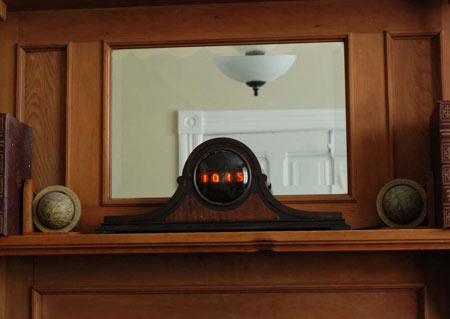
[John Clarke Mills] has pieced together this tastefully done Victorian style Nixie tube clock. He picked up a kit from nixietube.com and an old clock off of eBay. A little bit of elbow grease and solder later, he has this very nice mantle piece. Well done.
For those unfamiliar, a Nixie tube is used for displaying numbers or letters. They are a glass tube, filled with a gas (usually neon). There are metal structures inside that glow when electricity is applied. First widely used in the early sixties, Nixies were pretty much replaced when LED technology got cheap.
We noticed that nixietube.com was down, so you might also check TubeClock.com and neonixie.com for kits.
If you’re looking for more inspiration, read about the Nixie counter clock, Russian vfd, and the 6502 driven Nixie clock all previously on Hack a Day.
[via Retro Thing]
Ard-e: Cheap Arduino Robot Platform

[Adam] sent in his robot: Ard-e. It’s build on a cheap remote control bull dozer kit along with a pile of cheap parts. He managed to keep the cost under $100. You might be getting sick of the Arduino love, but we love how the platform makes it possible for the micro controller novice to get results without taking advanced assembly language.
Refillable Canned Air

While not very technical, [3eff_Jeff] posted an interesting modification to an empty air canister that makes it refillable. He was tired of drilling holes in the ozone, so he carefully drilled a hole into the top of the can instead. In the name of caution, he made sure the can was completely empty first by tying the trigger down with a rubber band. After waiting a while he carefully drilled the hole using an oil lubricant, and then epoxied in a Schrader valve from a leftover bike tire tube.
Due to compression of the air as it is pumped into the can, it becomes quite warm. He found that if the can is allowed to cool to room temperature, the air would become very cold once leaving the canister, which would cause condensation problems. So he uses it right after filling, and then empties it out when not in use.
We do not recommend anyone trying this, but it is a unique way to make a commonly used disposable resource in the computer field reusable. If we can use something more than once, we’re definitely for it. That’s why we support recycling components that would otherwise make their way to the landfill.
FABR: Another 3d Printing Project
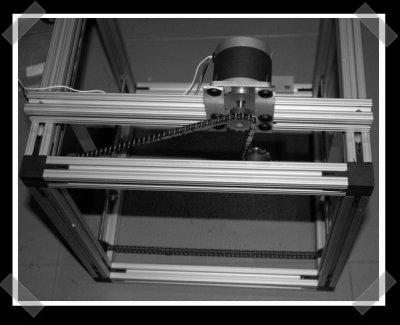
[Lou]’s been working on his own 3d printer: fabr. We find it appealing because the entry cost is quit a bit lower than something like the reprap. 80/20 isn’t that cheap, but you don’t need a large commercial laser cutter to build the chassis. The steppers he used appear to be inexpensive ones that can be salvaged from dot matrix printer. To drive it, he’s working on a custom microstepping board and hopes to eventually develop an Arduino shield to control the stepper drivers. That’s right, it’ll get an Arudino to act as the CNC control interface.
HandUSB Data Gloves Interface
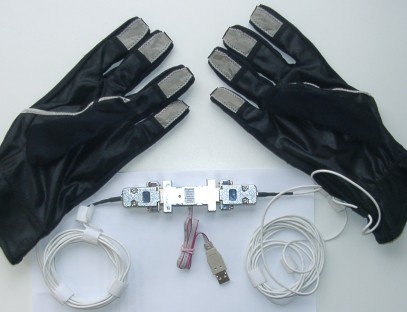
Following today’s earlier post on data gloves, HandUSB is a glove interface designed to relay fingertip touch data to a computer via USB. Although the gloves themselves are not extremely interesting or useful for your average hacker, the project has some good documentation. The electronics are all open source and he has links to the EAGLE files and the AVR Libc code. You can also find a demo program written for DOS. This project uses AVR-USB by Objective Development so if you are looking to move on from your USB-serial chips, this project would be a good resource to study.
[via YourlTronics]








