Google Loon’s Internet Balloons Come Back To Earth After A Decade In The Stratosphere

After a journey of a decade, what started as Project Loon by Google is no more. Promoted as a way to bring communications to the most remote parts of the globe, it used gigantic, high-altitude balloons equipped with communication hardware for air to ground, as well as air to air communication, between individual balloons. Based around LTE technology, it would bring multiple megabit per second data links to both remote areas and disaster zones.

Seven years into its development, Loon became its own company (Loon LLC), and would provide communications to some areas of Kenya, in addition to Sri Lanka in 2015 and Puerto Rico in 2017 after Hurricane Maria. Three years later, in January of 2021, it was announced that Loon LLC would be shutting down operations. By that point it had become apparent that the technology would not be commercially viable, with alternatives including wired internet access having reduced the target market.

While the idea behind Loon sounds simple in theory, it turns out that it was more complicated than just floating up some weather balloon with LTE base stations strapped to them.


Continue reading “Google Loon’s Internet Balloons Come Back To Earth After A Decade In The Stratosphere”

What’s The Deal With Chromium On Linux? Google At Odds With Package Maintainers

Linux users are more likely than most to be familiar with Chromium, Google’s the free and open source web project that serves as the basis for their wildly popular Chrome. Since the project’s inception over a decade ago, users have been able to compile the BSD licensed code into a browser that’s almost the same as the closed-source Chrome. As such, most distributions offer their own package for the browser and some even include it in the base install. Unfortunately, that may be changing soon.

A post made earlier this month to the official Chromium Blog explained that an audit had determined “third-party Chromium based browsers” were using APIs that were intended only for Google’s internal use. In response, any browser attempting to access features such as Chrome Sync with an unofficial API key would be prevented from doing so after March 15th.

To the average Chromium user, this doesn’t sound like much of a problem. In fact, you might even assume it doesn’t apply to you. The language used in the post makes it sound like Google is referring to browsers which are spun off of the Chromium codebase, and at least in part, they are. But the search giant is also using this opportunity to codify their belief that the only official Chromium builds are the ones that they provide themselves. With that simple change, anyone using a distribution-specific build of Chromium just became persona non grata.

Unhappy with the idea of giving users a semi-functional browser, the Chromium maintainers for several distributions such as Arch Linux and Fedora have said they’re considering pulling the package from their respective repositories altogether. With a Google representative confirming the change is coming regardless of community feedback, it seems likely more distributions will follow suit.

Continue reading “What’s The Deal With Chromium On Linux? Google At Odds With Package Maintainers”

NASA Challenge Offers Prizes For Sprouting Astronaut Food Systems

Humans have unfortunately not yet evolved the ability to photosynthesize or recharge from an electricity source, which is why astronauts well into the future of spaceflight will need to have access to food sources. Developing ways to grow food in space is the focus of the new Deep Space Food Challenge that was just launched by NASA and Canada’s Space Agency (CSA).

With a total of twenty $25,000 USD prizes for US contestants and ten $30,000 CAD prizes for the Canucks in Phase 1 of the challenge, there’s some financial incentive as well. In Phase 2, the winning teams of the concept phase have to show off their kitchen skills, and in the final Phase 3 (deadline by Fall 2023) the full food growing system has to be demonstrated.

The possible systems here would likely involve some kind of hydroponics, aeroponics or even aquaponics, to save the weight of lugging kilograms of soil into space. None of this is truly new technology, but cramming it into a package that would be able to supply a crew of four with enough food during a three-year mission does seem fairly challenging.

The NASA rules are covered in their Phase 1 Rules PDF document. While international teams are also welcome to compete, they cannot receive any prizes beyond recognition, and Chinese citizens or companies with links to China are not to allowed to compete at all.

An Alternator Powered Electric Bicycle Gives Rotor Magnetic Field Insight

For anyone involved in the construction of small electric vehicles it has become a matter of great interest that a cheap high-power electric motor can be made from a humble car alternator. It’s a conversion made possible by the advent of affordable three-phase motor controllers, and it’s well showcased by [austiwawa]’s electric bicycle build video (embedded below).

The bike itself is a straightforward conversion in which the motor powers the rear wheel via an extra sprocket. He tried a centrifugal clutch with limited success, but removed it for the final version. Where the interest lies in this build is in his examination of Hall effect sensor placement.

Most alternator conversions work without sensors, though for better control it’s worth adding these magnetic sensors to allow the controller to more directly sense the rotation. He initially placed them at the top of the stator coils and found them to be ineffectual, with the big discovery coming when he looked at the rotor. The electromagnet in the rotor on a car alternator has triangular poles with the field concentrated in the centre of the stator, thus a move of the sensors to half way down the stator solved the problem. Something to note, for anyone converting an alternator.

Should you wish to give it a try, a year ago we published a primer on turning car parts into motors.

Continue reading “An Alternator Powered Electric Bicycle Gives Rotor Magnetic Field Insight”

Porting Firefox To Apple Silicon: Tales From The Trenches

For any smaller and larger software product that aims to be compatible with Apple’s MacOS, the recent introduction of its ARM-based Apple Silicon processors and MacBooks to go with them came as a bit of a shock. Suddenly one of the major desktop platforms was going to shift processor architectures, and with it likely abandon and change a number of APIs. Over at Mozilla HQ, they assumed that based on past experiences, Apple’s announcement of ‘first Apple Silicon hardware’ would also mean that those systems would be available for sale.

Indeed, one week after the November 10th announcement Apple did in fact do so. By then, Mozilla had worked to ensure that the Firefox codebase could be built for Apple Silicon-based MacOS. Fortunately, through the experiences of running Firefox on Windows-on-ARM, they already had gained a codebase that was compatible with 64-bit ARM. Ultimately, the biggest snag here was the immature Rust language and dependency support for Apple Silicon, which set back the first release.

When it came to the distributing of Firefox on Intel- and ARM-based Macs, the decision was made to package both versions of the application into a so-called Universal Binary. While this pads out the size of the installer, it also means easier distribution and would not affect the built-in updater in Firefox. This also allowed for an easy fix for the Google Widevine DRM module, for which no Apple Silicon version was available at first, allowing the same module for Intel to be used with either Firefox version via the Rosetta 2 binary translator in MacOS (as we covered previously).

After this it was more or less smooth sailing, with some Rosetta 2-based glitches and MacOS Big Sur-related bugs that spoiled some of the fun. What this experience shows is that porting even a big codebase like Firefox to Apple’s new platform is fairly straightforward, with lack of support from toolchains and other dependencies the most likely things that may trip one up.

The Rosetta 2 feature, while helpful, also comes with its share of gotchas as the Firefox developers found out, and of course there is a lot more optimization that can (and should) be done for such a new platform.

This Week In Security: OpenWRT, Favicons, And Steganographia

OpenWRT is one of my absolute favorite projects, but it’s had a rough week. First off, the official OpenWRT forums is carrying a notice that one of the administrator accounts was accessed, and the userlist was downloaded by an unknown malicious actor. That list is known to include email addresses and usernames. It does not appear that password hashes were exposed, but just to be sure, a password expiration has been triggered for all users.

OpenWRT Security Notice

The second OpenWRT problem is a set of recently discovered vulnerabilities in Dnsmasq, a package installed by default in OpenWRT images. Of those vulnerabilities, four are buffer overflows, and three are weaknesses in how DNS responses are checked — potentially allowing cache poisoning. These seven vulnerabilities are collectively known as DNSpooq (Whitepaper PDF). Continue reading “This Week In Security: OpenWRT, Favicons, And Steganographia”

The US Air Force Wants Your 3D Scanner Ideas

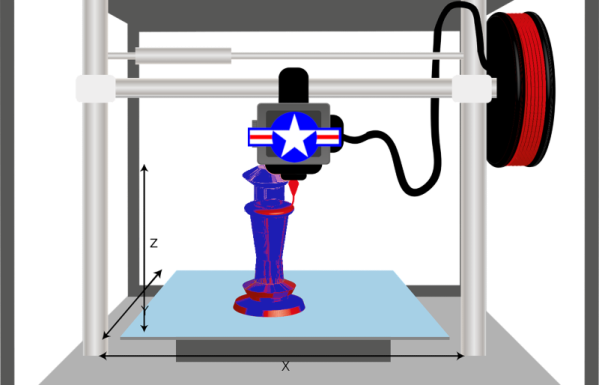
One key piece of technology from Star Trek is the replicator, a machine that 3D prints up almost anything using some hazily-defined high technology. You have to wonder though, how did the patterns for Earl Grey tea or a spare part for a shuttlecraft intercooler come to exist in the first place. Maybe someone designed them, or perhaps they scanned the real articles. The US Air Force is betting on the latter, and they’ve asked for white papers and proposals for innovative methods to scan objects for 3D printing.

It isn’t surprising military planners would like to have effective 3D printing. After all, you can’t carry every spare part you might need into a theater of operation. Not to mention spares for your friends in joint operations or for enemy gear you might happen to capture. Having a truck that could turn out whatever your troops need is an attractive proposition. Continue reading “The US Air Force Wants Your 3D Scanner Ideas”