Commodore 64 Reports The News

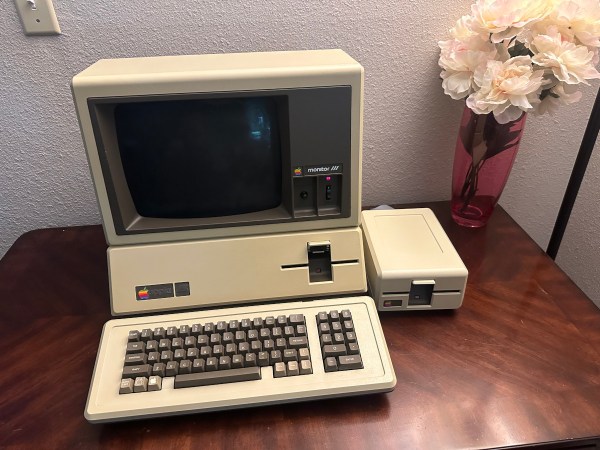
In the late 80s and into the 90s, [Cameron Kaiser] aka [ClassicHasClass] was an aspiring journalist, first becoming interested in the career in elementary school and then working on various publications into university. At some point, he started using a piece of software for laying out newspapers called The Newsroom which, he admits, was lacking a lot of tools that would have been modern even for the time, but had an otherwise agreeable price tag thanks to its focus more on home desktop publishing and newsletter production than on full-scale newspaper operations. It did have one interesting feature that he never could figure out, though, at least until he went back and pieced this mystery together.

The software itself ran on the Apple II and was eventually ported to other systems of the era, including the Commodore 64. The mystery feature was known as “Wire Service” and appeared to be a way that users of the software who had a modem could connect with one another and share news releases, layouts, graphics, and other content created in Newsroom, but in the days where it would have been modern never was able to connect to anything. In fact, it was eventually abandoned by the developers themselves in later releases of the software. But [ClassicHasClass] was determined to get it working. Continue reading “Commodore 64 Reports The News”

Fresh PCBs For The Quickshot II And II Plus Joysticks

The Quickshot II was released by Spectravideo in 1983 for the Commodore 64 and compatible systems, with the Quickshot II Plus following the next year. After decades of regular use, it’s quite understandable that these old-timers may be having some functional issues, but as long as the plastic parts are still good, [Stephan Eckweiler]’s replacement PCBs may be just the thing that these joysticks need to revitalize them for another few decades.

What may be a matter of taste is that these replace the nice tactile clicky switches on the QS II Plus with SMD push buttons, but compared to the stamped metal ‘button’ construction of the original QS II, the new board is probably a major improvement. As for the BOM, it features two ICs: a 74LS00 latch and NE555 timer, along with the expected stack of passives and switches, both through-hole and SMD.

The PCB contains break-off boards for the switches within the joystick itself, requiring a bit of wiring to be run to the main PCB before soldering on the DE-9 connector and connecting the joystick for a test run to a Commodore 64. All one needs now is a 3D printable enclosure version to create more QS II joysticks for some multiplayer action.

Dreamcast Linux: Looking Back At Linux On A SuperH-based Gaming Console

The Dreamcast is probably best known as the swansong of Sega’s ambitions as a gaming console manufacturer, but perhaps lesser known is the fact that you can run Linux on it. In a deep-dive by [Cameron Kaiser] over at the Old VCR blog, it is demonstrated what it takes to make this feat even work in 2023, and what one can expect from a system with a 200 MHz HItachi SuperH SH-4 CPU, 16 MB of RAM and the luxuries of VGA and network interfaces.

What’s interesting about Dreamcast Linux is that it was among the first times that Linux got put on a gaming console, even if it wasn’t entirely official or remotely supported by Sega. In fact, the fact that it works at all has its roots firmly in an exploit that was discovered shortly after the Dreamcast’s release. While Dreamcast discs are generally in a format called GD-ROM (Gigabyte Disc), early on it also supported the MIL-CD standard, which was Sega’s ill-fated attempt at creating multimedia CDs with MIL-CDs.

Not only did MIL-CDs flop in the market, the support form in Dreamcast units also provided a juicy exploit via the firmware that handles detecting and switching between GD-ROM and the much more constrained, audio-only MIL-CD mode. Later Dreamcast models dropped MIL-CD support and will thus also not boot Dreamcast Linux, which is an important gotcha to keep in mind when dragging out a Dreamcast for some Linux action.

As for running Linux on a Dreamcast, it’s pretty much what you’d expect from running it on such a constrained, RAM-disk only device. While [Cameron] was able to use workarounds such as swap-over-NFS to increase functionality, a lot more work remains to be done. Linux SuperH support seems to have petered out around the 2.6.x era, which would seem to have cemented the fate of Dreamcast Linux and similar SuperH platforms.

We’re curious, would double the RAM make a difference to this Linux platform?

It’s A 486 Computer, On A Breadboard

Ever since the 1970s, a frequent project has been to take a microprocessor and construct a computer system on a breadboard or stripboard. Usually these machines feature a familiar 8-bit processor such as a 6502 or a Z80 because of their breadboard-friendly DIP packages, but there is surprisingly little reason why some of the more recent silicon can’t be treated in the same way. [FoxTech] is leading the way on this, by making a breadboard computer using an 80486DX.

A 1990-era 32-bit desktop CPU seems unpromising territory for this application, but its architecture is surprisingly accessible. It needs a breakout board to gain access to its various lines, but beyond that it can be interfaced to in a very similar way to those earlier chips.

So far there are two videos in the series, which we’ve placed below the break. The first one introduces the project and shows the basic set-up. A 486 running NOPs may produce a pretty light show, but as he starts to show in the second video, it’s capable of more. The eventual aim is to have a simple but fully functional breadboard computer, so he’s starting with logic to decode the 32-bit bus on the 486 into the 8-bit bus he’s going to use.

It’s fascinating to learn about how the 32-bit 486 handles its interfacing and deals with four bytes at once, and we’re very much looking forward to seeing this project play out. The 486 may be on life support here in 2023, but that doesn’t mean it can’t still receive some love.

Continue reading “It’s A 486 Computer, On A Breadboard”

Replacing A Clock IC’s Battery

You can find a lot of strange things inside IC packages. For example, the Dallas DS12885 and DS12887 real time clock “chips” were available in a large package with an internal battery. The problem, of course, is that batteries die. [New Old Computer Show] wanted to restore a machine that used one of these devices and was able to repair the device. You can see two videos below. In the first video, he replaces both the battery and adds an external oscillator which would be necessary for the DS12885. However, he actually had the DS12887, which has an internal oscillator, something the second video explains.

The repair used a PCB he ordered from Tindie. However, the board is only part of the problem. You also need to disconnect the dead battery which requires a Dremel and a steady hand.

Continue reading “Replacing A Clock IC’s Battery”

Retrotechtacular: Military Graphics In The 1960s

While you might think the military doesn’t have a sense of humor with names. Take the AN/MSQ-19 “automated tactical operations central” for example. (Video, embedded below.) But then, when you find out that the truck-sized computer at the heart of it was MOBIDIC — yes, that’s pronounced Moby Dick — you know someone had a good chuckle somewhere. The video below was a promotional video from the early 1960s, and although it shows the unit in operation, it was most likely a mockup and not fully functional.

The MOBIDIC program ran from 1960-1964 and cost a whopping $25 million in 1960-era money. In 1964, testing revealed the system was too unwieldy, requiring at least five tractor-trailers, eight generators, portable buildings, and several large trucks to move around.

Continue reading “Retrotechtacular: Military Graphics In The 1960s”

Classic Gaming With FPGA And ATX

Playing classic games, whether they are games from the golden age of arcades or simply games from consoles that are long out of production, tends to exist on a spectrum. At one end is grabbing a game’s ROM file, finding an emulator, and kludging together some controls on a keyboard and mouse with your average PC. At the other is meticulously restoring classic hardware for the “true” feel of what the game would have felt like when it was new. Towards the latter end is emulating the hardware with an FPGA which the open-source MiSTer project attempts to do. This build, though, adds ATX capabilities for the retrocomputing platform. Continue reading “Classic Gaming With FPGA And ATX”