Retrotechtacular: TOPS Runs The 1970s British Railroad

How do you make the trains run on time? British Rail adopted TOPS, a computer system born of IBM’s SAGE defense project, along with work from Standford and Southern Pacific Railroad. Before TOPS, running the railroad took paper. Lots of paper, ranging from a train’s history, assignments, and all the other bits of data required to keep the trains moving. TOPS kept this data in real-time on computer screens all across the system. While British Rail wasn’t the only company to deploy TOPS, they were certainly proud of it and produced the video you can see below about how the system worked.

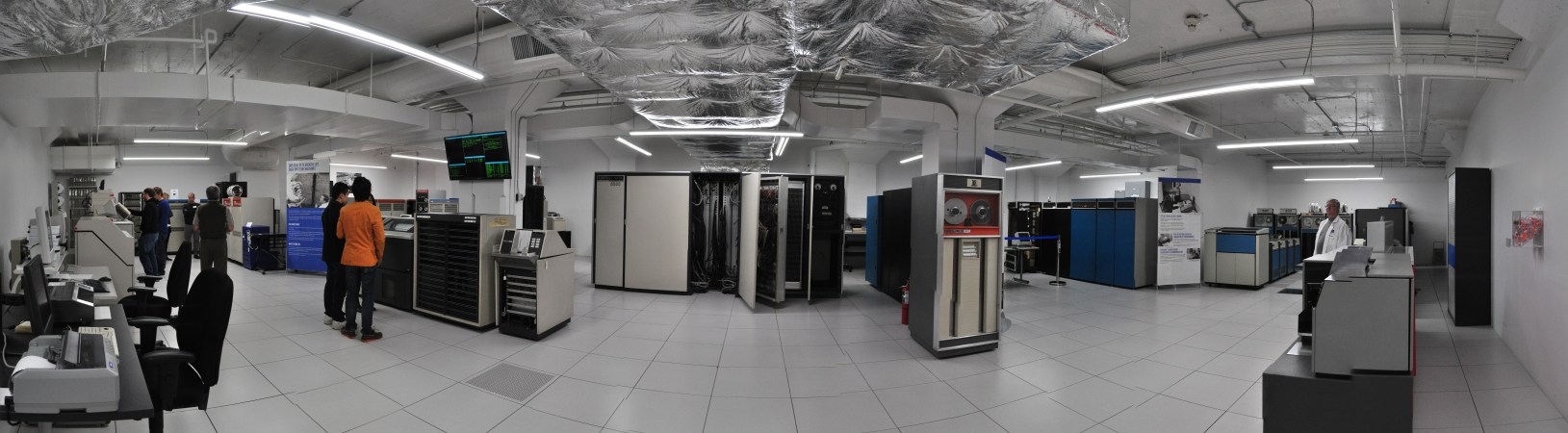
There are a lot of pictures of old big iron and the narrator says it has an “immense storage capacity.”  The actual computers in question were a pair of IBM System/370 mainframes that each had 4 MB of RAM. There were also banks of 3330 disk drives that used removable disk packs of — gasp — between 100 and 200 MB per pack.

As primitive and large as those disk drives were, they pioneered many familiar-sounding technologies. For example, they used voice coils, servo tracking, MFM encoding, and error-correcting encoding.

Continue reading “Retrotechtacular: TOPS Runs The 1970s British Railroad”

The Cryotron Remembered

[Sean Haas] is a “dangerous freelance historian,” and his recent talk at the Vintage Computer Festival in Southern California covers the cryotron — a strange detour on the road to computers circa 1956. The NSA wanted a computer to break codes, but in 1956, there wasn’t much to pick from, especially since they wanted a very fast computer.

As you might expect from the name, a cryotron depends on superconductivity. The original device was a tantalum wire wrapped with a niobium wire coil. When the device is soaked in liquid helium, both wires become superconducting. The tantalum wire can carry way more current in that state unless the niobium coil generates a magnetic field, which kills the wire’s superconductivity. On the plus side, you have a relay-like switch that works with no moving parts. On the negative side, you need liquid helium.

Continue reading “The Cryotron Remembered”

A 65-in-1 The 2024 Way

If necessity is the mother of invention, nostalgia must be its stepmother, or its aunt at the very least. The desire to recreate long-obsolete devices simply because they existed while we were growing up is a curious trait, but one that’s powerful enough to drive entire categories of hardware hacking — looking at you, retrocomputing buffs.

Hardware nostalgia isn’t all about 6502s and Z80s, though. Even more basic were the electronic toys of the 1970s, such as the Radio Shack 65-in-1 kit that [Tom Thoen] is currently recreating. The 65-in-1 was a breadboarding kit aimed at the budding electrical engineer, with components mounted to colorful cardboard by spring terminals. The included “lab manual” had circuits that could be quickly assembled using a handful of jumper wires. It was an endlessly fascinating toy that undoubtedly launched many careers, present company included.

The original 65-in-1 was $21.95 in 1976, or about $120 today.

While the passage of time may not have dulled [Tom]’s memories of his original 65-in-1, technology has marched on, meaning that certain allowances had to be made to create a modern version. He wisely eschews the cardboard for PCBs, one for each of the major component blocks provided in the original, and uses female header connectors in place of the springs. Component choice is tailored for the times; gone are the ferrite rod antenna and variable capacitor of the original, as well as the incandescent lamp, which is replaced by an LED that would have been a significant fraction of the kit’s $21.95 price back in 1976. There’s no BOM yet, so we can’t say for sure if any of the transistors are germanium, but it’s clear that there aren’t any of the old TO-1 cans. But dismay not, originalists, for the meter, relay, CdS photocell, and “solar battery” all made the final cut.

[Tom] has done some beautiful work here, with more to come. We imagine that 3D printing could be used to recreate some details like the original Morse key and speaker grille. We love the laser-engraved backing board, too, as it captures some of the charm of the original’s wooden box. This isn’t the only love for the “Science Fair” brand we’ve seen lately, either; the nostalgia seems to be contagious.

Retro Hackintosh Made From Retro Parts

Apple as a company, has staked most of its future around being a “walled garden” where it controls everything from the hardware up through the user experience. In some ways this is good for users; the hardware is generally high quality and vetted by the company creating the software, making for a very uniform experience. This won’t stop some people from trying to get Apple’s operating systems and other software running on unapproved hardware though. These “Hackintosh” computers were much more common in the Intel era but this replica goes even further back to the Macintosh era.

Originally [Kevin] had ordered an authentic Macintosh with the intent of getting it working again, but a broken floppy disk drive and lack of replacement parts turned this project into a different beast. He used the Mac instead as a model for a new 3D-printed case, spending a ton of time sanding, filling, and finishing it to get it to look nearly indistinguishable from the original. The hardware going in this replica is an old Linux-based thin client machine running the Mini vMac operating system, with a modified floppy drive the computer uses to boot. A hidden SD card slot helps interface with modern computers. The display is a modern LCD, though a sheet of acrylic glued to the front panel replicates a bit of the CRT curve.

Click through to read on!

Continue reading “Retro Hackintosh Made From Retro Parts”

Retrotechtacular: Right To Repair 1987

In 1987, your portable Osborne computer had a problem. Who you gonna call? Well, maybe the company that made “The Osborne Survival Kit,” a video from Witt Services acquired by the Computer History Museum. The narrator, [Mark Witt], tells us that they’ve been fixing these computers for more than three years, and they want to help you fix it yourself. Those days seem long gone, don’t they?

Of course, one thing you need to know is how to clean your floppy drives. The procedure is easy; even a 10-year-old can do it. At least, we think [William Witt] is about 10 in the video. He did a fine job, and we wonder what he’s up to these days.

The next step was taking the machine apart, but that required adult supervision. In some cases, it also took a soldering iron. As a byproduct, the video inadvertently is a nice tear-down video, too.

Continue reading “Retrotechtacular: Right To Repair 1987”

Obfuscated C 8080 Emulator Ported

[Oscar] is no stranger to writing hard-to-read C code. While most of us do that by accident, there are those who strive to write the most unreadable code and enter it in the IOCCC — the International Obfuscated C Code Contest. One of his winning entries was a single C function that emulates an 8080. With a few support files, the plucky little emulator will run CP/M.

The emulator won best in show, but that was in 2006. Things have changed a bit and [Oscar] has updated the code so that you can continue to try it if you want to give yourself a headache reading code. The portability isn’t a CPU issue — modern CPUs will happily run code from 2006. The problem is the compiler and operating system. Compilers are much stricter these days, and Linux needs a little extra coaxing to give access to the input stream the way the faux computer needs it.

Continue reading “Obfuscated C 8080 Emulator Ported”

New Pens For Old Plotters

Finding consumables is an ever-present problem facing anyone working with old computer hardware. Many of these devices ceased manufacture decades ago and what old stock remains is invariably degraded by time. [Retrohax] has encountered it with the pens for an Atari plotter, a machine that uses an ALPS mechanism that appears in more than one 1980s machine. The original pens had dried out beyond the ability to refill, so he takes us through the process of finding replacements.

Sadly there are no equivalent modern pens ripe for modification, so whatever replacement he used would have to involve a little lateral thinking. He thought salvation was at hand in the form of multicolor ballpoint refills of the type where the ink is in an easily cuttable plastic tube. [Retrohax] and was able to make a 3D-printed holder for a cut-down ballpoint refill. Sadly the pressure required for a good line from a ballpoint was much higher than the original pens, so he was back to square one. Then he happened upon gel pens and tried the same trick with a gel pen refill. This gave instant success and should provide a valid technique for more than just this ALPS mechanism.

If you haven’t got a classic plotter to hand, never fear. You can have a go at making your own.