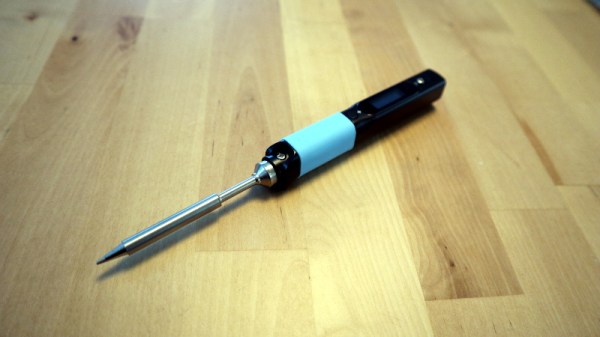
There was a time when decent quality soldering irons were substantial affairs, soldering stations with a chunky base unit containing the electronics and a lightweight handheld iron for the work. That has changed with the arrival of a new breed of microprocessor controlled lightweight handheld irons. There’s a new kid on the block from a company we associate more with open-source phones, laptops, and single board computers, Pine64 have produced the Pinecil. It’s a lightweight handheld iron with some innovative features at an attractive price, but does it raise the bar sufficiently to take on the competition?
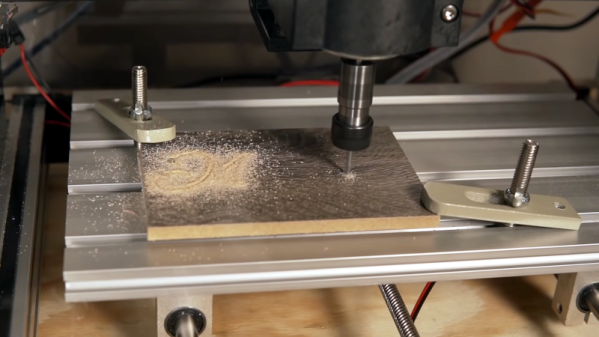
Low cost 3D printers have come a long way in the last few years, but have entry-level CNC machines improved by the same leaps and bounds? That’s what [ModBot] recently set out to find. Despite getting burned pretty badly on a cheap CNC a few years back, he decided to try again with a sub $400 machine from FoxAlien. You can see his full review after the break.
The machine looks very similar to other generic CNC machines you see under many brand names, sometimes for a good bit less. The 3018 number is a giveaway that the work area is 30×18 cm and a quick search pulled up several similar machines for just a bit more than $200. The FoxAlien did have a few nice features, though. It has a good-looking build guide and an acrylic box to keep down the shaving debris in your shop. There are also some other nice touches like a Z-axis probe and end stops. If you add those items to the cut-rate 3018 machines, the FoxAlien machine is pretty price competitive when you buy it from the vendor’s website. The Amazon page in the video shows $350 which is a bit more expensive but does include shipping.
As with most of these cheap CNC machines, one could argue that it’s more of an engraver than a full mill. But on the plus side, you can mount other tools and spindles to get different results. You can even turn one of these into a diode laser cutter, but you might be better off with something purpose-built unless you think you’ll want to switch back and forth often.
This reminded us of a CNC we’ve used a lot, the LinkSprite. It does fine for about the same price but we are jealous of the enclosure. Of course, half the fun of owning something like this is hacking it and there are plenty of upgrades for these cheap machines.
I suppose most of us have had the experience of going to the mailbox and seeing that telltale package in the white plastic bag, the sign that something has just arrived from China. This happened to me the other day, and like many of you it was one of those times when I puzzled to myself: “I wonder what I bought this time?”
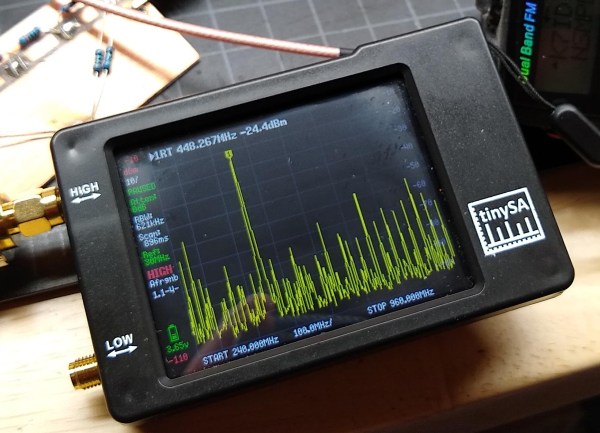
With so many weeks or months between the time of your impulsive click on the “Buy Now” button on AliExpress or eBay and the slow boat from China actually getting the package to your door, it’s easy enough to forget what exactly each package contains. And with the price of goods so low, the tendency to click and forget is all the easier. That’s not necessarily a good thing, but I like surprises as much as the next person, so I was happy to learn that I was now the owner of a tinySA spectrum analyzer. Time for a look at what this little thing can do.
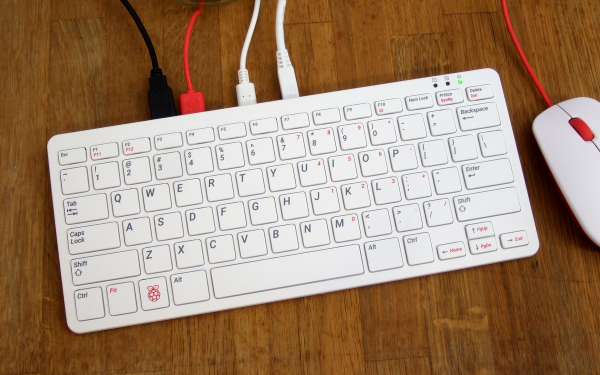
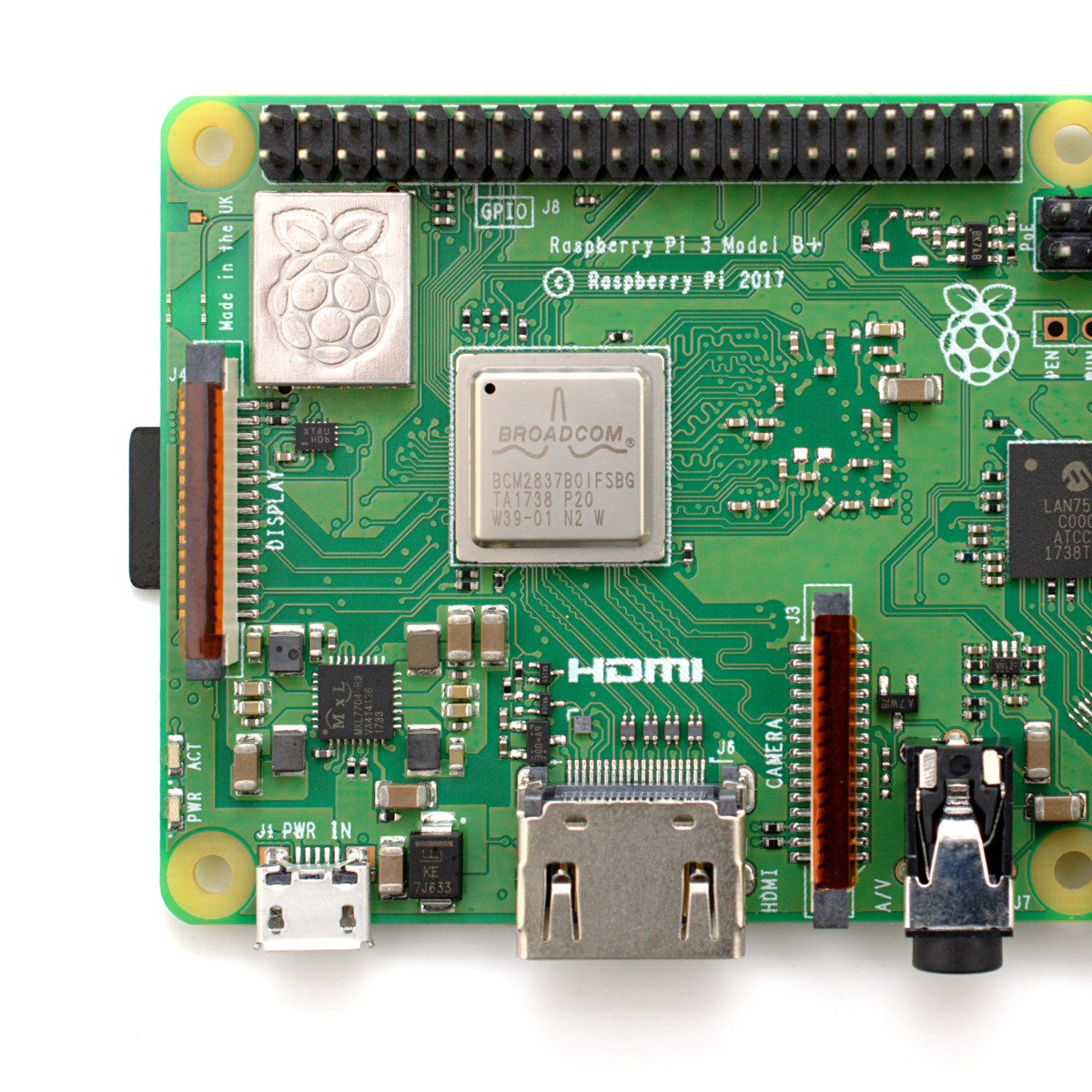
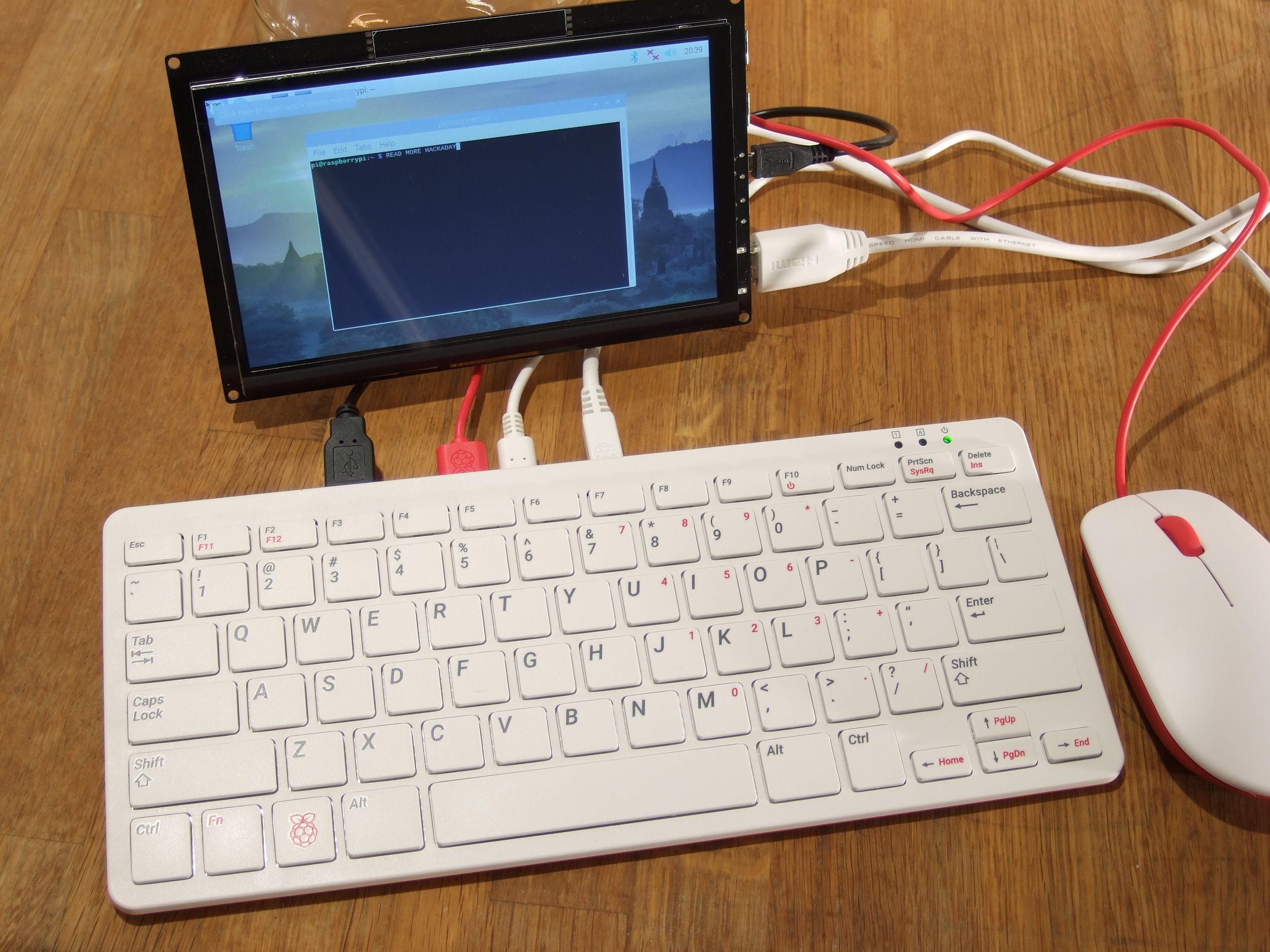
The newest Raspberry Pi 400 almost-all-in-one computer is very, very slick. Fitting in the size of a small portable keyboard, it’s got a Pi 4 processor of the 20% speedier 1.8 GHz variety, 4 GB of RAM, wireless, Ethernet, dual HDMI outputs, and even a 40-pin Raspberry Standard IDE-cable style header on the back. For $70 retail, it’s basically a steal, if it’s the kind of thing you’re looking for because it has $55 dollars worth of Raspberry Pi 4 inside.
In some sense, it’s getting dangerously close to fulfilling the Raspberry Pi Dream. (And it’s got one more trick up it’s sleeve in the form of a huge chunk of aluminum heat-sinked to the CPU that makes us think “overclocking”.)
We remember the founding dream of the Raspberry Pi as if it were just about a decade ago: to build a computer cheap enough that it would be within everyone’s reach, so that every school kid could have one, bringing us into a world of global computer literacy. That’s a damn big goal, and while they succeeded on the first count early on, putting together a $35 single-board computer, the gigantic second part of that master plan is still a work in progress. As ubiquitous as the Raspberry Pi is in our circles, it’s still got a ways to go with the general population.
The Raspberry Pi Model B wasn’t, and isn’t, exactly something that you’d show to my father-in-law without him asking incredulously “That’s a computer?!”. It was a green PCB, and you had to rig up your own beefy 5 V power supply, figure out some kind of enclosure, scrounge up a keyboard and mouse, add in a monitor, and only then did you have a computer. We’ve asked the question a couple of times, can the newest Raspberry Pi 4B be used as a daily-driver desktop, and answered that in the affirmative, certainly in terms of it having adequate performance.
But powerful doesn’t necessarily mean accessible. If you want to build your own cyberdeck, put together an arcade box, screw a computer into the underside of your workbench, or stack together Pi Hats and mount the whole thing on your autonomous vehicle testbed, the Raspberry Pi is just the ticket. But that’s the computer for the Hackaday crowd, not the computer for everybody. It’s just a little bit too involved.
The Raspberry Pi 400, in contrast, is a sleek piece of design. Sure, you still need a power supply, monitor, and mouse, but it’s a lot more of a stand-alone computer than the Pi Model B. It’s made of high-quality plastic, with a decent keyboard. It’s small, it’s light, and frankly, it’s sexy. It’s the kind of thing that would pass the father-in-law test, and we’d suggest that might go a long way toward actually realizing the dream of cheaply available universal (open source) computing. In some sense, it’s the least Hackaday Raspberry Pi. But that’s not saying that you might not want one to slip into your toolbag.
I can’t remember how exactly I came across the OrbiTouch keyboard, but it’s been on my list to clack about for a long time. Launched in 2003, the OrbiTouch is a keyboard and mouse in one. It’s designed for people who can’t keyboard regularly, or simply want a different kind of experience.
The OrbiTouch was conceived of by a PhD student who started to experience carpal tunnel while writing papers. He spent fifteen years developing the OrbiTouch and found that it could assist many people who have various upper body deficiencies. So, how does it work?
It’s Like Playing Air Hockey with Both Hands
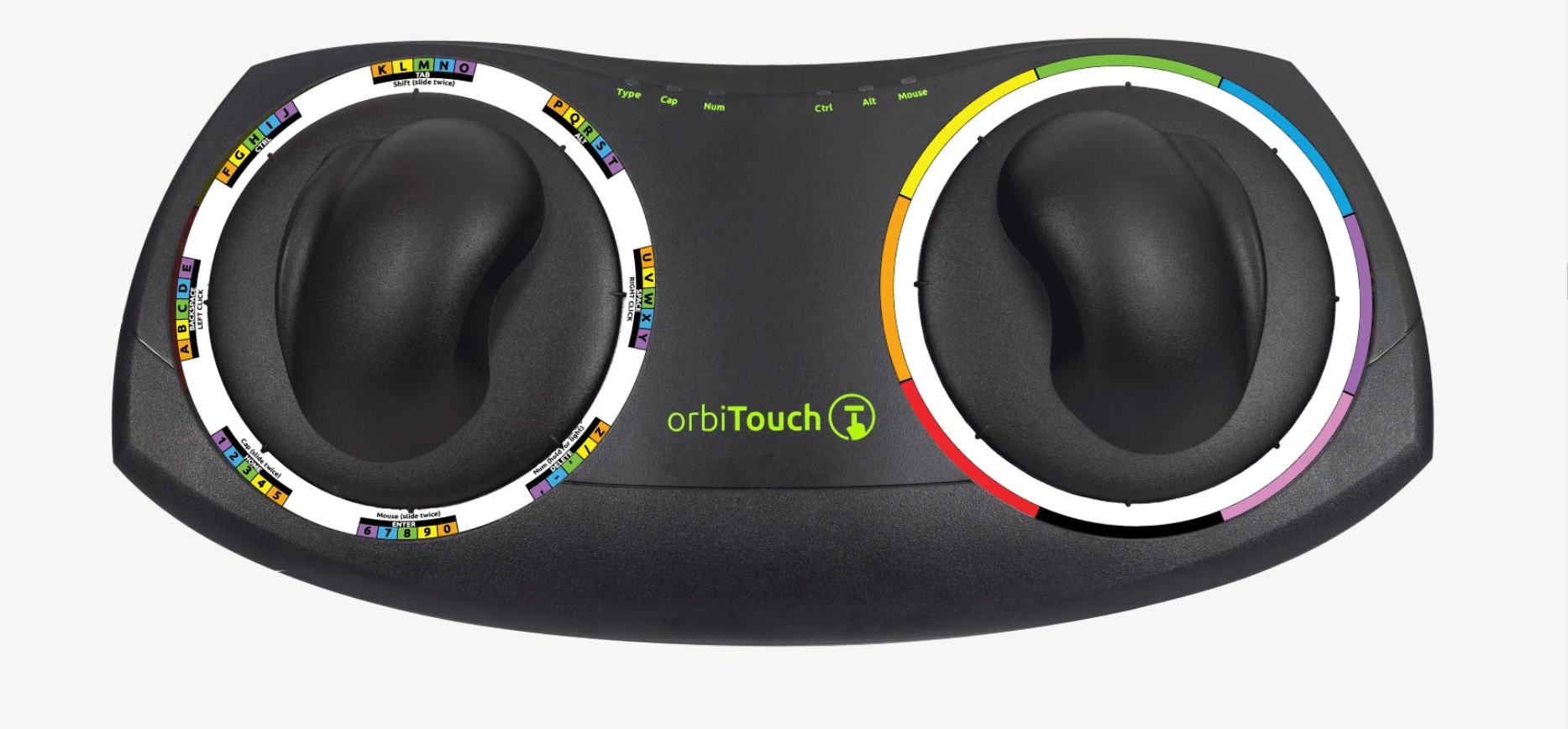
To use this keyboard, you put both hands on the sliders and move them around. They are identical eight-way joysticks or D-pads, essentially. The grips sort of resemble a mouse and have what looks like a special resting place for your pinky.
One slider points to groups of letters, numbers, and special characters, and the other chooses a color from a special OrbiTouch rainbow. Pink includes things like parentheses and their cousins along with tilde, colon and semi-colon. Black is for the modifiers like Tab, Alt, Ctrl, Shift, and Backspace. These special characters and modifiers aren’t shown on the hieroglyphs slider, you just have to keep the guide handy until you memorize the placement of everything around the circle.
You’re gonna need a decent amount of desk space for this. Image via OrbiTouch
The alphabet is divided up into groups of five letters which are color-coded in rainbow order that starts with orange, because red is reserved for the F keys. So for instance, A is orange, B is yellow, C is green, D is blue, E is purple, then it starts back over with F at orange. If you wanted to type cab, for instance, you would start by moving the hieroglyph slider to the first alphabet group and the color slider to green.
It was with considerable interest last month that I set out to track down where in the world there are still factories making tubes. My research found them in Slovakia, Russia, and China, and it’s fairly certain I didn’t find all the manufacturers by any means. There appeared to be a whole class of mundane tubes still in production that weren’t to be found on their glossy websites. A glance at any outlet through which Chinese modules can be bought will find this type of tube in small audio amplifier projects, and some of them can be astoundingly cheap. When faced with cheap electronics of course I’m tempted to buy some, so I parted with about £10 ($12.50) and bought myself a kit for a two-tube device described as a stereo preamplifier and headphone amplifier.
An Unusual Tube Choice For Audio
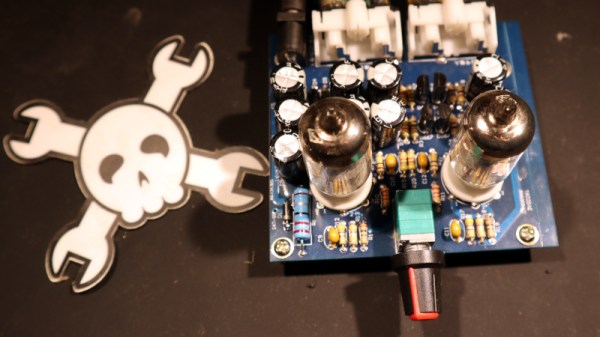
What I received for my tenner was a press-seal bag with a PCB and a pile of components, and not much else. No instructions, which would have been worrisome were the board not clearly marked with the value of each component. The circuit was on the vendor’s website and is so commonly used for these sort of kits that it can be found all over the web — a very conventional twin common-cathode amplifier using a pair of 6J1 miniature pentodes, and powered through a +25 V and -25 V supply derived from a 12 VAC input via a voltage multiplier and regulator circuit. It has a volume potentiometer, two sets of phono sockets for input and output, and the slightly naff addition of a blue LED beneath each tube socket to impart a blue glow. I think I’ll pass on that component.
The 6J1 seems to be ubiquitous throughout the Chinese kits, which is surprising when you understand that it’s not an audio tube at all. Instead it’s a small-signal VHF amplifier, a rough equivalent of the European EF95, and would be much more at home in an FM radio receiver or turret TV tuner from the 1950s. I can only assume that somewhere in China there’s a tube factory tooled up for radio tube production that is targeting this market, because another tube you will see in audio power amplifier kits is the FU32 or QQV03-20 in European parlance, a large power beam tetrode that might have been found in a 1950s military radio transmitter. Still just as if you were to use an RF transistor in an audio circuit it would give good account of itself, so it is with an RF tube. There is no reason a 6J1 won’t do an acceptable job in a circuit such as this one.
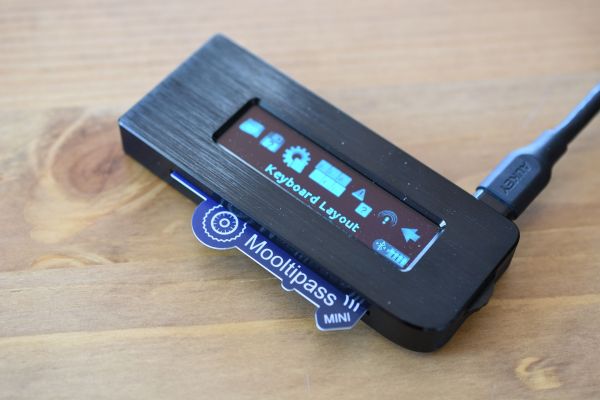
Remembering passwords is one of those things which one just cannot seem to escape. At the very least, we all need to remember a single password: namely the one for unlocking a password manager. These password managers come in a wide variety of forms and shapes, from software programs to little devices which one carries with them. The Mooltipass Mini BLE falls into the latter category: it is small enough to comfortably fit in a hand or pocket, yet capable of remembering all of your passwords.
Heading into its crowdfunding campaign, the Mooltipass Mini BLE is an evolution of the Mooltipass Mini device, which acts as a USB keyboard by default, entering log-in credentials for you. With the required browser extension installed, this process can also be automated when browsing to a known website. Any new credentials can also be saved automatically this way.
Where the Mooltipass Mini BLE differs from the original is in that it also adds a Bluetooth (BLE) mode, enabling it to be used easily with any BLE-capable device, including laptops and smartphones, without having to dig around for a USB cable and/or OTG adapter.
I have already been using the original Mooltipass Mini for a while, and the Mooltipass team was kind enough to send me a prototype Mooltipass Mini BLE for evaluation and comparison. Let’s take a look.


 What I received for my tenner was a press-seal bag with a PCB and a pile of components, and not much else. No instructions, which would have been worrisome were the board not clearly marked with the value of each component. The circuit was on the vendor’s website and is so commonly used for these sort of kits that it can be found all over the web — a very conventional twin common-cathode amplifier using a pair of 6J1 miniature pentodes, and powered through a +25 V and -25 V supply derived from a 12 VAC input via a voltage multiplier and regulator circuit. It has a volume potentiometer, two sets of phono sockets for input and output, and the slightly naff addition of a blue LED beneath each tube socket to impart a blue glow. I think I’ll pass on that component.