Superconducting Tape Leads To A Smaller Tokamak

Attempts to make a viable nuclear fusion reactor have on the whole been the domain of megabucks projects supported by countries or groups of countries, such as the European JET or newer ITER projects. This is not to say that smaller efforts aren’t capable of making their own advances, operations in both the USA and the UK are working on new reactors that use a novel superconducting tape to achieve a much smaller device.

The reactors in the works from both Oxfordshire-based Tokamak Energy and Massachusetts-based Commonwealth Fusion Systems, or CFS, are tokamaks, a Russian acronym describing a toroidal chamber in which a ring of high-temperature plasma is contained within a spiral magnetic field. Reactors such as JET or ITER are also tokamaks, and among the many challenges facing a tokamak designer is the stable creation and maintenance of that field. In this, the new tokamaks have an ace up their sleeve, in the form of a high-temperature superconducting tape from which those super-powerful magnets can be constructed. This makes the magnets easier to make, cheaper to maintain at their required temperature, and smaller than the low-temperature superconductors found in previous designs.

The world of nuclear fusion is a particularly exciting one to follow in these times of climate crisis, with competing approaches from laser-based devices racing with the tokamak projects to produce the research which will eventually lead to safer carbon-free power. If the CFS or Tokamak Energy reactors lead eventually to a fusion power station on the edge of our cities then it may just be some of the most important work we’ve ever reported.

Amateur Estimates Of Venusian Day Using Arecibo Data

[Nathaniel Fairfield] aka [thandal] was curious about the actual rotation and axis tilt of Venus. He decided to spin up at GitHub Python repository to study the issue further, as one does. The scientific literature shows a wide range of estimates and variations for the planet’s rotation and axis tilt. He wondered if the real answer might be found in a publicly available set of uncalibrated delay-doppler images of Venus. These data were collected by the former Arecibo Observatory in Puerto Rico from 1988 through 2020.  [Thanda] observed that the planet’s rotation appears to be speeding up slightly, and furthermore, his estimates of the orbital axis were within 0.01 degrees of the International Astronomical Union’s (IAU) values. [Note: Venus is a bit confusing — one planetary rotation, 243 Earth days, is longer than its year, 225 Earth days].

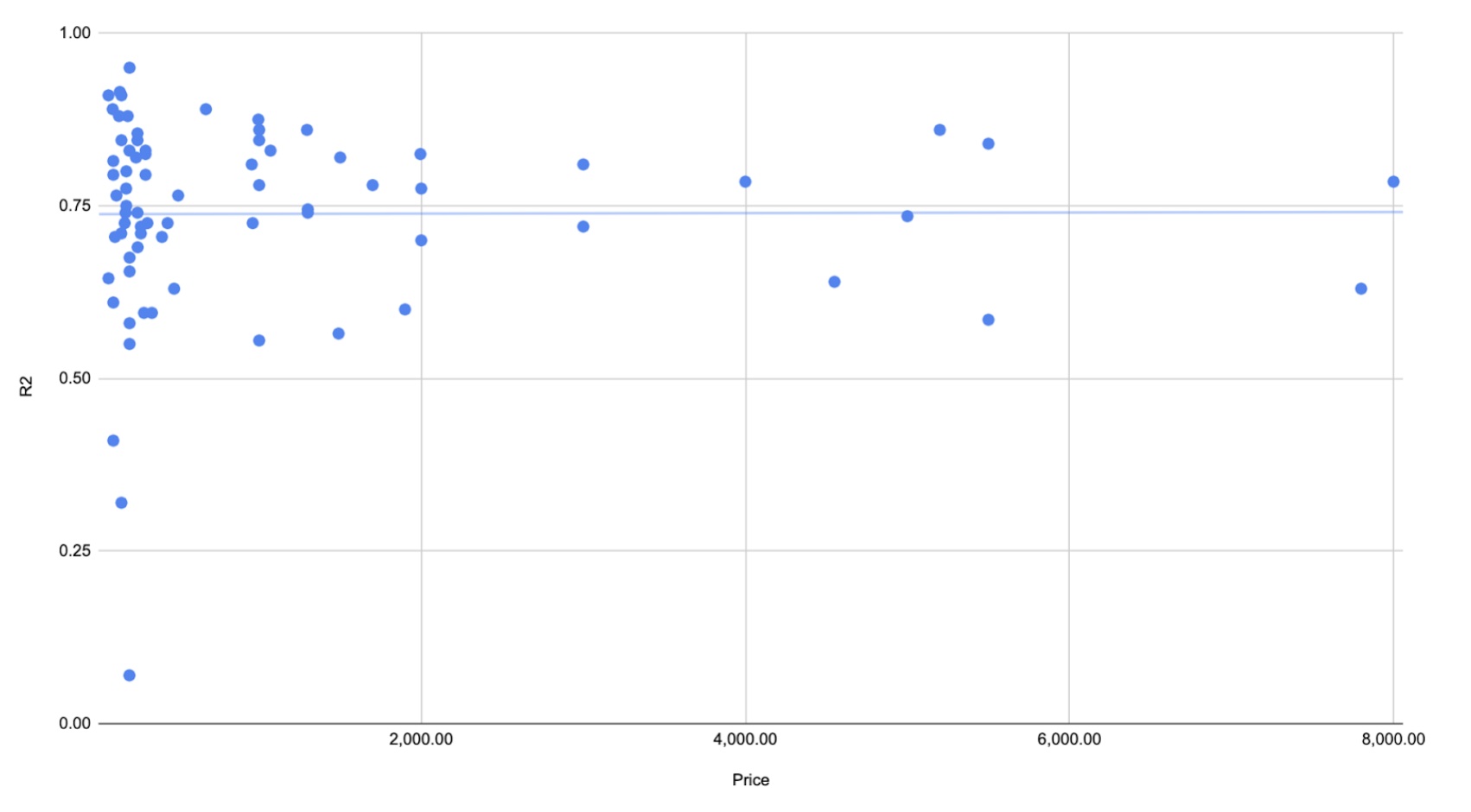
Estimations of Venusian Orbital Period, [Thandal] Estimates in Green
Aligning and calibrating the raw data was no trivial task. You have to consider the radar’s (Earth’s) position and time, as well as Venus. Complicating the math even more, some times the radar was operated in a bistatic mode, with the Green Bank Telescope in West Virginia being the receiver.

There’s a lot of interesting signal processing going on here. The Doppler-delay data consists of images that are 8091×8092 array of complex values, has to be mapped onto the Venus geoid.  Then by using various surface features, one can compare their positions vs time and obtain an estimate of rotational speed and tilt. If these kinds of calculations interest you, be sure to check out [Thandal]’s summary report, and also take note of the poliastro Python astrodynamics library. Why is this important? One reason to better plan future missions.

That Ultra-White Paint That Helps Cool Surfaces? Make Your Own!

It started with [KB9ENS] looking into paints or coatings for passive or radiative cooling, and in the process he decided to DIY his own. Not only is it perfectly accessible to a home experimenter, his initial results look like they have some promise, as well.

[KB9ENS] read about a type of ultra-white paint formulation that not only reflects heat, but is able to radiate it into space, cooling the painted surface to below ambient temperature. This is intriguing because while commercial paints can insulate and reflect heat, they cannot make a surface cooler than its surroundings.

Anecdotally speaking, this painted battery section of a solar recharger gets too hot to touch in full sunlight. But when painted over, it was merely warm.

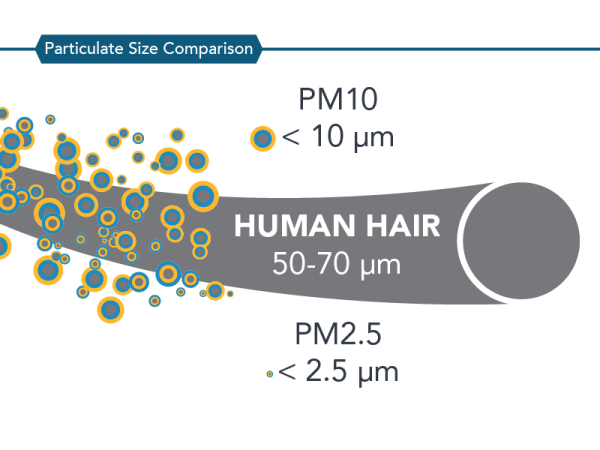
What really got [KB9ENS] thinking was that at its core, the passively-cooling paint in the research is essentially a whole lot of different particle sizes of barium sulfate (BaSO₄) mixed into an acrylic binder. These two ingredients are remarkably accessible. A half-pound of BaSO₄ from a pottery supply shop was only a few dollars, and a plain acrylic base is easily obtained from almost any paint or art supplier.

[KB9ENS] decided to mix up a crude batch of BaSO₄ paint, apply it to some things, and see how well it compared to other paints and coatings. He wetted the BaSO₄ with some isopropyl alcohol to help it mix into the base, and made a few different concentrations. A 60% concentration by volume seemed to give the best overall results.

There’s no indication of whether any lower-than-ambient cooling is happening, but according to a non-contact thermometer even this homemade mixture does a better job of keeping sunlight from heating things up compared to similarly-applied commercial paints (although it fared only slightly better than titanium dioxide-based white paint in the initial test.)

[KB9ENS] also painted the battery section of a solar recharger with his homemade paint and noted that while under normal circumstances — that is to say, in full sunlight — that section becomes too hot to touch, with the paint coating it was merely warm.

Actual passive cooling can do more than just keep something less warm than it would be otherwise. We’ve seen it recently used to passively and continuously generate power thanks to its ability to create a constant temperature differential, day and night.

Physical Neural Network Can Be Trained Like A Digital One

Here’s an unusual concept: a computer-guided mechanical neural network (video, embedded below.) Why would one want a mechanical neural network? It’s essentially a tool to explore what it would take to make physical materials work in nonstandard ways. The main part is a lattice of interlinked mechanical components. When one applies a certain force in a certain direction on one end, it causes the lattice to deform in a non-intuitive way on the other end.

To make this happen, individual mechanical elements  in the lattice need to have their compliance carefully tuned under the guidance of a computer system. The mechanisms shown can be adjusted on demand while force is applied and cameras monitor the results.

This feedback loop allows researchers to use the same techniques for training neural networks that are used in machine learning applications. Ultimately, a lattice can be configured in such a way that when side A is pressed like this, side B moves like that.

We’ve seen compliant structures that move in unexpected ways before, and they are always fascinating. One example is this 3D-printed door latch that translates a twisting motion into a linear one. Research into physical neural networks seems like it might open the door to more complex systems, or provide insights into metamaterial design.

You can watch the video below just under the page break, or if you prefer, skip the intro and jump straight into How It Works at [2:32].

Continue reading “Physical Neural Network Can Be Trained Like A Digital One”

Crab Shells Massively Improve Zinc-Ion Batteries

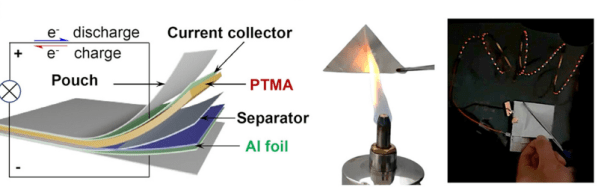
In the fast-moving world of battery research, scientists are constantly on the lookout for innovative materials with the right properties to help improve energy storage. Meanwhile, batteries are in greater demand than ever as production of EVs and renewable energy projects ramp up to new heights.

In the hunt for new and better battery materials, scientists found an unexpected hero: crab shells.Researchers at the University of Maryland have uncovered a remarkable breakthrough by exploring their use in battery production.

Continue reading “Crab Shells Massively Improve Zinc-Ion Batteries”

Improving Ocean Power With Static Electricity

Water is heavy, so if you think about it, a moving ocean wave has quite a bit of energy. Scientists have a new way to use triboelectric generators to harvest that power for oceangoing systems. (PDF) Triboelectric nanogenerators (TENGs) are nothing new, but this new approach allows for operation where the waves have lower amplitude and frequency, making traditional systems useless.

The new approach uses a rotor and a stator, along with some aluminum, magnets, and — no kidding — rabbit fur. The stator is 3D printed in resin. The idea is to mechanically accumulate and amplify small low-frequency waves into high-frequency motion suitable for triboelectric generation.

Continue reading “Improving Ocean Power With Static Electricity”

Gravity Wave Detector Is Galactic Sized

Detecting gravity waves isn’t easy. But what if you had a really big detector for a long time? That’s what researchers did when they crunched 15 years’ worth of data from the NANOGrav data set. The data was collected from over 170 radio astronomers measuring millisecond pulsars as a way to potentially detect low-frequency gravity waves.

Millisecond pulsars spin fast and make them ideal for the detection of low-frequency gravity waves, which are difficult to detect. The bulk of the paper is about the high-powered data analysis for a very large data set.

Continue reading “Gravity Wave Detector Is Galactic Sized”