NASA Lunar Probe Finds Out It’s Not Easy Being Green

If you’re a space fan, these are very exciting days. There’s so much happening overhead that sometimes it can be difficult to keep up with the latest news. Artemis I just got back from the Moon, the International Space Station crew are dealing with a busted Soyuz, SpaceX is making incredible progress with their Starship architecture, CubeSats are being flung all over the solar system, and it seems like every month a new company is unveiling their own commercially-developed launch vehicle.

Lunar Flashlight

So with everything going on, we wouldn’t be surprised if you haven’t heard about NASA’s Lunar Flashlight mission. The briefcase-sized spacecraft was launched aboard a special “rideshare” flight of SpaceX’s Falcon 9 rocket back on December 11th — tagging along with two other craft heading to our nearest celestial neighbor, the Japanese Hakuto-R lander, and a small rover developed by the United Arab Emirates. There was a time when a launch like that would have been big news, but being that it was only the second of seven launches that SpaceX performed in December alone, it didn’t make many headlines.

But recently, that’s started to change. There’s a growing buzz around Lunar Flashlight, though unfortunately, not for the reasons we’d usually hope. It seems the diminutive explorer has run into some trouble with its cutting-edge “green” propellant system, and unless the issue can be resolved soon, the promising mission could come to an end before it even had a chance to start.

Continue reading “NASA Lunar Probe Finds Out It’s Not Easy Being Green”

Hackaday Links Column Banner

Hackaday Links: January 22, 2023

The media got their collective knickers in a twist this week with the news that Wyoming is banning the sale of electric vehicles in the state. Headlines like that certainly raise eyebrows, which is the intention, of course, but even a quick glance at the proposed legislation might have revealed that the “ban” was nothing more than a non-binding resolution, making this little more than a political stunt. The bill, which would only “encourage” the phase-out of EV sales in the state by 2035, is essentially meaningless, especially since it died in committee before ever coming close to a vote. But it does present a somewhat lengthy list of the authors’ beefs with EVs, which mainly focus on the importance of the fossil fuel industry in Wyoming. It’s all pretty boneheaded, but then again, outright bans on ICE vehicle sales by some arbitrary and unrealistically soon deadline don’t seem too smart either. Couldn’t people just decide what car works best for them?

Speaking of which, a man in neighboring Colorado might have some buyer’s regret when he learned that it would take five days to fully charge his brand-new electric Hummer at home. Granted, he bought the biggest battery pack possible — 250 kWh — and is using a standard 120-volt wall outlet and the stock Hummer charging dongle, which adds one mile (1.6 km) to the vehicle’s range every hour. The owner doesn’t actually seem all that surprised by the results, nor does he seem particularly upset by it; he appears to know enough about the realities of EVs to recognize the need for a Level 2 charger. That entails extra expense, of course, both to procure the charger and to run the 240-volt circuit needed to power it, not to mention paying for the electricity. It’s a problem that will only get worse as more chargers are added to our creaky grid; we’re not sure what the solution is, but we’re pretty sure it’ll be found closer to the engineering end of the spectrum than the political end.

Continue reading “Hackaday Links: January 22, 2023”

Hackaday Podcast 202: CNC Monks, Acrobot, Bootleg Merch, And The Rise And Fall Of Megahex

This week, Editor-in-Chief Elliot Williams and Assignments Editor Kristina Panos stood around and marveled at machinery in its many forms, from a stone-cutting CNC to an acrobatic robot to an AI-controlled Twitch v-tuber. But before all of that, we took a look at the winners of our FPV Vehicle Contest, poured one out for Google Stadia, and Elliot managed to stump Kristina once again with this week’s What’s That Sound. Will you fare better?

Later, we drooled over an open-source smart watch, argued screen printing versus stenciling when it comes to bootleg Hackaday merch, and got into the finer points of punycodes.

Check out the links below if you want to follow along, and as always, tell us what you think about this episode in the comments!

And/or download it and listen offline.

Continue reading “Hackaday Podcast 202: CNC Monks, Acrobot, Bootleg Merch, And The Rise And Fall Of Megahex”

Retro Gadgets: Tired Of The Beatles On 8 Track? Try The Police

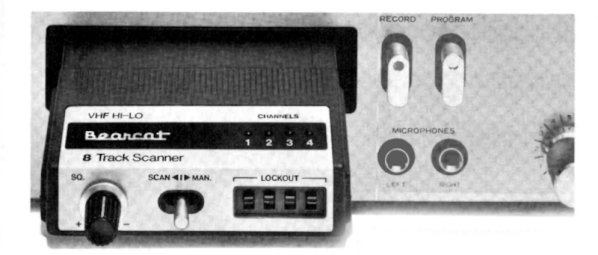
In the 1970s, 8-track audio players were very popular, especially in cars. For a couple of bucks, you could have the latest album, and you didn’t have to flip the tape in the middle of a drive like you did with a cassette. We’ve seen plenty of 8-tracks and most of us a certain age have even owned a few players. But we couldn’t find anyone who would admit to owning the Bearcat 8 Track Scanner, as seen in the 1979 Popular Electronics ad below.

Continue reading “Retro Gadgets: Tired Of The Beatles On 8 Track? Try The Police”

Punycodes Explained

When you’re restricted to ASCII, how can you represent more complex things like emojis or non-Latin characters? One answer is Punycode, which is a way to represent Unicode characters in ASCII. However, while you could technically encode the raw bits of Unicode into characters, like Base64, there’s a snag. The Domain Name System (DNS) generally requires that hostnames are case-insensitive, so whether you type in HACKADAY.com, HackADay.com, or just hackaday.com, it all goes to the same place.

[A. Costello] at the University of California, Berkley proposed the idea of Punycode in RFC 3492 in March 2003. It outlines a simple algorithm where all regular ASCII characters are pulled out and stuck on one side with a separator in between, in this case, a hyphen. Then the Unicode characters are encoded and stuck on the end of the string.

First, the numeric codepoint and position in the string are multiplied together. Then the number is encoded as a Base-36 (a-z and 0-9) variable-length integer. For example, a greeting and the Greek for thanks, “Hey, ευχαριστώ” becomes “Hey, -mxahn5algcq2″. Similarly, the beautiful city of München becomes mnchen-3ya. Continue reading “Punycodes Explained”

Supercon 2022: All Aboard The SS MAPR With Sherry Chen

How do you figure out what is in a moving body of water over a mile wide? For those in charge of assessing the water quality of the Delaware river, this is a real problem. Collecting the data required to evaluate the water quality was expensive and time-consuming, taking over six years. Even then, the data was relatively sparse, with just a few water quality stations and only one surface sample for every six miles of river.

Sherry Chen, Quinn Wu, Vanessa Howell, Eunice Lee, Mia Mansour, and Frank Fan teamed up to create a solution, and the SS MAPR was the result. At Hackaday Supercon 2022, Sherry outlined the mission, why it was necessary, and their journey toward an autonomous robot boat. What follows is a fantastic guide and story of a massive project coming together. There are plans, evaluations, and tests for each component.

Sherry and the team first started by defining what was needed. It needed to be cheap, easy to use, and able to sample from various depths in a well-confined bounding box. It needed to run for four hours, be operated by a single person, and take ten samples across a 1-mile (2 km) section of the river. Some of the commercial solutions were evaluated, but they found none of them met the requirements, even ignoring their high costs. They selected a multi-hull style boat with off-the-shelf pontoons for stability and cost reasons.
Continue reading “Supercon 2022: All Aboard The SS MAPR With Sherry Chen”

All About USB-C: High-Speed Interfaces

One amazing thing about USB-C is its high-speed capabilities. The pinout gives you four high-speed differential pairs and a few more lower-speed pairs, which let you pump giant amounts of data through a connector smaller than a cent coin. Not all devices take advantage of this capability, and they’re not required to – USB-C is designed to be accessible for every portable device under the sun. When you have a device with high-speed needs exposed through USB-C, however, it’s glorious just how much USB-C can give you, and how well it can work.

The ability to get a high-speed interface out of USB-C is called an Alternate Mode, “altmode” for short. The three altmodes you can encounter nowadays are USB3, DisplayPort and Thunderbolt, there’s a few that have faded into obscurity like HDMI and VirtualLink, and some are up and coming like USB4. Most altmodes require digital USB-C communication, using a certain kind of messages over the PD channel. That said, not all of them do – the USB3 is the simplest one. Let’s go through what makes an altmode tick. Continue reading “All About USB-C: High-Speed Interfaces”