Do you know the name [George Devol]? Probably not. In 1961 he received a patent for “Programmed Article Transfer.” We’d call his invention the first robot arm, and its name was the Unimate. Unlike some inventors, this wasn’t some unrealized dream. [Devol’s] arm went to work in New Jersey at a GM plant. The 4,000 pound arm cost $25,000 and stacked hot metal parts. With tubes and hydraulics, we imagine it was a lot of work to keep it working. On the other hand, about 450 of the arms eventually went to work somewhere.
The Unimate became a celebrity with an appearance in at least one newsreel — see below — and the Johnny Carson show. Predictably, the robot in the newsreel was pouring drinks.
Long after the enemy forces have laid down their arms, peace accords have been signed and victories celebrated, there is still a heavy toll to be paid. Most of this comes in the form of unexploded ordnance, including landmines and the severe pollution from heavy metals and other contaminants that can make large areas risky to lethal to enter. Perhaps the most extreme example of this lasting effect is the Zone Rouge (Red Zone) in France, which immediately after the First World War came to a close comprised 1,200 square kilometers.
Within this zone, contamination with heavy metals is so heavy that some areas do not support life, while unexploded shells – some containing lethal gases – and other unexploded ordnance is found throughout the soil. To this day much of the original area remains off-limits, though injuries from old, but still very potent ordnance are common around its borders. Clean-up of the Zone Rouge is expected to take hundreds of years. Sadly, this a pattern that is repeated throughout much of the world. While European nations stumble over ordnance from its two world wars, nations in Africa, Asia and elsewhere struggle with the legacy from much more recent conflicts.
Currently, in Europe’s most recent battlefield, more mines are being laid, booby traps set and unexploded shells and other ordnance scattered where people used to live. Clearing these areas, to make them safe for a return of their inhabitants has already begun in Ukraine, but just like elsewhere in the world, it is an arduous and highly dangerous process with all too often lethal outcomes.
We always love when people take the trouble to show information in new, creative ways — after all, there’s a reason that r/dataisbeautiful exists. But we were particularly taken by this version of the periodic table of the elements, distorted to represent the relative abundance on Earth of the 90 elements that make up almost everything. The table is also color-coded to indicate basically how fast we’re using each element relative to its abundance. The chart also indicates which elements are “conflict resources,” basically stuff people fight over, and which elements go into making smartphones. That last bit we thought was incomplete; we’d have sworn at least some boron would be somewhere in a phone. Still, it’s an interesting way to look at the elements, and reminds us of another way to enumerate the elements.
It’s wildfire season in the western part of North America again, and while this year hasn’t been anywhere near as bad as last year — so far — there’s still a lot of activity in our neck of the woods. And wouldn’t you know it, some people seem to feel like a wildfire is a perfect time to put up a drone. It hardly seems necessary to say that this is A Really Bad Idea™, but for some reason, people still keep doing it. Don’t misunderstand — we absolutely get how cool it is to see firefighting aircraft do their thing. The skill these pilots show as they maneuver their planes, which are sometimes as large as passenger jets, within a hundred meters of the treetops is breathtaking. But operating a drone in the same airspace is just stupid. Not only is it likely to get you in trouble with the law, but there’s a fair chance that the people whose property and lives are being saved by these heroic pilots won’t look kindly on your antics.
I was reading [Al Williams]’ great rant on why sometimes the public adoption of tech moves so slowly, as exemplified by the Japanese Minister of Tech requesting the end of submissions to the government on floppy diskettes. In 2022!
Along the way, [Al] points out that we still trust ballpoint-pen-on-paper signatures more than digital ones. Imagine going to a bank and being able to open an account with your authentication token! It would be tons more secure, verifiable, and easier to store. It makes sense in every way. Except, unless you’ve needed one for work, you probably don’t have a Fido2 (or whatever) token, do you?
Same goes for signed, or encrypted, e-mail. If you’re a big cryptography geek, you probably have a GPG key. You might even have a mail reader that supports it. But try requesting an encrypted message from a normal person. Or ask them to verify a signature.
Honestly, signing and encrypting are essentially both solved problems, from a technical standpoint, and for a long time. But somehow, from a societal point of view, we’re not even close yet. Public key encryption dates back to the late 1970’s, and 3.5” diskettes are at least a decade younger. Diskettes are now obsolete, but I still can’t sign a legal document with my GPG key. What gives?
This article is part of the Hackaday.com newsletter, delivered every seven days for each of the last 200+ weeks. It also includes our favorite articles from the last seven days that you can see on the web version of the newsletter.
Want this type of article to hit your inbox every Friday morning? You should sign up!
Automated Tank Gauges (ATGs) are nifty bits of tech, sitting unseen in just about every gas station. They keep track of fuel levels, temperature, and other bits of information, and sometimes get tied into the automated systems at the station. The problem, is that a bunch of these devices are listening to port 10001 on the Internet, and some of them appear to be misconfigured. How many? Let’s start with the easier question, how many IPs have port 10001 open? Masscan is one of the best tools for this, and [RoseSecurity] found over 85,000 listening devices. An open port is just the start. How many of those respond to connections with the string In-Tank Inventory Reports? Shodan reports 11,113 IPs as of August of this year. [RoseSecurity] wrote a simple Python script that checked each of those listening IPs came up with a matching number of devices. The scary bit is that this check was done by sending a Get In-Tank Inventory Report command, and checking for a good response. It seems like that’s 11K systems, connected to the internet, with no authentication. What could possibly go wrong? Continue reading “This Week In Security: 11,000 Gas Stations, TrustZone Hacks Kernel, And Unexpected Fuzzing Finds”→
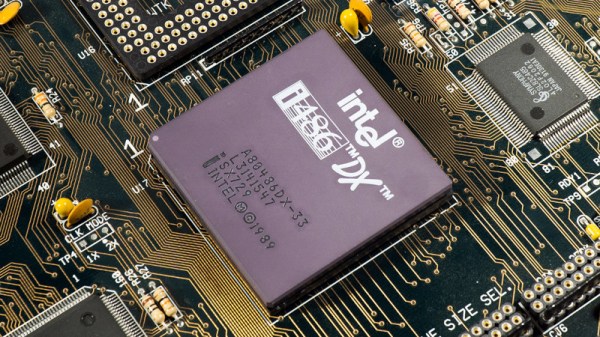
Since the early 2000s, the CPU industry has shifted from raw clock speed to core counts. Pat Gelsinger famously took the stage in 2002 and gave the talk the industry needed, stating processors needed specialty silicon or multiple cores to reduce power requirements and spread heat. A few years later, the Core series was introduced with two or four-core configurations to compete with the AMD Athlon 64 x2.
Nowadays, we’re seeing heterogeneous chip designs with big and little cores, chiplets, and other crazy fabrication techniques that are fundamentally the same concept: spread the thermal load across multiple pieces of silicon. This writer is willing to put good money into betting that you’ll see consumer desktop machines with 32 physical cores in less than five years. It might be hard to believe, but a 2013 Intel Haswell i7 came with just four cores compared to the twenty you’ll get in an i7 today. Even an ESP32 has two cores with support in FreeRTOS for pinning tasks to different cores. With so many cores, how to even write software for that? What’s the difference between processes and threads? How does this all work in straight vanilla C98?
Modularity is a fun topic for us. There’s something satisfying about seeing a complex system split into parts and these parts made replaceable. We often want some parts of our devices swapped, after all – for repair or upgrade purposes, and often, it’s just fun to scour eBay for laptop parts, equipping your Thinkpad with the combination of parts that fits you best. Having always been fascinated by modularity, I believe that hackers deserve to know what’s been happening on the CPU module front over the past decade.
This “swap your Thinkpad keyboard” video thumbnail captures a modularity-enabled sentiment many can relate to.
We’ve gotten used to swapping components in desktop PCs, given their unparalleled modularity, and it’s big news when someone tries to split a yet-monolithic concept like a phone or a laptop into modules. Sometimes, the CPU itself is put into a module. From the grandiose idea of Project Ara, to Intel’s Compute Card, to Framework laptop’s standardized motherboards, companies have been trying to capitalize on what CPU module standardization can bring them.
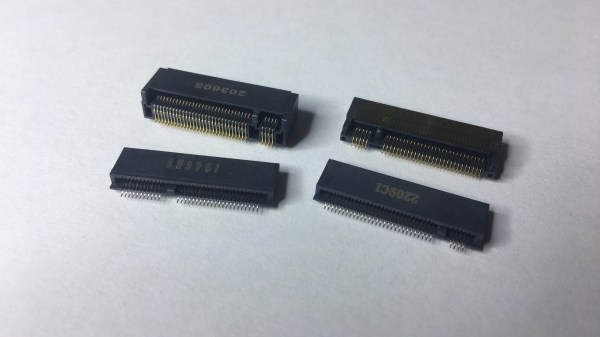
There’s some hobbyist-driven and hobbyist-friendly modular standards, too – the kind you can already use to wrangle a powerful layout-demanding CPU and RAM combo and place it on your simple self-designed board. I’d like to tell you about a few notable modular CPU concepts – their ideas, complexities, constraints and stories. As you work on that one ambitious project of yours – you know, the one, – it’s likely you will benefit a lot from such a standard. Or, perhaps, you’ll find it necessary to design the next standard for others to use – after all, we all know there’s never too few standards! Continue reading “Future Brings CPU Modules, And The Future Is Now”→