Linux Fu: The Ultimate Dual Boot Laptop?

I must confess, that I try not to run Windows any more than absolutely necessary. But for many reasons, it is occasionally necessary. In particular, I have had several laptops that are finicky with Linux. I still usually dual boot them, but I often leave Windows on them for one reason or another. I recently bought a new Dell Inspiron and the process of dual booting it turned out to be unusually effective but did bring up a few challenges.

If you ever wanted a proper dual-booting laptop, you’ll be interested in how this setup works. Sure, you can always repartition the drive, but the laptop has a relatively small drive and is set up very specifically to work with the BIOS diagnostics and recovery so it is always a pain to redo the drive without upsetting the factory tools.

Since the laptop came with a 512 GB NVMe drive, I wanted to upgrade the drive anyway. So one option would have been to put a bigger drive in and then go the normal route. That was actually my intention, but I wound up going a different way.

Continue reading “Linux Fu: The Ultimate Dual Boot Laptop?”

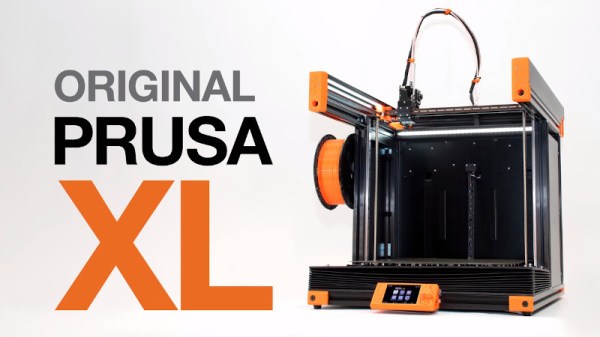
Prusa XL Goes Big, But That’s Only Half The Story

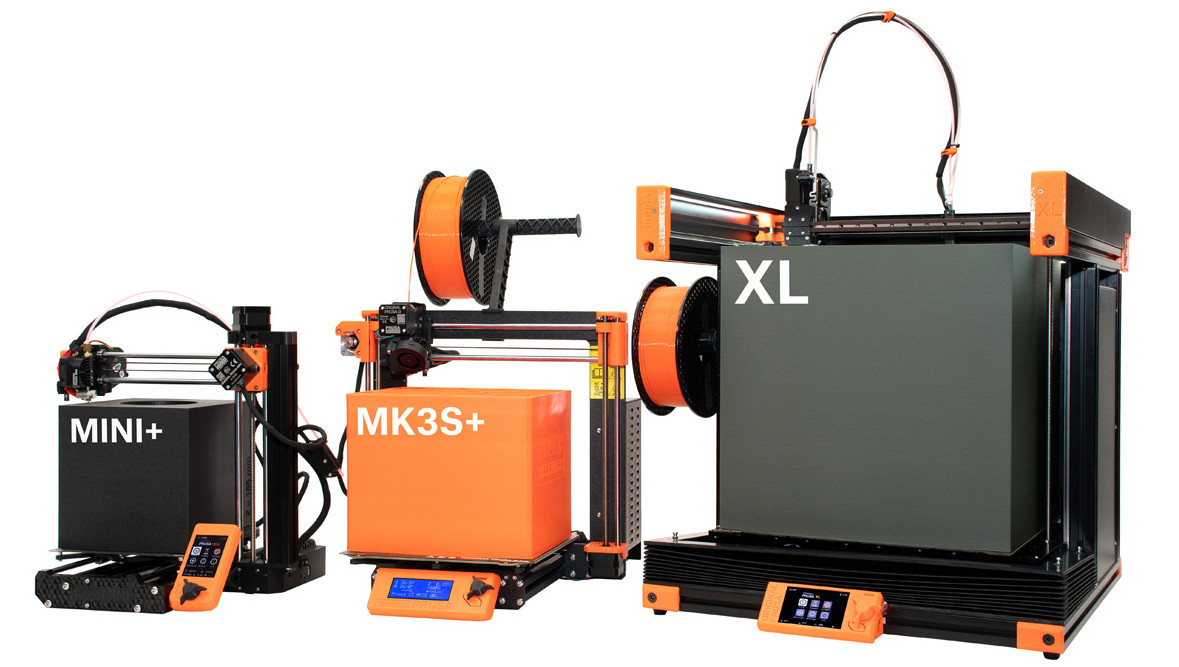
For a few years now it’s been an open secret that Prusa Research was working on a larger printer named, imaginatively enough, the Prusa XL. Positioned at the opposite end of their product spectrum from the wildly popular Prusa Mini, this upper-tier machine would be for serious hobbyists or small companies that need to print single-part objects that were too large for their flagship i3 MK3S+ printer. Unfortunately, the global COVID-19 pandemic made it difficult for the Czech company to focus on bringing a new product to market, to the point that some had begun to wonder if we’d ever see this mythical machine.

But now, finally, the wait is over. Or perhaps, it’s just beginning. That’s because while Prusa Research has officially announced their new XL model and opened preorders for the $1,999+ USD printer, it’s not expected to ship until at least the second quarter of 2022. That’s already a pretty substantial lead time, but given Prusa’s track record when it comes to product launches, we wouldn’t be surprised if early adopters don’t start seeing their machines until this time next year.

So what do you get for your money? Well, not an over-sized Prusa i3, that’s for sure. While many had speculated the XL would simply be a larger version of the company’s popular open source printer with a few modern niceties like a 32-bit control board sprinkled in, the reality is something else entirely. While the high purchase price and ponderous dimensions of the new machine might make it a tough sell for many in the hacker and maker communities, there’s little question that the technical improvements and innovations built into the Prusa XL provide a glimpse of the future for the desktop 3D printer market as a whole.

Continue reading “Prusa XL Goes Big, But That’s Only Half The Story”

Hackaday Podcast 146: Dueling Trackballs, Next Level BEAM Robot, Take Control Of Your Bench, And Green Programming

Postpone your holiday shopping and spend some quality time with editors Mike Szczys and Elliot Williams as they sift through the week in Hackaday. Which programming language is the greenest? How many trackballs can a mouse possibly have? And can a Bluetooth dongle run DOOM? Join us to find out!


Take a look at the links below if you want to follow along, and as always, tell us what you think about this episode in the comments!

Direct download (52 MB)

Continue reading “Hackaday Podcast 146: Dueling Trackballs, Next Level BEAM Robot, Take Control Of Your Bench, And Green Programming”

Turkey fryer

Why Deep Frying Turkey Can Go Very Wrong

Tomorrow is Thanksgiving and that means Americans across the United States will be cooking up a turkey feast. One of the most popular ways to cook the bird is by deep frying it in oil.

Local TV stations everywhere spend this week warning about turkey frying. They’re not wrong… if things get out of hand you can end up burning down your house, if not your entire street. Let’s talk the science behind November turkey fires, and hopefully avoid a turkeyferno.

Simple Errors

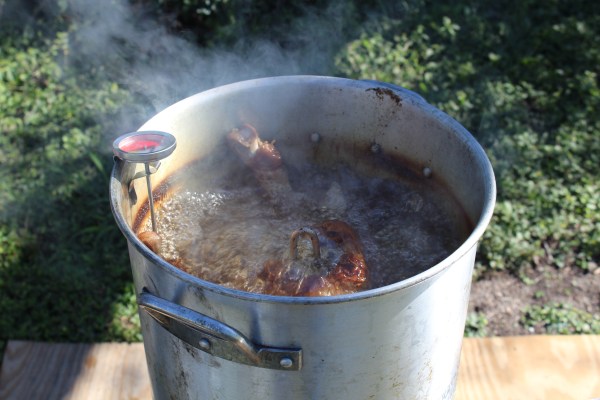
The typical setup for deep frying a turkey involves lowering the bird into a big pot full of oil sitting on a gas burner. Ropes and pulleys are often used to lower the turkey into the pot to avoid getting one’s hands near the hot oil. Ideally, this should be done in a backyard, away from structures, to provide good ventilation and plenty of room in the case something does go wrong.

Continue reading “Why Deep Frying Turkey Can Go Very Wrong”

Firefox logo displayed on screen

Firefox Brings The Fire: Shifting From GLX To EGL

You may (or may not) have heard that Firefox is moving from GLX to EGL for the Linux graphics stack. It’s an indicator of which way the tides are moving in the software world. Let’s look at what it means, why it matters, and why it’s cool.

A graphics stack is a complex system with many layers. But on Linux, there needs to be an interface between something like OpenGL and a windowing system like X11. X11 provides a fundamental framework for drawing and moving windows around a display, capturing user input, and determining focus, but little else. An X11 server is just a program that manages all the windows (clients). Each window in X11 is considered a client. A client connects to the server over a Unix process socket or the internet.

OpenGL focuses on what to draw within the confines of the screen space given by the window system. GLX (which stands for OpenGL Extension to the X window system) was originally developed by Silicon Graphics. It has changed over the years, gaining hardware acceleration support and DRI (Direct Rendering Interface). DRI is a way for OpenGL to talk directly to the graphical hardware if the server and the client are on the same computer. At its core, GLX provides OpenGL functions to X11, adds to the X protocol by allowing 3d rendering commands to be sent, and an extension that reads rendering commands and passes them to OpenGL.

EGL (Embedded-System Graphics Library) is a successor of GLX, but it started with a different environment in mind. Initially, the focus was embedded systems, and devices such as Android, Raspberry Pi, and Blackberry heavily lean on EGL for their graphical needs. Finally, however, Wayland decided to use EGL as GLX brought in X11 dependencies, and EGL offers closer access to hardware.

When Martin Stránský initially added Wayland support to Firefox, he used EGL instead of GLX. Additionally, the Wayland implementation had zero-copy GPU buffer sharing via DMABUF (a Linux kernel subsystem for sharing buffers). Unfortunately, Firefox couldn’t turn on this improved WebGL’s performance for X11 (it existed but was never stable enough). Nevertheless, features kept coming making Wayland (and consequently EGL) a more first-class citizen. Now EGL will be enabled by default in Firefox 94+ with Mesa 21+ drivers (Mesa is an implementation of OpenGL, Vulkan, and other specifications that translate commands into instructions the GPU can understand).

Continue reading “Firefox Brings The Fire: Shifting From GLX To EGL”

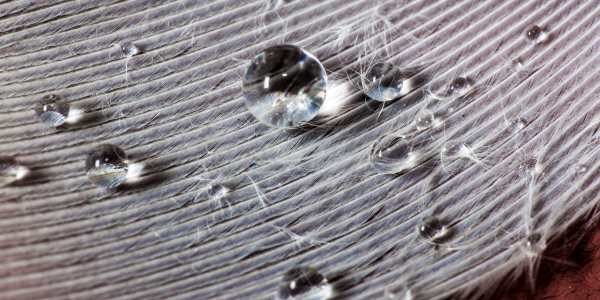
Water beading up on a feather

PFAS: The Organofluorines Your Biochemist Warned You About

Sometimes it begins to feel like a tradition that a certain substance or group of substances become highly popular due to certain highly desirable chemical or physical properties, only for these chemicals then to go on to turn out to form a hazard to the biosphere, human life, or both. In the case of per- and polyfluoroalkyl substances (PFAS) it’s no different. Upon the discovery that a subgroup of these – the fluorosurfactants – have the ability to reduce water surface tension significantly more than other surfactants, they began to be used everywhere.

Today, fluorosurfactants are being used in everything from stain repellents to paint, make-up, and foam used by firefighters. In a recent study of 231 cosmetic products bought in the US and Canada (Whitehead et al., 2021), it was found that all of them contained PFAS, even when not listed on the packaging. The problematic part here is that PFASs are very stable, do not decay after disposal, and bioaccumulate in the body where they may have endocrine-disrupting effects.

Some areas have now at least partially banned PFAS, but the evidence for this is so far mixed. Let’s review what we do know at this point, and which alternatives we have to continuing to use these substances. Continue reading “PFAS: The Organofluorines Your Biochemist Warned You About”

Blue Origin Rolls Out Test Article For Next-Gen Rocket

By any metric you care to use, this is a very exciting time for America’s space program. NASA is refocusing their efforts towards the Moon and beyond, SpaceX is launching routine crew and cargo flights to the International Space Station with reusable rockets, and if you’ve got deep enough pockets, there are now multiple companies offering suborbital pleasure trips requiring little more than a few hours worth of training. It’s taken longer than many people had hoped, but it seems we’re finally making the confident strides necessary to truly utilize space’s vast resources.

But things are just getting started. A new generation of massive reusable rockets are currently being developed, which promise to make access to space cheaper and faster than ever before. We’ve seen quite a bit of SpaceX’s Starship, thanks in no small part to the dramatic test flights that the media-savvy company has been regularly live streaming to YouTube. But Blue Origin, founded by Amazon’s Jeff Bezos, has been far more secretive about their New Glenn. That is, until now.

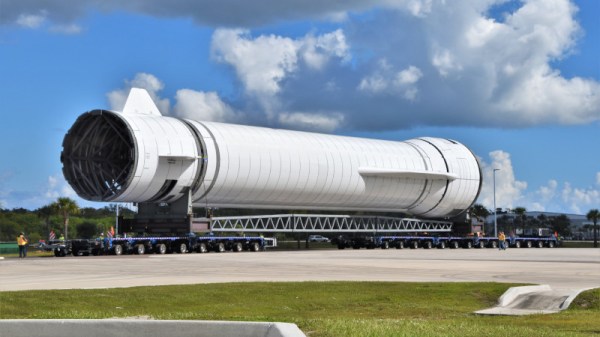
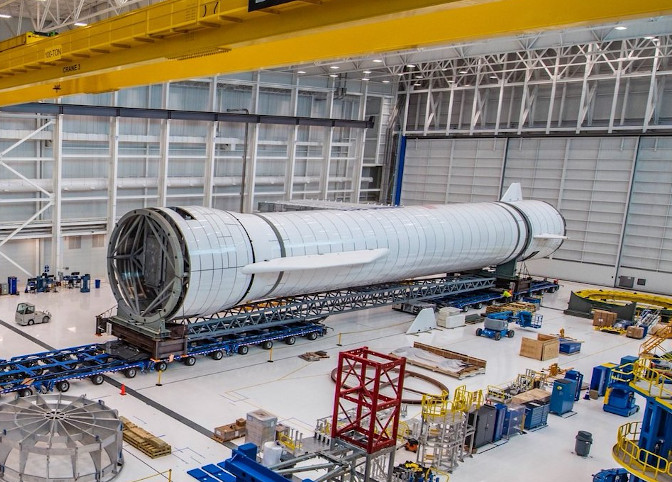
GS1 under construction in Florida.

On November 8th, Blue Origin rolled out their GS1 simulator for the New Glenn’s first stage. This stand-in for the real rocket will never fly, but it’s designed to perfectly recreate the dimensions, center of gravity, and mass, of the real thing. Ground teams will use the GS1 to practice safely transporting the booster, which is approximately half the length of the Saturn V, from their production facility to Launch Complex 36 (LC-36) at Cape Canaveral. It will also be used to test the fit and function of various pieces of ground support equipment, and eventually, the second stage stacking procedure.

For the uninitiated, it might seem like this is a lot of fuss over what’s ultimately just a hollow metal tube. But the introduction of a test article such as this has traditionally been a major milestone during the design and construction of rockets and spacecraft, dating back to the “boilerplate” test capsules used during the Mercury, Gemini, and Apollo programs; a sure sign that what was just an idea is now becoming a reality.

Continue reading “Blue Origin Rolls Out Test Article For Next-Gen Rocket”