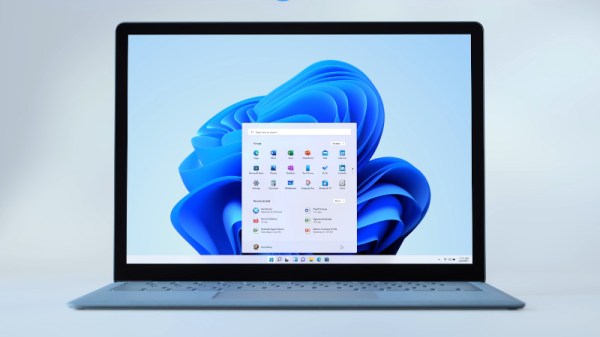
There was a time when a new version of Windows was a really big deal, such the launch of Windows 95 for which the tones of the Rolling Stones’ Start me up could be heard across all manner of media outlets. Gradually over years this excitement has petered out, finally leaving us with Windows 10 that would, we were told, be the last ever version of the popular operating system and thence only receive continuous updates
Back in September of 2019, I had the opportunity to climb aboard the restored B-17G bomber Nine-O-Nine as part of a national “Wings of Freedom” airport tour operated by the Collings Foundation. I was excited to get up close and personal with such an iconic aircraft, particularity since Hackaday gave me a platform to share the experience with a global audience. With fewer than 50 B-17s left in the world, and most of those in the United States, taking this sort of “virtual tour” was as close as most people would ever get to seeing what it was really like for the crews who operated these machines over the skies of Europe more than 75 years ago.
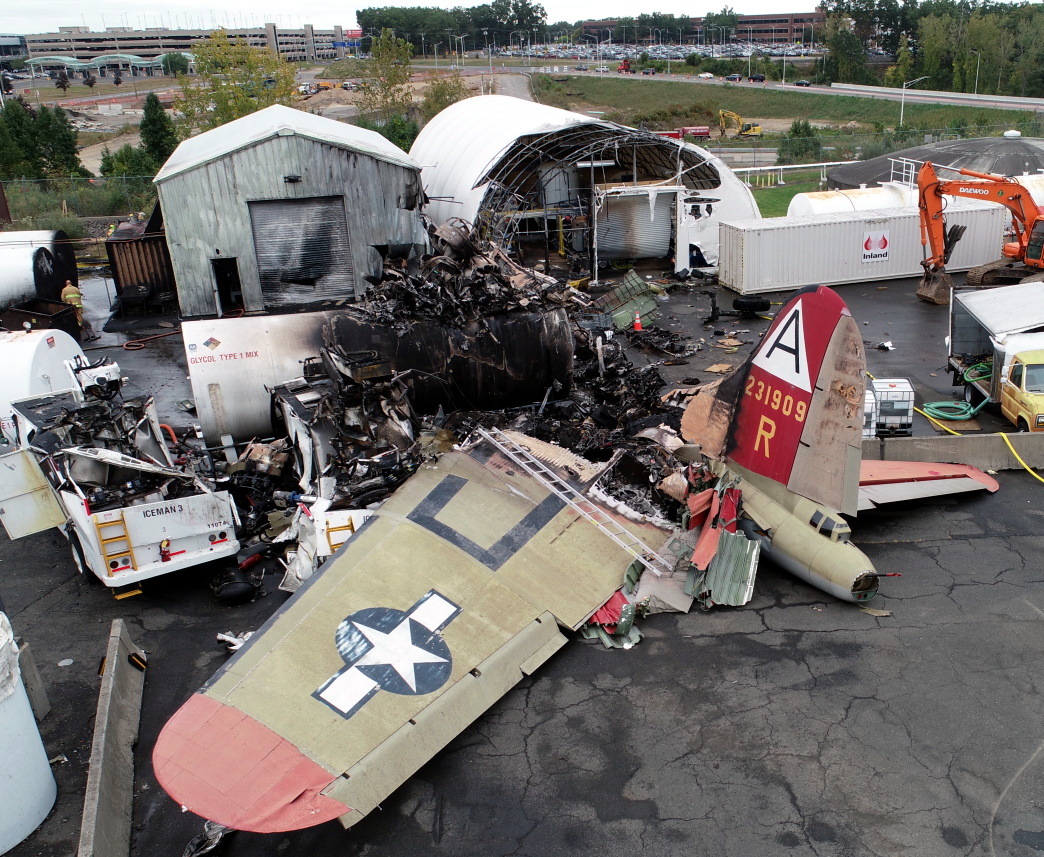
Tragically, just a week after the article was published, the Nine-O-Ninecrashed during a visit to Bradley International Airport in Connecticut. The pilot, co-pilot, and five paying passengers were all killed in either the initial impact or the subsequent fire. When crews were finally able to extinguish the flames, the left wing and tail were all that remained of the once mighty bomber. In a twist of fate, some of the images I took for the Hackaday article ended up being included in the National Transportation Safety Board (NTSB) accident report, as they represented perhaps the most detailed photographic record of the aircraft’s condition before the crash.
Wreckage of the Nine-O-Nine.
In the weeks and months that followed, many voiced their concerns over what the Federal Aviation Administration (FAA) calls “Living History Flight Experience” aircraft such as those operated by the Collings Foundation. The main point of contention was whether or not these planes were too old to safely carry passengers, and by extension, whether continuing to fly them around the country presented a menace to the national airspace. Critics argued that whatever cultural benefit offered by the chance for the public to tour or ride these antique aircraft was not worth anyone losing their lives over; a line of logic that’s difficult to find fault in.
Then came COVID-19. By March of 2020, individual states had already started going into lockdown, and suddenly there were far more pressing matters to address than the fate of a few dozen teetering WWII aircraft. It was around this time that the FAA pulled the Collings Foundation’s license to conduct any more paid flights, but since outdoor gatherings such as airshows were being put on hold for the foreseeable future, the measure had little immediate impact. It was clear these airborne museum pieces were going to spend most of 2020 in their hangers anyway.
Now, thankfully, the pall of COVID-19 is finally beginning to lift over the United States. In response to widespread vaccine availability, most states are ending or at least reducing their restrictions on outdoor events. With major airshows like the “World War II Weekend” in Reading, Pennsylvania given the green light to proceed, these legendary aircraft are being awakened from their long slumber and making their first tentative flights of the post-pandemic era.
We all need the occasional win when it comes to work or personal projects. Being able to feel that payoff of progress and satisfaction is deeply important, because if everything is always uphill, that’s a recipe for burnout. Avoiding that is important enough to explore how to set oneself up for a few easy wins.
Getting the occasional win helps us stay motivated, creative, and fulfilled. Meaningful work can deliver on this, but many of us rely on hobbies to make up any shortfall. Sometimes, that isn’t enough. Hobbies themselves can end up feeling like a chore, and when that happens, they cease to provide respite. The good news is that I believe it is possible to exploit the benefits of hobbies to deliver supplemental “wins” when they are needed most, and I’ll explain how.
I have found that successes do not have to be hard-won in order to be beneficial, but they do need to be relevant to one’s passions and interests. So, when naturally-occurring successes come too few and far between, and hobbies aren’t doing the trick, use knowledge of yourself to stack the deck for some easy wins. It can tip the scales towards feeling meaningful progress and fulfillment in the face of what could otherwise lead to burnout. Continue reading “We All Need A Win Sometimes, So Make Them Yourself”→
Astronauts are currently installing the first of six new solar arrays on the International Space Station (ISS), in a bid to bolster the reduced power generation capability of the original panels which have now been in space for over twenty years. But without the Space Shuttle to haul them into orbit, developing direct replacements for the Stations iconic 34 meter (112 foot) solar “wings” simply wasn’t an option. So NASA has turned to next-generation solar arrays that roll out like a tape measure and are light and compact enough for the SpaceX Dragon to carry them into orbit.
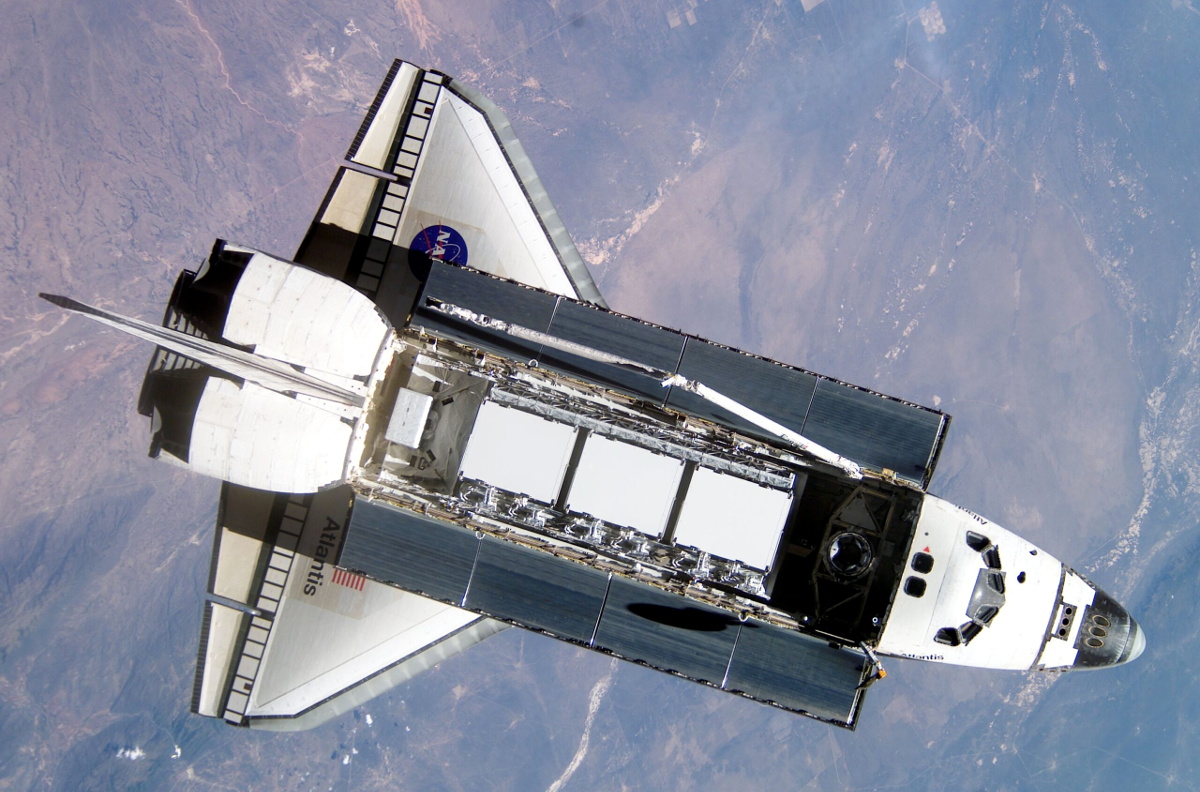
Space Shuttle Atlantis carrying part of the ISS truss.
Considering how integral the Space Shuttle was to its assembly, it’s hardly a surprise that no major modules have been added to the ISS since the fleet of winged spacecraft was retired in 2011. The few small elements that have been installed, such as the new International Docking Adapters and the Nanoracks “Bishop” airlock, have had to fit into the rear unpressurized compartment of the Dragon capsule. While a considerable limitation, NASA had planned for this eventuality, with principle construction of the ISS always intended to conclude upon the retirement of the Shuttle.
But the International Space Station was never supposed to last as long as it has, and some components are starting to show their age. The original solar panels are now more than five years beyond their fifteen year service life, and while they’re still producing sufficient power to keep the Station running in its current configuration, their operational efficiency has dropped considerably with age. So in January NASA announced an ambitious timeline for performing upgrades the space agency believes are necessary to keep up with the ever-increasing energy demands of the orbiting laboratory.
After five years of research, Colgate-Palmolive recently revealed Australia’s first recyclable toothpaste tube. Why is this exciting? They are eager to share the design with the rest of the toothpaste manufacturers and other tube-related industries in an effort to reduce the volume of plastic that ends up in landfills. It may not be as life-saving as seat belts or the Polio vaccine, but the move does bring Volvo and OG mega open-sourcer Jonas Salk to mind.
Today, toothpaste tubes are mostly plastic, but they contain a layer of aluminum that helps it stay flattened and/or rolled up. So far, multi-layer packaging like this isn’t accepted for recycling at most places, at least as far as Australia and the US are concerned. In the US, Tom’s of Maine was making their tubes entirely out of aluminum for better access to recycling, but they have since stopped due to customer backlash.
Although Colgate’s new tubes are still multi-layered, they are 100% HDPE, which makes them recyclable. The new tubes are made up of different thicknesses and grades of HDPE so they can be easily squeezed and rolled up.
Toothpaste Before Tubes
Has toothpaste always come in tubes? No it has not. It also didn’t start life as a paste. Toothpaste has been around since 5000 BC when the Egyptians made tooth powders from the ashes of ox hooves and mixed them with myrrh and a few abrasives like powdered eggshells and pumice. We’re not sure what they kept it in — maybe handmade pottery with a lid, or a satchel made from an animal’s pelt or stomach.
The ancient Chinese used ginseng, salt, and added herbal mints for flavoring. The Greeks and Romans tried crushed bones, oyster shells, tree bark, and charcoal, which happens to be back in vogue. There is evidence from the late 1700s showing that people once brushed with burnt breadcrumbs.
Raise your hand if you remember when PulseAudio was famous for breaking audio on Linux for everyone. For quite a few years, the standard answer for any audio problem on Linux was to uninstall PulseAudio, and just use ALSA. It’s probably the case that a number of distros switched to Pulse before it was quite ready. My experience was that after a couple years of fixing bugs, the experience got to be quite stable and useful. PulseAudio brought some really nice features to Linux, like moving sound streams between devices and dynamically resampling streams as needed.
After decades of improvements to hard disk drive (HDD) technology, manufacturers are now close to taking the next big leap that will boost storage density to new levels. Using laser-assisted writes, manufacturers like Seagate are projecting 50+ TB HDDs by 2026 and 120+ TB HDDs after 2030. One part of the secret recipe is heat-assisted magnetic recording (HAMR).
One of the hurdles with implementing HAMR is finding a protective coating for the magnetic media that can handle this frequent heating while also being thinner than current coatings, so that the head can move even closer to the surface. According to a recent paper by N. Dwivedi et al. published in Nature Communications, this new protective coating may have been found in the form of sheets of graphene.