A Full Speed, Portable Apple //e

A while back, [Jorj] caught wind of a Hackaday post from December. It was a handheld Apple IIe, emulated on an ATMega1284p. An impressive feat, no doubt, but it’s all wrong. This ATapple only has 12k of RAM and only runs at 70% of the correct speed. The ATapple is impressive, but [Jorj] knew he could do better. He set out to create the ultimate portable Apple IIe. By all accounts, he succeeded.

This project and its inspiration have a few things in common. They’re both assembled on perfboard, using tiny tact switches for the keyboard. The display is a standard TFT display easily sourced from eBay, Amazon, or Aliexpress. There’s a speaker for terribad Apple II audio on both, and gigantic 5 1/4″ floppies have been shrunk down to the size of an SD card. That’s where the similarities end.

[Jorj] knew he needed horsepower for this build, so he turned to the most powerful microcontroller development board he had on his workbench: the Teensy 3.6. This is a 180 MHz ARM Cortex M4 running a full-speed Apple IIe emulator. Writing a simple 6502 emulator is straightforward, but Apple IIe emulation also requires an MMU. the complete emulator is available in [Jorj]’s repo, and passes all the tests for 6502 functionality.

The project runs all Apple II software with ease, but we’re really struck by how simple the entire circuit is. Aside from the Teensy, there really isn’t much to this build. It’s an off-the-shelf display, a dead simple keyboard matrix, and a little bit of miscellaneous circuitry. It’s simple enough to be built on a piece of perfboard, and we hope simple enough for someone to clone the circuit and share the PCBs.

The Elements Converge For ±.002 In Tolerance

What can be accomplished with just a torch and compressed air? We can think of many things, but bringing a 17-foot-long marine shaft into ±.002 in tolerance was not on our list.

Heat straightening (PDF) utilizes an oxy-acetylene flame that is used to quickly heat a small section of a workpiece. As the metal cools, it contracts more than it expanded when heated, resulting in a changed volume. With skill, any distortions on a shaft can theoretically be straightened out with enough time (and oxy-acetylene). Heat straightening is commonly applied to steel but works on nickel, copper, brass and aluminum additionally.

[Keith Fenner’s] standard process for trueing stock is sensitive enough that even sunlight can introduce irregularities, but at the same time is robust enough to carry out in your driveway. However, even though the only specialty tools you need are a torch, compressed air and work supports, watching [Keith] work makes it clear that heat straightening is as much an art as it is a science. Check out his artistry in the video below the break. Continue reading “The Elements Converge For ±.002 In Tolerance”

Homemade Subaru Head Unit Is Hidden Masterpiece

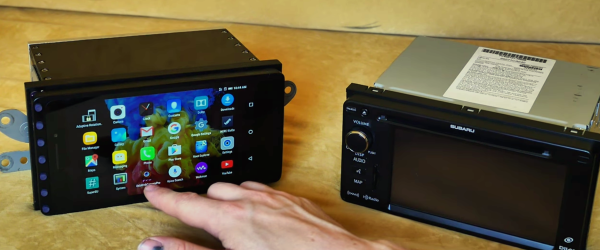
The Subaru BRZ (also produced for Toyota as the GT86) is a snappy sportster but [megahercas6]’s old US version had many navigation and entertainment system features which weren’t useful or wouldn’t work in his native Lithuania. He could have swapped out the built in screen for a large 4G Android tablet/phone, but there’s limited adventure in that. Instead, he went ahead and built his own homemade Navigation system by designing and integrating a whole bunch of hardware modules resulting in one “hack” of an upgrade.

The system is built around a Lenovo 4G phone-tablet running android and supporting GPS, GLONASS as well as the Chinese BeiDou satellite navigation systems. He removed the original daughter board handling the USB OTG connection on the tablet, and replaced it with his version so he could connect it to his external USB board via a flat ribbon cable. The USB board contains a Cypress 4-port USB hub. One port is used as the USB HID device to allow external buttons for system control — Power, Volume Up/Down, Fwd/Rev, Play/Pause, and Phone Answer/Hangup. The second port is used as a regular USB input to allow connecting external devices such as flash drives. The third one goes to a reversing camera while the fourth port goes to a USB DAC.

The USB DAC is another hardware board by itself and also includes a Bluetooth module which integrates his phone’s audio and control functions with the on-board system. There’s also an audio mixer which allows him to use the phone audio without having to miss out on the navigation prompts from the tablet. Both boards also contain several peripheral circuits such as amplifiers and DC power supplies. Audio to the speakers is routed through six LM3886 based power amplifier boards. And the GPS module receives its own special low-noise amplifier board to ensure extremely strong reception at all times. That’s a total of ten boards custom built for this project. He’s also managed to source all the original harness connectors so his system is literally a snap in replacement. The final assembly looks pretty dashing.

For some strange reason, the Lenovo tablet uses 4.35V as the ‘fully charged” value for its LiPo instead of the more common 4.20V, so even with the whole system connected to a hefty 12V lead acid battery from which he’s deriving the 4.20V charging voltage for the tablet, it still complains about “low battery” — and he’s looking for advice on how he can resolve that issue short of blowing up the LiPo by using the higher charge voltage. Besides that, he’s (obviously a kickass) hardware designer and a little bit rusty on the software and programming side of things, for which he’s looking for inputs from the community. His introductory video is almost 30 minutes long, but the shorter demo video after the break shows the system after installation in his car. He’s posted all of his Altium hardware source files on the project page, but until he shares PDF versions, it would be difficult for most of us to look at his work.

Continue reading “Homemade Subaru Head Unit Is Hidden Masterpiece”

HackBusting: Can You Fake A TV Remote With A Lighter And Some Paper?

We recently published an article where someone apparently controlled their TV by simulating a remote with merely a lighter and a sheet of paper. The paper had a barcode like cutout for a supposed “Universal Standby Signal”. The video rightfully attracted a substantial crowd, some awestruck by its simplicity, others sceptical about its claims.

Coming from some generic “Viral Life Hack” production house, the characteristic blare of background music, more suited to an underground rave than a technical video, certainly did not do it any favours. As any moderately experienced campaigner would know, modern televisions and remotes have been carefully engineered  to prevent such mishaps. Many of us at Hackaday, were under the impression that it would take something slightly more sophisticated than a fluorescent-bodied lighter and a crisp sheet of A4 to deceive the system. So we tested it out. Our verdict? Unlikely, but not impossible. (And we’re pretty sure that the video is a fake either way.) But enough speculation, we’re here to do science.

Continue reading “HackBusting: Can You Fake A TV Remote With A Lighter And Some Paper?”

Nespresso Capsule Detector

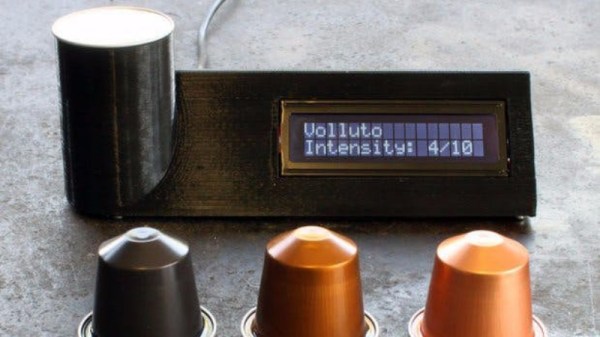
Nespresso fans rejoice! If you like coffee (of course you do) and are a Nespresso fan, chances are you are one of two types of persons: the ones that chosen one type of capsule and stick to it or the ones that have a jar full of mixed capsules and lost track which coffee is which. Of course, there is a third, rarer, OCDish, kind. The ones that have every capsule organized neatly by color in a proper holder, full of style. In any case, if you forgot which color is which coffee because you threw the case away and forgot about it here’s an interesting weekend project for you: the Nespresso Capsule Detector.

[circuit.io team] made a neat Arduino-based project that can detect which capsule is which using an RGB color detector and display information about it on an LCD display. It’s a pretty simple project to make. If you have a 3D printer you can print the case, if not it’s fairly easy to come up with a working casing for the electronics and capsule.

The operation is simple, just drop the capsule in the hole and the Nespresso Capsule Detector will tell you which type it is, its intensity, its flavor tones and the optimal cup size for the coffee in question. We are just not sure if it can detect the Nespresso weddingbots correctly, but who knows?

Have a look:

Continue reading “Nespresso Capsule Detector”

40-Acre HAARP Rides Again, And They Want You To Listen

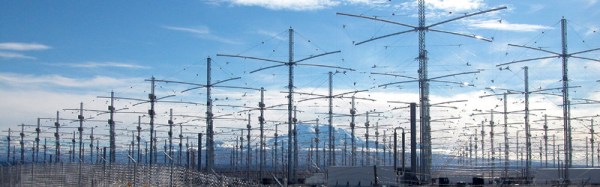
News comes to us this week that the famous HAARP antenna array is to be brought back into service for experiments by the University of Alaska. Built in the 1990s for the US Air Force’s High Frequency Active Auroral Research Program, the array is a 40-acre site containing a phased array of 180 HF antennas and their associated high power transmitters. Its purpose it to  conduct research on charged particles in the upper atmosphere, but that hasn’t stopped an array of bizarre conspiracy theories being built around its existence.

The Air Force gave up the site to the university a few years ago, and it is their work that is about to recommence. They will be looking at the effects of charged particles on satellite-to-ground communications, as well as over-the-horizon communications and visible observations of the resulting airglow. If you live in Alaska you may be able to see the experiments in your skies, but residents elsewhere should be able to follow them with an HF radio. It’s even reported that they are seeking reports from SWLs (Short Wave Listeners). Frequencies and times will be announced on the @UAFGI Twitter account. Perhaps canny radio amateurs will join in the fun, after all it’s not often that the exact time and place of an aurora is known in advance.

Tinfoil hat wearers will no doubt have many entertaining things to say about this event, but for the rest of us it’s an opportunity for a grandstand seat on some cutting-edge atmospheric research. We’ve reported in the past on another piece of upper atmosphere research, a plan to seed it with plasma from cubesats, and for those of you that follow our Retrotechtacular series we’ve also featured a vintage look at over-the-horizon radar.

HAARP antenna array picture: Michael Kleiman, US Air Force [Public domain], via Wikimedia Commons.

How A Van De Graaff Generator Works

What I particularly like about the Van de Graaff (or VDG) is that it’s a combination of a few discrete scientific principles and some mechanically produced current, making it an interesting study. For example, did you know that its voltage is limited mostly by the diameter and curvature of the dome? That’s why a handheld one is harmless but you want to avoid getting zapped by one with a 15″ diameter dome. What follows is a journey through the workings of this interesting high voltage generator.

Continue reading “How A Van De Graaff Generator Works”