VW Engineer Pleads Guilty To Conspiracy

[James Liang], an engineer at Volkswagen for 33 years, plead guilty today to conspiracy. He was an engineer involved in delivering Diesel vehicles to market which could detect an emissions test scenario and perform differently from normal operation in order to pass US emission standards.

A year ago we talked about the Ethics in Engineering surrounding this issue. At the time we wondered why any engineer would go along with a plan to defraud customers. We may get an answer to this after all. [Mr. Liang] will cooperate with authorities as the VW probe continues.

According to information in the indictment, none of this happened by mistake (as we suspected). There was a team responsible for developing a mode that would detect a test and pass inspection after the company discovered the engine could not otherwise pass. It’s not hard to see the motivation behind this — think of the sunk cost in developing an engine design. The team responsible for cheating the tests went so far as to push software updates in 2014 which made the cheat better, and lying about the existence of these software “features” when questioned by authorities (again, according to the indictment).

Books You Should Read: Poorly Made In China

This book is scary, and honestly I can’t decide if I should recommend it or not. It’s not a guide, it doesn’t offer solutions, and it’s full of so many cautionary tales and descriptions of tricks and scams that you will wonder how any business gets done in China at all. If you are looking for a reason not to manufacture in China, then this is the book for you.

The author is not involved in the electronics industry. Most of the book describes a single customer in the personal products field (soap, shampoo, lotions, creams, etc.). He does describe other industries, and says that in general most factories in any industry will try the same tricks, and confirms this with experiences from other similar people in his position as local intermediary for foreign importers.

Continue reading “Books You Should Read: Poorly Made In China”

31415926 (That’s Roughly Π Times 10 Million Raspberries)

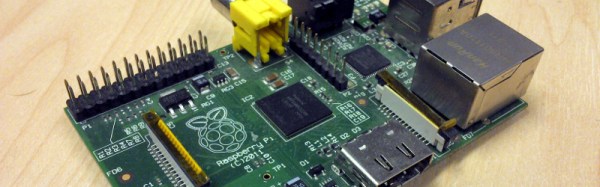
The Raspberry Pi Foundation founder Eben Upton has announced that their ten millionth eponymous single-board computer has been sold since their launch back in February 2012. It’s an impressive achievement, especially so since their original sales expectations were for a modest ten thousand. For those of us who watched the RS and Farnell websites crumble under the strain of so many would-be purchasers on that leap day morning four and a half years ago their rapidly exceeding that forecast came as no surprise, but still, it’s worth a moment’s consideration. They passed the Sinclair ZX Spectrum’s British record of 5m computers sold back in February 2015, leaving behind the Pi’s BBC Micro spiritual ancestor on 1.5m sold long before that.

Critics of the Pi will point out that its various versions have rarely been the most powerful small single board computer on the market, or even at times the cheapest. They will also point to the closed-source nature of the Broadcom binary blob that underpins Pi operating systems, and even the sometimes unpredictable nature of the Pi Foundation with respect to its community, product availability and launches. But given that the Pi Foundation’s focus is not on our side of the community but on using the boards as a tool to introduce young people to computing, it’s fair to say that they’ve done a pretty good job of ensuring that a youngster can now get their hands on a useful and easily programmable computer much more easily than at any time in the past.

Would we be in the same position of being able to buy a capable Linux computer for near-pocket-money prices had the Raspberry Pi not been released? Probably so, in fact certainly so. The hardware required to deliver these products has inevitably fallen into a more affordable price bracket, and we would certainly have plenty of boards at our fingertips. They would probably have Allwinner or maybe Mediatek processors rather than the Pi’s Broadcom part, but they would be very likely to deliver equivalent performance at a similar cost. Where the Raspberry Pi’s continued success has come from then has not necessarily been from its hardware but from its community and software. The reliability and ease of use delivered by the Raspbian Linux distribution that Just Works for the parent putting a Pi in front of their child, and the wealth of expert information on the Raspberry Pi forums to get them through any Pi-related troubles are what has given the Pi these sales figures. The boards themselves are almost incidental, almost any hardware paired with that level of background information would likely have met with similar success. Comparing the Pi software experience with for example one of their most capable competitors, it’s obvious that the software is what makes the difference.

It’s likely that Raspberry Pi sales will continue to climb, and in years to come we’ll no doubt be reporting on fresh milestones on ever more powerful revisions of their product. But it’s also likely that their competition will up their software game and their position in the hearts and minds of single board computer users might be usurped by a better offering. If this increased competition in the single board computer market delivers better boards with more for the hardware developer community, then we’re all for it.

Review: The RC2014 Z80 Computer

As hackers and makers we are surrounded by accessible computing in an astonishing diversity. From tiny microcontrollers to multi-processor powerhouses, they have become the universal tool of our art. If you consider their architecture though you come to a surprising realisation. It is rare these days to interface directly to a microprocessor bus. Microcontrollers and systems-on-chip have all the functions that were once separate peripherals integrated into their packages, and though larger machines such as your laptop or server have their processor bus exposed you will never touch them as they head into your motherboard’s chipset.

A few decades ago this was definitely not the case. A typical 8-bit microprocessor of the 1970s had an 8-bit data bus, a 16-bit address bus, and a couple of request lines to indicate whether it wanted to talk to memory or an I/O port. Every peripheral you connected to it had to have some logic to decode its address and select it when you wanted to use it, and all shared the processor’s bus. This was how those of us whose first computers were the 8-bit machines of the late 1970s and early 1980s learned the craft of computer hardware, and in a world of Arduino and Raspberry Pi this now seems a lost art.

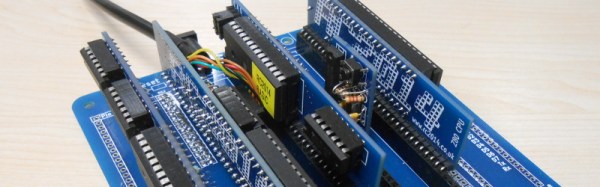
The subject of today’s review then provides a rare opportunity for the curious hardware hacker to get to grips with a traditional microprocessor bus. The RC2014 is a modular 8-bit computer in which daughter cards containing RAM, ROM, serial interface, clock, and Z80 processor are ranged on a backplane board, allowing complete understanding of and access to the workings of each part of the system. It comes with a ROM BASIC, and interfaces to a host computer through a serial port. There is also an ever-expanding range of further peripheral cards, including ones for digital I/O, LED matrixes, blinkenlights, a Raspberry Pi Zero for use as a VDU, and a small keyboard.

Continue reading “Review: The RC2014 Z80 Computer”

Nexmon Turns Nexus 5 (and RPi3!) Into WiFi Toolkit

Back in the day, when wardriving was still useful (read: before WPA2 was widespread), we used to wander around with a Zaurus in our pocket running Kismet. Today, every cellphone has WiFi and a significantly more powerful processor inside. But alas, the firmware is locked down.

mrmcd16-7748-deu-nexmon_-_make_wi-fi_hacking_on_smartphones_great_again_sdmp4-shot0005_thumbnailEnter the NexMon project. If you’ve got a Nexus 5 phone with the Broadcom BCM4339 WiFi chipset, you’ve now got a monitor-mode, packet-injecting workhorse in your pocket, and it looks a lot less creepy than that old Zaurus. But more to the point, NexMon is open. If you’d like to get inside what it took to reverse-engineer a hole into the phone’s WiFi, or make your own patches, here’s a great starting place.

But wait, there’s more! The recently released Raspberry Pi 3 has a similar Broadcom WiFi chipset, and has been given the same treatment, turning your RPi 3 into a wireless-sniffing powerhouse. How many Raspberry Pi “hacks” actually hack the Raspberry Pi? Well, here’s one.

We first learned of this project from a talk given at the MetaRhein-Main Chaos Days conference which took place last weekend. The NexMon talk (in German, but with slides in English) is just one of the many talks, all of which are available online.

The NexMon project is a standout, however. Not only do they reverse the WiFi firmware in the Nexus 5, but they show you how, and then apply the same methods to the RPi3. Kudos times three to [Matthias Schulz], [Daniel Wegemer], and [Matthias Hollick]!

Amazing Meccano Pinball Machine Fully Functional Before Meeting Its Fate

[Brian Leach] of the South East London Meccano Club has put an impressive amount of ingenuity into making his pinball machine almost entirely out of Meccano parts. He started in 2013 and we saw an earlier version of the table back in 2014, but it has finally been completed. It has all the trappings of proper pinball: score counter, score multiplier with timeout, standing targets, kickouts, pot bumpers, drop targets, and (of course) flippers and plunger.

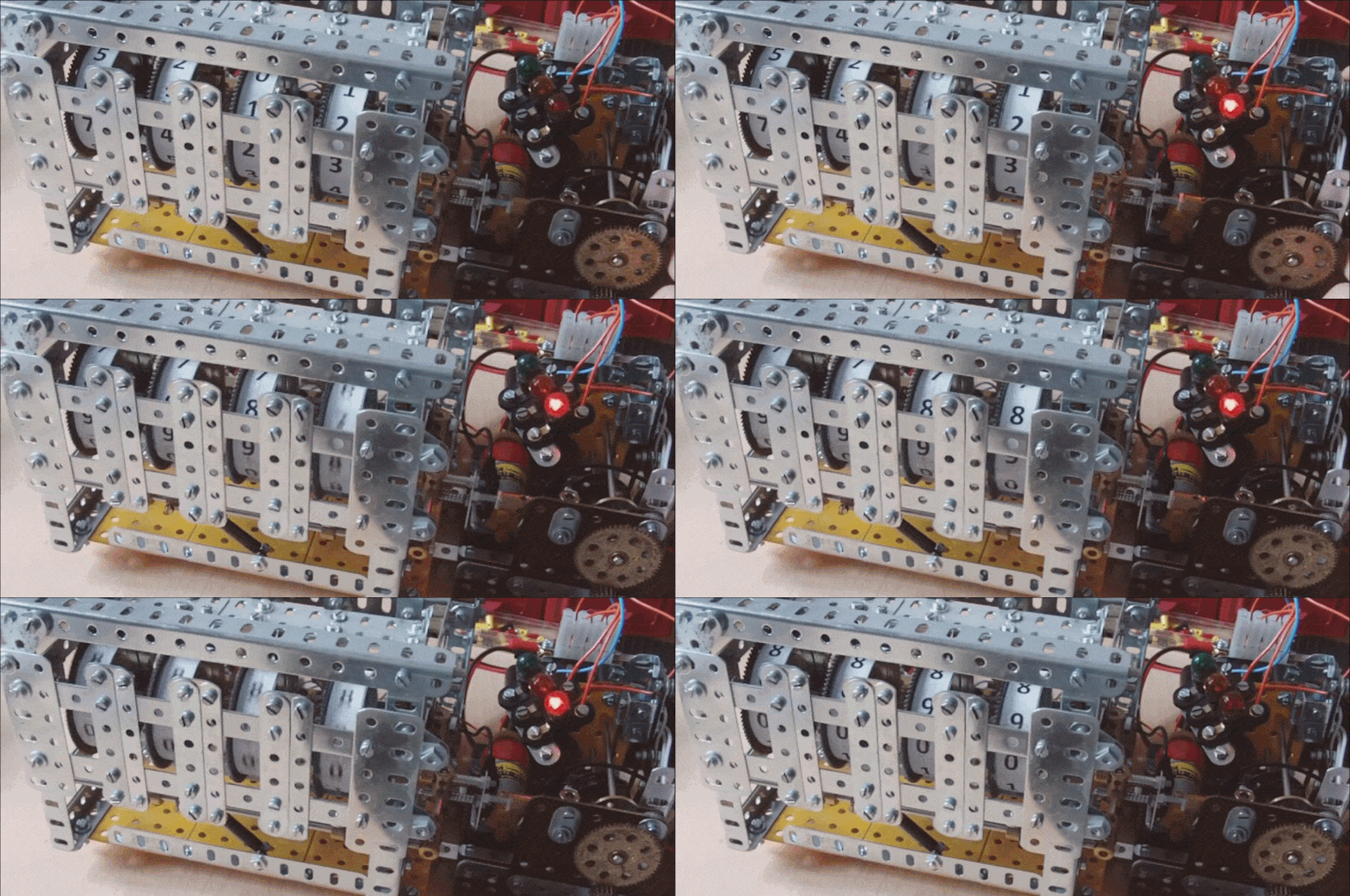
The video (embedded below) is very well produced with excellent closeups of the different mechanisms as [Brian] gives a concise tour of the machine. Some elements are relatively straightforward, others required workarounds to get the right operation, but it’s all beautifully done. For example, look at the score counter below. Meccano electromagnets are too weak to drive the numbers directly, so a motor turns all numbers continuously with a friction drive and electromagnets are used to stop the rotation at specific points. Reset consists of letting the numbers spin freely to 9999 then doing a last little push for a clean rollover to zero.

meccano-pinball-anim-wide

Continue reading “Amazing Meccano Pinball Machine Fully Functional Before Meeting Its Fate”

Nintendo Wields DMCA Ax On Fan Games

In a move that may sadden many but should surprise nobody, Nintendo of America has issued a DMCA takedown notice for 562 fan-created games created in homage to Nintendo originals and hosted on the popular Game Jolt site. Games affected include Mario, Zelda, and Pokémon based creations among others, and Game Jolt have responded, as they are required to, by locking the pages of the games in question. They state that they believe their users and developers should have the right to know what content has been removed from their site and why the action has been taken, so they have begun posting any notices they receive in their GitHub repository.

It is likely that this action won’t be appreciated within our community, however it’s important to note that while there are numerous examples of DMCA abuse this is not one of them. Nintendo are completely within their rights over the matter, if you use any of the copyrighted Nintendo properties outside the safe harbor of fair use then you will put yourself legitimately in their sights.

Something that is difficult to escape though is a feeling that DMCA takedowns on fan-created games are rather a low-hanging fruit. An easy way for corporate legal executives to be seen to be doing something by their bosses, though against a relatively defenseless target and without really tackling the problem.

To illustrate this, take a walk through a shopping mall, motorway service station, or street market almost anywhere in the world, and it’s very likely that you will pass significant numbers of counterfeit toys and games copying major franchises including those of Nintendo. A lot of these dollar store and vending machine specials are so hilariously awful that their fakeness must be obvious to even the most out-of-touch purchaser, but their ready availability speaks volumes. Unlike the fan-created games which are free, people are buying these toys in huge numbers with money that never reaches Nintendo, and also unlike the fan-created games there’s not a Nintendo lawyer in sight. Corporate end-of-year bonuses are delivered on the numbers of violations dealt with, and those come easiest by piling up the simple cases rather than chasing the difficult ones that are costing the company real sales.

We’ve covered many DMCA stories over the years, and some of them have been pretty shocking. Questions over its use in the Volkswagen emissions scandal, or keeping John Deere tractor servicing in the hands of dealers. Let’s hope that the EFF and Bunnie Huang’s efforts pay off and dismantle section 1201, one of the most nonsensical parts of the law.

Via Engadget. Dendy Junior unauthorised Nintendo Famicom clone image, By Nzeemin (Own work) [CC BY-SA 3.0], via Wikimedia Commons.