Frickin’ Amazing Clock

Wwood_clock_05e’ve featured a lot of clock builds, but this one, as the title suggests, is frickin’ amazing. Talented art student [Kango Suzuki] built this Wooden Mechanical Clock (Google translation from Japanese) as a project while on his way to major in product design. There’s a better translation at this link. And be sure to check out the video of it in motion below the break.

[Kango]’s design brief was to do something that is “easy for humans to do, but difficult for machines”. Writing longhand fits the bill, although building the machine wasn’t easy for a human either — he needed six months just to plan the project.

The clock writes time in hours and minutes on a magnetic board. After each minute, the escapement mechanism sets in motion almost 400 wooden cogs, gears and cams. The board is tilted first to erase the old numbers, and then the new numbers are written using four stylii.

The clock doesn’t have any micro controllers, Arduinos, servos or any other electronics. The whole mechanism is powered via gravity using a set of four weights. [Kango] says his biggest challenge was getting the mechanism to write the numbers simultaneously. While he managed the geometry right, the cumulative distortion and flex in the hundreds of wooden parts caused the numbers to be distorted until he tuned around the error.

Continue reading “Frickin’ Amazing Clock”

Embed With Elliot: Audio Playback With Direct Digital Synthesis

Direct-digital synthesis (DDS) is a sample-playback technique that is useful for adding a little bit of audio to your projects without additional hardware. Want your robot to say ouch when it bumps into a wall? Or to play a flute solo? Of course, you could just buy a cheap WAV playback shield or module and write all of the samples to an SD card. Then you wouldn’t have to know anything about how microcontrollers can produce pitched audio, and could just skip the rest of this column and get on with your life.

Harmonic distortion down ~45db on an Arduino
~45db signal to noise ratio from an Arduino

But that’s not the way we roll. We’re going to embed the audio data in the code, and play it back with absolutely minimal additional hardware. And we’ll also gain control of the process. If you want to play your samples faster or slower, or add a tremolo effect, you’re going to want to take things into your own hands. We’re going to show you how to take a single sample of data and play it back at any pitch you’d like. DDS, oversimplified, is a way to make these modifications in pitch possible even though you’re using a fixed-frequency clock.

The same techniques used here can turn your microcontroller into a cheap and cheerful function generator that’s good for under a hundred kilohertz using PWM, and much faster with a better analog output. Hackaday’s own [Bil Herd] has a nice video post about the hardware side of digital signal generation that makes a great companion to this one if you’d like to go that route. But we’ll be focusing here on audio, because it’s easier, hands-on, and fun.

Continue reading “Embed With Elliot: Audio Playback With Direct Digital Synthesis”

Lego Gaming Computer Case

Lego isn’t the first material that springs to mind when you think about building a new gaming computer case, but it does make sense when you think about it. It is easy to work with, can be easily reconfigured, and it’s pretty cheap. That’s the idea behind this very cool (no pun intended) gaming computer case build by [Mike Schropp]. Built around a Skylake i7 CPU and an NVidia 980 Ti graphics card, his build has an unusual X-shaped design that allows for plenty of airflow. The sides of the X hold the CPU cooler, the power supply, the hard drives and the graphics card cooler, so each of them has its own separate flow of cool air from the outside. That avoids the common problem of hot air from one component being passed over another, so it doesn’t get cooled properly. Critically for a gaming system, this design keeps all of the components much cooler than a more traditional case, which makes for more overclocking potential.

At the moment, [Mike] says he is struggling to keep up with the demand for people who want to buy custom versions of his build, but he is planning to release the details soon. “Initially that will probably be in the form of a DIY kit, where you can buy the plans with all the Lego bricks needed for the build, in a kit form” he told us. “Then you can add your own computer components to complete your build. At some point I’ll probably also just offer the plans themselves and allow the end-user to acquire the Lego bricks needed.”

Continue reading “Lego Gaming Computer Case”

Clearly The Best Way To Organize SMD Parts

Have some plexiglas (acrylic) leftovers lying around? Well, they could be put to good use in making this SMD organizer. It comes in handy if you deal with a lot of SMD components in your work. No longer will you waste your time trying to find a 15K 1206 resistor, or that BAS85 diode… or any other component you can think of soldering on the PCB. The basic idea is fairly straightforword, which helped keep this short.

2SMD resistors are packed in thick paper tapes that don’t bend easily, and thus need larger containers than other components, which are packed mainly in flexible PE tapes. The first version of this organizer was built with a 96mm diameter space for resistors and 63mm diameter for other components, but it seems that there is no need for such large compartments. If I were to make it again, I would probably scale everything down to about 80% of it’s current size.

The best way to join all plexiglass parts is to use four M4 threaded rods. There is also a 1.5mm steel rod which holds SMD tape ends in place and helps to un-stick the transparent tape which covers the components. At the top of the organizer there is a notch for paper, used for components labels. Most SMD components are packed in 8mm wide tapes, making the optimal compartment width 10mm. It is not easy to cut the 10mm thick acrylic and get a neat edge – instead, you could use more layers of thin sheets to make the spacers. Using 5mm acrylic you can combine more layers for any width of tape, which contains wider components, like SMD integrated circuits. The only thing that you have to be careful about, is to keep the distance between the thin steel rod and acrylic, which is marked as “2-4mm” on the drawing. It is good if this space is just a few tenths of a millimeter wider than the thickness of SMD tapes.

smd_orthoThe CorelDraw file that can be used for laser cutting the acrylic parts, is available for download. If you scale the profiles, don’t forget to readjust the hole diameters and some other dimensions which have to remain intact. If you have 5mm acrylic pieces, you should probably use two layers of acrylic for every tape (red parts on the drawing). The barrier layers would be made of thin acrylic — for instance 2mm (the blue parts). Edge layers (green) are once again 5mm thick, and there are also the end pieces (yellow), glued to the previous borders and used to “round up” the whole construction and to protect your hands from the threaded rods and nuts.

While you’re building this for your bench, make a vacuum picking tool for SMDs out of a dispensing syringe with a thick needle. It’s a common trick for hackers to use an aquarium air pump, just turn the compressor unit by 180°, so that it creates vacuum instead of blowing the air outside. This process is described by R&TPreppers in the video below.

Continue reading “Clearly The Best Way To Organize SMD Parts”

China’s Fusion Reactor Hits Milestone

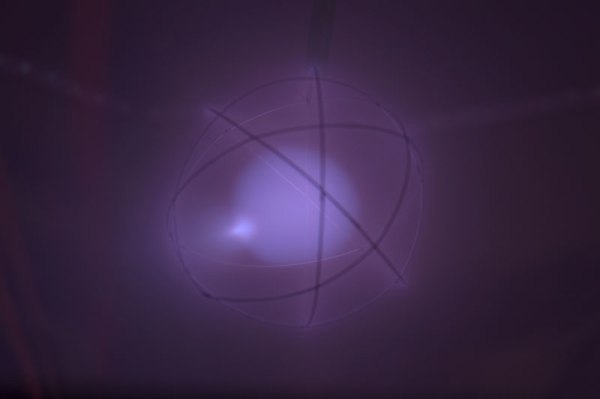
An experimental fusion reactor built by the Chinese Academy of Science has hit a major milestone. The Experimental Advanced Superconducting Tokamak (EAST) has maintained a plasma pulse for a record 102 seconds at a temperature of 50 million degrees – three times hotter than the core of the sun.

The EAST is a tokamak, or a torus that uses superconducting magnets to compress plasma into a thin ribbon where atoms will fuse and energy will be created. For the last fifty years, most research has been dedicated to the study of tokamaks in producing fusion power, but recently several projects have challenged this idea. The Wendelstein 7-X  stellarator at the Max Planck Institute for Plasma Physics recently saw first plasma and if results go as expected, the stellarator will be the design used in fusion power plants. Tokamaks have shortcomings; they can only be ‘pulsed’, not used continuously, and we haven’t been building tokamaks large enough to produce a net gain in power, anyway.

Other tokamaks currently in development include ITER in France. Theoretically, ITER is large enough to attain a net gain in power at 12.4 meters in diameter. EAST is much smaller, with a diameter of just 3.7 meters. It is impossible for EAST to ever produce a net gain in power, but innovations in the design that include superconducting toroidal and poloidal magnets will surely provide insight into unsolved questions in fusion reactor design.

Dumping U8Plus Smartwatch ROM Via Vibration Motor

[Lee] continues with his exploration of the U8Plus (a cheap smartwatch). He hasn’t got it all cracked, yet, but he did manage to get a dump of the device’s ROM using an unusual method. At first, [Lee] thought that the JTAG interface (or, at least, the pins presumed to be the JTAG interface) would be a good way to explore the device. However, none of the people experimenting with the device have managed to get it to work.

Instead, [Lee] went through the serial bootloader and dumped the flash memory. He found out, though, that the bootloader refused to read the ROM area. It would, however, load and run a program. Unfortunately, no one has found how to access the UART device directly, but they have found how to drive the vibration motor.

[Lee] took off the vibration motor and used it as an output port for a simple program to dump the ROM. An Arduino picked up the data at a low baud rate and produced an output file. This should allow more understanding of how to drive the watch hardware.

We covered the initial teardown of this watch earlier this year. Of course, if you don’t want to reverse engineer a smartwatch, you could always build your own.

Particle Electron – The Solution To Cellular Things

Just over a year ago, Particle (formerly Spark), makers of the very popular Core and Particle Photon WiFi development kits, released the first juicy tidbits for a very interesting piece of hardware. It was the Electron, a cheap, all-in-one cellular development kit with an even more interesting data plan. Particle would offer their own cellular service, allowing their tiny board to send or receive 1 Megabyte for $3.00 a month, without any contracts.

Thousands of people found this an interesting proposition and the Electron crowdfunding campaign took off like a rocket. Now, after a year of development and manufacturing, these tiny cellular boards are finally shipping out to backers and today the Electron officially launches.

Particle was kind enough to provide Hackaday with an Electron kit for a review. The short version of this review is the Electron is a great development platform, but Particle pulled off a small revolution in cellular communications and the Internet of Things

Continue reading “Particle Electron – The Solution To Cellular Things”