Falcon 9 Beats Shuttle’s Reflight Record, But Still Has A Long Way To Go

Put simply, the goal of any reusable booster is to reduce the cost of getting a payload into space. The comparison is often made to commercial aviation: if you had to throw away the airliner after every flight, nobody could afford the tickets. The fact that the plane can be refueled and flown again and again allows operators to amortize its high upfront cost.

In theory, the same should hold true for orbital rockets. With enough flight experience, you can figure out which parts of the vehicle will need replacement or repair, and how often. Assuming the fuel is cheap enough and the cost of refurbishment doesn’t exceed that of building a new one, eventually the booster will pay for itself. You just need a steady stream of paying customers, which is hardly a challenge given how much we rely on our space infrastructure.

But there’s a catch. For the airliner analogy to really work, whatever inspections and repairs the rocket requires between missions must be done as quickly as possible. The cost savings from reuse aren’t nearly as attractive if you can only fly a few times a year. The key to truly making space accessible isn’t just building a reusable rocket, but attaining rapid reusability.

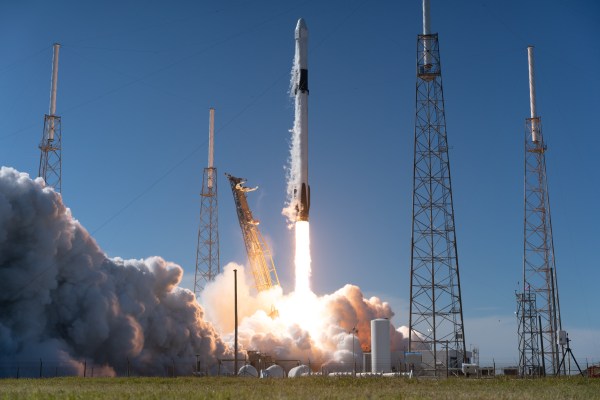
Which is precisely where SpaceX currently finds themselves. Over the years they’ve mastered landing the Falcon 9’s first stage, and they’ve even proven that the recovered boosters can be safely reused for additional flights. But the refurbishment process is still fairly lengthy. While their latest launch officially broke the record for fastest reflight of a space vehicle that had previously been set by Space Shuttle Atlantis, there’s still a lot of work to be done if SpaceX is ever going to fly their rockets like airplanes.

Continue reading “Falcon 9 Beats Shuttle’s Reflight Record, But Still Has A Long Way To Go”

The WISE In NEOWISE: How A Hibernating Satellite Awoke To Discover The Comet

Over the last few weeks the media has been full of talk about NEOWISE, one of the brightest and most spectacular comets to ever pass through our solar system that you can still see if you hurry. While the excitement over this interstellar traveler is more than justified, it’s also an excellent opportunity to celebrate the Wide-field Infrared Survey Explorer (WISE) space telescope it was named after. The discovery of this particular comet is just the latest triumph in the orbiting observatory’s incredible mission of discovery that’s spanned over a decade, with no signs of slowing down anytime soon.

In fact, WISE has been operational for so long now that its mission has evolved beyond its original scope. When it was launched in December 2009 from California’s Vandenberg Air Force Base, its primary mission was scheduled to be completed in less than a year. But like many NASA spacecraft that came before it, WISE achieved its original design goals and found itself ready for a new challenge. Though not before it spent almost three years in hibernation mode as the agency decided what to do with it.

Continue reading “The WISE In NEOWISE: How A Hibernating Satellite Awoke To Discover The Comet”

Apollo Missions Get Upgraded Video

July 20th marked the anniversary of the first human setting foot on the moon. If you were alive back then, you probably remember being glued to the TV watching the high-tech images of Armstrong taking that first step. But if you go back and watch the video today, it doesn’t look the way you remember it. We’ve been spoiled by high-density video with incredible frame rates. [Dutchsteammachine] has taken a great deal of old NASA footage and used their tools to update them to higher frame rates that look a lot better, as you can see below.

The original film from the moon landing ran between 12 frames per second and as low as 1 frame per second. The new video is interpolated to 24 frames per second. Some of the later Apollo mission film is jacked up to 60 frames per second. The results are great.

Continue reading “Apollo Missions Get Upgraded Video”

Window In The Skies: Why Everyone Is Going To Mars This Month

Mars may not be the kind of place to raise your kids, but chances are that one day [Elton John]’s famous lyrics will be wrong about there being no one there to raise them. For now, however, we have probes, orbiters, and landers. Mars missions are going strong this year, with three nations about to launch their rockets towards the Red Planet: the United States sending their Perseverance rover, China’s Tianwen-1 mission, and the United Arab Emirates sending their Hope orbiter.

As all of this is planned to happen still within the month of July, it almost gives the impression of a new era of wild space races where everyone tries to be first. Sure, some egos will certainly be boosted here, but the reason for this increased run within such a short time frame has a simple explanation: Mars will be right around the corner later this year — relatively speaking — providing an ideal opportunity to travel there right now.

In fact, this year is as good as it gets for quite a while. The next time the circumstances will be (almost) as favorable as this year is going to be in 2033, so it’s understandable that space agencies are eager to not miss out on this chance. Not that Mars missions couldn’t be accomplished in the next 13 years — after all, several endeavors are already in the wings for 2022, including the delayed Rosalind Franklin rover launch. It’s just that the circumstances won’t be as ideal.

But what exactly does that mean, and why is that? What makes July 2020 so special? And what’s everyone doing up there anyway? Well, let’s find out!

Continue reading “Window In The Skies: Why Everyone Is Going To Mars This Month”

Don’t Wait, You Need To See Comet NEOWISE Right Now

By now you’ve heard of NEOWISE, the most spectacular comet to visit our little corner of the galaxy since Hale-Bopp passed through over 20 years ago. But we’re willing to bet you haven’t actually seen it with your own eyes. That’s because up until now, the only way to view this interstellar traveler was to wake up in the pre-dawn hours; an especially difficult requirement considering a large chunk of the population has gotten used to sleeping-in over the last few months.

But things are about to change as NEOWISE begins a new phase of its trip through our celestial neck of the woods. Having come to within 44.5 million km (27.7 million miles) of the sun on July 3rd, the comet is now making its way back out of our solar system. Thanks to the complex dance of the heavens, that means that observers in the Northern Hemisphere will now be able to see NEOWISE in the evening sky just above the horizon.

NEOWISE is on a kind of “up and over” trajectory compared to the orbital paths of the planets. Get a better feel for it with JPL’s interactive solar dynamics tool.

While NEOWISE might be beating a hasty retreat from Sol right now, the comet it actually getting closer to us in the process. On July 22nd it will reach perigee, that is, the point in its orbit closest to Earth. On that evening the comet will be approximately 103 million km (64 million miles) away. Not exactly a stone’s throw, but pretty close in astronomical terms. The comet will appear to be getting higher in the sky as it approaches Earth, and should be visible with the naked eye between 10 and 20 degrees above the northern horizon.

Most estimates say that NEOWISE should remain visible until at least the middle of August, though it will be dimming rapidly. After that, you’re going to have to wait awhile for a repeat showing. Given the orbit of this particular comet, it won’t come around our way again for approximately 6,800 years, give or take a few lifetimes.

NASA will be hosting a NEOWISE live stream tomorrow afternoon where researchers will answer questions about this once in a lifetime celestial event, though we think you’ll get a lot more out of it if you just go outside and look up.

NASA Making Big Upgrades To Their Big Dish DSS43

When it comes to antenna projects, we usually cover little ones here. From copper traces on a circuit board to hand-made units for ham radio. But every once in a while it’s fun to look at the opposite end of the spectrum, and anyone who craves such change of pace should check out DSS43’s upgrade currently underway.

Part of NASA’s Deep Space Network (DSN) built to communicate with spacecraft that venture far beyond Earth, Deep Space Station 43 is a large dish antenna with a diameter of 70 meters and largest of the Canberra, Australia DSN complex. However, the raw reflective surface area is only as good as the radio equipment at its center, which are now outdated and thus focus of this round of upgrades.

The NASA page linked above offers a few pieces of fun trivia about DSS43 and its capabilities. If that whets an appetite for more, head over to Twitter for a huge treasure trove. Whoever is in charge of Canberra DSN’s Twitter account has an endless fountain of facts and very eager to share them in response to questions, usually tagged with #DSS43. Example: the weight of DSS43 is roughly 8.5 million kilograms, 4 million of which is moving structure. They also shared time lapse video clips of work in progress, one of which is embedded after the break.

Taking the uniquely capable DSS43 offline for upgrades does have some consequences, one of which is losing our ability to send commands to distant interplanetary probe Voyager 2. (Apparently smaller DSN dishes can be arrayed to receive data, but only DSS43 can send commands.) Such sacrifices are necessary as an investment for the future, with upgrade completion scheduled for January 2021. Just in time to help support Perseverance (formerly “Mars 2020”) rover‘s arrival in February and many more missions for years to come.

Continue reading “NASA Making Big Upgrades To Their Big Dish DSS43”

Spacing Out: OneWeb Rescue, Starlink Base Stations, And Rocket Tests

Another couple of weeks, and a fresh crop of space news to run through as a quick briefing of the latest in the skies above us.

OneWeb's most recent launch, from Baikonur on the 21st of March 2020.
OneWeb’s most recent launch, from Baikonur on the 21st of March 2020. (OneWeb)

The global positioning orbits are getting pretty crowded, with GPS, Russia’s GLONASS, the EU’s Galileo, Japan’s QZSS, and now with the launch of the final satellite in their constellation, China’s BeiDou. As if five were not enough the chance that they might be joined by a sixth constellation from the United Kingdom resurfaced this week, as the UK government is expressing interest in supporting a rescue package for the troubled satellite broadband provider OneWeb. The idea of an independent GPS competitor from a post-Brexit UK has been bouncing around for a couple of years now, and on the face of it until this opportune chance to purchase an “oven ready” satellite constellation might deliver a route to incorporating a positioning payload into their design. The Guardian has its doubts, lining up a bevvy of scientists to point out the rather obvious fact that a low-earth-orbit satellite broadband platform is a very different prospect to a much-higher-orbiting global positioning platform. Despite the country possessing the expertise through its work on Galileo then it remains to be seen whether a OneWeb purchase would be a stroke of genius or a white elephant. Readers with long memories will know that British government investment in space has had its upsets before.

Happily for Brits, not all space endeavours from their islands end in ignominious retreat. Skyrora have scored another milestone, launching the first ever rocket skywards from the Shetland Islands. The Skylark Nano is a relatively tiny craft at only 2m high, and gathered research data during its flight to an altitude of 6km. We’ve followed their work before, including their testing in May of a Skylark L rocket on the Scottish mainland with a view to achieving launch capability in 2023.

A Starlink phased array end user antenna, spotted in Winsconsin. (darkpenguin22)

SpaceX’s Starlink is never far away from the news, with a fresh set of launches delayed for extra pre-launch tests, and the prospect of signing up to be considered for the space broadband firm’s beta test. Of more interest for Hackaday readers though are a few shots of prototype Starlink ground stations and user terminals that have made it online, on the roof of a Tesla Gigafactory and at a SpaceX facility in Wisconsin. What can be seen are roughly 1.5m radomes for the ground stations and much smaller dinner-plate-sized enclosed arrays for the user terminals. The latter are particularly fascinating as they conceal computer-controlled phased arrays for tracking the constellation as it passes overhead. This is a technology more at home in billion-dollar military radars than consumer devices, so getting it to work on a budget that can put it on a roof anywhere in the world must be a challenge for the Starlink engineers. We can’t wait to see the inevitable eventual teardown when it comes.

Elsewhere, the Virgin Galactic SpaceShip Two completed its second glide test over its Mojave Spaceport home since being grounded in 2019 for extensive refitting, and is now said to be ready for powered tests leading to eventual commercial service giving the extremely well-heeled the chance to float in the zero gravity of suborbital spaceflight. And finally, comes the news that NASA are naming their Washington DC headquarters building for Mary W. Jackson, their first African American female engineer, whose story some of you may be familiar with from the book and film Hidden Figures. The previously unnamed building sits on a section of street named Hidden Figures Way.