Levitating Starship Model Comes In For A Landing

If everything goes according to plan, Elon Musk says the first generation of SpaceX’s massive Starship will make an orbital flight before the end of 2020. That’s a pretty bold claim, but when you’ve made landing rockets on their tails as in the old science fiction pulp magazines seem routine, we suppose you’ve earned the right to a bit of bravado. We’re excited to see the vehicle evolve over the next several months, but even if the real one stays grounded, we’ll gladly take this “flying” Starship model from [Chris Chimienti] as a consolation prize.

A magnetic levitation module, we’re officially in the future.

Feeling a bit let down by the 3D printable models of the Starship he found online, [Chris] set out to build his own. But it wasn’t enough to just make his bigger, stronger, and more accurate to Starship’s current design; he also wanted to make it a bit more exciting. Some RGB LEDs an Arduino embedded in the “cloud” stand the rocket sits on was a good start, and the landing pad inspired by SpaceX’s real autonomous spaceport drone ship Just Read the Instructions looks great all lit up.

But this is Starship we’re talking about, a vehicle that could literally push humanity towards being a multi-planet species. To do it justice, you’ve really got to knock it out of the park. So [Chris] found a magnetic levitation module online that could support a few hundred grams, and set to work on making his plastic Starship actually hover over the landing pad.

As you might imagine, it was a bit tricky. The first versions of the rocket looked great but came out too heavy, so he switched over to printing the model in so-called “spiral vase mode” which made it entirely hollow. Now far lighter and with a magnetic plate fit into the bottom, it was stable enough to float on its own. For the final touch, [Chris] added some red LEDs and a coin cell battery to the base of the Starship so it looks like the sleek craft is performing a last-second landing burn with its “impossible” full-flow staged combustion engines.

This isn’t the first time we’ve seen a model rocket with an electronic glowing cloud under it, but it’s certainly the first one we’ve seen that could levitate in mid-air. While this little rocket might not make it all the way to Mars, we wouldn’t be surprised to see it touching down on the desks of other hackers and makers in the near future.

Continue reading “Levitating Starship Model Comes In For A Landing”

A Farewell To Hackaday’s Favorite Falcon 9 Booster

With the notable exception of the Space Shuttle, rockets and spacecraft have always been considered disposable. It’s a slow and expensive way to travel, akin to building a new airliner for every flight, but it was the easiest option. These vehicles have always represented the pinnacle of engineering and material science of their time, and just surviving the trip to space once was an incredible accomplishment. To have another go around would have been asking too much of the technology. Even looking back on the Space Shuttle program, there’s plenty of debate about whether or not the reusable design really paid off in the end.

So SpaceX’s ability to land, refurbish, and refly the first stage of their Falcon 9 booster is no small accomplishment. After demonstrating the idea was possible in 2017, the company made numerous changes to the latest iteration of the rocket with reusability in mind. Known as Block 5, this version of the Falcon 9 is designed to be more survivable and require minimal servicing between flights. The company says its cheaper and faster to reuse the Block 5 than it would be to build a new one for each flight, allowing the company to approach spaceflight more like commercial aviation.

Falcon 9 launch and landing streaks
Falcon 9 launch and landing streaks. (Source: SpaceX)

With a fleet of Block 5 boosters now in rotation, SpaceX has given them serial numbers not unlike an airplane’s tail number. It might not be the kind of thing the general public would normally be aware of, but these serial numbers have allowed a dedicated community of space aficionados to keep track of the missions each booster has flown.

Unfortunately the story of one of these rockets, officially referred to as “Cores” in SpaceX parlance, was recently cut short. Core B1056, returning from the Starlink 4 mission on February 17th, failed to land on the autonomous spaceport drone ship (ASDS) Of Course I Still Love You and splashed down in the ocean. It’s still unclear what condition the booster was in after its soft landing in the water, but when the recovery ships returned to port empty handed, there was no question as to the fate of B1056.

From a purely business standpoint, the failure of any of SpaceX’s boosters means lost time and revenue. But in some ways B1056 had established itself as the vanguard of the fleet, managing to either set or break a number of records in its relatively short life. The destruction of the most thoroughly flight proven Block 5 booster is a stark reminder that there’s very little about spaceflight that could be called routine.

Continue reading “A Farewell To Hackaday’s Favorite Falcon 9 Booster”

How Does Starlink Work Anyway?

No matter what you think of Elon Musk, it’s hard to deny that he takes the dictum “There’s no such thing as bad publicity” to heart. From hurling sports cars into orbit to solar-powered roof destroyers, there’s little that Mr. Musk can’t turn into a net positive for at least one of his many ventures, not to mention his image.

Elon may have gotten in over his head, though. His plan to use his SpaceX rockets to fill the sky with thousands of satellites dedicated to providing cheap Internet access ran afoul of the astronomy community, which has decried the impact of the Starlink satellites on observations, both in the optical wavelengths and further down the spectrum in the radio bands. And that’s with only a tiny fraction of the planned constellation deployed; once fully built-out, they fear Starlink will ruin Earth-based observation forever.

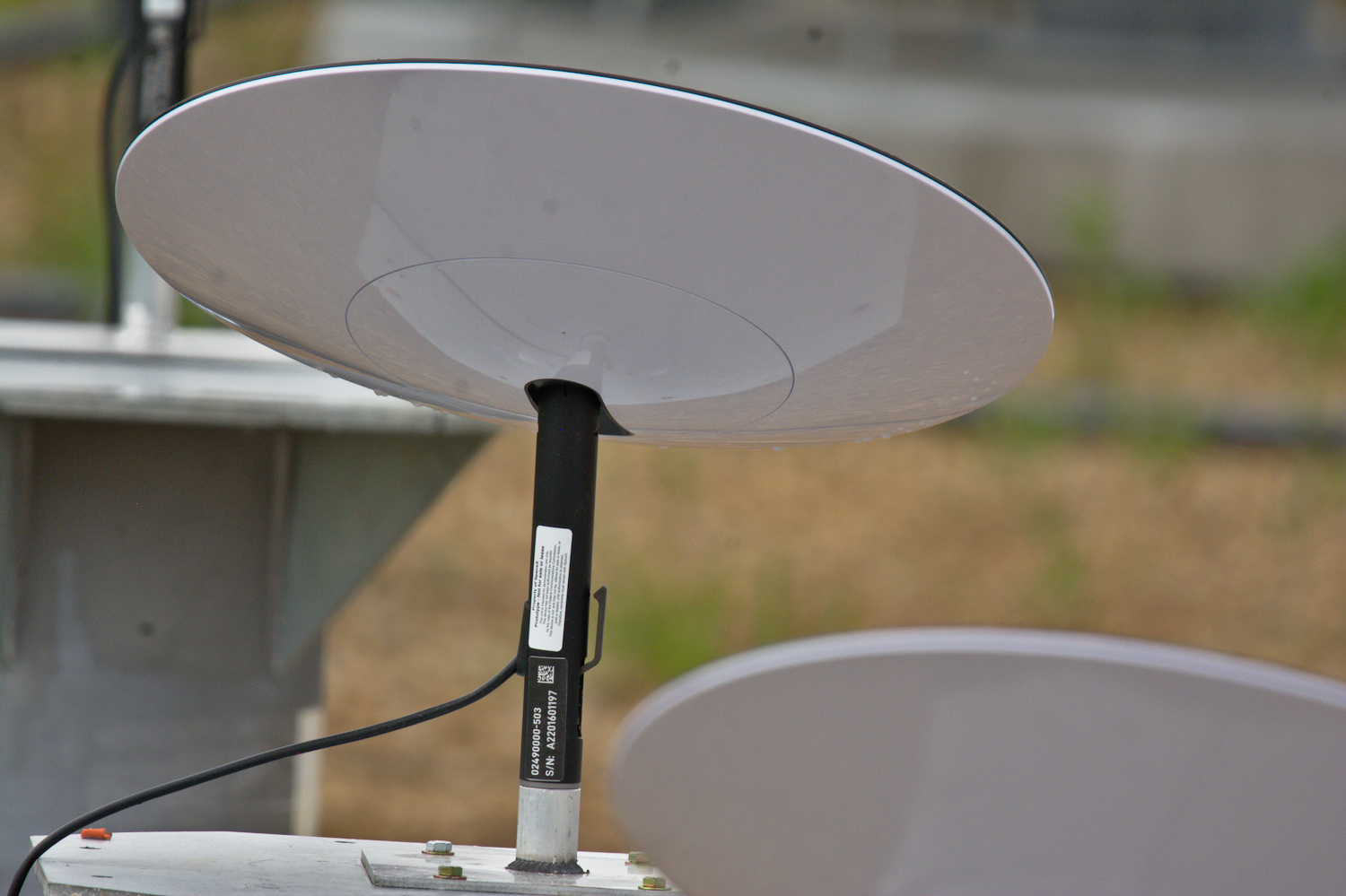
What exactly the final Starlink constellation will look like and what impact it would have on observations depend greatly on the degree to which it can withstand regulatory efforts and market forces. Assuming it does survive and gets built out into a system that more or less resembles the current plan, what exactly will Starlink do? And more importantly, how will it accomplish its stated goals?

Continue reading “How Does Starlink Work Anyway?”

Taking Pictures Of The Space Station With A Handheld Camera

It is easy to find out when the space station is passing overhead, and you may have run outside to see the blip of light moving at five miles per second. It turns out that some people make a hobby out of taking its picture, and if you have a pretty beefy telescope you can get some good shots. [Scott], on the other hand, wanted to take a handheld consumer-grade camera and try some pictures. His results show up in the video below.

If you look at the second video from [Thierry], you’ll see [Scott’s] videos are a far cry from state of the art. However, the [Thierry] photos essentially use a special telescope made to track the station very precisely. [Scott] is using a handheld, consumer-grade Nikon P1000.

Continue reading “Taking Pictures Of The Space Station With A Handheld Camera”

Mars 2020 Rover: Curiosity’s Hi-Tech Twin Is Strapped For Science; Includes A Flying Drone

While Mars may be significantly behind its sunward neighbor in terms of the number of motor vehicles crawling over its surface, it seems like we’re doing our best to close that gap. Over the last 23 years, humans have sent four successful rovers to the surface of the Red Planet, from the tiny Sojourner to the Volkswagen-sized Curiosity. These vehicles have all carved their six-wheeled tracks into the Martian dust, probing the soil and the atmosphere and taking pictures galore, all of which contribute mightily to our understanding of our (sometimes) nearest planetary neighbor.

You’d think then that sending still more rovers to Mars would yield diminishing returns, but it turns out there’s still plenty of science to do, especially if the dream of sending humans there to explore and perhaps live is to come true. And so the fleet of Martian rovers will be joined by two new vehicles over the next year or so, lead by the Mars 2020 program’s yet-to-be-named rover. Here’s a look at the next Martian buggy, and how it’s built for the job it’s intended to do.

Continue reading “Mars 2020 Rover: Curiosity’s Hi-Tech Twin Is Strapped For Science; Includes A Flying Drone”

First Space Cookies: Cosmic Cooking Is Half-Baked

For decades, astronauts have been forced to endure space-friendly MREs and dehydrated foodstuffs, though we understand both the quality and the options have increased with time. But if we’re serious about long-term space travel, colonizing Mars, or actually having a restaurant at the end of the universe, the ability to bake and cook from raw ingredients will become necessary. This zero-gravity culinary adventure might as well start with a delicious experiment, and what better than chocolate chip cookies for the maiden voyage?

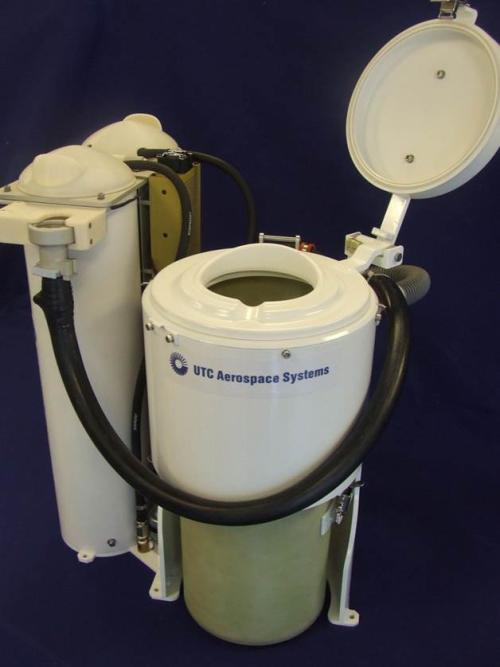
That little filtered vent lets steam out and keeps crumbs in. Image via Zero-G Kitchen

The vessel in question is the Zero-G Oven, built in a collaboration between Zero-G Kitchen and Nanoracks, a Texas-based company that provides commercial access to space. In November 2019, Nanoracks sent the Zero-G oven aloft, where it waited a few weeks for the bake-off to kick off. Five pre-formed cookie dough patties had arrived a few weeks earlier, each one sealed inside its own silicone baking pouch.

The Zero-G Oven is essentially a rack-mounted cylindrical toaster oven. It maxes out at 325 °F (163 °C), which is enough heat for Earth cookies if you can wait fifteen minutes or so. But due to factors we haven’t figured out yet, the ISS cookies took far longer to bake.

Continue reading “First Space Cookies: Cosmic Cooking Is Half-Baked”

Deploy Workaround Code To The Field When “The Field” Is Lunar Orbit

The Apollo missions still inspire people today, decades after they took place. A fortunate side effect of the global public relations campaign is that a lot of information is publicly available for us to review and process. We’re right around the 49th anniversary of Apollo 14 mission, so it was a good time for [Frank O’Brien] to take readers through Apollo Guidance Computer and the hack that saved Apollo 14 (while it was in lunar orbit).

Space fans would already know many parts of this piece, but [Frank] weaves it together into a single narrative around a problematic “Abort” button that was found to be making intermittent contact as the crew were preparing to land on the moon. An inconvenient timing would have unnecessarily aborted the mission, which was obviously Not Good. [Frank] brings us up to speed on AGC fundamentals, just enough to understand the technical constraints for the hack, devised within the time constraints they faced.

For those that prefer a short video summary [Scott Manley] covered this same hack on YouTube. And for another perspective on the scope of this task, remember this was years before we had vi or emacs. When they were contemplating flipping status bits as programs were running, it’s not trivial to do a global search for code that might examine those bits. Look at the tome of source code AGC programmer [Don Eyles] worked with. Space fans who want to learn more can check out [Don]’s book.

For the ultimate AGC talk, check out The Ultimate AGC Talk.

Maybe someday trips to the moon will be a commonplace thing, but Apollo will always be the pioneer.