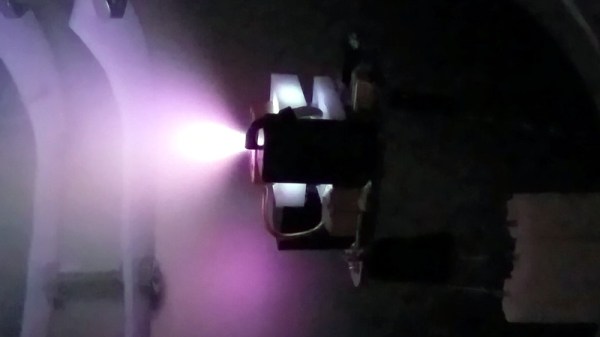
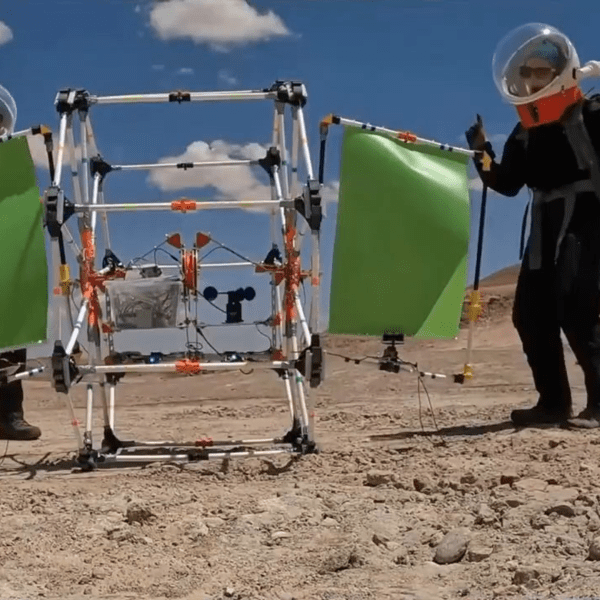
To place a satellite in orbit satisfactorily it is necessary not only to hitch a ride on a rocket, but also to put it in the right orbit for its task, and once it is there, to keep it there. With billions of dollars or roubles of investment over six decades of engineering behind them the national space agencies and commercial satellite builders solved these problems long since, but replicating those successes for open source microsatellites still represents a significant engineering challenge. One person working in this field is [Michael Bretti], who is doing sterling work with a shoestring budget on open source electric thrusters for the smallest of satellites, and he needs your help in crowdfunding a piece of equipment.
Beware suspiciously cheap eBay vacuum pumps!
As part of his testing he has a vacuum chamber, and when he places a thruster inside it he has to create a space-grade vacuum . This is no easy task, and to achieve it he has two pumps. The first of these, a roughing pump, is a clapped-out example that has clearly reached the end of its days, and it is this that he needs your help to replace. His GoFundMe page has a modest target of only $4,200 which should be well within the capabilities of our community in reaching, and in supporting it you will help the much wider small satellite community produce craft that will keep giving us interesting things from space for years to come.
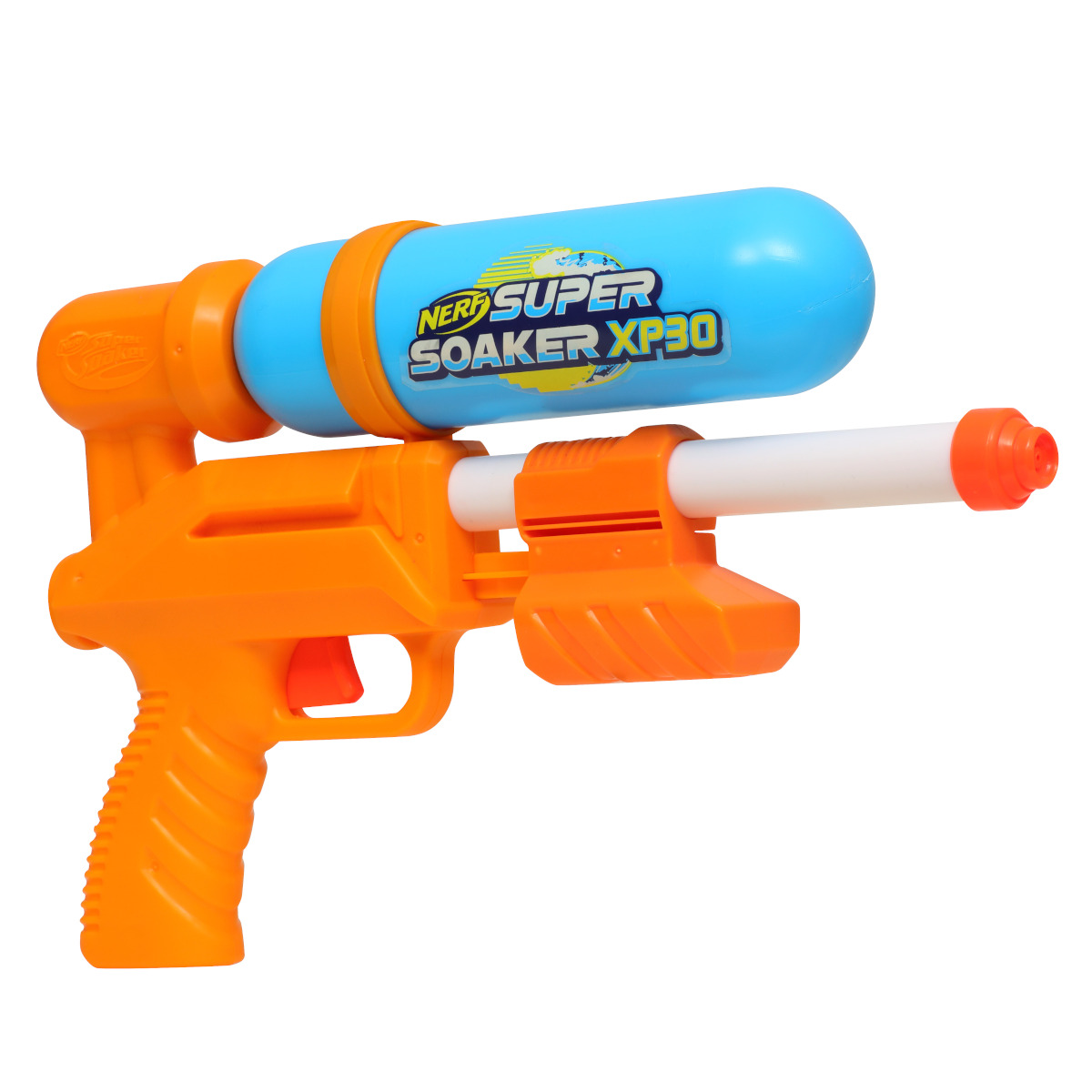
The current generation Super Soaker XP30. (Hasbro)
To be a child in the 1970s and 1980s was to be of the first generations to benefit from electronic technologies in your toys. As those lucky kids battled blocky 8-bit digital foes, the adults used to fret that it would rot their brains. Kids didn’t play outside nearly as much as generations past, because modern toys were seducing them to the small screen. Truth be told, when you could battle aliens with a virtual weapon that was in your imagination HUGE, how do you compete with that.
How those ’80s kids must have envied their younger siblings then when in 1990 one of the best toys ever was launched, a stored-pressure water gun which we know as the Super Soaker. Made of plastic, and not requiring batteries, it far outperformed all squirt guns that had come before it, rapidly becoming the hit toy of every sweltering summer day. The Super Soaker line of water pistols and guns redefined how much fun kids could have while getting each other drenched. No longer were the best water pistols the electric models which cost a fortune in batteries that your parents would surely refuse to replace — these did it better.
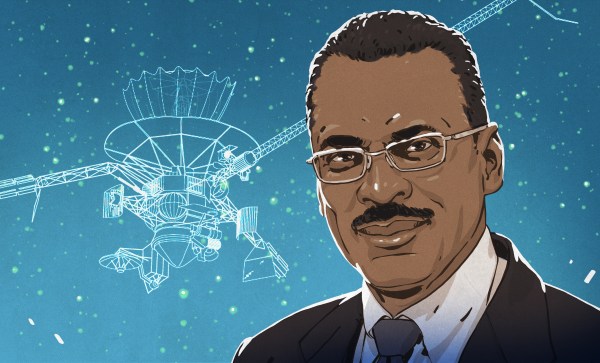
You likely know all about the Super Soaker, but you might not know it was invented by an aerospace engineer named Lonnie Johnson whose career included working on stealth technology and numerous projects with NASA.
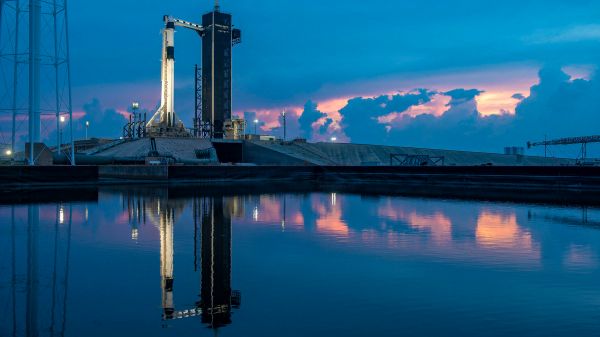
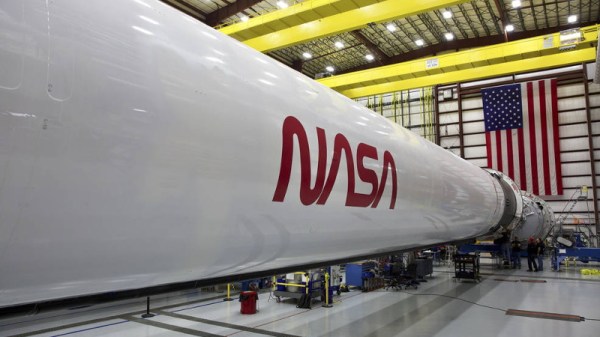
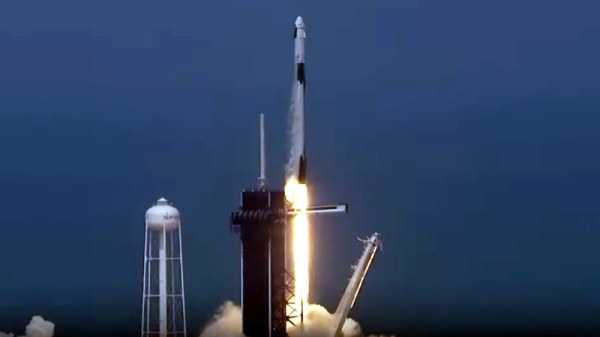
Orbiting over our heads right now are two human beings who flew to the International Space Station in a SpaceX Crew Dragon vehicle on top of a Falcon 9. The majority of coverage focused on the years since human spaceflight last launched from Florida, but [Eric Berger] at Ars Technica reminds us it also makes for a grand ten-year celebration of the SpaceX workhorse rocket by sharing some stories from its early days.
Falcon 9 is a huge presence in the global space launch industry today, but ten years ago the future of a young aerospace company was far from certain. The recent uneventful launch is the result of many lessons learned in those ad-hoc days. Some early Falcon 9 flights were successful because the team decided some very unconventional hacks were worth the risk that paid off. A bit of water intrusion? Dry it out with a blow dryer and seal it back up. Small tear in a rocket nozzle? Send in someone to trim a few inches with shears (while the rocket was standing vertical on the launchpad).
Industry veterans appalled at “a cowboy attitude” pounced on every SpaceX failure with “I told you so.” But the disregard for convention is intentional, documented in many places like this old Wired piece from 2012. Existing enshrined aerospace conventions meant the “how” was preserved but the “why” was reduced to “we’ve always done it this way” rarely re-evaluated in light of advancements. Plus the risk-averse industry preferred staying with flight-proven designs, setting up a Catch-22 blocking innovation. SpaceX decided to go a different way, rapidly evolving the Falcon 9 and launching at a high cadence. Learning from all the failures along the way gave them their own set of “why” to back up their “how” growing far beyond blow dryers and metal shears. We’re happy to see the fail-learn-improve cycle at the heart of so many hacker projects have proven effective to send two astronauts to the space station and likely beyond.
In this day and age where a megabyte of memory isn’t a big deal, it is hard to recall when you had to conserve every byte of memory. If you are a student of such things, you might enjoy an annotated view of the Apollo 11 DSKY sine and cosine routines. Want to guess how many lines of code that takes? Try 35 for both.
Figuring out how it works takes a little knowledge of how the DSKY works and the number formats involved. Luckily, the site has a feature where you can click on the instructions and see comments and questions from other reviewers.
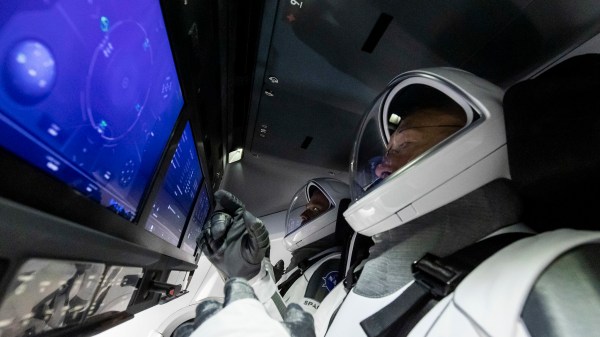
The touchscreen interface aboard SpaceX Crew Dragon is just one of its many differences from past space vehicles, but those big screens make an outsized visual impact. Gone are panels filled with indicator needles in gauges, or endless rows of toggle switches. It looked much like web interaction on everyday tablets for good reason: what we see is HTML and JavaScript rendered by the same software core underlying Google’s Chrome browser. This and many other details were covered in a Reddit Ask Me Anything with members of the SpaceX software team.
Various outlets have mentioned Chromium in this context, but without answering the obvious follow-up question: how deep does Chromium go? In this AMA we learn it does not go very deep at all. Chromium is only the UI rendering engine, their fault tolerant flight software interaction is elsewhere. Components such as Chromium are isolated to help keep system behavior predictable, so a frozen tab won’t crash the capsule. Somewhat surprisingly they don’t use a specialized real-time operating system, but instead a lightly customized Linux built with PREEMPT_RT patches for better real-time behavior.
In addition to Falcon rocket and Dragon capsule, this AMA also covered software work for Starlink which offered interesting contrasts in design tradeoffs. Because there are so many satellites (and even more being launched) loss of individual spacecraft is not a mission failure. This gives them elbow room for rapid iteration, treating the constellation more like racks of servers in a datacenter instead of typical satellite operations. Where the Crew Dragon code has been frozen for several months, Starlink code is updated rapidly. Quickly enough that by the time newly launched Starlink satellites reach orbit, their code has usually fallen behind the rest of the constellation.
Finally there are a few scattered answers outside of space bound code. Their ground support displays (visible in Hawthorne mission control room) are built with LabVIEW. They also confirmed that contrary to some claims, the SpaceX ISS docking simulator isn’t actually running the same code as Crew Dragon. Ah well.
Anyone interested in what it takes to write software for space would enjoy reading through these and other details in the AMA. And since it had a convenient side effect of serving as a recruiting event, there are plenty of invitations to apply if anyone has ambitions to join the team. We certainly can’t deny the attraction of helping to write the next chapter in human spaceflight.
With the launch of the SpaceX Demo-2 mission, the United States has achieved something it hasn’t done in nearly a decade: put a human into low Earth orbit with a domestic booster and vehicle. It was a lapse in capability that stretched on far longer than anyone inside or outside of NASA could have imagined. Through a series of delays and program cancellations, the same agency that put boot prints on the Moon and built the iconic Space Shuttle had been forced to rely on Russia to carry its astronauts into space since 2011.
But America’s slow return to human spaceflight can’t be blamed on the CST-100, or even Boeing, for that matter. Since the retirement of the Space Shuttle, NASA has been hindered by politics and indecisiveness. With a constantly evolving mandate from the White House, the agency’s human spaceflight program has struggled to make significant progress towards any one goal.
So after a false start due to bad weather, the first crewed launch of a SpaceX Crew Dragon capsule with two astronauts on board has gone ahead. After playing catch-up with the ISS for around 27 hours they’re now safely aboard. At times it seems that space launches have become everyday occurrences, but they are still heroes who have risked their lives in the furtherment of mankind’s exploration of space. Their achievement, and that of all the scientists, engineers, and other staff who stand behind them, is immense.
I watched the drama unfold via the live video feed. Having heaved a huge sigh of relief once they were safely in orbit, the feed cut to the studio, and then moved on to interview the NASA administrator Jim Bridenstine. He was naturally elated at a successful launch, and enthused about the agency’s achievement. You can watch the full interview embedded below, but what caught my attention was his parting sentence:
And if this can inspire a young child to become the next Elon Musk, or the next Jeff Bezos, or the next Sir Richard Branson, then that’s what this is all about
I was slightly shocked and saddened to hear this from the NASA administrator, because to my mind the careers of Musk, Bezos, or Branson should not be the ones first brought to mind by a space launch. This isn’t a comment on those three in themselves; although they have many critics it is undeniable that they have each through their respective space companies brought much to the world of space flight. Instead it’s a comment on what a NASA administrator should be trying to inspire in kids.
Ask yourself how many billionaire masters-of-the-universe it takes for a successful space race compared to the number of scientists, engineers, mathematicians, technicians, physicists, et al. From the anecdote of the NASA administrator it takes about three, but if he is to make good on his goal of returning to the Moon in 2024 and then eventually taking humanity to Mars it will take a generation packed full of those other roles. To understand that we’ll have to take a trip back to the Apollo era, and how that generation of kids were inspired by the spacecraft on their screens.
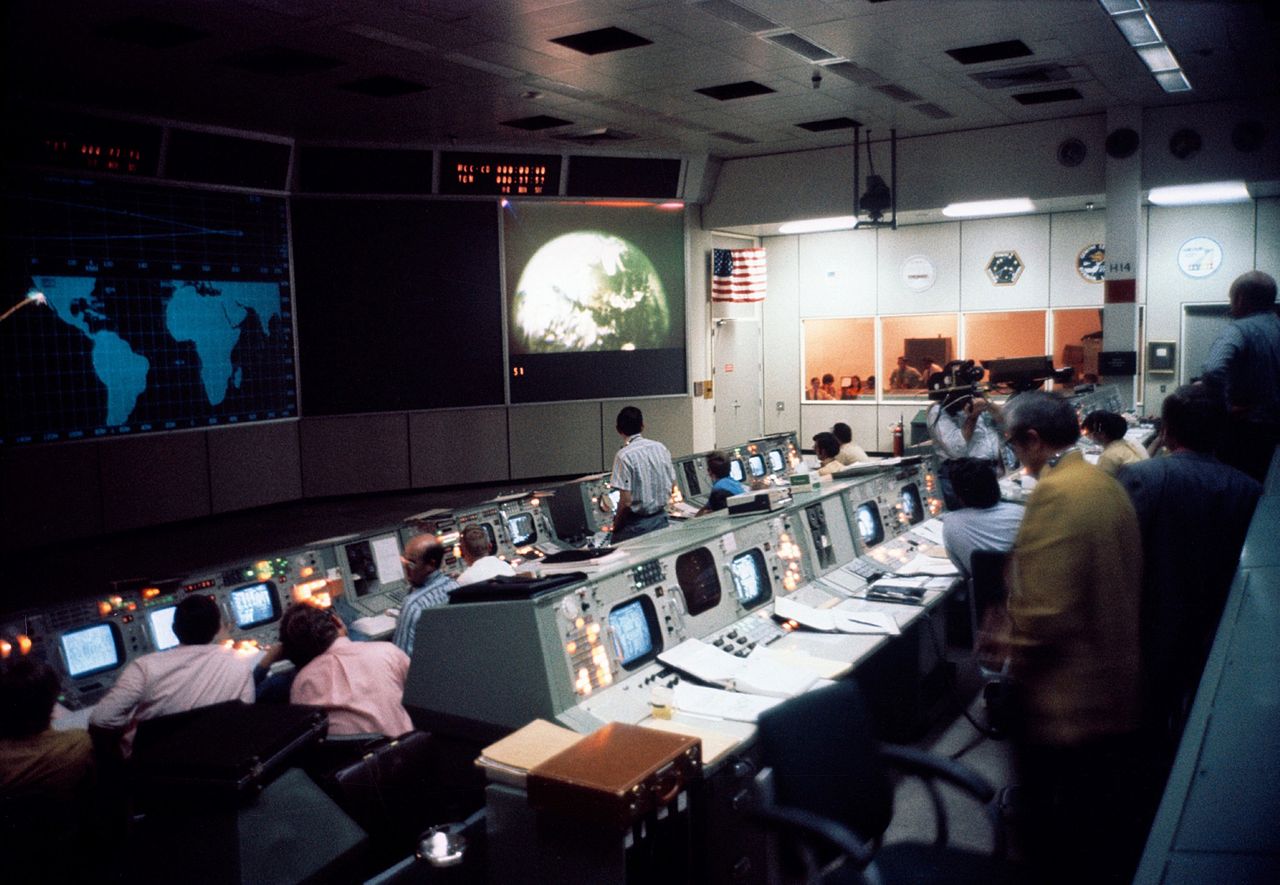
Inspiration from probably the coolest room in the world at the time, the Apollo mission control in Houston. NASA on The Commons / No restrictions
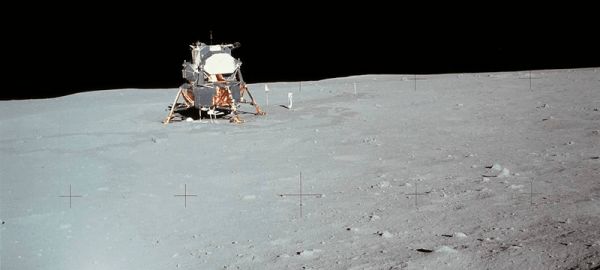
Fifty years ago, we were very much on the brink of becoming a spacefaring planet. American astronauts were taking their first steps on the Moon, and Soviet cosmonauts were occupying real space stations that would soon be capable of housing them for months at a time. Planetary probes were returning colour TV pictures from other worlds, and it was certain that in the immediate aftermath of the Apollo programme we’d be sending astronauts and probably cosmonauts too further afield. A Mars base in the 1980s perhaps, and following our fictional Star Trek heroes further afield thereafter.
We now know it didn’t quite work out that way, but a whole generation of tech-inclined kids grew up wanting nothing more than to be involved in space flight. The vast majority of us never made it, but with that inspiration we took our soldering irons and 8-bit home computers and ran with them. Those NASA folks were the coolest of role-models, and no doubt their Soviet equivalents were too for kids on the other side of the Iron Curtain.
With the best will in the world, the chances of any kid becoming the next Jeff Bezos is about as high as that of their becoming the next Neil Armstrong. Compared to the number of kids in the world, the number of billionaires and the number of astronauts both pale into statistical insignificance. But the chances of a kid becoming an engineer or a scientist is much higher, and in those careers their chances of having some of their work be involved with the space effort becomes not entirely unlikely.
I understand what the NASA administrator was trying to say, but can’t shake the feeling that if those are the people he rolls out to inspire kids watching a space launch, he’s missed an opportunity. Those are the names we all recognize, but shouldn’t we also elevate the people making the scientific breakthroughs so their names are equally recognized? Like Margaret Hamilton, Gene Kranz, and Sergei Korolev and many others before them, we should be making names like Tom Mueller and Margarita Marinova prominent examples of where a career in the sciences can take you. But to be honest, the real problem is we just don’t hear much about all the people doing this fascinating engineering and that’s a sad state of affairs.
Looks like it’s time for Hackaday to pursue a biography series based on the many great minds who are the ones delivering on the promise and vision of today’s (and tomorrow’s) space race. Get us started by talking about your favorite behind the scenes science folks in the comments below.