Soyuz Rocket Emergency Landing, Everyone OK

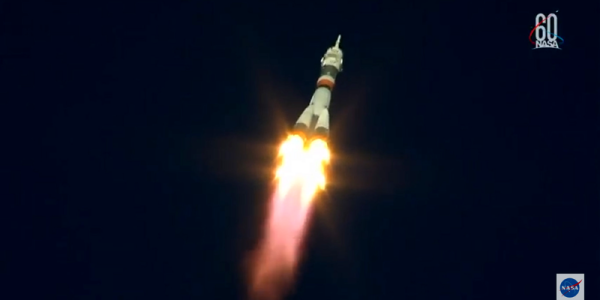
NASA spokesperson [Brandi Dean] summarized it succinctly: “Confirming again that today’s Soyuz MS10 launch did go into ballistic re-entry mode … That means the crew will not be going to the ISS today. Instead they will be taking a sharp landing, coming back to earth”. While nobody likes last-minute changes in plans, we imagine that goes double for astronauts. On the other hand, it’s always good news when we are able to joke about a flight that starts off with a booster separation problem.

Astronauts [Nick Hague] and [Aleksey Ovchinin] were on their way this morning to the International Space Station, but only made it as far as the middle of Kazakhstan. Almost as soon as the problem occurred, the rocket was re-pathed and a rescue team was sent out to meet them. Just an hour and a half after launch, they were on-site and pulled the pair out of the capsule unharmed. Roscosmos has already commissioned a report to look into the event. In short, all of the contingency plans look like they went to plan. We’ll have to wait and see what went wrong.

Watching the video (embedded below) the only obvious sign that anyone got excited is the simultaneous interpreter stumbling a bit when she has to translate [Aleksey] saying “emergency… failure of the booster separation”. Indeed, he reported everything so calmly that the NASA commentator didn’t even catch on for a few seconds. If you want to know what it’s like to remain cool under pressure, have a listen.

Going to space today is still a risky business, but thankfully lacks the danger factor that it once had. For instance, a Soyuz rocket hasn’t had an issue like this since 1975. Apollo 12 was hit by lightning and temporarily lost its navigation computer, but only the truly close call on Apollo 13 was made into a Hollywood Blockbuster. Still, it’s worth pausing a minute or two to think of the people up there floating around. Or maybe even sneak out and catch a glimpse when the ISS flies overhead.

Continue reading “Soyuz Rocket Emergency Landing, Everyone OK”
Maker Faire NY: Developing For The Final Frontier

The cost of getting a piece of hardware into space is now cheaper than ever, thanks in no small part to the rapid progress that’s been made by commercial launch providers such as SpaceX. In the near future, as more low-cost providers come online, it should get even cheaper. Within a few years, we could be seeing per kilogram costs to low Earth orbit that are 1/10th what they were on the Space Shuttle. To be sure, this is a very exciting time to be in the business of designing and building spacecraft.

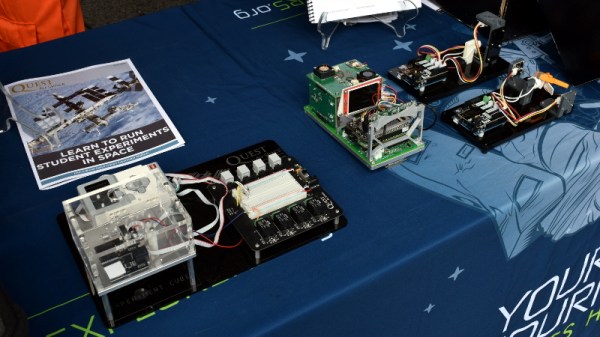
But no matter how cheap launches to orbit get, it’ll never be cheaper than simply emailing some source code up to the International Space Station (ISS). With that in mind, there are several programs which offer students the closest thing to booking passage on a Falcon 9: the chance to develop software that can be run aboard the Station. At the 2018 World Maker Faire in New York we got a chance to get up close and personal with functional replicas of the hardware that’s already on orbit, known in space parlance as “ground units”.

On display was a replica of one of the SPHERES free-flying satellites that have been on the ISS since 2006. They are roughly the size of a soccer ball and utilize CO2 thrusters and ultrasonic sensors to move around inside of the Station. Designed by MIT as a way to study spaceflight techniques such as docking and navigation without the expense and risk of using a full scale vehicle, the SPHERES satellites are perhaps the only operational spacecraft to have never been exposed to space itself.

MIT now runs the annual “Zero Robotics” competition, which tasks middle and high school students with solving a specific challenge using the SPHERES satellites. Competitors run their programs on simulators until the finals, which are conducted using the real hardware on the ISS and live-streamed to schools.

We also saw hardware from “Quest for Space”, which is a company offering curricula for elementary through high school students which include not only the ground units, but training and technical support when and if the school decides to send the code to the matching hardware on the Station. For an additional fee, they will even work with the school to design, launch, and recover a custom hardware experiment.

Their standard hardware is based on off-the-shelf platforms such as Arduino and LEGO Mindstorms EV3, which makes for an easy transition for school’s existing STEM programs. The current hardware in orbit is setup for experiments dealing with heat absorption, humidity, and convection, but “Quest for Space” notes they change out the hardware every two years to provide different experiment opportunities.

Projects such as these, along with previous efforts such as the ArduSat, offer a unique way for the masses to connect with space in ways which would have been unthinkable before the turn of the 21st century. It’s still up for debate if anyone reading Hackaday in 2018 will personally get a chance to slip Earth’s surly bonds, but at least you can rest easy knowing your software bugs can hitch a ride off the planet.

Space Garbage Truck Passes Its First Test

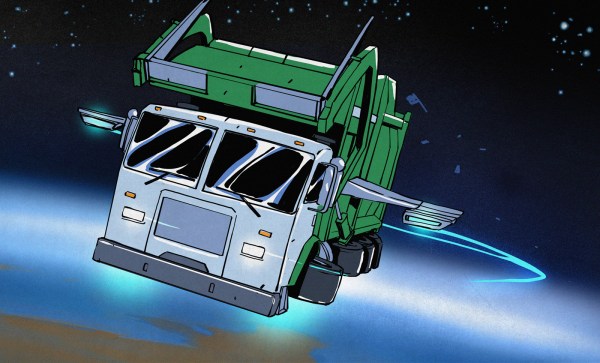
Back in April we reported on the successful launch of the SpaceX Falcon 9 rocket to the International Space Station which carried, along with supplies and experiments for the orbiting outpost, the RemoveDEBRIS spacecraft. Developed by the University of Surrey, RemoveDEBRIS was designed as the world’s first practical demonstration of what’s known as Active Debris Removal (ADR) technology. It included not only a number of different technologies for ensnaring nearby objects, it even brought along deployable targets to use them on.

Orbital debris (often referred to simply as “space junk”) is a serious threat to all space-faring nations, and has become even more pressing of a concern as the cost of orbital launches have dropped precipitously over the last few years, accelerating number and frequency of new objects entering orbit. The results of these first of their kind tests have therefore been hotly anticipated, as the technology to actively remove debris from Low Earth orbit (LEO) is seen by many in the industry to be a key element of expanding access to space for commercial purposes.

Six months after its arrival in space we’ve now starting to see the first results of the groundbreaking tests performed by the RemoveDEBRIS spacecraft, and so far it’s very promising.

Continue reading “Space Garbage Truck Passes Its First Test”

DIY Falcon Heavy 2nd stage test flight of BPS.space

Rocket Science With The Other SpaceX

When you say that something’s not rocket science you mean that it’s not as hard to understand or do as it may seem. The implication is that rocket science is something which is hard and best left to the likes of SpaceX or NASA. But that’s not the hacker spirit.

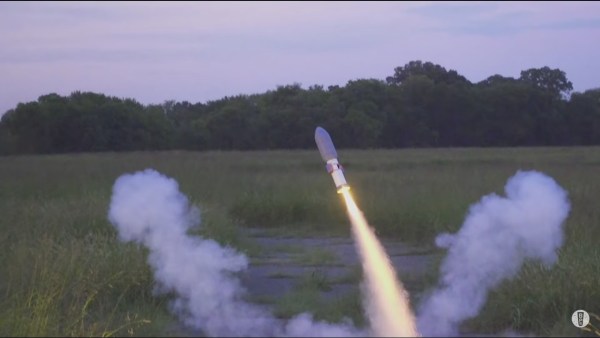
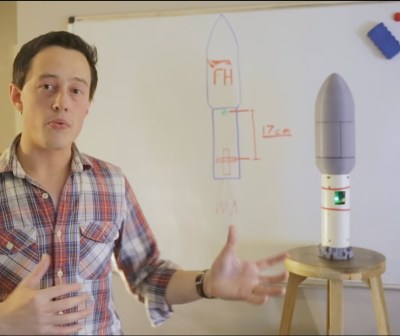
Rocket science with BPS.Space[Joe Barnard] recently had an unsuccessful flight of his Falcon Heavy’s second stage and gives a very clear explanation of what went wrong using those two simple concepts along with the thrust, which in this case is just the force applied to the moment arm.

And no, you didn’t miss a big happening with SpaceX. His Falcon Heavy is a homebrew one using model rocket solid boosters. Mind you, it is a little more advanced than that as he’s implemented thrust vectoring by controlling the engine’s direction using servo motors.

And therein lies the problem. The second stage’s inertia is so small and the moment arm so short that even a small misalignment in the thrust vectoring results in a big effect on the moment arm causing the vehicle to deviate from the desired path. You can see this in the first video below. Another issue he discusses is the high drag, but we’ll leave that to the second video below which contains his explanation and some chart analysis.

So yeah, maybe rocket science is rocket science. But there’s no better way to get your feet wet then to get out there and get building.

Continue reading “Rocket Science With The Other SpaceX”

Katherine Scott: Earth’s Daily Photo Through 200 Cubesat Cameras

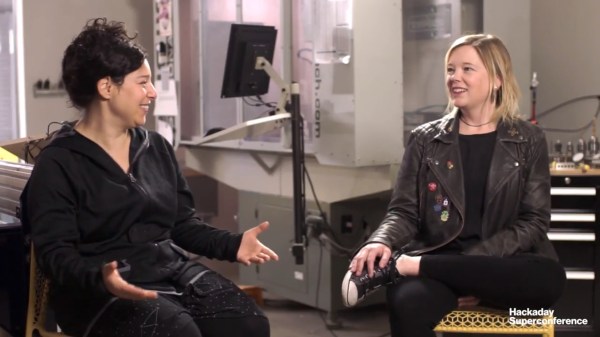
Every year at Supercon there is a critical mass of awesome people, and last year Sophi Kravitz was able to sneak away from the festivities for this interview with Katherine Scott. Kat was a judge for the 2017 Hackaday Prize. She specializes in computer vision, robotics, and manufacturing and was the image analytics team lead at Planet Labs when this interview was filmed.

You’re going to chuckle at the beginning of the video as Kat and Sophi recount the kind of highjinks going on at the con. In the hardware hacking area there were impromptu experiments in melting aluminum with gallium, and one of the afternoon’s organized workshop combined wood and high voltage to create lichtenberg figures. Does anyone else smell burning? Don’t forget to grab your 2018 Hackaday Superconference tickets and join in the fun this year!

Below you’ll find the interview which dives into Kat’s work with satellite imaging.

Continue reading “Katherine Scott: Earth’s Daily Photo Through 200 Cubesat Cameras”

One Small Step For A Space Elevator

Space elevators belong to that class of technology that we all want to see become a reality within our lifetimes, but deep-down doubt we’ll ever get to witness firsthand. Like cold fusion, or faster than light travel, we understand the principles that should make these concepts possible, but they’re so far beyond our technical understanding that they might as well be fantasy.

Except, maybe not. When Japan Aerospace Exploration Agency (JAXA) launches their seventh Kounotori H-II Transfer Vehicle towards the International Space Station, riding along with the experiments and supplies for the astronauts, will be a very special pair of CubeSats. They make up the world’s first practical test of space elevator technology, and with any luck, will be one of many small steps that precedes the giant leap which access to space at a fraction of the cost will be.

Of course, they won’t be testing a fully functional space elevator; even the most aggressive of timelines put us a few decades out from that. This will simply be a small scale test of some of the concepts that are central to building a space elevator, as we need to learn to crawl before we can walk. But even if we aren’t around to see the first practical space elevator make it to the top, at least we can say we were there on the ground floor.

Continue reading “One Small Step For A Space Elevator”

France Questions Russian Satellite With “Big Ears”

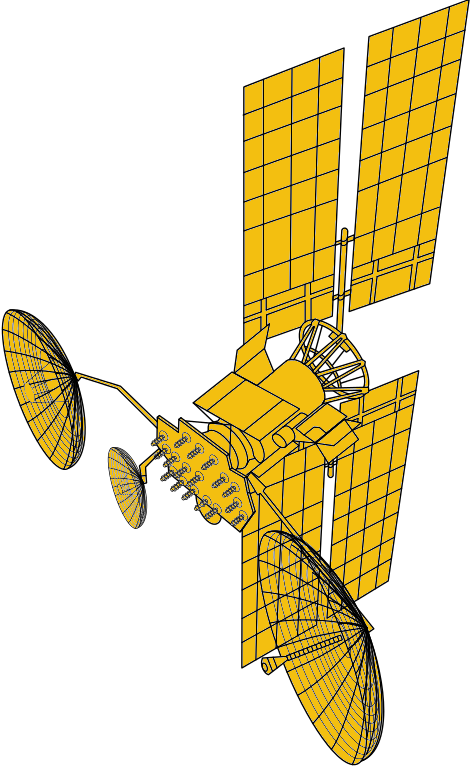
French Defense Minister Florence Parly took a page out of Little Red Riding Hood when she recently called out a Russian satellite for having “big ears”. While she stopped short of giving any concrete details, it was a rare and not terribly veiled accusation that Russia is using their Luch-Olymp spacecraft to perform orbital espionage.

Luch satellite conceptual drawing from NASA

At a speech in Toulouse, Parly was quoted as saying: “It got close. A bit too close. So close that one really could believe that it was trying to capture our communications.” and “this little Stars Wars didn’t happen a long time ago in a galaxy far away. It happened a year ago, 36,000 kilometers above our heads.”

The target of this potential act of space piracy is the Athena-Fidus satellite, a joint venture between France and Italy to provide secure communication for the military and emergency services of both countries. Launched in 2014, it provides 3 Gbit/s throughput via the Ka-band for mobile receivers on the ground and in drones.

This isn’t the first time Russia’s Luch class of vehicles has been the subject of scrutiny. In 2015 it was reported that one such craft maneuvered to within 10 kilometers of the Intelsat 7 and Intelsat 901 geostationary communications satellites, prompting classified meetings at the United States Defense Department. As geostationary satellites orbit the Earth at 3.07 km/s, a 10 km approach is exceptionally dangerous. Even a slight miscalculation could cause an impact within seconds.

Could Stealth Satellites Be In Our Future?

Much to the chagrin of shadowy spy agencies everywhere, this sort of orbital cat and mouse is easily detectable from the ground. When spy planes became easy to detect using radar, the next step was to evade that detection. Are we on a path to satellites that are transparent to radar?

Gregory Charvat, author of Small and Short-Range Radar Systems and occasional contributor here at Hackaday, tells us that building a stealth satellite is no easy task. “Just like how we had to re-invent the aircraft to make the first stealth aircraft, to make a stealth satellite one would have to fundamentally re-invent the satellite as we know it today.”

Likening it to the immense cost and effort it took to develop stealth aircraft like the Lockheed F-117 Nighthawk, Gregory says developing a satellite which could hide from radar would likely be more trouble than it’s worth for most applications. Space is already hard enough. “Maintaining that special shape that reflects radar away from your aircraft and including all of these essential peripherals is a big challenge” Gregory says, which results in “compromise and high maintenance costs.”

Beyond attempting to eavesdrop on communications, military insiders say that these close passes by Luch satellites could also be “dry-runs” for anti-satellite operations; either by using a directed energy weapon to disable the target spacecraft, or simply running into it. With events like these, and the commitment by the United States to establish a Space Force in the coming years, efforts to militarize space seem to be on the rise.

[via DefenseNews]