Hitchhiking To The Moon For Fun And Profit

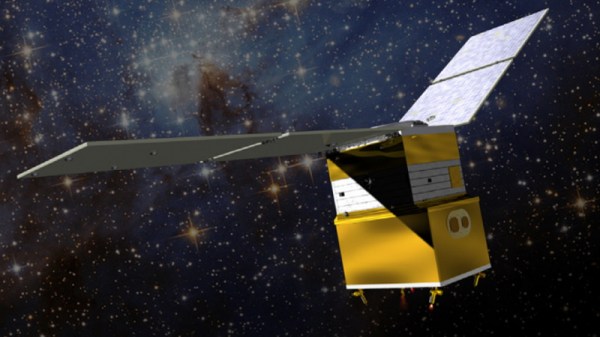
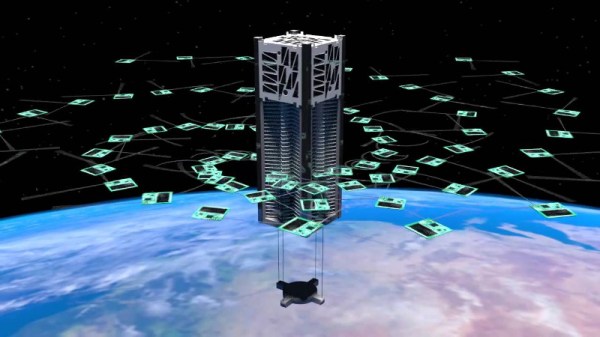
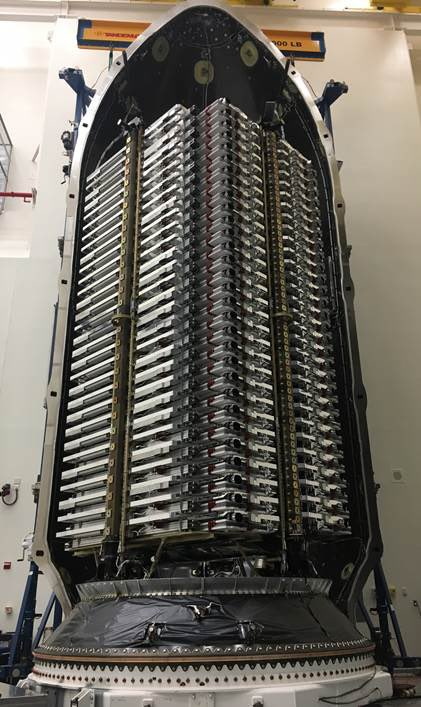
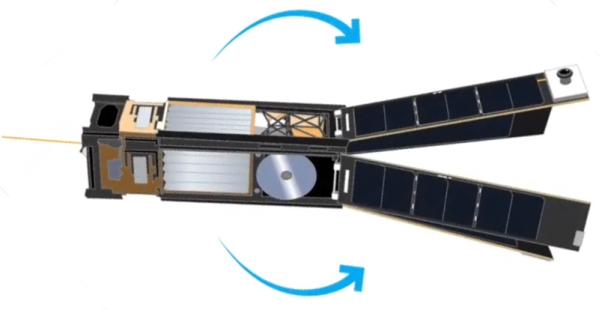
On February 22nd, a Falcon rocket lifted off from Cape Canaveral carrying the Indonesian communications satellite Nusantara Satu. While the satellite was the primary payload for the mission, as is common on the Falcon 9, the rocket had a couple of stowaways. These secondary payloads are generally experiments or spacecraft which are too small or light to warrant a rocket of their own such as CubeSats. But despite flying in the economy seats, one of the secondary payloads on this particular launch has a date with destiny: Israel’s Beresheet, the first privately-funded mission to attempt landing on the Moon.

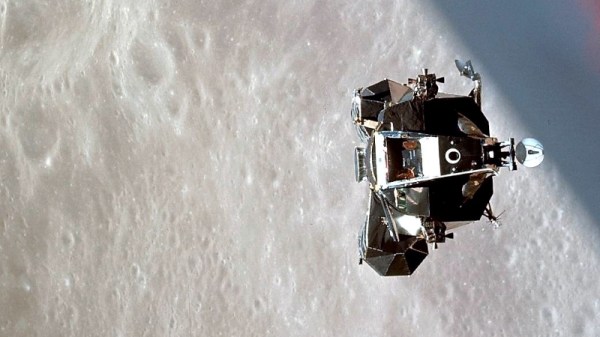
But unlike the Apollo missions, which took only three days to reach our nearest celestial neighbor, Beresheet is taking a considerably more leisurely course. It will take over a month for the spacecraft to reach the Moon, and it will be a few weeks after that before it finally makes a powered descent towards the Sea of Serenity, not far from where Apollo 17 landed 47 years ago. That assumes everything goes perfectly; tack a few extra weeks onto that estimate if the vehicle runs into any hiccups on the way.

At first glance, this might seem odd. If the trip only took a few days with 1960’s technology, it seems a modern rocket like the Falcon 9 should be able to make better time. But in reality, the pace is dictated by budgetary constraints on both the vehicle itself and the booster that carried it into space. While one could argue that the orbital maneuvers involved in this “scenic route” towards the Moon are more complicated than the direct trajectory employed by the manned Apollo missions, it does hold promise for a whole new class of lunar spacecraft. If you’re not in any particular hurry, and you’re trying to save some cash, your Moon mission might be better off taking the long way around.

Continue reading “Hitchhiking To The Moon For Fun And Profit”

Proposed NASA Budget Signals Changes To Space Launch System

The White House’s proposed budget for 2020 is out, and with it comes cuts to NASA. The most important item of note in the proposed budget is a delay of the Space Launch System, the SLS, a super-heavy lifting launch vehicle designed for single use. The proposed delay would defer work on the enhanced version of the SLS, the Block 1B with the Exploration Upper Stage.

The current plans for the Space Launch System include a flight using NASA’s Orion spacecraft in June 2020 for a flight around the moon. This uncrewed flight, Exploration Mission 1, or EM-1, would use the SLS Block 1 Crew rocket. A later flight, EM-2, would fly a crewed Orion capsule around the moon in 2022. A third proposed flight in 2023 would send the Europa Clipper to Jupiter. The proposed 2020 budget puts these flights in jeopardy.

Continue reading “Proposed NASA Budget Signals Changes To Space Launch System”

When New Space Loses Out To NASA Pragmatism

You’ve got to admit, things have been going exceptionally well for SpaceX. In the sixteen years they’ve been in operation, they’ve managed to tick off enough space “firsts” to make even established aerospace players blush. They’re the first privately owned company to not only design and launch their own orbital-class rocket, but to send a spacecraft to the International Space Station. The first stage of their Falcon 9 rocket is the world’s only orbital booster capable of autonomous landing and reuse, and their Falcon Heavy has the highest payload capacity of any operational launch system. All of which they’ve managed to do at a significantly lower cost than their competition.

United Launch Alliance Atlas V

So it might come as a surprise to hear that SpaceX recently lost out on a lucrative NASA launch contract to the same entrenched aerospace corporations they’ve been running circles around for the last decade. It certainly seems to have come as a surprise to SpaceX, at least. Their bid to launch NASA’s Lucy mission on the Falcon 9 was so much lower than the nearly $150 million awarded to United Launch Alliance (ULA) for a flight on their Atlas V that the company has decided to formally protest the decision. Publicly questioning a NASA contract marks another “first” for the company, and a sign that SpaceX’s confidence in their abilities has reached the point that they’re no longer content to be treated as a minor player compared to heavyweights like Boeing and Lockheed Martin.

But this isn’t the first time NASA has opted to side with more established partners, even in the face of significantly lower bids by “New Space” companies. Their decision not to select Sierra Nevada Corporation’s Dream Chaser spaceplane for the Commercial Crew program in 2014, despite it being far cheaper than Boeing’s CST-100 Starliner, triggered a similar protest to the US Government Accountability Office (GAO). In the end, the GAO determined that Boeing’s experience and long history justified the higher sticker price of their spacecraft compared to the relative newcomer.

NASA has yet to officially explain their decision to go with ULA over SpaceX for the Lucy mission, but in light of what we know about the contract, it seems a safe bet they’ll tell SpaceX the same thing they told Sierra Nevada in 2014. The SpaceX bid might be lower, but in the end, NASA’s is willing to pay more to know it will get done right. Which begs the question: at what point are the cost savings not compelling enough to trust an important scientific mission (or human lives) to these rapidly emerging commercial space companies?

Continue reading “When New Space Loses Out To NASA Pragmatism”

NASA Is Building A Space Station In A Weird Orbit. Here’s Why

Representatives from SpaceX, Blue Origin, and United Launch Alliance participated in a forum last week held by NASA to determine the future of humans on the moon. This isn’t just how they will live, how long they will stay, or what they will do; no, this is far more interesting: this was how humans will travel from lunar orbit from the surface of the moon. The future of the next generation of lunar lander is being determined right now.

The plan right now is entirely unlike Apollo, which sent a pair of spaceships in orbit around the moon, sent one to the surface, then returned to the mother ship for the trip back to Earth. Instead of something somewhat simple, the next era of lunar exploration will happen from a gateway orbiting in cis-lunar space. What makes this so amazing is how weird the orbit is, and the reasons behind it.

Continue reading “NASA Is Building A Space Station In A Weird Orbit. Here’s Why”

Don’t Need A Weatherman To Know Which Way The Wind Blows On Mars

NASA’s latest Mars lander has a very precise weather package, and you can check the daily conditions on Elysium Planitia online. The data however has apparently led to a bit of a mystery. According to Ars Technica, every day at 7AM and 7PM local time, there’s an unexplained atmospheric pressure spike.

The TWINS (Temperature and Wind for InSight) package provided by Spain’s Centro de Astrobiología shows the little spikes regularly since the lander hit the ground in November. They seem to correspond to local sunrise and sunset. Keep in mind, the pressure on Mars is very low — about 1% of Earth’s atmosphere — and scientists have already ruled out instrument problems.

Continue reading “Don’t Need A Weatherman To Know Which Way The Wind Blows On Mars”

CNC Tellurion Lets You See The Earth And Moon Dance

Kids – they’re such a treasure. One minute you’re having a nice chat, the next minutes they’re testing your knowledge of the natural world with a question like, “Why can we see the Moon during the day?” And before you know it, you’re building a CNC Earth-Moon orbital model.

We’ve got to applaud [sniderj]’s commitment to answering his grandson’s innocent question. What could perhaps have been demonstrated adequately with a couple of balls and a flashlight instead became an intricate tellurion that can be easily driven to show the relative position of the Earth and Moon at any date; kudos for anticipating the inevitable, “Where was the moon when I was born, Grampa?” question. The mechanism is based on the guts of a defunct 3D-printer, with the X-, Y-, and Z-axis steppers now controlling the Earth’s rotation and tilt and the Moon’s orbit respectively, with the former extruder drive controlling the tilt of the Moon’s orbital plane. A complex planetary gear train with herringbone gears, as well as a crossed-shaft helical gear set, were 3D-printed from PLA. The Earth model is a simple globe and the Moon is a ping-pong ball; [sniderj] is thinking about replacing the Moon with a 3D-printed bump-map model, a move which we strongly endorse. The video below shows the tellurion going through a couple of hundred years of the saros at warp speed.

There’s just something about machines that show the music of the spheres, whether they be ancient or more modern. And this one would be a great entry into our 3D-Printed Gears, Pulleys, and Cams contest too.

Continue reading “CNC Tellurion Lets You See The Earth And Moon Dance”

The “Impossible” Tech Behind SpaceX’s New Engine

Followers of the Church of Elon will no doubt already be aware of SpaceX’s latest technical triumph: the test firing of the first full-scale Raptor engine. Of course, it was hardly a secret. As he often does, Elon has been “leaking” behind the scenes information, pictures, and even video of the event on his Twitter account. Combined with the relative transparency of SpaceX to begin with, this gives us an exceptionally clear look at how literal rocket science is performed at the Hawthorne, California based company.

This openness has been a key part of SpaceX’s popularity on the Internet (that, and the big rockets), but its been especially illuminating in regards to the Raptor. The technology behind this next generation engine, known as “full-flow staged combustion” has for decades been considered all but impossible by the traditional aerospace players. Despite extensive research into the technology by the Soviet Union and the United States, no engine utilizing this complex combustion system has even been flown. Yet, just six years after Elon announced SpaceX was designing the Raptor, they’ve completed their first flight-ready engine.

The full-flow staged combustion engine is often considered the “Holy Grail” of rocketry, as it promises to extract the most possible energy from its liquid propellants. In a field where every ounce is important, being able to squeeze even a few percent more thrust out of the vehicle is worth fighting for. Especially if, like SpaceX, you’re planning on putting these new full-flow engines into the world’s largest operational booster rocket and spacecraft.

But what makes full-flow staged combustion more efficient, and why has it been so difficult to build an engine that utilizes it? To understand that, we’ll need to first take a closer look at more traditional rocket engines, and the design paradigms which have defined them since the very beginning.

Continue reading “The “Impossible” Tech Behind SpaceX’s New Engine”