A Daring Search For Answers In Soyuz Mystery

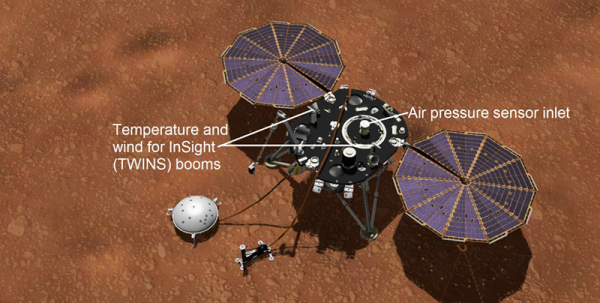
If you happened to tune into NASA TV on December 11th, you’d have been treated to a sight perhaps best described as “unprecedented”: Russian cosmonauts roughly cutting away the thermal insulation of a docked Soyuz spacecraft with a knife and makeshift pair of shears. Working in a cloud of material ripped loose during the highly unusual procedure, cosmonauts Oleg Kononenko and Sergey Prokopyev were effectively carving out their own unique place in space history. Their mission was to investigate the external side of the suspicious hole in the Soyuz MS-09 capsule which caused a loss of air pressure on the International Space Station earlier in the year.

That astronauts don’t generally climb out the hatch and use a knife to hack away at the outside of their spacecraft probably goes without saying. Such an event has never happened before, and while nobody can predict the future, odds are it’s not something we’re likely to see again. Keep in mind that this wasn’t some test capsule or a derelict, but a vehicle slated to return three human occupants to Earth in a matter of days. Cutting open a spacecraft in which human lives will shortly be entrusted is not a risk taken likely, and shows how truly desperate the Russian space agency Roscosmos is to find out just who or what put a hole in the side of one of their spacecraft.

Close inspection from the inside of the spacecraft confirmed the hole wasn’t made by an impact with a micrometeorite or tiny piece of space junk as was originally assumed. It appears to have been made with a drill, which really only allows for two possible scenarios: intentional sabotage or a mistake and subsequent cover-up. In either event, a truly heinous crime has been committed and those responsible must be found. As luck would have it the slow leak of air pressure was detected early and the hole was patched before any damage was done, but what if it hadn’t?

Continue reading “A Daring Search For Answers In Soyuz Mystery”

Cortex 2 Is One Serious 3D Printed Experimental Rocket

Rocketry is wild, and [Foaly] is sharing build and design details of the Cortex 2 mini rocket which is entirely 3D printed. Don’t let that fool you into thinking it is in any way a gimmick; the Cortex 2 is a serious piece of engineering with some fascinating development.

Cortex 1 was launched as part of C’Space, an event allowing students to launch experimental rockets. Stuffed with sensors and entirely 3D printed, Cortex 1 flew well, but the parachute failed to deploy mainly due to an imperfectly bonded assembly. The hatch was recovered, but the rocket was lost. Lessons were learned, and Cortex 2 was drafted up before the end of the event.

Some of the changes included tweaking the shape and reducing weight, and the refinements also led to reducing the number of fins from four to three. The fins for Cortex 2 are also reinforced with carbon fiber inserts and are bolted on to the main body.

Here’s an interesting details: apparently keeping the original fins would result in a rocket that was “overstable”. We didn’t really realize that was a thing. The results of overstabilizing are similar to a PID loop where gain is too high, and overcorrection results in oscillations instead of a nice stable trajectory.

Cortex 2 uses a different rocket motor from its predecessor, which led to another interesting design issue. The new motor is similar to hobby solid rocket motors where a small explosive charge at the top of the motor blows some time after the fuel is gone. This charge is meant to eject a parachute, but the Cortex 2 is not designed to use this method, and so the gasses must be vented. [Foaly] was understandably not enthusiastic about venting hot gasses through the mostly-PLA rocket body. Instead, a cylindrical cartridge was designed that both encases the motor and redirects any gasses from the explosive charge out the rear of the rocket. That cartridge was SLA printed out of what looks to us like Formlabs’ High Tempurature Resin.

Finally, to address the reasons Cortex 1 crashed, the hatch and parachute were redesigned for better reliability. A servo takes care of activating the system, and a couple of reverse-polarity magnets assist in ensuring the hatch blows clear. There’s even a small servo that takes care of retracting the launch guide.

The rocket is only half built so far, but looks absolutely fantastic and we can’t wait to see more. It’s clear [Foaly] has a lot of experience and knowledge. After all, [Foaly] did convert a Makerbot printer into a CNC circuitboard engraver.

GPS III Launching Today But You Can’t Use It Until 2022

Imagine if you bought a new car but they keys were not going to be shipped to you until a few years later. That’s analogous to the situation the U.S. Air Force finds itself in. The first GPS III satellite is finally ready to launch today, December 18, 2018 — a little over 2 years beyond the original schedule. However, most of the unique GPS III features won’t be available until at least 2022, according to a 2017 Government Accounting Office (GAO) report to Congress.

GPS III is a project to launch 32 new satellites that will — for military users — be more difficult to jam. For civilian users, the new GPS satellites will be compatible with other systems, including the EU’s Galileo system. But the big draw? About three times the accuracy of the current system. For civilian use, that means 3 to 10 feet under good conditions as opposed to the current systems’ 10- to 33-foot resolution.

Continue reading “GPS III Launching Today But You Can’t Use It Until 2022”

Welcome To The Slow Death Of Satellite TV In America

During an earnings call on November 29th, CEO of AT&T Communications John Donovan effectively signed the death warrant for satellite television in the United States. Just three years after spending $67 billion purchasing the nations’s largest satellite TV provider, DirecTV, he made a comment which left little doubt about the telecom giant’s plan for the service’s roughly 20 million subscribers: “We’ve launched our last satellite.

The news might come as a surprise if you’re a DirecTV customer, but the writing has been on the wall for years. When the deal that brought DirectTV into the AT&T family was inked, they didn’t hide the fact that the actual satellite content delivery infrastructure was the least of their concerns. What they really wanted was the installed userbase of millions of subscribers, as well as the lucrative content deals that DirecTV had already made. The plan was always to ween DirecTV customers off of their satellite dishes, the only question was how long it would take and ultimately what technology they would end up using.

Now that John Donovan has made it clear their fleet of satellites won’t be getting refreshed going forward, the clock has officially started ticking. It won’t happen this year, or even the year after that. But eventually each one of the satellites currently beaming DirecTV’s content down to Earth will cease to function, and with each silent bird, satellite television (at least in the United States) will inch closer to becoming history.

Continue reading “Welcome To The Slow Death Of Satellite TV In America”

The Space Station Has A Supercomputer Stowaway

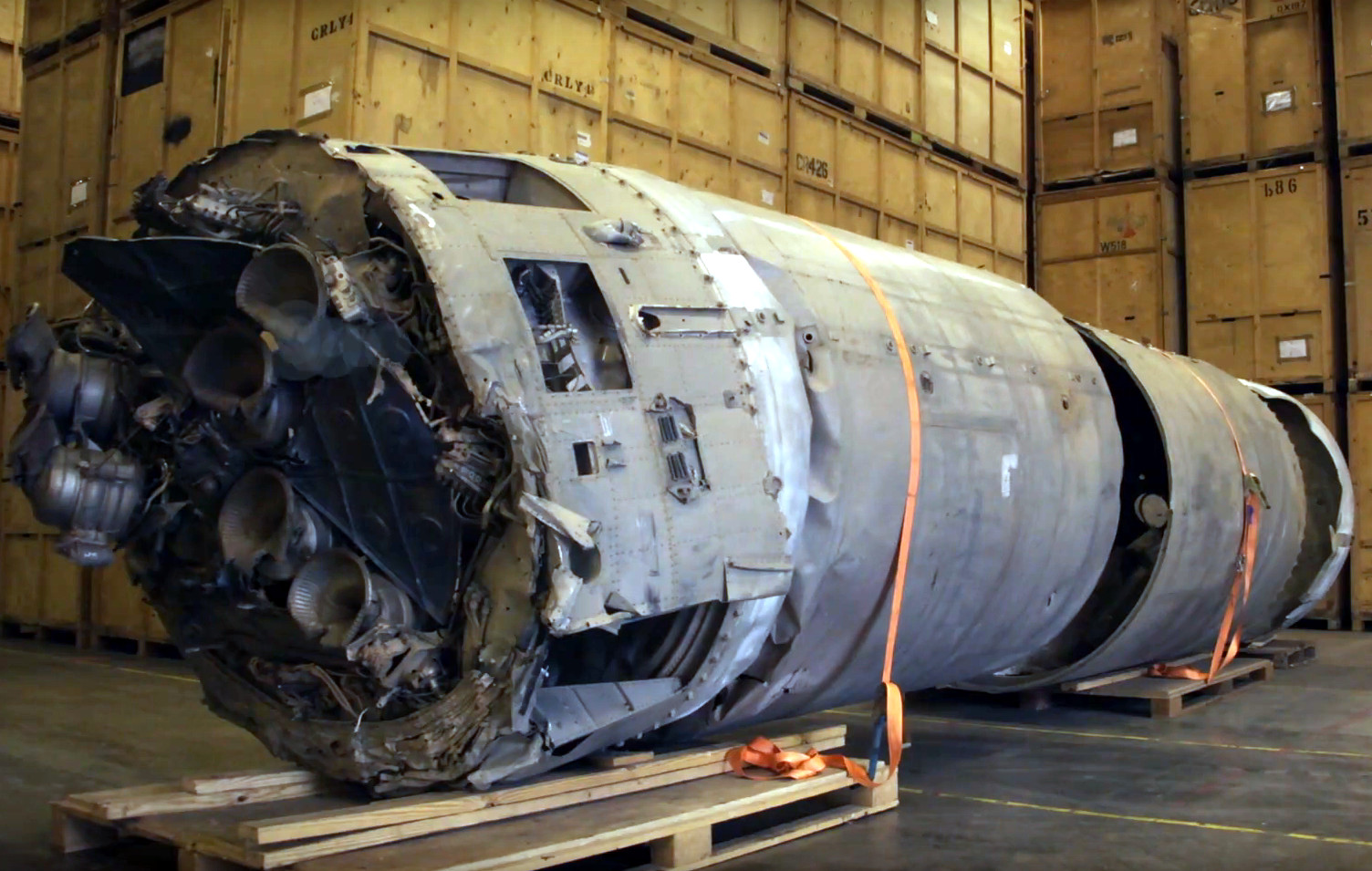
The failed launch of Soyuz MS-10 on October 11th, 2018 was a notable event for a number of reasons: it was the first serious incident on a manned Soyuz rocket in 35 years, it was the first time that particular high-altitude abort had ever been attempted, and most importantly it ended with the rescue of both crew members. To say it was a historic event is something of an understatement. As a counterpoint to the Challenger disaster it will be looked back on for decades as proof that robust launch abort systems and rigorous training for all contingencies can save lives.

But even though the loss of MS-10 went as well as possibly could be expected, there’s still far reaching consequences for a missed flight to the International Space Station. The coming and going of visiting vehicles to the Station is a carefully orchestrated ballet, designed to fully utilize the up and down mass that each flight offers. Not only did the failure of MS-10 deprive the Station of two crew members and the experiments and supplies they were bringing with them, but also of a return trip which was to have brought various materials and hardware back to Earth.

But there’s been at least one positive side effect of the return cargo schedule being pushed back. The “Spaceborne Computer”, developed by Hewlett Packard Enterprise (HPE) and NASA to test high-performance computing hardware in space, is getting an unexpected extension to its time on the Station. Launched in 2017, the diminutive 32 core supercomputer was only meant to perform self-tests and be brought back down for a full examination. But now that its ticket back home has been delayed for the foreseeable future, NASA is opening up the machine for other researchers to utilize, proving there’s no such thing as a free ride on the International Space Station.

Continue reading “The Space Station Has A Supercomputer Stowaway”

Designing Space-Rated PCBs

We’ve reduced printed circuit board design to practice so much that we hardly give a thought to the details anymore. It’s so easy to bang out a design, send it to a fab house, and have ten boards in your hands in no time at all. All the design complexities are largely hidden from us, abstracted down to a few checkboxes on the vendor’s website.

There’s no doubt that making professional PCB design tools available to the hobbyist has been a net benefit, but there a downside. Not every PCB design can be boiled down to the “one from column A, one from column B” approach. There are plenty of applications where stock materials and manufacturing techniques just won’t cut it. PCBs designed to operate in space is one such application, and while few of us will ever be lucky enough to have a widget blasted to infinity and beyond, learning what’s behind space-rated PCBs is pretty interesting.

Continue reading “Designing Space-Rated PCBs”

Flagging Down Aliens With World’s Biggest Laser Pointer

As you’re no doubt aware, humans are a rather noisy species. Not just audibly, like in the case of somebody talking loudly when you’re in a movie theater, but also electromagnetically. All of our wireless transmissions since Marconi made his first spark gap broadcast in 1895 have radiated out into space, and anyone who’s got a sensitive enough ear pointed into our little corner of the Milky Way should have no trouble hearing us. Even if these extraterrestrial eavesdroppers wouldn’t be able to understand the content of our transmissions, the sheer volume of them would be enough to indicate that whatever is making all that noise on the third rock orbiting Sol can’t be a natural phenomena. In other words, one of the best ways to find intelligent life in the galaxy may just be to sit around and wait for them to hear us.

Of course, there’s some pesky physics involved that makes it a bit more complicated. Signals radiate from the Earth at the speed of light, which is like a brisk walk in interstellar terms. Depending on where these hypothetical listeners are located, the delay between when we broadcast something and when they receive it can be immense. For example, any intelligent beings that might be listening in on us from the closest known star, Proxima Centauri, are only just now being utterly disappointed by the finale for “How I Met Your Mother“. Comparatively, “Dallas” fans from Zeta Reticuli are still on the edge of their seats waiting to find out who shot J.R.

But rather than relying on our normal broadcasts to do the talking for us, a recent paper in The Astrophysical Journal makes the case that we should go one better. Written by James R. Clark and Kerri Cahoy,  “Optical Detection of Lasers with Near-term Technology at Interstellar Distances” makes the case that we could use current or near-term laser technology to broadcast a highly directional beacon to potentially life-harboring star systems. What’s more, it even theorizes it would be possible to establish direct communications with an alien intelligence simply by modulating the beam.

Continue reading “Flagging Down Aliens With World’s Biggest Laser Pointer”