Generative Design Algorithms Prepare For Space

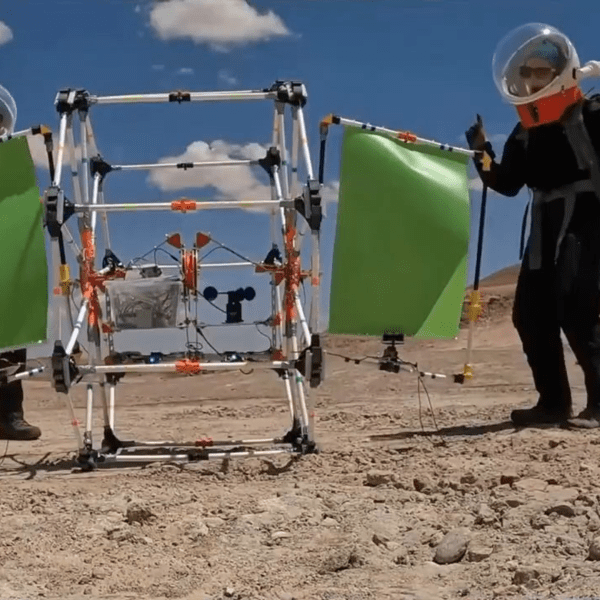
NASA is famously risk-averse, taking cautious approaches because billions of taxpayer dollars are at stake and each failure receives far more political attention than their many successes. So while moving the final frontier outward requires adopting new ideas, those ideas must first prove themselves through a lengthy process of risk-reduction. Autodesk’s research into generative design algorithms has just taken a significant step on this long journey with a planetary lander concept.

It was built jointly with a research division of NASA’s Jet Propulsion Laboratory, the birthplace of many successful interplanetary space probes. This project got a foot in the door by promising 30% weight savings over conventional design techniques. Large reduction in launch mass is always a good way to get a space engineer’s attention! Mimicking mother nature’s evolutionary process, these algorithms output very organic looking shapes. This is a relatively new approach to design optimization under exploration by multiple engineering software vendors. Not just Autodesk’s “Generative Design” but also “Topology Optimization” in SolidWorks, plus others. Though these shapes appear ideally suited to 3D printing, Autodesk also had to prove their algorithm could work with more traditional fabrication techniques like 5-axis CNC mills.

This is leading-edge research technology though some less specialized, customer-ready versions are starting to trickle out of research labs. Starting with an exclusive circle: People with right tiers of SolidWorks license, the paid (not free) tier of Autodesk Fusion 360, etc. We’ve looked at another recent project with nontraditional organic shapes, and we’ve looked at generative designs used for their form as well as their function. This category of CAD tools hold a lot of promise, and we’re optimistic they’ll soon become widely accessible so we can all put them to good use in our earthbound projects.

Possibly even before they fly to another planet.

[via Engadget]

Backyard Planetarium With Magnets

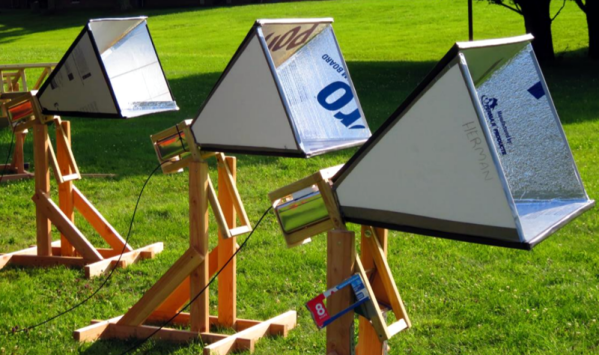
If you are a Hackaday reader, you probably like space in real life, fiction, or both. A trip to a planetarium is a great treat, but what if you could have a planetarium in your backyard? [Ecasill] thought so and used a Zip Tie domes kit to create just such a thing. It takes some sewing and a projector, but there’s a problem. The dome needs to come down if there is going to be bad weather. The answer? Magnetic dowel rods.

Because the magnets are brittle, plastic dip covers them after epoxy sticks them in place. The cloth has steel bolts to adhere, too. All in, the setup cost about $2,000. That includes a projector, a mirror ball, a sound system, and all the construction.

Continue reading “Backyard Planetarium With Magnets”

Soyuz Failure Leaves Questions Unanswered

The Russian space program experienced its first serious incident on a manned mission in 35 years when Soyuz MS-10 failed during ascent on October 11th, 2018. The abort system worked as designed, and crew members Aleksey Ovchinin and Nick Hague landed safely approximately 430 km from the launch site in Baikonur. Beyond being put through unusually high G forces, the two men suffered no injuries and will have their mission recycled for a future flight.

From an abort standpoint, the event went as well as could possibly be expected. The fact that the crew walked away unharmed is a testament to the emergency systems on the rocket and spacecraft, and serve as a reminder of why these functions are designed into manned rockets even if they are rarely (if ever) used. The success is especially impressive considering the Soyuz’s launch abort tower, the solid fuel rocket designed to pull the spacecraft away from the failing booster rocket, had already been jettisoned before the event occurred. The spacecraft was instead pulled to safety by the secondary abort thrusters, which were added to the vehicle’s design in 1975 as a contingency and until now had never been used in a real-life scenario.

What Went Wrong?

But while the safe return of the crew was naturally the first priority for all agencies involved, the questions soon turned to the Soyuz itself. What caused the loss of the rocket? Is it a defect which could be present in the other Soyuz rockets currently under construction? Perhaps most importantly, when could the Soyuz fly again? As it’s currently the only way to put humans into space, the International Space Station is completely dependent on regular Soyuz flights, and a delay in the program could endanger the orbiting outpost.

Now, with the initial findings of the Russian incident investigation being made public, we’re starting to get answers on some of those questions. The official report so far agrees with the conclusions many “Armchair Astronauts” made watching the live stream of the launch, and the evidence suggests that the core issue is the same which doomed previous Russian vehicles.

Continue reading “Soyuz Failure Leaves Questions Unanswered”

Did We Just Get Buzzed By Alien Space Junk?

Perhaps you heard about Oumuamua (don’t ask us how to pronounce that). The cigar-shaped object is the first item found by astronomers that is known to have come from outside the solar system and is continuing to pass through, not being captured by the sun’s gravitational field. A recent paper from [Shmuel Bialy] and [Abraham Loeb] from Harvard suggests that the thing could be a discarded light sail from an alien spacecraft.

Of course, it is fun to speculate that anything in space we don’t understand could be alien. However, the paper is doing more than just speculating. The rotation rate of the object suggests it is fairly flat (pancake-like, was the exact phrase used). In addition, it appears to experience “non-gravitational” acceleration — that is, it is accelerating due to some force other than gravity.

Others have suggested that the acceleration is due to material boiling off as the sun warms it. However, there’s no indication of that happening and activity like that ought to also change the spin rate which does not appear to be happening. Solar wind pressure could explain the changes, though. You might think that proves nothing since the solar wind pushes on everything. However, it is just like the wind in the atmosphere — sure it pushes on your car, your house, and a sailboat, but only the sailboat moves appreciably from it.

Continue reading “Did We Just Get Buzzed By Alien Space Junk?”

Kepler Closes Eyes After A Decade Of Discovery

Since its launch in March 2009, the Kepler Space Telescope has provided us with an incredible amount of data about exoplanets within our galaxy, proving these worlds are more varied and numerous than we could ever have imagined. Before its launch we simply didn’t know how common planets such as ours were, but today we know the Milky Way contains billions of them. Some of these worlds are so hot they have seas of molten rock, others experience two sunsets a day as they orbit a pair of stars. Perhaps most importantly, thousands of the planets found by Kepler are much like our own: potentially playing host to life as we know it.

Kepler lived a fruitful life by any metric, but it hasn’t been an easy one. Too far into deep space for us to repair it as we did Hubble, hardware failures aboard the observatory nearly brought the program to a halt in 2013. When NASA announced the spacecraft was beyond hope of repair, most assumed the mission would end. Even by that point, Kepler was an unqualified success and had provided us with enough data to keep astronomers busy for years. But an ingenious fix was devised, allowing it to continue collecting data even in its reduced capacity.

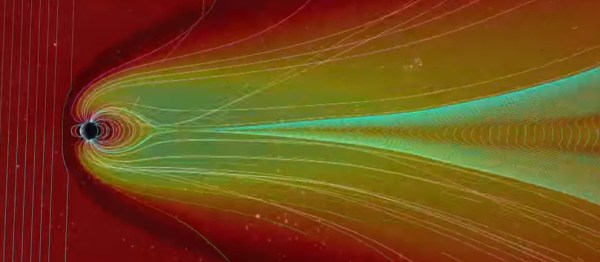
Leaning into the solar wind, Kepler was able to use the pressure of sunlight striking its solar panels to steady itself. Kepler’s “eyesight” was never quite the same after the failure of its reaction wheels, and it consumed more propellant than originally intended to maintain this careful balancing act, but the science continued. The mission that had already answered many of our questions about our place in the galaxy would push ahead in spite of a failure which should have left it dead in space.

As Kepler rapidly burned through its supply of propellant, it became clear the mission was on borrowed time. It was a necessary evil, as the alternative was leaving the craft tumbling through space, but mission planners understood that the fix they implemented had put an expiration date on Kepler. Revised calculations could provide an estimate as to when the vehicle would finally run its tanks dry and lose attitude control, but not a definitive date.

For the last several months NASA has known the day was approaching, but they decided to keep collecting data until the vehicle’s thrusters sputtered and failed. So today’s announcement that Kepler has at long last lost the ability to orient itself came as no surprise. Kepler has observed its last alien sunset, but the search for planets, and indeed life, in our corner of the galaxy doesn’t end today.

Continue reading “Kepler Closes Eyes After A Decade Of Discovery”

Relativity Space’s Quest To 3D Print Entire Rockets

While the jury is still out on 3D printing for the consumer market, there’s little question that it’s becoming a major part of next generation manufacturing. While we often think of 3D printing as a way to create highly customized one-off objects, that’s a conclusion largely based on how we as individuals use the technology. When you’re building something as complex as a rocket engine, the true advantage of 3D printing is the ability to not only rapidly iterate your design, but to produce objects with internal geometries that would be difficult if not impossible to create with traditional tooling.

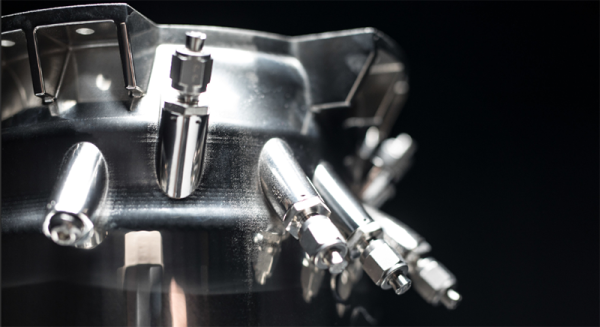
SpaceX’s SuperDraco 3D Printed Engine

So it’s no wonder that key “New Space” players like SpaceX and Blue Origin make use of 3D printed components in their vehicles. Even NASA has been dipping their proverbial toe in the additive manufacturing waters, testing printed parts for the Space Launch System’s RS-25 engine. It would be safe to say that from this point forward, most of our exploits off of the planet’s surface will involve additive manufacturing in some capacity.

But one of the latest players to enter the commercial spaceflight industry, Relativity Space, thinks we can take the concept even farther. Not content to just 3D print rocket components, founders Tim Ellis and Jordan Noone believe the entire rocket can be printed. Minus electrical components and a few parts which operate in extremely high stress environments such as inside the pump turbines, Relativity Space claims up to 95% of their rocket could eventually be produced with additive manufacturing.

If you think 3D printing a rocket sounds implausible, you aren’t alone. It’s a bold claim, so far the aerospace industry has only managed to print relatively small rocket engines; so printing an entire vehicle would be an exceptionally large leap in capability. But with talent pulled from major aerospace players, a recently inked deal for a 20 year lease on a test site at NASA’s Stennis Space Center, and access to the world’s largest metal 3D printer, they’re certainly going all in on the idea. Let’s take a look at what they’ve got planned.

Continue reading “Relativity Space’s Quest To 3D Print Entire Rockets”

Travel To Mercury On Ion Power

Star Trek — as much as we love it — was guilty sometimes of a bit of hyperbole and more than its share of inconsistency. In some episodes, ion drives were advanced technology and in others they were obsolete. Make up your mind!

The ESA-JAXA BepiColombo probe is on its way to Mercury riding on four ion thrusters developed by a company called QinetiQ. But unlike the ion drive featured in the infamous “Spock’s Brain” episode, BepiColombo will take over seven years to get to Mercury. That’s because these ion drives are real.

The craft is actually two spacecraft in one with two different Mercury missions. The Mercury planetary orbiter will study the surface while the magnetosphere orbiter will study the little planet’s magnetic field. Check out a video about the mission, below. The second video shows [Neil Wallace] talking about how the ion propulsion — also known as solar electric engines — differ from traditional chemical thrusters.

Continue reading “Travel To Mercury On Ion Power”