Last week we covered the past and current state of artificial intelligence — what modern AI looks like, the differences between weak and strong AI, AGI, and some of the philosophical ideas about what constitutes consciousness. Weak AI is already all around us, in the form of software dedicated to performing specific tasks intelligently. Strong AI is the ultimate goal, and a true strong AI would resemble what most of us have grown familiar with through popular fiction.
Artificial General Intelligence (AGI) is a modern goal many AI researchers are currently devoting their careers to in an effort to bridge that gap. While AGI wouldn’t necessarily possess any kind of consciousness, it would be able to handle any data-related task put before it. Of course, as humans, it’s in our nature to try to forecast the future, and that’s what we’ll be talking about in this article. What are some of our best guesses about what we can expect from AI in the future (near and far)? What possible ethical and practical concerns are there if a conscious AI were to be created? In this speculative future, should an AI have rights, or should it be feared?
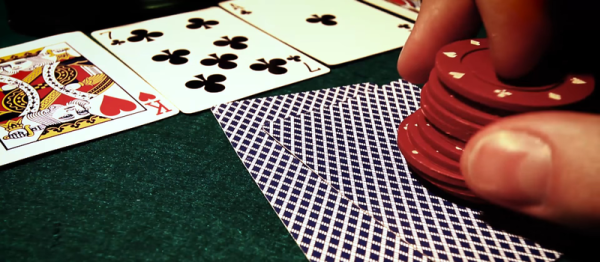
There have been a few “firsts” in AI-versus-human gaming lately, and the computers are now beating us at trivia, chess and Go. But in some sense, none of these are really interesting; they’re all games of fact. Poker is different. Aside from computing the odds of holding the winning hand, where a computer would obviously have an advantage, the key to winning in poker is bluffing, and figuring out when your opponent is bluffing. Until recently, this has helped man beat the machine. Those days are over.
Chess and Go are what a game theorist would call games of perfect information: everyone knows everything about the state of the game just from looking at the board, and this means that there is, in principle, a best strategy (series of moves) for every possible position. Granted, it’s hard to figure these out because it’s a big brute-force problem, but it’s still a brute-force problem where computers have an innate advantage. Chess and Go are games where the machines should be winning. Continue reading “AI Beats Poker Pros: Skynet Looms”→
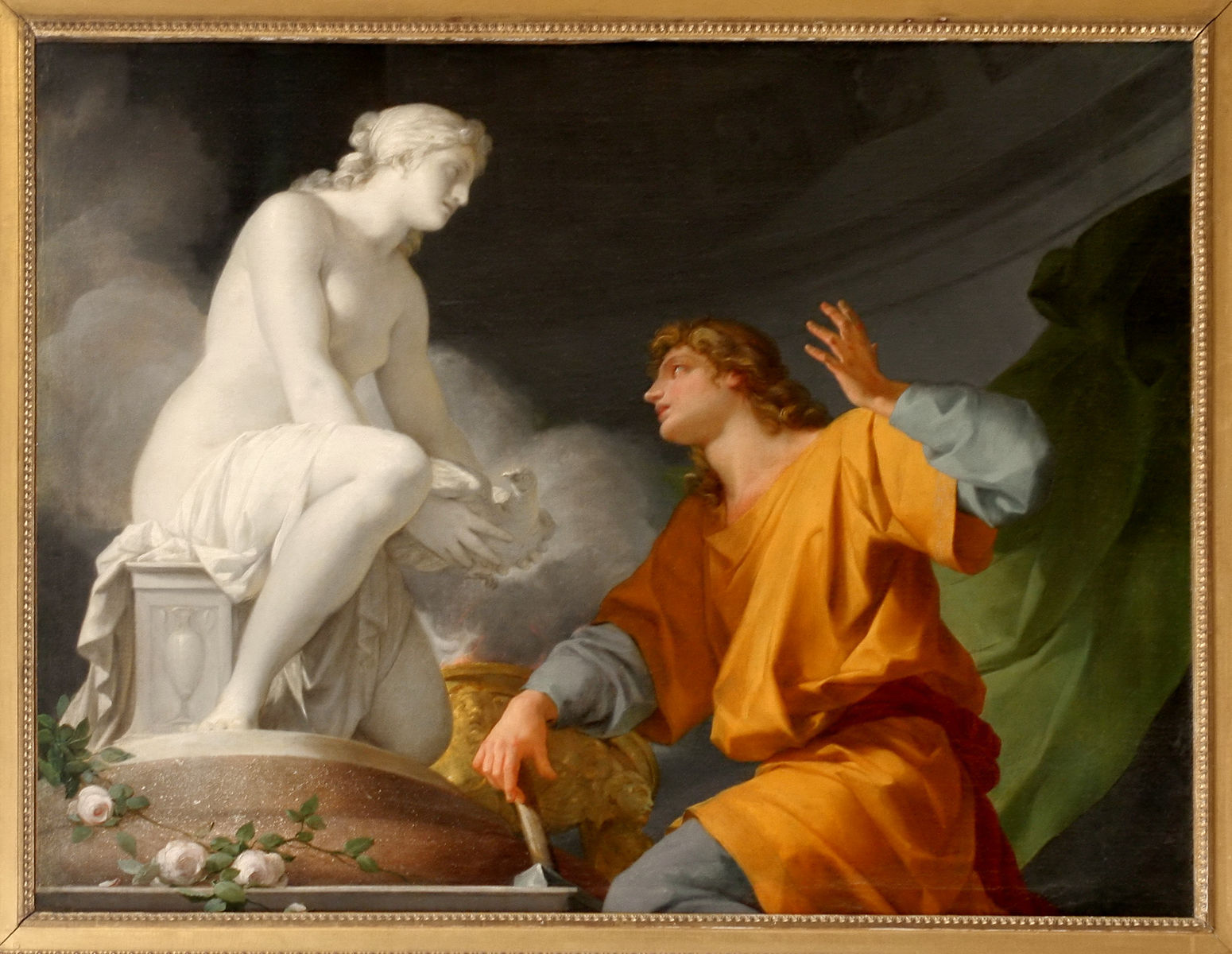
The concept of artificial intelligence dates back far before the advent of modern computers — even as far back as Greek mythology. Hephaestus, the Greek god of craftsmen and blacksmiths, was believed to have created automatons to work for him. Another mythological figure, Pygmalion, carved a statue of a beautiful woman from ivory, who he proceeded to fall in love with. Aphrodite then imbued the statue with life as a gift to Pygmalion, who then married the now living woman.
Pygmalion by Jean-Baptiste Regnault, 1786, Musée National du Château et des Trianons
Throughout history, myths and legends of artificial beings that were given intelligence were common. These varied from having simple supernatural origins (such as the Greek myths), to more scientifically-reasoned methods as the idea of alchemy increased in popularity. In fiction, particularly science fiction, artificial intelligence became more and more common beginning in the 19th century.
But, it wasn’t until mathematics, philosophy, and the scientific method advanced enough in the 19th and 20th centuries that artificial intelligence was taken seriously as an actual possibility. It was during this time that mathematicians such as George Boole, Bertrand Russel, and Alfred North Whitehead began presenting theories formalizing logical reasoning. With the development of digital computers in the second half of the 20th century, these concepts were put into practice, and AI research began in earnest.
Over the last 50 years, interest in AI development has waxed and waned with public interest and the successes and failures of the industry. Predictions made by researchers in the field, and by science fiction visionaries, have often fallen short of reality. Generally, this can be chalked up to computing limitations. But, a deeper problem of the understanding of what intelligence actually is has been a source a tremendous debate.
Despite these setbacks, AI research and development has continued. Currently, this research is being conducted by technology corporations who see the economic potential in such advancements, and by academics working at universities around the world. Where does that research currently stand, and what might we expect to see in the future? To answer that, we’ll first need to attempt to define what exactly constitutes artificial intelligence.
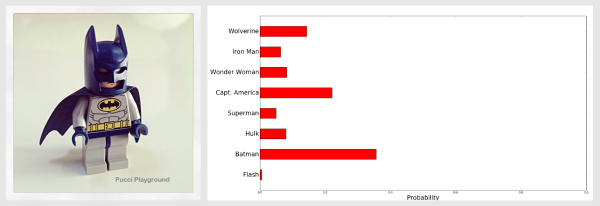
[Massimiliano Patacchiola] writes this handy guide on using a histogram intersection algorithm to identify different objects. In this case, lego superheroes. All you need to follow along are eyes, Python, a computer, and a bit of machine learning magic.
He gives a good introduction to the idea. You take a histogram of the colors in a properly cropped and filtered photo of the object you want to identify. You then feed that into a neural network and train it to identify the different superheroes by color. When you feed it a new image later, it will compare the new image’s histogram to its model and output confidences as to which set it belongs.
This is a useful thing to know. While a lot of vision algorithms try to make geometric assertions about the things they see, adding color to the mix can certainly help your friendly robot project recognize friend from foe.
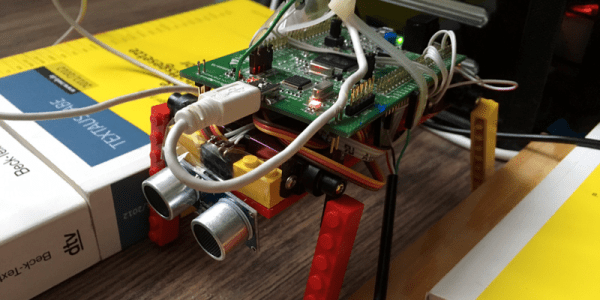
[Basti] was playing around with Artificial Neural Networks (ANNs), and decided that a lot of the “hello world” type programs just weren’t zingy enough to instill his love for the networks in others. So he juiced it up a little bit by applying a reasonably simple ANN to teach a four-legged robot to walk (in German, translated here).
While we think it’s awesome that postal systems the world over have been machine sorting mail based on similar algorithms for years now, watching a squirming quartet of servos come to forward-moving consensus is more viscerally inspiring. Job well done! Check out the video embedded below.
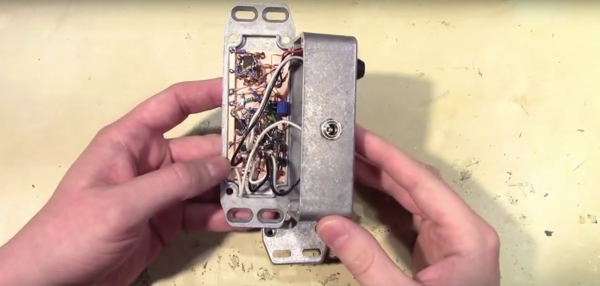
When a job can be handled with a microcontroller, [devttys0] likes to buck the trend and build a circuit that requires no coding. Such was the case with this “Clapper”-inspired faux-AI light controller, which ends up being a great lesson in analog design.
The goal was to create a poor man’s JARVIS – something to turn the workshop lights on with a free-form vocal command. Or, at least to make it look that way. This is an all-analog circuit with a couple of op amps and a pair of comparators, so it can’t actually process what’s being said. “Aziz! Light!” will work just as well as any other phrase since the circuit triggers on the amplitude and duration of the spoken command. The AI-lite effect comes from the clever use of the comparators, RC networks to control delays, and what amounts to an AND gate built of discrete MOSFETs. The end result is a circuit that waits until you finish talking to trigger the lights, making it seems like it’s actually analyzing what you say.
We always enjoy [devttys0]’s videos because they’re great lessons in circuit design. From block diagram to finished prototype, everything is presented in logical steps, and there’s always something to learn. His analog circuits that demonstrate math concepts was a real eye-opener for us. And if you want some background on the height of 1980s AI tech that inspired this build, check out the guts of the original “Clapper”.
Most people wish they were more productive. Some buckle down and leverage some rare facet of their personality to force the work out. Some of them talk with friends. Some go on vision quests. There are lots of methods for lots of types of people. Most hackers, I’ve noticed, look for a datasheet. An engineer’s reference. We want to solve the problem like we solve technical problems.
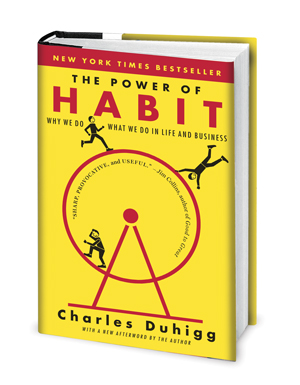
It’s got the cover equivalent of click-bait, but the centimeter thick bibliography listing research sources at the back won me over.
There were three books that gave me the first hints at how to look objectively at my brain and start to hack on it a little. These were The Power of Habit by Charles Duhigg, Flow By Mihaly Csikszentmihalyi, and Getting Things Done By David Allen.
I sort of wandered into these books in a haphazard path. The first I encountered was The Power of Habit which I found to be a bit of a revelation. It presented the idea of habits as functions in the great computer program that makes up a person. The brain sees that you’re doing a task over and over again and just learns to do it. It keeps optimizing and optimizing this program over time. All a person needs to do is trigger the habit loop and then it will run.
For example: Typing. At first you either take a course or, if your parents left you alone with a computer for hours on end, hunt-and-peck your way to a decent typing speed. It involves a lot of looking down at the keyboard. Eventually you notice that you don’t actually need to look at the keyboard at all. Depending on your stage you may still be “t-h-i-n-k-i-n-g”, mentally placing each letter as you type. However, eventually your brain begins to abstract this away until it has stored, somewhere, a combination of hand movements for every single word or key combination you typically use. It’s only when you have to spell a new word that you fall back on older programs.