DWex Watch Looks For Future Development

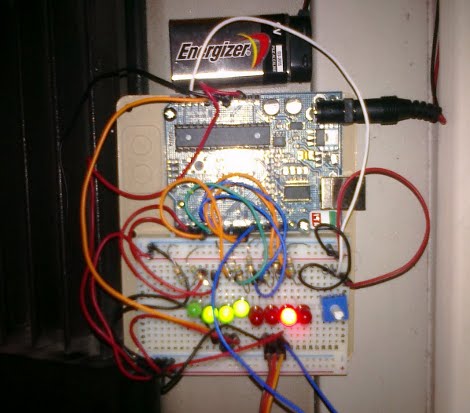
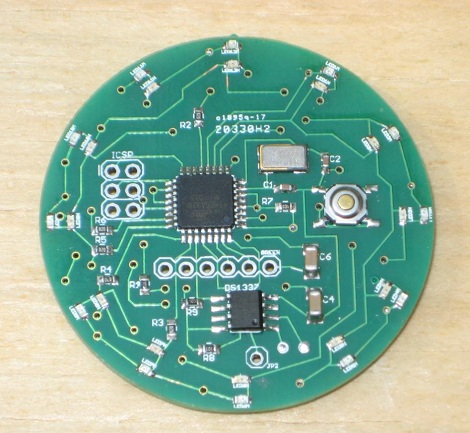
[FlorinC] sent in his DWex Arduino watch, with intentions for it double as an experimenting base. Inspired by the MakerBotWatch, it runs an ATmega328P, DS1337 RTC,and 24 LEDs to display the time. [FlorinC] tells us the (yet to come) case and strap will be similar to Woz’s watch to ensure airport security tackles him. As for experimenting, the PCB contains an ICSP6 and also an FTDI connector for those “other-than-watch purposes”. We’re not all sure what else could be done with a watch; we racked our brains and came up with a compass, but with the source code and Eagle files available maybe you have a better idea?
IPhone Drum Machine Isn’t Synthesized

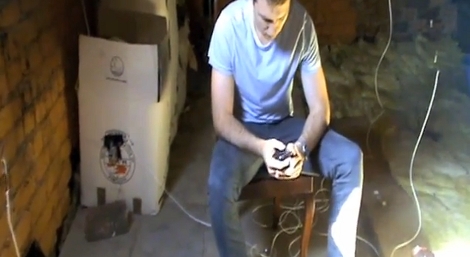
There was a time when a drummer would grab some sticks and lay out a groove using the items around him as instruments. [Lsa Wilson] would rather not work quite that hard and has chosen to do the same thing by tapping on an iPhone screen. As you can see in the clip after the break, many of the items in the room around him have been fitted with solenoids. Each is connected to an Arduino which is then controlled by Open Sound Control and interfaced with the iPhone via TouchOSC. We love the sounds being created and can’t help being reminded of the Multixylophoniomnibus.

LED Goggles Make You Trip Out?

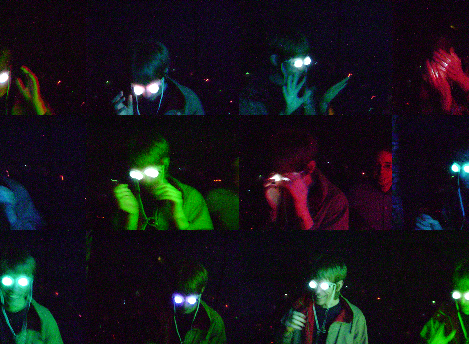
Who knows if this works and should you really want to try to induce hallucinations by flashing colors in front of your eyes? But we do love the zaniness of the project. [Everett’s] homemade hallucination goggles come in two flavors, the small swimming-goggle-type model and the heavy-duty trip visor made from welder’s goggles. Each brings together the same components; a half ping-pong ball for each eye to diffuse the light from an RGB LED. The system is controlled by an Arduino with some buttons and 7-segment displays for a user interface. Put this together with some homemade EL wire and you’re ready for Burning Man.
[Thanks Evan]

Todays Arduino Moment

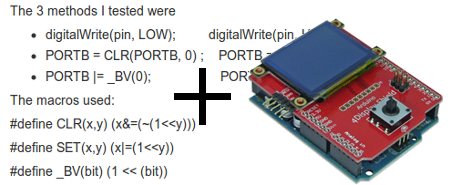
We have gotten a number of Arduino tips in the last couple days, and we thought we would combine them for your convenience. The first tip we received was for some hints provided by [Bill] on some digitalWrite() alternatives. Similar to some previous research we covered, this tip also includes some tips on how to make the direct register writing a little easier by using #define to simplify things. Obviously this wont be as idiot-proof as digitalWrite() is, but we think you can handle it.

Our second tip is for a set of OLED displays from 4dsystems sold as Arduino Shields. They have a couple of different sizes from .96″ to 1.7″, depending on your needs and budget. There is no official display library for them yet, but 4dsystems have been kind enough to provide a few resources to work from. Hopefully we’ll see a few great applications from this, maybe a much bigger pixel Mario? A much smaller Game of Life? Feel free to send us your projects, or leave your ideas in the comments!

Super Simple Arduino Setup Lowers Electricity Bills

An Arduino with 40 lines of code, a temperature resistor, and servo are all that’s truly needed to save some dough with this thermostat by [Peter Hamilton]. LEDs and a potentiometer are added as well to help set and read the desired temperature. With or without said additional parts, the hack is still ridiculously simple and we’re wondering why we didn’t have a similar setup on our blisteringly cold office AC system before seeing it.

Though, we’re going a bit further with our version, plans are in the making to add timers to turn off the system for extended hours while no one is at the office. What would you add?

Beer Fridge Holds IPad Hostage

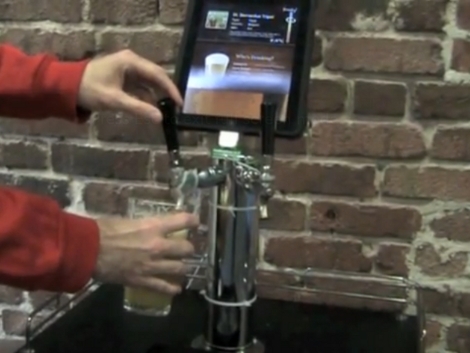
A hackathon by the engineers over at Yelp produced this iPad-centric beer fridge. A thirsty dude bellies up to the contraption, swipes his or her RFID card, then dispenses a glass of frothy goodness. The iPad display shows information about what’s on tap, and allows you to give it a rating. This is based on kegbot but it has a few extra tricks. Instead of measuring how much beer is left via weight, this version uses a flow sensor on the beer lines. Temperature data is recorded from an analog sensor affixed to the keg itself, and the whole shebang is pulled together via an Arduino connected to the serial port of the iPad. You can even check on the keg over the Internet. See for yourself after the break.

Continue reading “Beer Fridge Holds IPad Hostage”

Out Now: EL Coat, Coming Soon: EL Hat

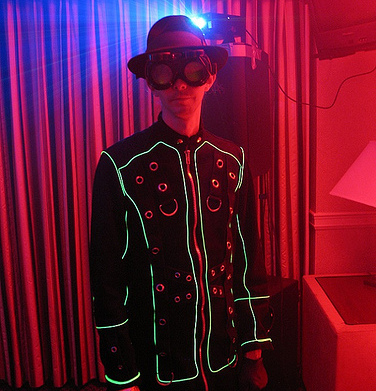
[Render] says his coat is simply “enhanced with EL wire”, but we know the truth. He’s secretly an alien that can’t block out all of his glowing green skin with a the black coat. No? Fine,

You can put away the sewing machine, [Render] simply used a needle and fishing line to attach ~50-70 foot of electroluminescent wire to the outside of a coat he picked up at a local clothing shop. Solder and program in an inverter and controller board thanks to SparkFun, and you’re ready to go.

Just double check all your connections, high voltage directly on your person is not fun. Trust us.