Adventures In Consumer Electronics Control (CEC)

[Valkyrie-MT] was frustrated by the inability to control TrueHD audio volume from his computer. That’s because digital audio passes through the cable to the receiver where the volume adjustments are done. This meant that his RF computer remote was no good because the receiver uses an IR remote. He set out to find a way to get around this and ended up working with the Consumer Electronics Control (CEC) protocol.

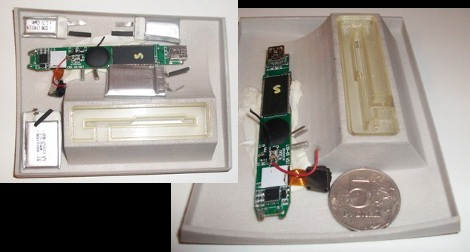
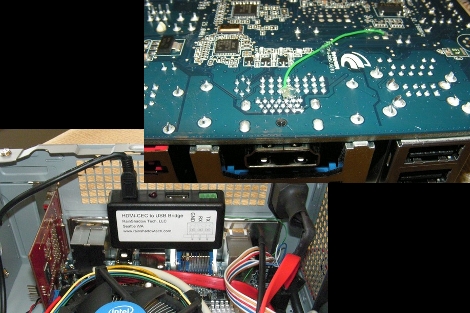
The CEC protocol is a 1-wire serial bus built into the HDMI standard. The solution he settled up required one solder connection on the motherboard as well as the internal USB translator module seen above. That translator box, called the RainShadow, is a PIC 18F87J50 controlled board that translates incoming commands from the USB connection and sends them out as CEC hex codes. A bit of code writing and [Valkyrie-MT] is in business. You can see in the video after the break that it’s not just controlling audio, he can now control the entire entertainment center including turning on the TV and setting it to the appropriate input.

Continue reading “Adventures In Consumer Electronics Control (CEC)”

More Car Audio Input Hacking

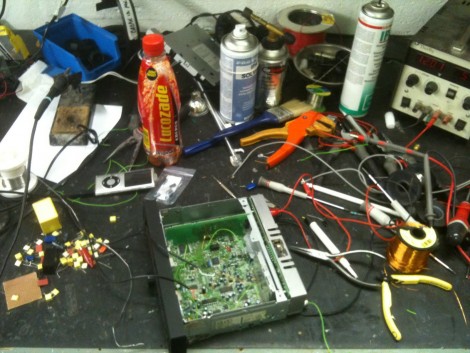
[Dave] pulled the head unit out of his dashboard to add an iPod input. He took a much more invasive route than the other hack we saw a few days ago. He actually patched into the audio lines going from the Dolby reader head chip to the amplifier.

The first step was to trick the deck into thinking it had a cassette inserted. He scoped an enable pin on one of the chips to discover the timing and emulated that signal using a PIC microprocessor. From there he popped off the chip that reads the tape data, patching directly into the audio out traces. This presented some noise issues when charging the iPod but [Dave] fixed that with some decoupling capacitors.

Making Home Automation Modules Talk To Each Other


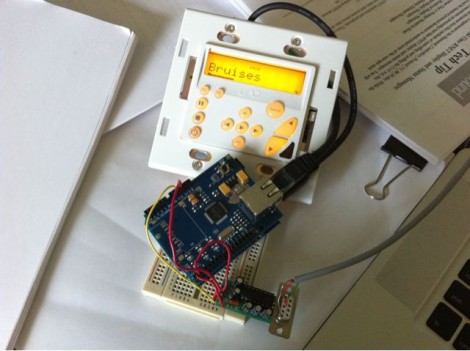
[Danny] has been working on an RNET to Sonos bridge. These are devices from two different manufacturers used to facility whole-house audio systems. Usually there’s a main controller with a large color screen and then several satellite controllers like the one above which have some of the features but at a lower cost. Normally you’re limited to using hardware from one line of devices in order to get them to talk to each other but [Danny’s] saying ‘no way’ to that restriction.

His latest post has some of the details on how he pulls this off. He used an RS232 serial connection with an Arduino to sniff out the data stream from the RNET base unit. Once he figured out the protocol he used the Arduino to parse all incoming commands, format them for the Sonos controller, and send it over the Ethernet cable to that device. He’s got everything tied together and working. Take a look at the proof in the clip after the break.

Continue reading “Making Home Automation Modules Talk To Each Other”

Audio Breakout Box For MacBook Pro

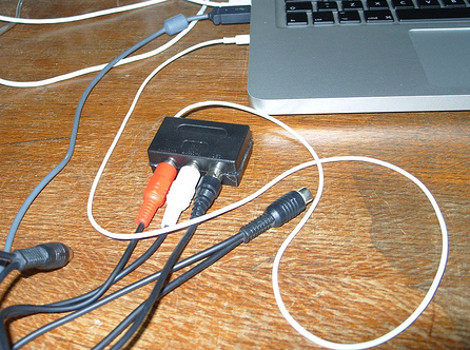
[Billy] wanted to use the audio connector on his MacBook Pro for input and output at the same time. He knew it could be done because Apple sells headphones with built-in microphones that work with the computer. He set out to build a breakout box so that he could connect the components of his choice to the single port. Using a scart-RCA adaptor box he scrapped the scart plug and wired the RCA jacks to the Apple headphone wires. He can now patch the pickup of his guitar to the mic connector, send it through the MacBook, and run the output back to his guitar amp.

BAMF2010: Spy TRAKR – No Lasers, $14,861 Cheaper

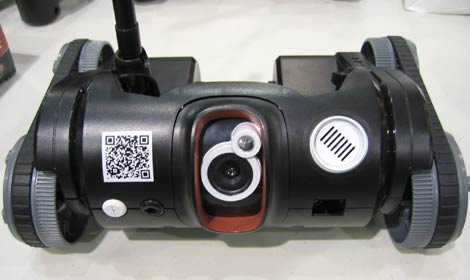
Maybe $15K for an elaborate balancing telepresence robot is a bit out of one’s league. In that case, another Bay Area Maker Faire exhibitor — Wild Planet — has you covered. Faire attendees got a hands-on sneak preview of the upcoming Spy Video TRAKR, a video-transmitting radio-controlled toy that’s programmable and extensively hackable.

The TRAKR has an impressive pedigree. It’s a collaborative effort between three successful and creative technology companies: Wild Planet, makers of the Spy Gear toy line; MOTO Development Group, designers of the Flip Video camera; and Making Things, software designers for the Make Controller.

So just how hackable are we talking? The Spy Video TRAKR is intended right out of the box to use downloadable apps, and allows development of new programs in C. The controller and vehicle each contain their own ARM9 processor, and the ’bot features 8 megs of RAM, an SD card slot and USB client and host (yes, host) ports. And that’s all with the cover still on. Pop the lid, and you’ll find links to online schematics and neatly-labeled breakout headers for deeper exploration.

The Spy Video TRAKR is expected to ship in October with a target price of $139 or less. Additional photos after the break.

Continue reading “BAMF2010: Spy TRAKR – No Lasers, $14,861 Cheaper”

Antique Jukebox Audio Streamer

Reader [Jimmy] sent us some info about his recently completed antique radio to audio streamer conversion. The electronics from the original radio were too far gone to repair, but he took the time to pull apart modern components to provide a polished looking finished project without losing the antique feel. We like it, but we are just suckers for that old time look. Check out his blog for more photos.

Android Audio-serial Connection

This seems like something of a throwback hack. [WilinNeofoxx] has built an audio modem interface for use with his Android phone. A program running on the Android device takes the accelerometer data and converts it into a 9600bps audio signal, kind of like a dial-up modem. His custom circuit board takes that sound in through the headphone jack and demodulates it for use on the serial port of a PC. This connection to controls a flight simulator using the G1‘s motion sensors. In the video at the bottom of his post he unplugs the audio cable for a few seconds and you can hear the audio datastream coming from the phone. It’s pretty annoying so you might want to turn down those speakers before viewing it.