3D Printing With Chemicals

From the horse’s mouth,

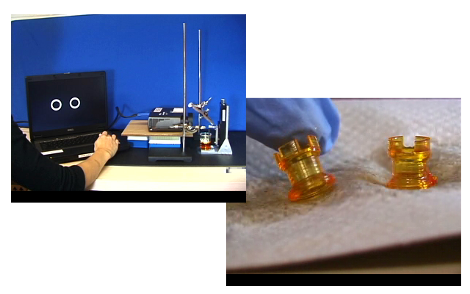
“In this lithography experiment light creates free radicals from phenylbis(2,4,6-trimethylbenzoyl)phosphine oxide which induce polymerization of 1,6-hexanediol diacrylate.”

Or for those without a Chemical Engineering degree, light from a (high resolution) projector interacts with a special liquid, producing a hard polymer on the surface. A platform within the liquid is lowered, taking the layer of polymer with it. Shine the projector again to produce another layer: lather, rinse, repeat. Long story short, an atypical 3D printer using light on a very small scale.

You get the chemicals and lab equipment, we’ll get the laptop and projector, and for goodness sake [Jimmie] stop bumping the table.

[Thanks Tomas]

DTG Using A Stock Printer

[youtube=http://www.youtube.com/watch?v=qc3OrrsnMHs]

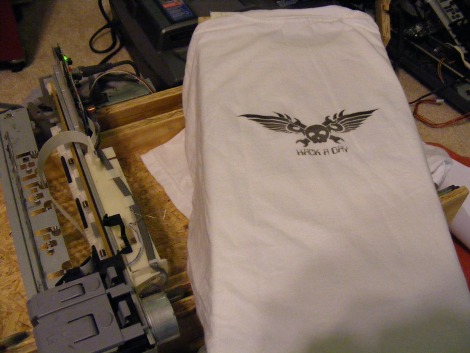
Here’s a Direct-to-Garment device that uses a stock printer. [Jeff German] used an Epson R1900 with the stock firmware to get the results seen in the video. His hardware modifications involve adding two buttons to the printer’s circuit board. For DTG beginners this certainly lowers some of the obstacles to getting started. [Jeff] is working on detailed instructions but for now take a look at our own How-to for building a DTG printer.

(mini)How-To: Refill Your DTG Inks

The number one and number two things asked after presentation of our DIYDTG were…
“How does it hold up in the wash?”
and…
“How did you change out the inks?”
While we’ve explained the first several times (regular ink washes out, DTG ink gets a little lighter but survives) we can hopefully answer the second with a tutorial.

Continue reading “(mini)How-To: Refill Your DTG Inks”

How-to: DIYDTG

For those unaware, the little acronym above stands for Do-It-Yourself-Direct-To-Garment printing. In layman’s terms, printing your own shirts and designs. Commercial DTGs can cost anywhere from $5,000 to $10,000 which for the hobbyist who only wants a few shirts is ridiculous. So you would think this field of technology would be hacked to no end, but we’ve actually only seen one other fully finished and working DIYDTG. So we took it upon ourselves to build a DIYDTG as cheaply and as successfully as possible. Continue reading “How-to: DIYDTG”

Printing With Pressure

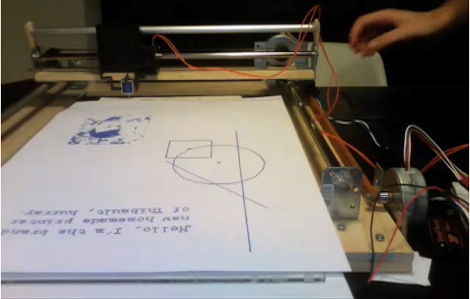
The video of [Thibault Brevet’s] printer makes it look like he’s actually designed a vinyl cutter (watch it after the break). But at the end of the printing process you see that the top layer was actually a piece of carbon copy paper and the magic was happening underneath. The print head applies enough pressure to transfer the blue-ish printing ink onto the paper giving the result seen above. He’s driving this with an Arduino and feeding data using Processing.

[Thibault] left this link in the comments from the LEGO printer post. Shame on him for not tipping us off as soon as he posted info on this hack. Don’t underestimate yourselves, if you hack it we want to hear about it!

Continue reading “Printing With Pressure”

LEGO Printer Built Without NXT parts

[youtube=http://www.youtube.com/watch?v=zX09WnGU6ZY]

[Squirrelfantasy] built a printer using LEGO pieces. It’s not a Mindstorm project but instead depends on some type of development board and some auxiliary components on a protoboard. We couldn’t get a good enough look to tell exactly what makes up the electronics so start the debate in the comments. We feel this is a printer and not a plotter because the stylus moves on just one plane while the paper feeds past it but that’s open for debate as well.

Guess this answers the question of why aren’t we building our own printers? Some folks are.

[Thanks Haxorflex and many others, via DVICE]

Multiple Material 3D Printing

[youtube=http://www.youtube.com/watch?v=D4Yq3glEyec]

It’s no surprise that we’re wild about 3D printing, especially [Devlin]. Now we’re absolutely out of our minds for this multi-material polyjet machine that is featured in the video above. Before we go any further it’s worth mentioning that this post is not advertising, we just think this machine is unbelievable.

It is capable of printing 600 dpi in 3D using multiple materials at the same. Two types of rigid material, one like ABS and the other like polypropylene, as well as seven levels of a soft material all exist on the same print head. They can be deposited along with a support material at the same time. In the video you can see enclosures that come out of the printer with rubber-like padding already mounted in the hard plastic shell. They even show a bicycle chain that is fully assembled after printing. Cost for these machines? We don’t want to know, it’s just fun to dream about having unrestricted access to one.

Continue reading “Multiple Material 3D Printing”