A Better Anonabox With The Beaglebone Black

A few weeks ago, Anonabox, the ill-conceived router with custom firmware that would protect you from ‘hackers’ and ‘legitimate governments’ drew the ire of tech media. It was discovered that this was simply an off-the-shelf router with an installation of OpenWrt, and the single common thread in the controversy was that, ‘anyone can build that. This guy isn’t doing anything new.’

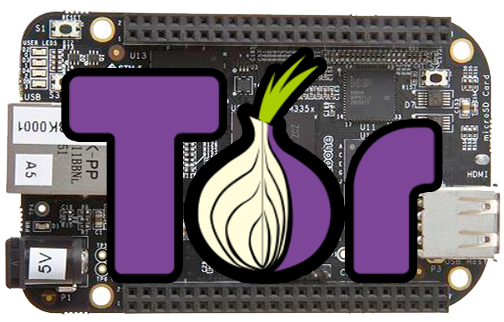
Finally, someone who didn’t have the terrible idea of grabbing another off the shelf router and putting it up on Kickstarter is doing just that. [Adam] didn’t like the shortcomings of the Anonabox and looked at the best practices of staying anonymous online. He created a Tor dongle in response to this with a Beaglebone Black.

Instead of using wireless like the Anonabox and dozens of other projects, [Andy] is using the Beaglebone as a dongle/Ethernet adapter with all data passed to the computer through the USB port. No, it doesn’t protect your entire network; only a single device and only when it’s plugged in.

The installation process is as simple as installing all the relevent software, uninstalling all the cruft, and configuring a browser. [Adam] was able to get 7Mb/sec down and 250kb/sec up through his Tor-ified Ethernet adapter while only using 40% of the BBB’s CPU.

The Hackaday Prize: Interview With A ChipWhisperer

chipwhisperer

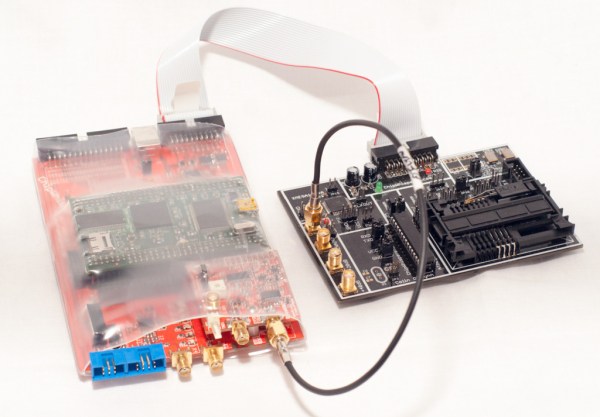
Every finalist for The Hackaday Prize has some aspect of it that hasn’t been done before; finding the chemical composition of everything with some 3D printed parts is novel, as is building a global network of satellite ground stations with off the shelf components. [Colin]’s ChipWhisperer, though, has some scary and interesting implications. By looking inside a microcontroller as its running, the ChipWhisperer is able to verify – or break – security on these chips. It’s also extremely interesting and somewhat magical being able to figure out what data a chip is processing simply by looking at its power consumption.

We have no idea who the winner of The Hackaday Prize is yet, and I’m hoping to remain ignorant of that fact until the party two weeks from now. Until then, you can read the short interview with [Colin O’Flynn], or check out his five-minute video for the ChipWhisperer below:

Continue reading “The Hackaday Prize: Interview With A ChipWhisperer”

THP Semifinalist: Secure Your Internets With Web Security Everywhere

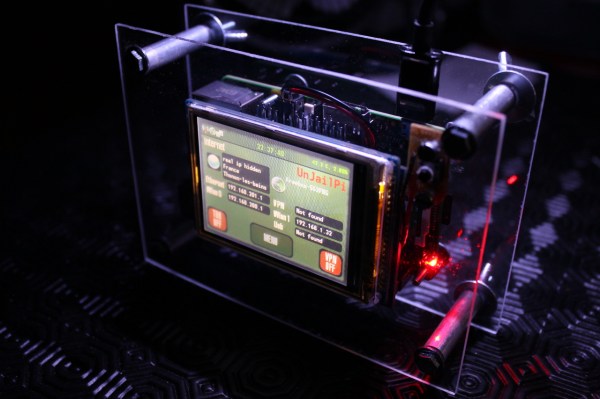
[Arcadia Labs] has created a great little device in Web Security Everywhere, a semifinalist in The Hackaday Prize. At the center of it all is UnJailPi, a Raspberry Pi device which can act as a secure router between a protected network and the unprotected internet. UnJailPi can create OpenVPN and Tor connections on the fly from its touch screen interface. The full details are right up on [Arcadia’s] Hackaday.io project page.

One of the most amazing things about the project is its creator, [Arcadia Labs]. [Arcadia] started from square one learning python just 1 year ago. Since then he’s become a proficient python coder, and created UnJailPi’s  entire user interface with pygame.

[Arcadia] is also working with simple hand tools. He has no access to the CNC routers, 3D printers, or milling machines used in many of the projects we see here on Hackaday. All the work on UnJailPi’s acrylic case was done with a handsaw, a file, and a heck of a lot of patience.

Currently [Arcadia’s] biggest hurdle is finding a good power supply for his project. UnJailPi is designed to work both on AC or an internal battery. His current power circuit throws off enough heat that the Raspberry Pi resets while the battery is charging.

We’re sure [Arcadia] will figure out his power issues, but if you have any suggestions, leave a comment here, or head over to the project page and let him know!


SpaceWrencherThe project featured in this post is a semifinalist in The Hackaday Prize.

Arduino-Powered Alarm System Has All The Bells And Whistles

Put aside all of the projects that use an Arduino to blink a few LEDs or drive one servo motor. [IngGaro]’s latest project uses the full range of features available in this versatile microcontroller and has turned an Arduino Mega into a fully-functional home alarm system.

The alarm can read RFID cards for activation and control of the device. It communicates with the front panel via an I2C bus, and it can control the opening and closing of windows or blinds. There is also an integrated GSM antenna for communicating any emergencies over the cell network. The device also keeps track of temperature and humidity.

The entire system can be controlled via a web interface. The Arduino serves a web page that allows the user full control over the alarm. With all of that, it’s hard to think of any more functionality to get out of this tiny microcontroller, unless you wanted to add a frickin’ laser to REALLY trip up the burglars!

Stupid Security In A Security System

alarm

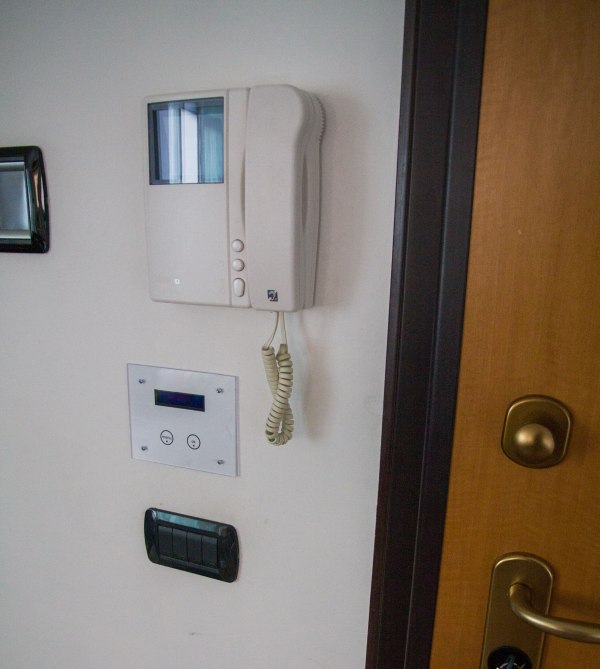
[Yaehob]’s parents have a security system in their house, and when they wanted to make a few changes to their alarm rules – not arming the bathroom at night – an installer would come out, plug a box into the main panel, press a few buttons, and charge 150 €. Horrified at the aspect of spending that much money to flip a few bits, [yaehob] set out to get around the homeowner lockout on the alarm system, and found security where he wasn’t expecting.

Opening the main panel for the alarm system, [yaehob] was greeted with a screeching noise. This was the obvious in retrospect tamper-evident seal on the alarm box, easily silenced by entering a code on the keypad. The alarm, however, would not arm anymore, making the task of getting ‘installer-level’ access on the alarm system a top priority.

After finding a DE-9 serial port on the main board, [yaehob] went to the manufacturer’s website thinking he could download some software. The website does have the software available, but only for authorized distributors, installers, and resellers. You can register as one, though, and no, there is no verification the person filling out a web form is actually a distributor, installer, or reseller.dist

Looking at the installer and accompanying documentation, [yaehob] could see everything, but could not modify anything. To do that would require the installer password, which, according to the documentation was between four and six characters. The system also responded quickly, so brute force was obviously the answer here.

After writing up a quick script to go through all the possible passwords, [yaehob] started plugging numbers into the controller board. Coming back a bit later, he noticed something familiar about what was returned when the system finally let him in. A quick peek at where his brute force app confirmed his suspicions; the installer’s code was his postal code.

From the installer’s point of view, this somewhat makes sense. Any tech driving out to punch a few numbers into a computer and charge $200 will always know the postal code of where he’s driving to. From a security standpoint, holy crap this is bad.

Now that [yaehob]’s parents are out from under the thumb of the alarm installer, he’s also tacked on a little bit of security of his own; the installer’s code won’t work anymore. It’s now changed to the house number.

DEFCON: Blackphone

Despite being full of techies and people doing interesting things with portable devices, you don’t want to have an active radio on you within a quarter-mile of DEFCON. The apps on your phone leak personal data onto the Internet all the time, and the folks at DEFCON’s Wall Of Sheep were very successful in getting a few thousand usernames and passwords for email accounts.

Blackphone is designed to be the solution to this problem, so when we ran into a few members of the Blackphone crew at DEFCON, we were pretty interested to take a quick peek at their device.

The core functionality for the Blackphone comes from its operating system called PrivatOS. It’s a fork of Android 4.4.2 that is supposed to seal up the backdoors found in other mobile phones. There’s also a bundle of apps from Silent Circle that give the Blackphone the ability to make encrypted phone calls, texts (with file sharing), and encrypted and password protected contact lists.

The hardware for the Blackphone is pretty impressive; a quad-core Nvidia Tegra provides all the power you need for your apps, video, and playing 2048, a 2000mAh battery should provide enough juice to get you through a day or two (especially since you can turn off cores), and the usual front/rear cameras, GPS, 802.11bgn and GSM and HSPA+/WCDA radios means this phone will be useable on most networks.

The ChipWhisperer At Defcon

We’ve seen [Colin]’s entry to The Hackaday Prize before. After seeing his lightning talk at Defcon, we had to get an interview with him going over the intricacies of this very impressive piece of hardware.

The ChipWhisperer is a security and research platform for embedded devices that exploits the fact that all security measures must run on real hardware. If you glitch a clock when a microcontroller is processing an instruction, there’s a good probability something will go wrong. If you’re very good at what you do, you can simply route around the code that makes up the important bits of a security system. Power analysis is another trick up the ChipWhisperer’s sleeve, analyzing the power consumption of a microcontroller when it’s running a bit of code to glean a little information on the keys required to access the system. It’s black magic and dark arts, but it does work, and it’s a real threat to embedded security that hasn’t had an open source toolset before now.

Before our interview, [Colin] did a few short and sweet demos of the ChipWhisperer. They were extraordinarily simple demos; glitching the clock when a microcontroller was iterating through nested loops resulted in what can only be described as ‘counter weirdness’. More advanced applications of the ChipWhisperer can supposedly break perfectly implemented security, something we’re sure [Colin] is saving for a followup video.

You can check out [Colin]’s 2-minute video for his Hackaday Prize entry below.

Continue reading “The ChipWhisperer At Defcon”