Conventional wisdom dictates that if you need to make a million of something, you go to China. China is all about manufacturing, and there aren’t many other places on the planet that have the industry and government-subsidized shipping that will bring your product from China to people around the world. Building a million things in China is one thing, but what about building one thing? How do you create a working prototype of your latest product, and how do you make that prototype look like something that isn’t held together with zip ties and hot glue? The folks at Hatch Manufacturing have a guide for doing just that, and lucky for us, it’s a process that’s easy to replicate in any well-equipped shop.
In this tutorial/case study/PR blitz, Hatch Manufacturing takes on constructing a one-off smartphone. The Huaqiangbei markets in Shenzhen are filled with vendors selling smartphones of all shapes and sizes. If you want a miniature iPhone running Android, that’s no problem. If you want a phone that looks like a 1969 Dodge Charger with the Stars and Bars on top, you can find it in China. But how are all these phones made, and how do you show off a prototype to factories begging for business?
The answer, as is always the case, comes from one-off manufacturing. Building, assembling and reworking PCBs is a well-trodden path whose process could fill several volumes, but for this post, Hatch Manufacturing decided to focus on the plastics that go into a smartphone or tablet.
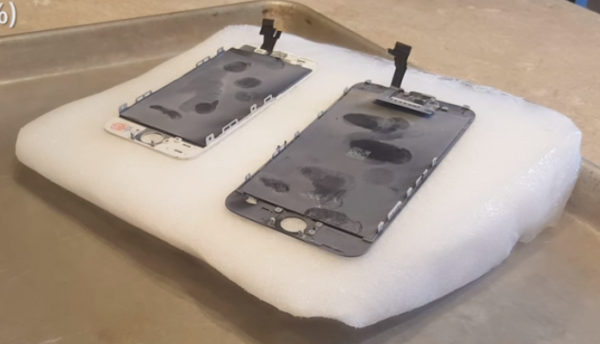
Once the case or enclosure is designed with a few CAD tools, a block of plastic is run through a mill. After that, it’s a matter of painting and finishing the latest smartphone that will show up in the Chinese market. Putting a professional finish on a block of plastic is something that will look familiar to anyone who has ever assembled a miniature plastic model. There’s priming, airbrushing, sanding, more painting, sanding, wet sanding, and still more sanding. After that comes polishing the plastic part to a fine finish. It is extraordinarily labor intensive work even for a skilled hand with the right equipment.
Once the plastics are done, the PCB, display, battery, and everything else comes together in a completely custom one-off prototype. It’s very similar to how this would be done in any small shop with a benchtop mill and a dozen grades of wet/dry sandpaper. It’s also something anyone can do, provided they have enough practice and patience.


The specs I’m quoting come from the LG Optimus Exceed 2, which is currently available from Amazon in the USA for $20. The same package has been available for as little as $10 from retail stores in recent weeks. The Exceed 2 is just one of several low-cost Android prepaid phones on the market now, and undoubtedly the list will change. How to keep up with the current deals? We found an unlikely place. Perk farmers. Perk is one of those “We pay you to watch advertisements” companies. We’re sure some people actually watch the ads, but most set up “farms” of drone phones which churn through the videos. The drones earn the farmer points which can be converted to cash. How does this all help us? In order to handle streaming video, Perk farmers want the most powerful phones they can get for the lowest investment. Subreddits like