Wicked use of HTML5 to display sensor data

posted Oct 25th 2011 9:42am by
filed under: Microcontrollers

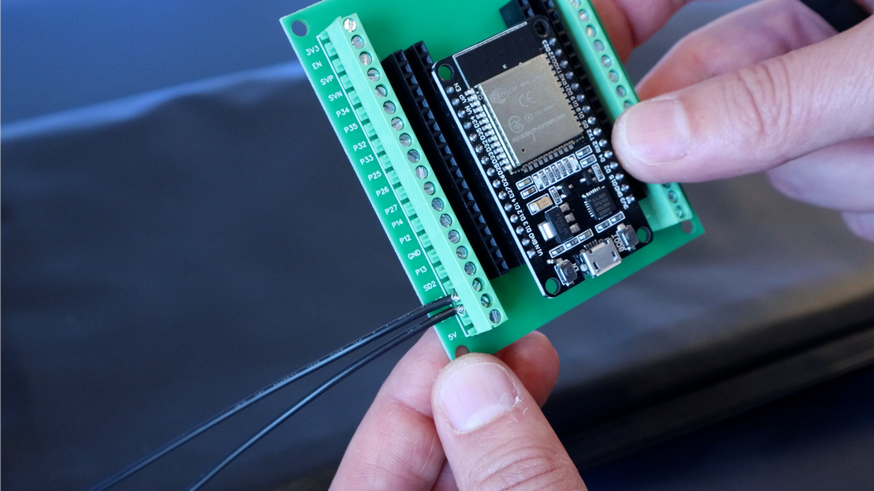
This project shows you one possible way to use HTML5 to fully integrate sensor data from a microcontroller into our technological lives. Now, when we saw this tip come through our inbox we thought it would be an interesting example to learn from but we weren’t ready for how truly cool the setup is. Take a look at the video after the break and you’ll see that scanning the QR code on the project box will immediately start a 10ms resolution live stream of the accelerometer data. Furthermore, the browser page that the phone loads allows you to send what you’re currently viewing to the main frame of a browser running on a different computer with the touch of a button. In this way you can build a dashboard of streaming sensor data. Talk about the future of home automation. Imagine a QR code on your thermostat that allows you gain access to your home’s heating, air conditioning, humidifier, and water heater performance and controls just by snapping a pic? The sky’s the limit on this one so let us know what you’d use it for by leaving a comment.

In this case an mbed microcontroller is handling the data acquisition and pushing that to a server via a WiFly module using the WebSockets library. This data is pushed in the form of a JSON packet which is distributed by the server as a data stream. Clients can access it via a browser through a page that makes use of JavaScript.

Read the rest of this entry »

Logging bubble frequency and pressure in your fermenter

posted Oct 24th 2011 6:01am by
filed under: beer hacks

In an attempt to add technology to his brewing process [hpux735] build a sensor rig that monitors bubbles and pressure during fermentation. What does this have to do with brewing great beer? We’re not sure and neither is [hpux735], but he’s got some preliminary readings to spark your imagination.

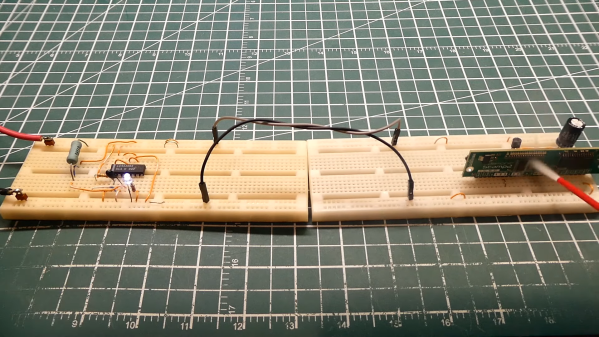
The bubble sensor itself was inspired by a SparkFun Tutorial where fermenting wine was monitored with a data logger. It uses an optical gate to detect the passage of air. But the goal here was to combine bubble frequency with internal pressure measurements to calculate how much CO2 is being vented. Perhaps it would be possible to get an idea of how close the batch is to completion based on those calculations. A hole was drilled into the fermenter side of an airlock to take these pressure readings.

This actually works quite well during secondary fermentation when the bubble frequency is quite slow. The hardware is able to discern a pressure difference before and after a bubble has passed the lock. Unfortunately the system breaks down during the vigorous bubbling that takes place soon after pitching yeast. See a few bubble-counting clips in the video after the break.

Read the rest of this entry »


TSC230 Color Light-to-Frequency Module

posted Sep 8th 2011 11:01am by
filed under: parts

ElecFreaks is selling a new color sensing module based on the TSC230 sensor. They’ve posted a demonstration using an Arduino that shows off what this sensor is capable of. The module includes four white LEDs which give a baseline of light to help normalize readings when reflected off of differently colored surfaces. The white balance of the sensor needs to calibrated in software in order to ensure accurate readings, but once that’s done you’ll be cable to pull RGB values off of whatever you put in front of the sensor.

What a nice addition to sorting machines like this LEGO sorter. Of course you can do something like this yourself using an RGB LED as a detector, but the TSC230 is extremely sensitive and should be quite reliable in comparison. They’re selling the module for $15, a price point that’s hard to beat if you need precise color detection in your next project. A colored token reader for your MAME cabinet perhaps?

Paper accelerometers for pennies in the works

posted Feb 12th 2011 7:27am by
filed under: parts

Cheap paper accelerometers? Put us down for a dozen to start. They’re not quite ready for mass production yet but it looks like they’re on the way.

[George Whitesides] led a team to develop the new technology that uses simple manufacturing methods to produce the sensor seen above. Graphite and silver inks were screen printed onto heavy paper. The single limb sticking out from the body of the sensor is a separate piece of paper that bends the carbon area when force is applied. This changes the carbon’s resistance which is measured using a Wheatstone bridge constructed by gluing resistors to the device.

It sounds unsophisticated compared to most of the accelerometer modules we’re used to, but if you need a sensor that detects sudden motion this sounds like the perfect part. Now who wants to be the first person to replicate this in their basement?

[Thanks Fabien]

Today’s Arduino Minute

posted Feb 10th 2011 3:25pm by
filed under: arduino hacks

Sometimes projects are vast, complicated, and complex. Other times projects are a bit more on the simple. Today we thought we would share a couple projects with something in common that may be familiar sounding to the more experienced crowd, but may inspire a few readers new to the world of microcontrollers.

Read the rest of this entry »


Christmas tree low-water monitor

posted Dec 8th 2010 6:00am by
filed under: home hacks

The end of the year is rapidly approaching and there’s a good chance you have a slowly dying tree in your living room. Help it hold on a little longer by using [Eric Ayars'] Christmas Tree water monitor. He’s built a sensor out of a piece of strip board. Three bus strips on the board allow for a variety of alerts. When all three are submerged everything is ok. When the two longer traces are still under water but the third is not an LED will blink to let you know it’s time. If you don’t pay attention and there’s no water left, a piezo buzzer makes noise until you add water (or the coin cell runs out of juice).

This project centers around an ATtiny85 that [Eric] programmed using an Arduino, one of the methods we covered in our AVR Programming Tutorial. But if this simple circuit isn’t high-tech enough for you, we saw a similar method last year that will send an alert to your iPhone.

Sluggy Wind Speed Sensor

posted Dec 4th 2010 10:00am by
filed under: linux hacks

Sometimes when we look at a hack, its to see how someone chose those parts for the project. In this case, it would have been hard to see it coming. [Janne Jansson] decided to combine a set of measuring cups, a hacked Linksys NSLU2 NAS, and a PS/2 Mouse together to make a self-contained Wind Speed Sensor for his roof. The measuring cups act as wind catchers, which in turns drives the rotation of one of the mouse ball sensors. This data is then logged and transmitted by the NSLU2. The NSLU2 is running a custom Linux based firmware, similar to how OpenWRT works for wireless routers.

To calibrate the device, he also made the best logical choice: to duct tape it to the hood of his car along with a much more expensive wind sensor and use that data to make his own device as accurate as possible. When placed atop his house with a 1500VA 220V UPS, the device managed 250 days of uptime before meeting its demise. Those 250 days also included 5 days of being frozen solid, yet still transmitting (somewhat meaningless) data. All of the relevant code and build instructions are available, for those of you with similar parts to spare.

Motion activated wildlife camera (or a spy device)

posted Nov 21st 2010 12:09pm by
filed under: digital cameras hacks

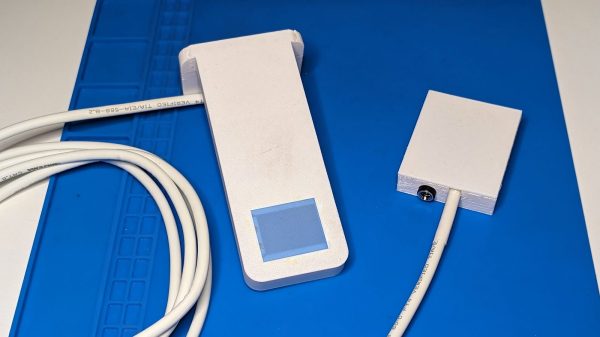
Now you can capture pictures of our furry friends by building a motion activated wildlife camera. [Doug Paradis] took his Air Freshener hack and used it to trigger a camera. The white dome in the picture above is the PIR sensor from an Air Wick Freshmatic, along with a cheap keychain camera and an MSP430 microcontroller. He used one of the chips that came with the TI Launchpad, a transistor, and some discreet components to interface the devices and then put them into a project box. Now he’s got a fully configurable motion-sensing camera.


Hack a Day serves up fresh hacks each day, every day from around the web as well as hacking related news.

Send us your hacks


Hacks

Resources