Hacking A Dollar Store Bluetooth Device

Hardware hackers are always looking for devices to tear apart and scavenge from. It’s hardly a secret that purchasing components individually is significantly more expensive than the minuscule cost per unit that goes along with mass manufacturing. Bluetooth devices are no exception. Sure, they’re not exactly a luxury purchase anymore, but they’re still not dirt cheap either.

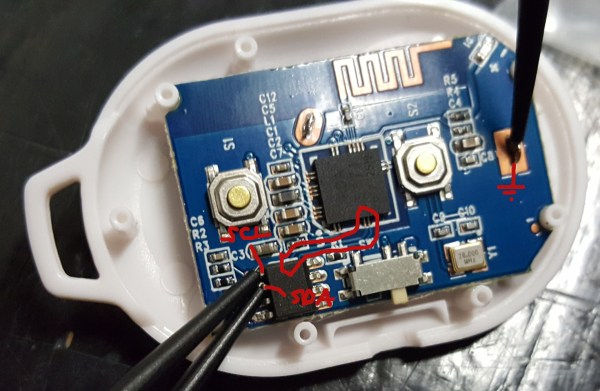
Luckily for [Troy Denton], it seems dollar stores have started carrying a Bluetooth camera shutter for just a few dollars (it was three bucks, perhaps the dollar store actually means divisible-by). The device is designed to pair with a smart phone, and has two buttons allowing you to control the camera from afar. The fact that it works at all at that price is a small miracle, but the device also has potential for hacking that adds to its appeal. Continue reading “Hacking A Dollar Store Bluetooth Device”
Wanhao Duplicator I3 Should Put An End To “Cheapest Printer” Kickstarters

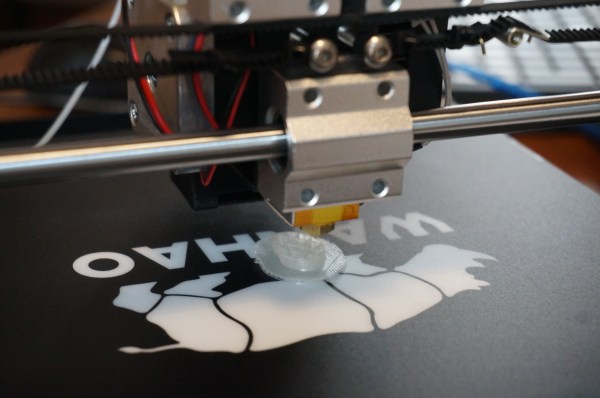
Is the Wanhao Duplicator the best printer on the market? Not at all. Is it a contender for best low-price printer?Definitely. If you consider it a low priced kit printer instead of a finished product then it’s possible that, in its price class, it is hands down the best out there.

For somewhere between 300 and 500 dollars, the Duplicator is a hell of a printer. Also selling under the name Cocoon and Maker Select, the printer is a thin folded sheet steel frame clone of the Prusa i3. I opened the box expecting the most flagrant cost cutting I could imagine. I figured the steel would be paper thin. The holes wouldn’t line up. I expected the connections to be improperly terminated. I expected a fire.

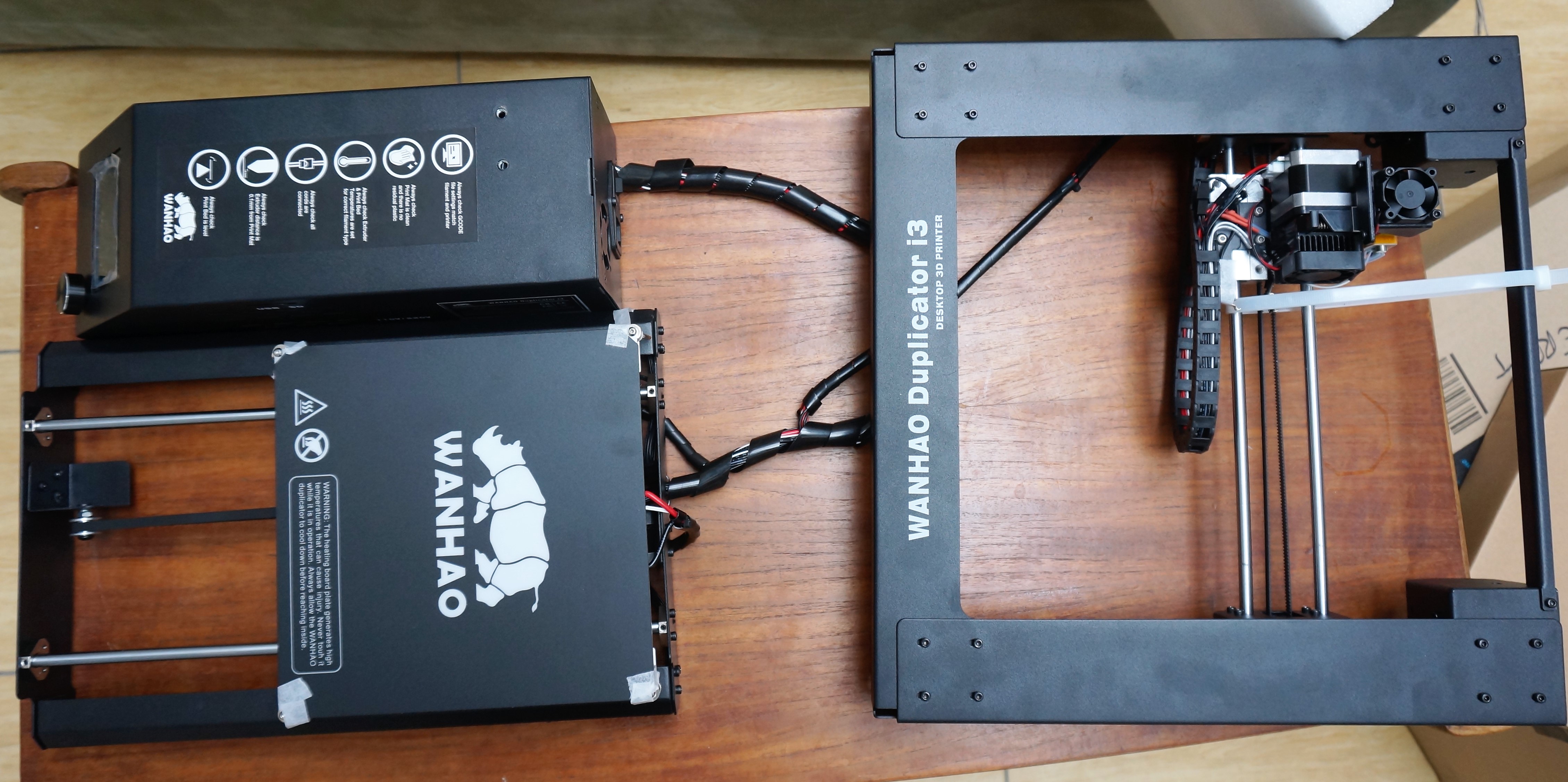
The Duplicator six screws away from being fully assembled. When the manual says find a 1m x 1m flat area to work in it's not kidding. This table was too small.
The Duplicator six screws away from being fully assembled. When the manual says find a 1m x 1m flat area to work in it’s not kidding. This table was too small.

What I got was up and printing in under an hour. What I got was something designed by someone who cares, but with an obvious cost goal. As a bonus, it even printed pretty well. As mentioned, the basic shape of the frame is that of a Prusa i3. A horizontal bit holds the bed and y movement. A vertical bit is attached to the middle of that, making a T. It holds the X, Z, and nozzle.

Continue reading “Wanhao Duplicator I3 Should Put An End To “Cheapest Printer” Kickstarters”

Staring At The Sun: Erasing An EPROM

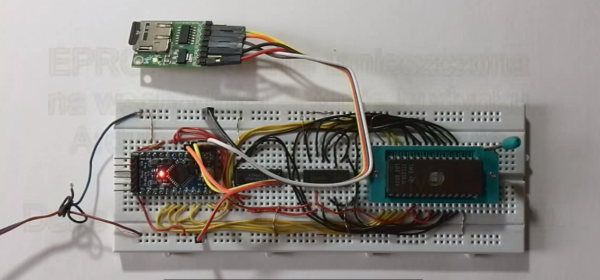
Flash memory is the king today. Our microcontrollers have it embedded on the die. Phones, tablets, and computers run from flash. If you need re-writable long term storage, flash is the way to go. It hasn’t always been this way though. Only a few years ago EPROM was the only show in town. EPROM typically is burned out-of-circuit in a programming fixture. When the time comes to erase the EPROM, just pop it under an ultraviolet (UV) bulb for 30 minutes, and you’re ready to go again. The EPROM’s quartz window allows UV light to strike the silicon die, erasing the memory.

The problem arises when you want to use an EPROM for long term storage. EPROM erasers weren’t the only way to blank a chip. The sun will do it in a matter of weeks. Even flourescent light will do it — though it could take years.

Continue reading “Staring At The Sun: Erasing An EPROM”

Furuta Style Inverted Pendulum Is King Of Geek Desk Ornaments

Newton’s Cradle is thought of as the most elegant of executive desk toys. But that 20th-century dinosaur just got run off the road as [Ben Katz]’s Furuta pendulum streaks past in the fast lane, flipping the bird and heralding a new king of desk adornments.

This Furata pendulum has wonderfully smooth movement. You can watch it go through its dance in the video after the break. Obviously you agree that this is the desk objet d’art for the modern titan of industry (geek). Just don’t stop at watching it in action. The best part is the build log that [Ben] put together — this project has a little bit of everything!

Continue reading “Furuta Style Inverted Pendulum Is King Of Geek Desk Ornaments”

Hackaday Prize Entry: The Internet Of Garbage

The Internet of Things is garbage. While the most visible implementations of the Internet of Things are smart lights that stop working because the company responsible for them folded, or smart thermostats that stop working because providing lifetime support wasn’t profitable, IoT could actually be useful, albeit in devices less glamorous than a smart toaster. Smart meters are a great idea, and so is smart trash. That’s what [mikrotron] and company are entering into the Hackaday Prize – smart trash cans – and it’s not as dumb as spending $40 on a light bulb.

The idea behind the Internet of Trash is to collect data on how full a trashcan is, and publish that data to the Internet. This information will be used by a city’s trash collectors and recycling agencies to know when it’s time to collect the garbage.

The hardware for the Internet of Garbage needs to know how full a can is, and for that the team has turned to an ultrasonic sensor pointed down into the garbage. The amount of trash in a can is pinged once a day, and the information is sent over the Internet via a GSM network. Additionally, the GPS coordinates and a unique ID are delivered to the server, with everything ultimately powered by a solar panel.

The future of the Internet of Things isn’t putting Twitter in a coffee maker, it’s all about infrastructure, whether that’s power, solar freakin’ roadways, or the trash. We’re glad to see a useful application of a billion smart things, and the Internet of Trash makes for a great Hackaday Prize entry.

Complex, Beautiful Device Is Limited To Text-speak And Cat Pictures (WTF, LOL)

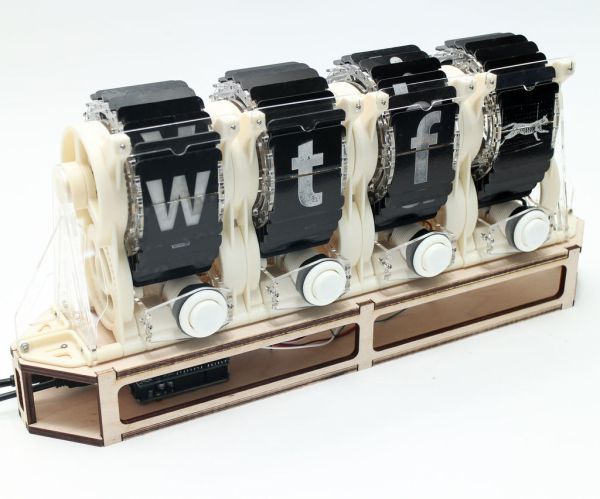
Beautifully documented, modular, and completely open-source, this split flap display project by [JON-A-TRON] uses 3D printing, laser cutting and engraving, and parts anyone can find online to make a device that looks as sharp as it is brilliantly designed. Also, it appears to be a commentary on our modern culture since this beautifully engineered, highly complex device is limited to communicating via three-letter combos and cat pictures (or cat video, if you hold the button down!) As [JON-A-TRON] puts it, “Why use high-resolution, multi-functional devices when you can get back to your industrial revolution roots?” Video is embedded below.

Continue reading “Complex, Beautiful Device Is Limited To Text-speak And Cat Pictures (WTF, LOL)”

MicroLisp, Lisp For The AVR

We’ve seen tiny microcontroller-based computers before, but nothing like this. Where the usual AVR + display + serial connection features BASIC, Forth, or another forgotten language from the annals of computer history, this project turns an AVR into a Lisp machine.

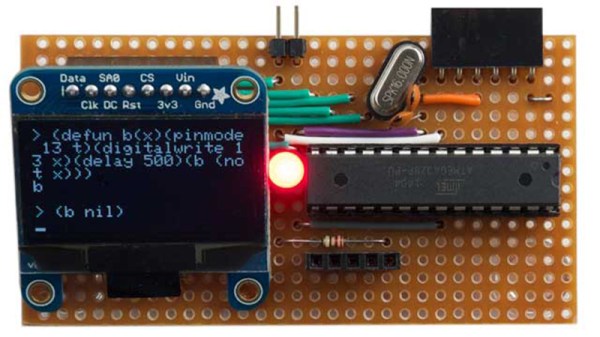
The μλ project is the product of several decades of playing with Lisp on the university mainframe, finding a Lisp interpreter for the 6800 in Byte, and writing a few lisp applications using the Macintosh Toolbox. While this experience gave the author a handle on Lisp running on memory-constrained systems, MicroLisp is running on an ATMega328 with 32k of Flash and 2k of RAM.  In that tiny space, this tiny computer can blink a few boards, write to an OLED display, and read a PS/2 keyboard.

The circuit is simple enough to fit on a breadboard, but the real trick here is the firmware. A large subset of Lisp is supported, as is analog and digitalRead, analog and digitalWrite, I2C, SPI, and a serial interface. It’s an amazing piece of work that’s just begging to be slapped together on a piece of perfboard, if only to have a pocket-sized Lisp machine.

Thanks [gir] for the tip.