Printed Upgrades Improve Cheap Digital Microscope

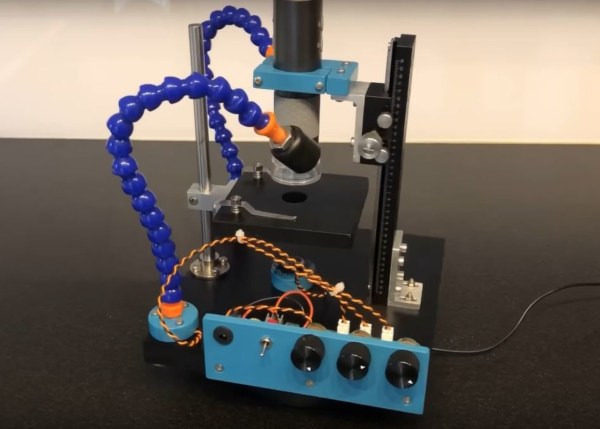
Digital microscopes used to be something that only labs or universities might have, but as image sensor technology has progressed, the prices have fallen to the point that any classroom or hobbyist can easily obtain a usable device. The only problem is that a lot of features and quality have been lost to make some of these digital microscopes more affordable. In an effort to add some of these creature comforts back into more inexpensive devices, [Marb’s lab] has created a special carriage for one of these microscopes.

The first addition to the microscope is improved lighting. To accomplish this, three LEDs were built into custom housings and wired to a purpose-built LED driver board coupled with a voltage regulator. Two of the LED housings were attached to the end of adjustable arms, allowing them to be pointed in whichever direction is needed. The third is situated directly below the microscope underneath the stage. These are all mounted to a large, sturdy PVC base which also holds an adjustable carriage for the microscope itself. This allows much more fine-tuning of the distance between the sample and the microscope than it otherwise would have had.

For just a few dollars and a little bit of effort, the usability of a device like this is greatly improved. If you want to take the opposite approach and really go all-out for your microscope, though, take a look at these microscopes used for PCB circuit construction and troubleshooting or even this electron microscope for viewing things at a much higher magnification than any optical system would allow.

Continue reading “Printed Upgrades Improve Cheap Digital Microscope”
Sailor Hat Adds Graceful Shutdown To Pis

Even though Windows and other operating systems constantly remind us to properly eject storage devices before removing them, plenty of people won’t heed those warnings until they finally corrupt a drive and cause all kinds of data loss and other catastrophes. It’s not just USB jump drives that can get corrupted, though. Any storage medium can become unusable if certain actions are being taken when the power is suddenly removed. That includes the SD cards on Raspberry Pis, too, and if your power isn’t reliable you might consider this hat to ensure they shut down properly during power losses.

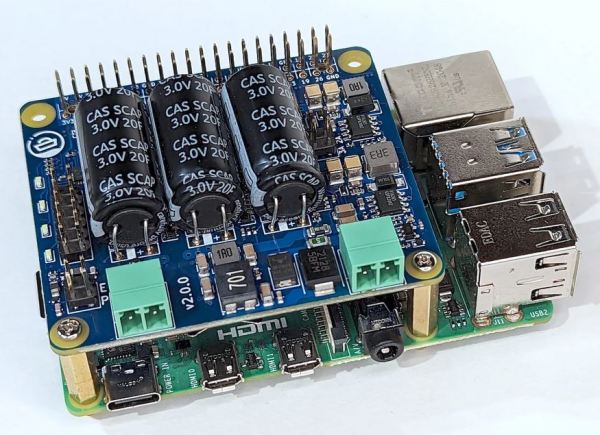
The Raspberry Pi hat is centered around a series of supercapacitors which provide power for the Pi temporarily. The hat also communicates with the Pi to let it know there is a loss of power, so that the Pi can automatically shut itself down in that situation to prevent corrupting the memory card. The hat is more than just a set of backup capacitors, though. The device is capable of taking input power from a wide range of sources and filtering it for the power requirements of the Pi, especially in applications like boats and passenger vehicles where the input power might be somewhat noisy. There’s an optocoupled CAN bus interface as well for those looking to use this for automotive applications.

The entire project is also available on the project’s GitHub page for those wishing to build their own. Some sort of power backup is a good idea for any computer, though, not just Raspberry Pis. We’ve seen uninterruptible power supplies (UPS) with enough power to run an entire house including its computers, to smaller ones that’ll just keep your Internet online during a power outage.

Continue reading “Sailor Hat Adds Graceful Shutdown To Pis”

Buck Converter Takes 8V To 100V

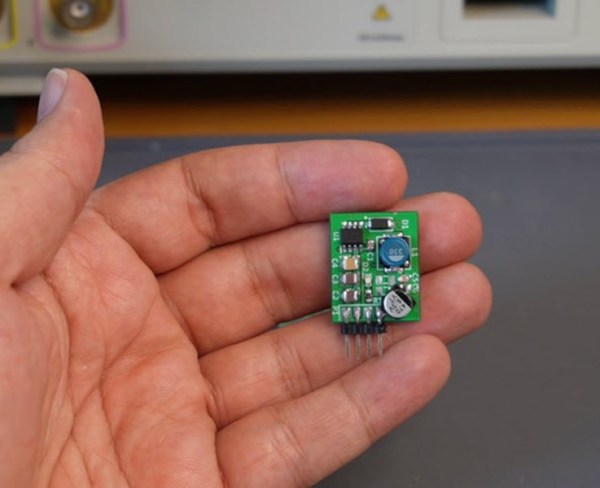
For those living before the invention of the transistor, the modern world must appear almost magical. Computers are everywhere now and are much more reliable, but there are other less obvious changes as well. Someone from that time would have needed a huge clunky machine like a motor-generator set to convert DC voltages, but we can do it with ease using a few integrated circuits. This one can take a huge range of input voltages to output a constant 5V.

The buck converter was designed by [hesam.moshiri] using a MP9486 chip. While it is possible to use a multipurpose microcontroller like something from Atmel to perform the switching operation needed for DC-DC converters, using a purpose-built chip saves a lot of headache. The circuit was modified a little bit to support the higher input voltage ranges and improve its stability and reliability. The board is assembled in an incredibly tiny package with inputs and outputs readily accessible, so it would be fairly simple to add one into a project rather than designing it from scratch.

Even though buck converters, and other DC converters like boost and the mysterious buck-boost converter, seem like magic even to us, there is some interesting electrical theory going on if you’re willing to dive into the inner workings of high-frequency switching. Take a look at this explanation we featured a while back to see more about how buck converters, the more easily understood among them, work.

PyOBD Gets Python3 Upgrades

One of the best things about open source software is that, instead of being lost to the ravages of time like older proprietary software, anyone can dust off an old open source program and bring it up to the modern era. PyOBD, a python tool for interfacing with the OBD system in modern vehicles, was in just such a state with its latest version still being written in Python 2 which hasn’t had support in over three years. [barracuda-fsh] rewrote the entire program for Python 3 and included a few other upgrades to it as well.

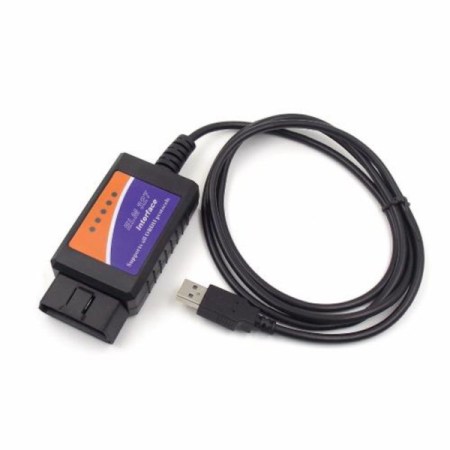
Key feature updates with this version besides being completely rewritten in Python 3 include enhanced support for OBD-II commands as well as automating the detection of the vehicle’s computer capabilities. This makes the program much more plug-and-play than it would have been in the past. PyOBD now also includes the python-OBD library for handling the actual communication with the vehicle, while PyOBD provides the GUI for configuring and visualizing the data given to it from the vehicle. An ELM327 adapter is required.

With options for Mac, Windows, or Linux, most users will be able to make use of this software package provided they have the necessary ELM327 adapter to connect to their vehicle. OBD is a great tool as passenger vehicles become increasingly computer-driven as well, but there are some concerns surrounding privacy and security in some of the latest and proposed versions of the standard.

Multi-Year Doorbell Project

Camera modules for the Raspberry Pi became available shortly after its release in the early ’10s. Since then there has been about a decade of projects eschewing traditional USB webcams in favor of this more affordable, versatile option. Despite the amount of time available there are still some hurdles to overcome, and [Esser50k] has some supporting software to drive a smart doorbell which helps to solve some of them.

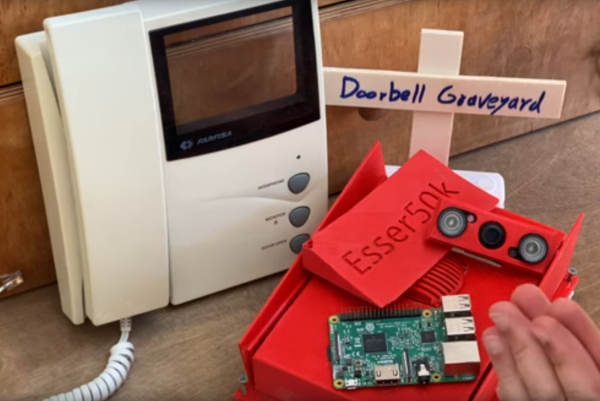
One of the major obstacles to using the Pi camera module is that it can only be used by one process at a time. The PiChameleon software that [Esser50k] built is a clever workaround for this, which runs the camera as a service and allows for more flexibility in using the camera. He uses it in the latest iteration of a smart doorbell and intercom system, which uses a Pi Zero in the outdoor unit armed with motion detection to alert him to visitors, and another Raspberry Pi inside with a touch screen that serves as an interface for the whole system.

The entire build process over the past few years was rife with learning opportunities, including technical design problems as well as experiencing plenty of user errors that caused failures as well. Some extra features have been added to this that enhance the experience as well, such as automatically talking to strangers passing by. There are other unique ways of using machine learning on doorbells too, like this one that listens for a traditional doorbell sound and then alerts its user.

Continue reading “Multi-Year Doorbell Project”

Preserving Floppy Disks

Time is almost up for magnetic storage from the 80s and 90s. Various physical limitations in storage methods from this era are conspiring to slowly degrade the data stored on things like tape, floppy disks, and hard disk drives, and after several decades data may not be recoverable anymore. It’s always worth trying to back it up, though, especially if you have something on your hands like critical evidence or court records on a nearly 50-year-old floppy disk last written to in 1993 using a DEC PDP-11.

This project all started when an investigation unit in Maryland approached the Bloop Museum with a request to use their antique computer resources to decode the information on a 5.25″ floppy disk. Even finding a floppy disk drive of this size is a difficult task, but this was further compounded not just by the age of the disk but that the data wasn’t encoded in the expected format. Using a GreaseWeazle controlled by a Raspberry Pi, they generated an audio file from the data on the disk to capture all available data, and then used that to work backwards to get to the usable information.

After some more trials with converting the analog information to digital and a clue that the data on the disk was not fragmented, they realized they were looking at data from a digital stenography machine and were finally able to decode it into something useful. Of course, stenography machines are dark magic in their own right so just getting this record still requires a stenographer to make much sense out of it.

Hackaday Prize 2023: AutoDuct Smart Air Duct

Modern building techniques are relying more and more on passive elements to improve heating and cooling efficiencies, from placing windows in ways to either absorb sunlight or shade it out to using high R-value insulation to completely sealing the living space to prevent airflow in or out of the structure. One downside of sealing the space in this fashion, though, is the new problem of venting the space to provide fresh air to the occupants. This 3D printed vent system looks to improve things.

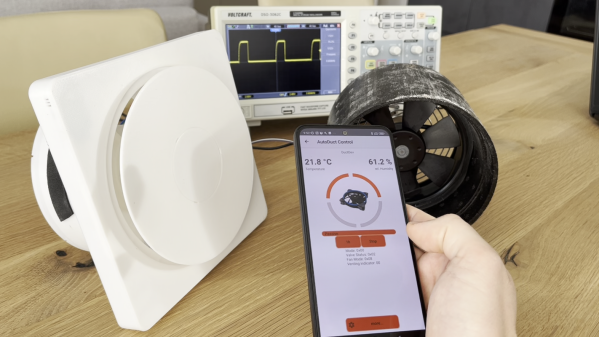
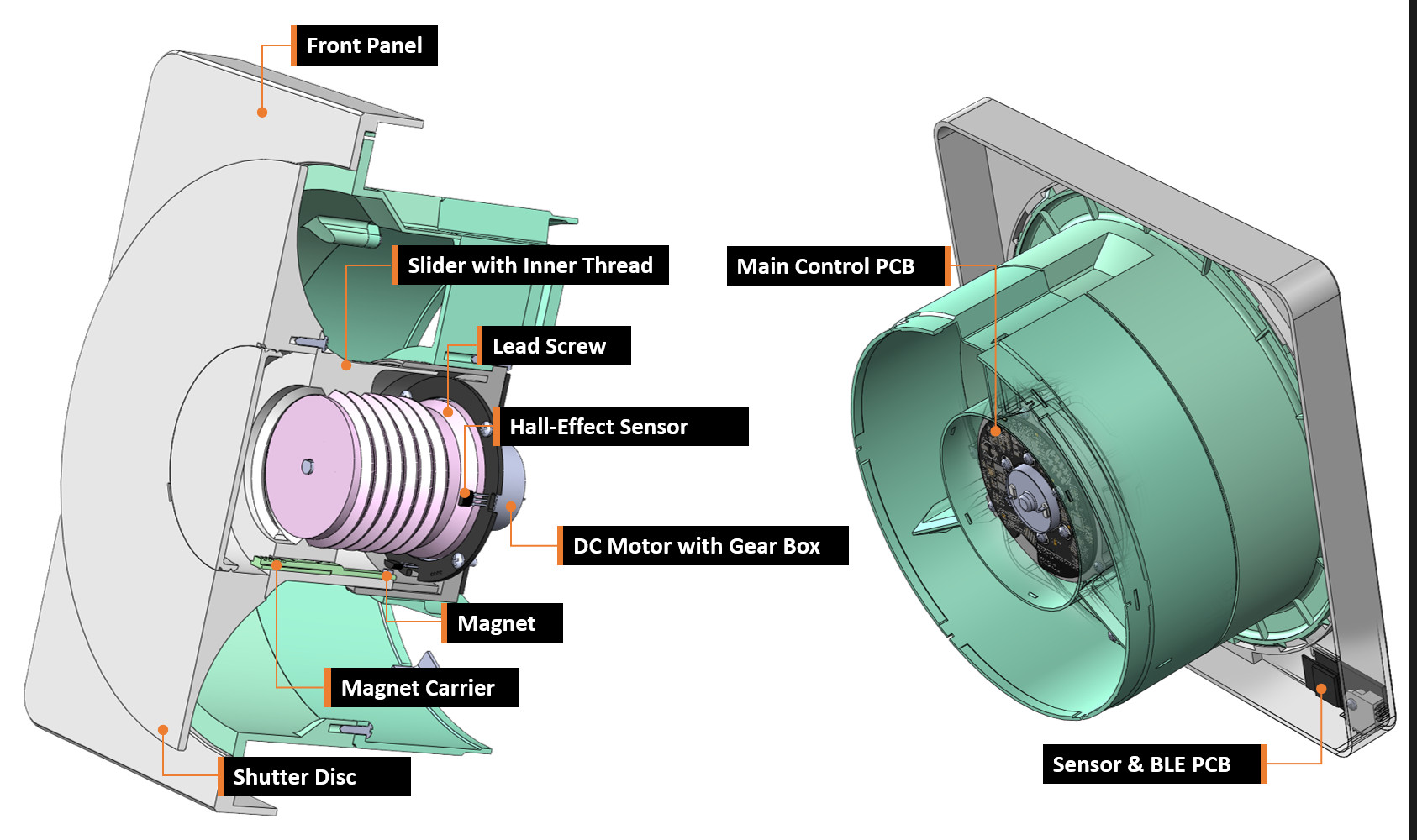
Known as the AutoDuct, the shutter and fan combination is designed to help vent apartments with decentralized systems. It can automatically control airflow and also reduces external noise passing through the system using a printed shutter mechanism which is also designed to keep out cold air on windy days.

A control system enables features like scheduling and automatic humidity control. A mobile app is available for more direct control if needed. The system itself can also integrate into various home automation systems like Apple’s HomeKit.

A 100% passive house that’s also as energy-efficient as possible might be an unobtainable ideal, but the closer we can get, the better. Some other projects we’ve seen lately to help climate control systems include this heat pump control system and this automatic HVAC duct booster fan system.