With events of all sizes on hold and live sports mostly up in the air, it’s a great time to think of new ways to entertain ourselves within our local circles. Bonus points if the activity involves running around outside, and/or secretly doubles as a team-building exercise, like [KarelBousson]’s modernized version of Capture the Flag.
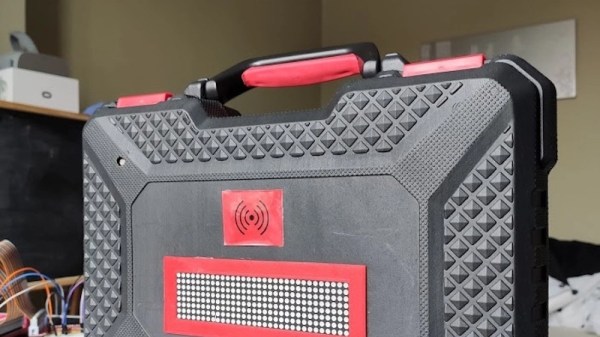
Much like the original, the point of this game is to capture the case and keep it for as long as possible before the other team steals it away. Here, the approach is much more scientific: the box knows exactly who has it and for how long, and the teams get points based on the time the case spends in any player’s possession.
Each player carries an RFID tag to distinguish them from each other. Inside the case is an Arduino Mega with a LoRa shield and a GPS unit. Whenever the game is afoot, the case communicates its position to an external Raspi running the game server.
While I may have fallen in love aesthetically with the ErgoDox I built, beauty is only skin deep. And that’s funny, because you can see right through it. But the thing is, it’s just too big and knife-edged to be my daily driver. I keep missing the space bar and thumb-thumping the acrylic wasteland between the thumb cluster and the mainland.
The point was to make a nice portable keeb, even though all my trips for he foreseeable future are going to be limited to the bed or the couch. But it has to be comfortable, and the ErgoDox in its present state simply is not long-term comfortable. I’d take it over a rectangle any day, but it would probably end up being a half day.
Ergo isn’t so much a preference for me as it is a necessity at this point. I feel like I can honestly say that I might not be typing these words to you now if it weren’t for the Kinesis. I don’t want my fingers to do unnecessary legwork, or downgrade from the quality of typing life that concave keys have afforded me. So let me just say that using the ErgoDox made me want to build a dactyl even more than before.
Magnets (especially those ball magnets!) are endlessly fascinating, aren’t they? It’s almost dangerous to combine them with LEDs, because how are you supposed to get anything done with something like [andrei.erdei]’s Arduino Magnetic Board beckoning from beyond your keyboard?
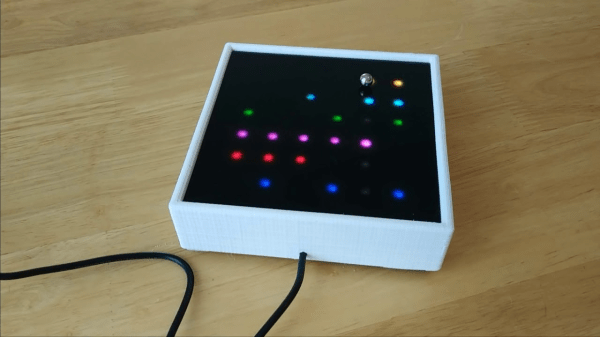
This tons-of-fun board uses ball magnets to light up RGB LEDs as they roll around on the sexy Plexiglas field. Underneath the LED matrix is an orchestra of 36 reed switches — those little glass gas-filled grains of rice with axial leads that snap together or fly apart in the presence of magnetic fields. The LEDs are controlled with an Arduino Pro Mini, and so is the 8Ω speaker for sound effects.
[andrei.erdei] has already developed a few applications for this delightful desk toy, and they’re all on GitHub. There’s a chase game that involves tilting the board to catch the next red dot with the magnet, a light painting game, and a sequencer that mimics the ToneMatrix. Roll past the break to check out the series of short demo videos.
For the average person, a government order to shelter in place or stay at home comes with some adjustments. Many changes are cerebral: we navigate vast expanses of togetherness with our families while figuring out how to balance work, life, and newfound teaching roles. Other changes are physical, like giving each other enough space to be successful. A lucky few can say that not much has changed for them personally. No matter what your position is in this thing, if you have a place to shelter, you’re doing better than 20% of the world’s population.
CalEarth founder Nader Khalili leads from the top of a dome in progress.
An estimated 1.6 billion people, including those who are homeless and those who are refugees, are living without adequate shelter. The need for shelter is a cornerstone of human well-being, and yet building a home for oneself can seem totally out of reach. After all, most people aren’t qualified to build a habitable structure without an architect, an engineer or two, and a team of construction workers with heavy equipment. Or are they?
It all depends on the design and materials. Dome structures have been around for centuries, and the idea of using packed earth to build walls is a tried and true concept. Architect Nader Khalili perfected a blend of the two concepts with his SuperAdobe construction system, which employs long sandbags filled with moistened earth. Khalili opened the California Institute of Earth Architecture (CalEarth) in 1991 to explore the possibilities of SuperAdobe and to educate others in the building process.
I grew up among the poor. I am one of nine children, and constantly knew need. I never forgot, so now I’m responding. — Nader Khalili
This year, the Hackaday Prize is teaming up with CalEarth to push their widely accessible concept of sustainable living into the future. As with our other three non-profits, this effort is twofold. The open call challenge invites you to design sustainable add-ons for SuperAdobe homes that expand their livability and are simple to build and use. Throughout June and July, our CalEarth Dream Team members are working to find ways to automate the process so that these homes can be built much faster, and in turn help more people.
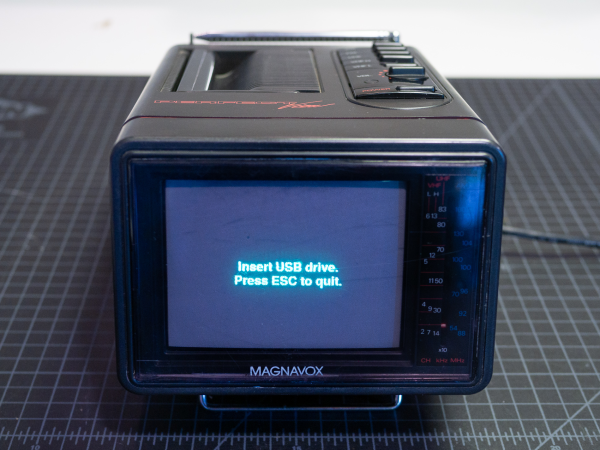
We all have handfuls of thumb drives lying around with only a vague idea of what’s on most of them, right? So why not dust one off, back it up somewhere, and give it a new purpose? That’s exactly what [Cher_Guevara] did to make this portable Raspberry Pi video looper. The hardest part of recreating this one might be coming up with such a good candidate mini CRT TV.
Once powered on, the Pi Zero W stuffed inside this baby Magnavox waits for a thumb drive to be inserted and says as much in nice green text on the screen. Then it displays the number of video files found on the drive and gives a little countdown before looping them all endlessly.
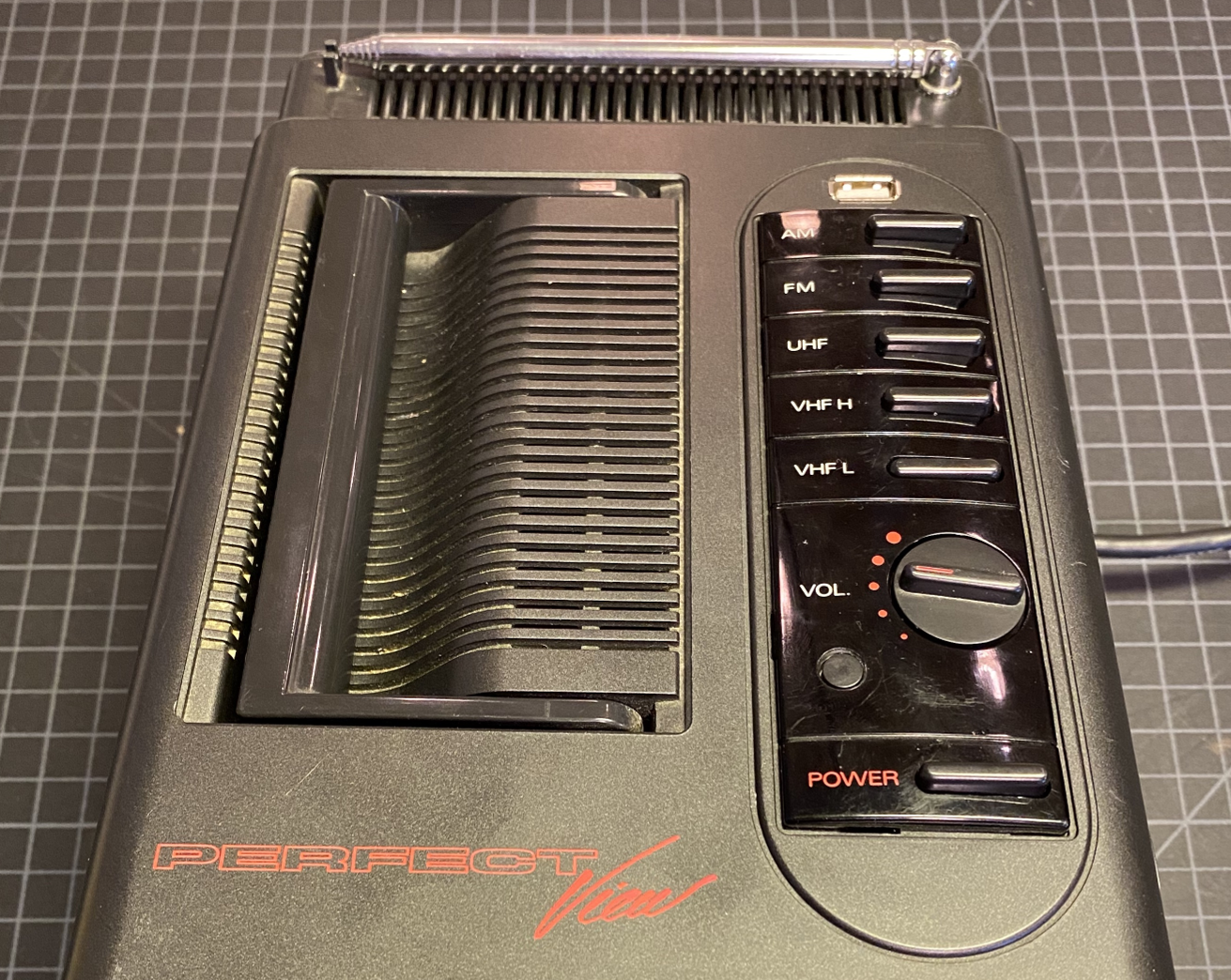
We love how flawlessly [Cher] was able to integrate the USB port and a flush-mounted shutdown button for the Pi into the TV’s control panel on the top. It’s like a portable from another timeline.
[Cher] got lucky because this TV happens to have a video-in jack for connecting up the Pi. If yours doesn’t have one, you might be able to use an RCA to RF converter if the antenna is removable. We’ve got the demo video waiting for you after these messages.
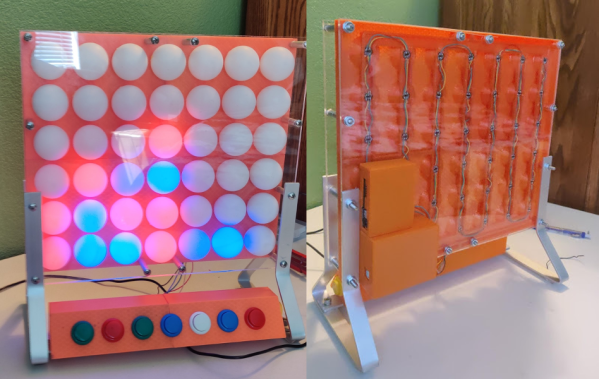
Recreating classic games in software is a great way to get better at coding or learn to code in the first place. If you do it in hardware though, you’ll gain a lot more than coding skills. Just ask [Kelly] and [Jack] did, when they built this Arduino-based electronic Connect Four for a school project.
We love that their interpretation manages to simplify game play and make it more fun than the original version. All the players have to do is turn it on and start pushing the arcade buttons along the bottom to choose the column where they want to make a play. The LEDs animate from top to bottom to imitate the plastic disc dropping down through the board. If a win is detected — four in a row of the same color going any direction — the board fills up with the winning color and the game starts over.
The state machine doesn’t currently do anything about tie situations, so there’s a reset button hidden on the side. As [Kelly] and [Jack] explain in their walk-through video after the break, that is something they would like to address in the future, along with making it possible to choose whatever battle color you want. We think a reset animation that mimics the look of the discs spilling out the bottom would be cool, too.
Being a fan of pinball is bittersweet these days. In the go-go 1990s, you could still find pins in places like coffeehouses and the odd gas station here and there as the commercial arcade began to fade into the past. Things were looking up once booze-fueled b-arcades became a thing, but the pandemic economy may come for them soon enough.
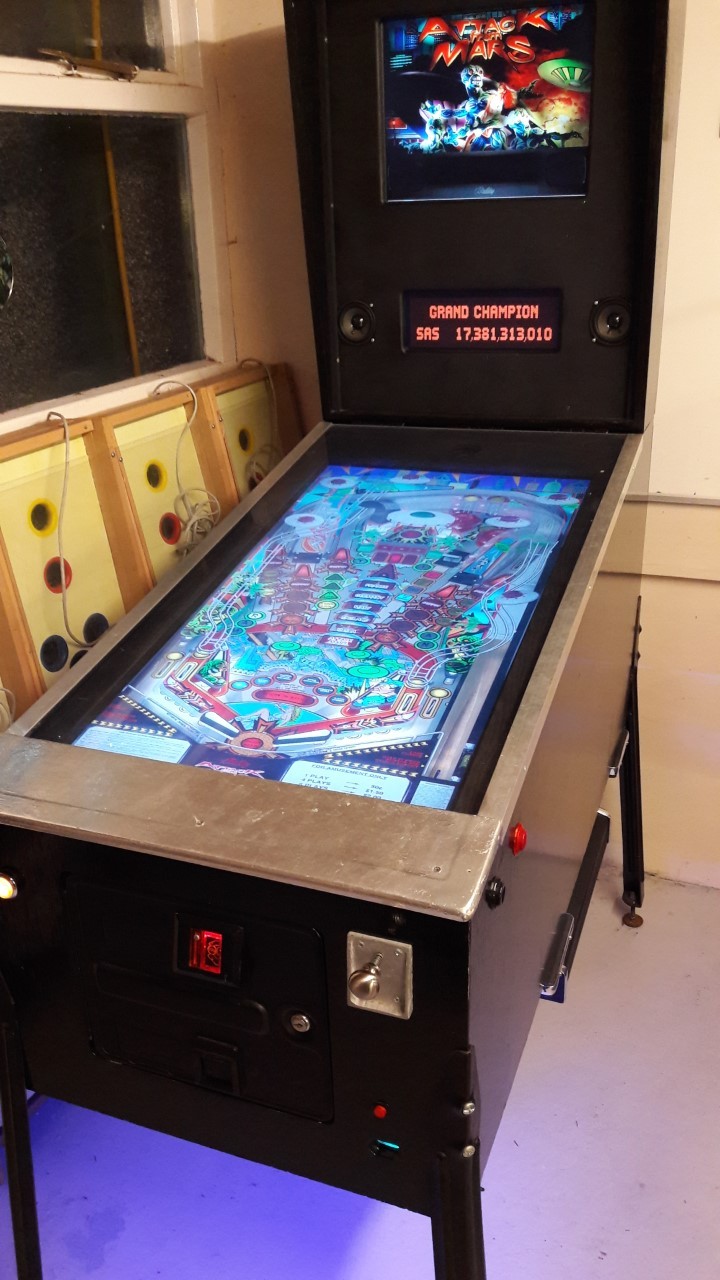
Poor [smithsa3] doesn’t have a table around for hundreds of miles. Instead of settling for an older table or agonizing over the average price of newer tables, [smithsa3] found a happy medium and built a full-size virtual pinball cabinet to play pretty much any table there is. The only non-negotiable game was Addams Family, which you can see in the demo after the break.
Inside is a PC running PinballX, along with a 37″ TV for the playfield and two 17″ monitors that make up the backboard. Between the physical inputs and the faithful recreations of current and classic pinball games that are out there, this really is the best of both worlds.
We love that [smithsa3] combined stock and DIY hardware to pull this together. The cabinet uses standard legs and arcade buttons, but [smithsa3] built the plunger, interfaced it with an old keyboard controller, and made a coin slot mechanism that rejects everything but 10p coins.
Spend enough time playing pinball, and you’ll no doubt begin to fantasize about building your own. We’ve seen one or two of those, but not too many that can play themselves.