A must-have peripheral for games consoles of the 1980s and 1990s was the light gun. A lens and photo cell mounted in a gun-like plastic case, the console could calculate where on the screen it was pointing when its trigger was pressed by flashing the screen white and sensing the timing at which the on-screen flying spot triggered the photo cell.
Unfortunately light gun games hail from the era of CRT TVs, they do not work with modern LCDs as my colleague [Will Sweatman] eloquently illustrated late last year. Whereas a CRT displayed the dot on its screen in perfect synchronization with the console output, an LCD captures a whole frame, processes it and displays it in one go. All timing is lost, and the console can no longer sense position.
[Charlie] has attacked this problem with some more recent technology and a bit of lateral thinking, and has successfully brought light gun games back to life. He senses where the gun is pointing using a Wiimote with its sensor bar on top of the TV through a Raspberry Pi, and feeds the positional information to an Arduino. He then takes the video signal from the console and strips out its sync pulses which also go to the Arduino. Knowing both position and timing, the Arduino can then flash a white LED stuck to the end of the light gun barrel at the exact moment that part of the CRT would have been lit up, and as far as the game is concerned it has received the input it is expecting.
He explains the timing problem and his solution in the video below the break. He then shows us gameplay on a wide variety of consoles from the era using the device. More information and his code can be found on his GitHub repository.
Many of you will probably at some point have looked at a satellite dish antenna and idly wondered whether it would collect useful amounts of heat if you silvered it and pointed it at the sun. Perhaps you imagine a handy source of solar-cooked hotdogs, or maybe you’re a bit of a pyromaniac.
[Charlie Soeder] didn’t just think about it, he did it. Finding a discarded offset-focus DirecTV dish, he glued a grid of 230 inch-square mirror tiles to it and set to investigating the concentrated solar energy at its focus.
Cotton waste, newspaper, and scraps of fabric char and burn with ease. A cigarette is lit almost from end to end, and it burns a hole right through a piece of bamboo. Most of the energy is in the form of light, so transparent or reflective items need a little help to absorb it from something dark. He demonstrated this by caramelizing some sugar through adding a few bits of charcoal to it, once the charcoal becomes hot enough to caramelize the sugar around it the spreading dark colour causes the rest of the sugar to caramelize without further help.
Solar furnace calculations
To gain some idea of the power of his solar furnace, he recorded a time series of temperature readings as it heated up some water darkened with a bit of charcoal to absorb heat. The resulting graph had a flat spot as a cloud had passed over the sun, but from it he was able to calculate instantaneous power figures from just below 30W to just below 50W depending on the sun.
He records his progress in the video you’ll find below the break. Will we be the only ones casting around for a surplus dish after watching it?
If you are familiar with radio propagation you’ll know that radio waves do not naturally bend around the earth. Like light and indeed all electromagnetic radiation if they are given a free space they will travel in a straight line.
At very high frequencies this means that in normal circumstances once a receiver moves over the horizon from a transmitter that’s it, you’re out of range and there can be no communication. But at lower frequencies this is not the case. As you move through the lower end of the VHF into the HF (Short Wave) portion of the spectrum and below, the radio signal routinely travels far further than the horizon, and at the lower HF frequencies it starts to reach other continents, even as far as the other side of the world.
Of course, we haven’t changed the Laws Of Physics. Mr. Scott’s famous maxim still stands. Radio waves at these frequencies are being reflected, from ionised portions of the atmosphere and from the ground, sometimes in multiple “hops”. The science of this mechanism has been the subject of over a hundred years of exploration and will no doubt be for hundreds more, for the atmosphere is an unreliable boiling soup of gasses rather than a predictable mirror for your radio waves.
Radio amateurs have turned pushing the atmosphere to its limits into a fine art, but what if you would prefer to be able to rely on it? The US military has an interest in reliable HF communications as well as in evening out the effects of solar wind on the ionisation of the atmosphere, and has announced a research program involving bombing the upper atmosphere with plasma launched from cubesats. Metal ions will be created from both chemical reactions and by small explosions, and their results on the atmosphere will be studied.
Of course, this isn’t the first time the upper atmosphere has been ionised in military experiments. Both the USA and the USSR exploded nuclear weapons at these altitudes before the cessation of atmospheric nuclear testing, and more recently have directed high power radio waves with the aim of ionising the upper atmosphere. You may have heard of the USA’s HAARP project in Alaska, but Russia’s Sura Ionospheric Heating Facility near Nizhniy Novgorod has been used for similar work. It remains to be seen whether these latest experiments will meet with success, but we’re sure they won’t be the last of their kind.
We are fortunate to live in an age of commoditized high-power computer hardware and driver abstraction, in which most up-to-date computers have the ability to do more or less anything that requires keeping up with the attention of a human without breaking a sweat. Processors are very fast, memory is plentiful, and 3D graphics acceleration is both speedy and ubiquitous.
Thirty years ago it was a different matter on the desktop. Even the fastest processors of the day would struggle to perform on their own all the tasks demanded of them by a 1980s teenager who had gained a taste for arcade games. The manufacturers rose to this challenge by surrounding whichever CPU they had chosen with custom co-processors, ASICs that would take away the heavy lifting associated with 2D graphics acceleration, or audio and music synthesis.
One of the 1980s objects of computing desire was the Atari ST, featuring a Motorola 68000 processor, a then-astounding 512k of RAM, a GUI OS, high-res colour graphics, and 3.5″ floppy drive storage. Were you to open up the case of your ST you’d have found those ASICs we mentioned as being responsible for its impressive spec.
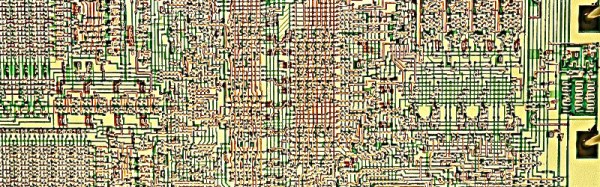
Jumping forward three decades, [Christian Zietz] found that there was frustratingly little information on the ST ASIC internal workings. Since a trove of backed-up data became available when Atari closed down he thought it would be worth digging through it to see what he could find. His write-up is a story of detective work in ancient OS and backup software archaeology, but it paid off as he found schematics for not only an ASIC from an unreleased Atari product but for the early ST ASICs he was looking for. He found hundreds of pages of schematics and timing diagrams which will surely take the efforts of many Atari enthusiasts to fully understand, and best of all he thinks there are more to be unlocked.
This article is the fifth in a series looking at the process of bringing an electronic kit to market from a personal project. We’ve looked at market research, we’ve discussed making a product from your project and writing the best instructions possible before stuffing your first kits ready for sale. In this article we’ll tackle the different means of putting your kits out there for sale.
Given a box of ready-to-sell kits, what next? You have to find some means of selling them, getting them in front of your customer, making the sale, sending them to the purchaser, and safely collecting their money. A few years ago this was an expensive and risky process involving adverts in print magazines and a lot of waiting, but we are fortunate. The Internet has delivered us all the tools we need to market and sell a product like an electronic kit, and in a way that needn’t cost a fortune. We’ll now run through a few of those options for selling your kits, before looking at shipping, marketing, and post-sales support in the final article in the series.
The police force in Evanston, Illinois had a problem on their hands. A mystery transmitter was blocking legal use of radio devices, car key fobs, cellphones, and other transmitters in an area of their city, and since it was also blocking 911 calls they decided to investigate it. Their first call for help went to the FCC who weren’t much use, telling them to talk to the manufacturers of the devices affected.
Eventually they approached the ARRL, the USA’s national amateur radio organisation, who sent along [Kermit Carlson, W9XA] to investigate. He fairly quickly identified the frequencies with the strongest interference and the likely spot from which it originated, and after some investigation it was traced to a recently replaced neon sign power supply. Surprisingly the supply was not replaced with a fault-free unit, its owner merely agreeing to turn it off should any further interference be reported.
The ARRL are highlighting this otherwise fairly unremarkable case to draw attention to the problem of devices appearing on the market with little or no pretence of electromagnetic compatibility compliance. In particular they are critical of the FCC’s lacklustre enforcement response in cases like this one. It’s a significant problem worldwide as huge numbers of very cheap switch-mode mains power supplies have replaced transformers in mains power applications, and in any center of population its effects can be readily seen with an HF radio in the form of a significantly raised RF noise floor. Though we have reported before on the FCC’s investigation of the noise floor problem we’d be inclined to agree with the ARRL that it is effective enforcement of EMC regulations that is key to the solution.
City of Evanston police vehicle picture, [Inventorchris] (CC BY-NC 2.0) via Flickr.
“I wasted a weekend learning why elemental bismuth is not commonly used for metal parts.“
It’s a fair assessment of his time spent growing unspectacular bismuth crystals, casting a bismuth cylinder that cracked, and machining bismuth only to be left with a very rough finish. But even though he admits the exercise was unsuccessful, he does provide us with a fascinating look at the physical properties of the element.
This is what [David] wanted to make. Alchemist-hp + Richard Bartz with focus stack. (Own work) [CC BY-SA 3.0], via Wikimedia Commons
Bismuth is one of those elements you pass by in your school chemistry lessons, it has applications in machining alloys and as a lead replacement but most of us have never knowingly encountered it in the real world. It’s one of the heavy metals, below antimony and to the right of lead on the Periodic Table. Curious schoolchildren may have heard that like water it expands on solidifying or that it is diamagnetic, and most of us have probably seen spectacular pictures of its crystals coated in colourful iridescent oxides.
It was a Hackaday story about these crystals that attracted [David] to the metal. It has a low enough melting point – 271.5 °C – that it can be liquified on a domestic stove, so mindful of his marital harmony should he destroy any kitchen appliances he bought a cheap electric ring from Amazon to go with his bismuth ingot. and set to work.
His first discovery was that cheap electric rings outdoors aren’t very effective metallurgy furnaces. Relocating to the kitchen and risking spousal wrath, he did eventually melt his bismuth and pick off the top layer once it had resolidified, to reveal some crystals.
These are the bismuth crystals he made.
Unfortunately for him, instead of spectacular colors and huge crystals, the sight that greeted him was one of little brilliance. Small grey crystals with no iridescence. It seems the beautiful samples are made by a very slow cooling of the liquid bismuth, followed by a quick pouring off of the remaining molten metal. Future efforts, he assures us, will involve sand-insulated molds and careful temperature monitoring.
Undeterred, he continued with his stock of bismuth and embarked on the creation of a cylinder. Early efforts with a clay mold resulted in cracked cylinders, so in desperation he cast the entirety of the metal in an aluminium baking tray and cut the resulting ingot to a rough piece of stock for turning.
Poor finish on machined bismuth.
With the bismuth in the lathe, he then came face to face with what he alluded to in his conclusion above, why machined bismuth parts aren’t something you’ll encounter. His cylinder came out with significantly rough patches on the surface, because bismuth is both crystalline and brittle. He suggests improvements could be made if the metal could be solidified with fewer crystals, but it’s obvious that elemental bismuth on its own is not a winner in the turning stakes.
We suggest you take a look at [David]’s write-up. It may be presented as a Fail of The Week here, but in fact it’s more of a succession of experiments that didn’t work than an unmitigated disaster. The result is an interesting and well-documented read that we’re sure most Hackaday readers will gain something from.
Fail of the Week is a Hackaday column which celebrates failure as a learning tool. Help keep the fun rolling by writing about your own failures and sending us a link to the story -- or sending in links to fail write ups you find in your Internet travels.