A Look At All The Badge Hacks Of Supercon 2023

For those of you who’ve had the opportunity to join us in Pasadena for Supercon, you’ll know it’s a wild ride from start to finish. Singling out a single moment as our favorite is pretty much impossible, but certainly the Sunday Badge Hacking Ceremony has to rank up there. It’s the culmination of ~78 hours of intense hardware and software hacking, and that’s not even counting the pre-show work that attendees often put into their creations. Every year, without fail, this community manages to pull off badge hacks that are beyond anything we could have imagined — and we’re the ones who made the thing in the first place.

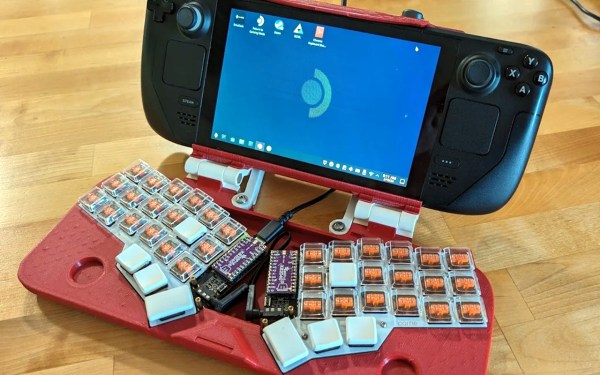
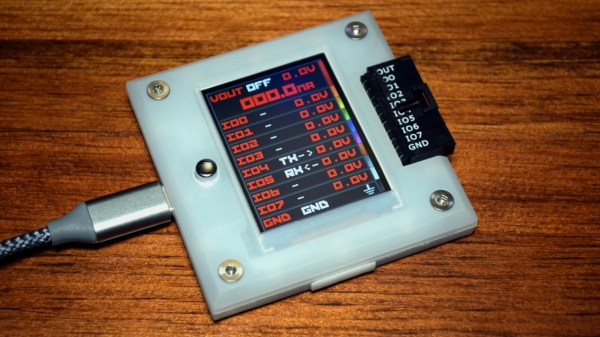
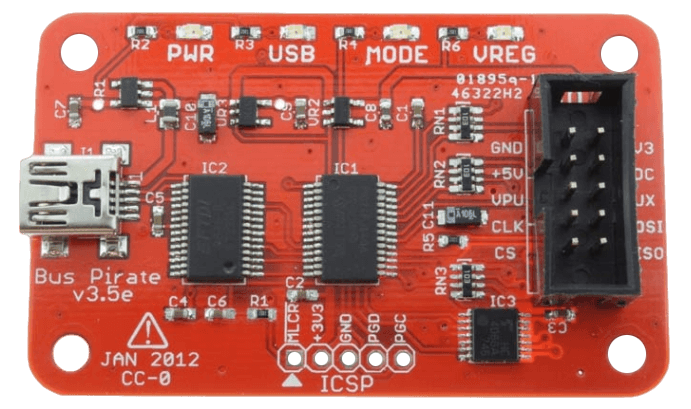
Unfortunately, in the mad rush, we’ve never had a chance to actually photograph the hacked badges and share them with the Hackaday readers. This year, at the urging of some of the badge hackers themselves, we were able to throw together a suitable overhead light at the last minute and actually snapped shots of each badge after it was presented to the audience.

The resulting images, sorted by badge hacking category, are below. While some proved difficult to photograph, especially with an impromptu setup, we’re happy to at least have a complete record of this year’s creations. Hopefully we’ll be able to improve on our technique for 2024 and beyond. If yours shows up, or if you’d like to share your appreciation, sound off in the comments below!

Continue reading “A Look At All The Badge Hacks Of Supercon 2023”

JawnCon 0x0: A Strong Start With A Bright Future

Last month, I had the pleasure witnessing a birth. No, not of a child. What I’m talking about is something far rarer, though arguably, just as loud and danger fraught — the birth of a new hacker convention.

The very first JawnCon took place on October 19th and 20th at Arcadia University, just outside of Philadelphia. If you’re in the Northeast US and suddenly find yourself surprised to learn that a hacker con managed to slip under your radar, don’t be. The organizers, who previously helped launch the WOPR Summit back in 2019, wisely decided to keep the scale of this first outing in check. Just a single track of talks, a chill out room, and 130 or like-minded individuals.

Although, even if they’d hatched a more ambitious plan, it’s hard to imagine they’d have had enough time to pull it off. Due to various circumstances, JawnCon had to come together at a breakneck pace, with less than 100 days separating the con’s inception and kickoff. That an event such as this could not only be organized so quickly, but go off without a hitch, is a testament to the incredible folks behind the scenes.

As for what a Jawn is…well, that might take a bit more explaining. It’s regional slang that’s perhaps best described as a universal noun in that it can be used to refer to basically anything or anyone. Think “smurf” or “da kine”. According to organizer Russell Handorf, the all-encompassing nature of the word describes not only his personal ethos but the spirit of the event. Rather than focusing too closely on any one aspect of hacking, JawnCon set out to explore a diverse array of tech topics from both the new and old schools. It would be an event where you could listen to a talk on payphone remote management, try your hand at lock picking, and learn about the latest in anti-drone technology, all under the same roof.

To that end, the team did an incredible job. Everyone I spoke to, young or old, newbie or vet, had a fantastic time. What’s more, as revealed in the Closing Remarks, the con actually managed to stay in the black — no mean feat for a first attempt. With a little luck, it seems like JawnCon is well on its way to becoming one of the Northeast’s can’t-miss hacker events. Continue reading “JawnCon 0x0: A Strong Start With A Bright Future”

Hackaday Prize 2023: Ending 10 Years On A High Note

It’s a fact of life — all good things must eventually come to an end. The trick is not to focus so much on the chapter that’s closing, but look ahead to what comes next. This is precisely how the Hackaday Prize ended its incredible ten-year run on Saturday during Supercon.

This final year of the competition saw some of the most impressive entries we’ve ever had, leaving us with five exceptionally promising winners. These projects exemplify the qualities that the Hackaday Prize was designed to seek out and amplify and make a perfect capstone for this grand experiment in philanthropic hacking.

Continue reading “Hackaday Prize 2023: Ending 10 Years On A High Note”

Random Number Generator Is A Blast From The Past

Hackers love random numbers, or more accurately, the pursuit of them. It turns out that computers are so good at following our exacting instructions that they are largely incapable of doing anything that would fit the strict definition of randomness — which has lead to some elaborate methods of generating the unexpected.

Admittedly, the SB42 Random Number Generator built by [Simon Boak] isn’t exactly something you’d be using for cryptography. The method used to generate the digits, a pair of 555 timers sending pulses through linear-feedback shift registers, would at best be considered pseudo-random. Plus the only way of getting the digits out of the machine is by extracting them from the Nixie tubes with your Mark I Eyeballs. But it absolutely excels at the secondary reason many hackers like to build their own randomness rigs — it looks awesome.

Externally, it absolutely nails the look of a piece of vintage DIY year. Down to the classic white-on-black label tape. But open up the hood, and you’re treated to a real rarity these days: wirewrap construction. In an era where you can get PCBs made and shipped to your door for literally pennies, [Simon] is out there keeping the old ways alive. It doesn’t just look the part either. Unlike most modern projects we see, there isn’t a multi-core microcontroller behind the scenes doing all the work, it’s logic gates all the way down.

This isn’t the first random-ish number generator that we’ve seen use shift registers. But if you’re looking for something that might actually pass some randomness checks, and don’t mind working with something a bit spicy, you could check out some of the previous devices we’ve covered that used radioactive decay as an entropy source.

Continue reading “Random Number Generator Is A Blast From The Past”

This OSHW Trackball Is Ready To Be Customized

Oh sure, Amazon can deliver any number of Logitech peripherals to your door in 48 hours, but where’s the fun in that? With open source hardware (OSHW) input devices like the Ploopy Adept Trackball, you not only get to say you built the thing yourself, but there’s also an opportunity to tune the gadget to your exacting specifications — even if that just means packing it full of RGB LEDs.

The trackball is powered by the Raspberry Pi Pico running QMK, features a high-accuracy PMW3360 sensor that can be found in commercial gaming mice, and uses a snooker ball for the business end. All the hardware is wrapped up in a 3D printed enclosure, and thanks to the VIA project, configuring the device can be done right in the browser through a web app.

Like the other devices in the (somewhat unfortunately named) Ploopy family, all of the design files for the Adept Trackball are released under the CERN license, which combined with the project’s fantastic documentation means you’ve got everything you need to build it from scratch. There are official parts kits if you don’t want to source or print all the components yourself, but as of this writing, the Ploopy Shop will only let you preorder them.

2023 Hackaday Supercon: Cory Doctorow Signs On As Keynote Speaker

As if you weren’t already excited enough about the speakers and events that will be part of this year’s Hackaday Supercon, today we can finally reveal that journalist, activist, author, technologist, and all around geek Cory Doctorow will be presenting the keynote address on Saturday morning.

Cory has always been an outspoken supporter of digital freedom, from helping develop OpenCola in 2001 as a way to explain the concepts behind free and open source software, to his more recent work at the Electronic Frontier Foundation. He’s made his novels available for purchase directly from his personal website in DRM-free file formats, and he’s even developed a habit of releasing some of them for free under the Creative Commons license. The hacker ethos is strong with this one.

Over the last year, he’s been particularly vocal about what he calls Enshittification — the inevitable decay of any online service where the users are, whether they realize it or not, the product. It’s a concept that’s perfectly exemplified by the ongoing slow-motion implosion of Twitter, and Reddit’s increasingly hostile treatment of its community. Cory explains that one of the signposts on this particular journey is when user-created tools, such as web scrapers or bots, are banned by the powers that be. Reverse engineering, especially when it can uncover a way out of the Walled Garden, is strictly forbidden.

Luckily, there’s a way out. Cory will be delivering his talk An Audacious Plan to Halt the Internet’s Enshittification and Throw It Into Reverse, not only to those who will be physically attending Supercon, but to the entire Hackaday community via our live YouTube stream of the event. It’s a presentation that’s critically important to an audience such as ours — while nearly anyone with an Internet connection can appreciate the problem he’s describing, hackers and makers are in a unique position to actually do something about it. Following the principles Cory will detail in his talk, we can build services and networks that actually respect their users rather than treating them like the enemy.

It Won’t Be Long Now

By the time this post hits the front page of Hackaday, there will be slightly more than a week to go before several hundred of our best friends descend on the city of Pasadena for Supercon. We recently unveiled the Vectorscope badge, dropped two posts listing off all of this year’s presenters, and offered up a list of fascinating workshops. The stage is now officially set for what we consider, as humbly as possible, to be the greatest gathering of hardware hackers, builders, engineers, and enthusiasts in the world. Check out the schedule and plan your Supercon ahead of time.

Tickets for the 2023 Hackaday Supercon are, perhaps unsurprisingly, completely sold out. But you can still add your name to the wait list on Eventbrite, which will put you in the running to grab any returned tickets should somebody have to back out at the last minute. Failing that, there’s always 2024.


Featured Image: Copyright Julia Galdo and Cody Cloud (JUCO), www.jucophoto.com/, CC BY-SA 2.0

Hackaday Podcast Ep 241: Circuit Bending, Resistor Filing, The Butterfly Keyboard, And The Badge Reveal

Hackaday Editors Elliot Williams and Tom Nardi meet up virtually to talk about the week’s top stories and hacks, such as the fine art of resistor trimming and lessons learned from doing overseas injection molding. They’ll go over circuit bending, self-driving cars, and a solar camera that started as a pandemic project and turned into an obsession. You’ll also hear about Linux on the Arduino, classic ICs etched into slate, and an incredible restoration of one of the most interesting Thinkpads ever made. Stay tuned until the end to hear about a custom USB-C power supply and the long-awaited Hackaday Supercon 2023 Vectorscope badge.

Check out the links below if you want to follow along, and as always, tell us what you think about this episode in the comments!

Download your own, unlimited-edition MP3 of this week’s podcast.

Continue reading “Hackaday Podcast Ep 241: Circuit Bending, Resistor Filing, The Butterfly Keyboard, And The Badge Reveal”