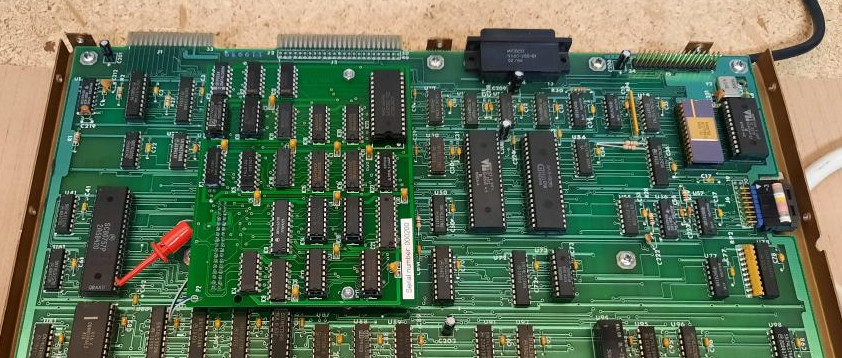
A Gaggle Of Boards Makes For An I2C Playground

It’s not much of a stretch to assume that the majority of Hackaday readers are at least familiar with I2C. In fact, there’s an excellent chance that anyone who’s ever done more with an Arduino than blink the onboard LED has at one time or another used the serial communication protocol to talk to a sensor, display, or other external gadget. Of course, just because most of us have used it in a few projects doesn’t mean we truly understand it.

If you’re looking to brush up on your I2C knowledge, you could do worse than to follow the guide [András Tevesz] recently wrote up. With a title like Hardware Hacking 101: E01 I2C Sniffing, How to Listen to Your Arduino’s I2C Bus, you know you’re in for a good time. While the document is arguably geared more towards security researchers than electronic hobbyists, the concepts presented can be useful even if you’re just trying to debug your own projects. Continue reading “A Gaggle Of Boards Makes For An I2C Playground”

Hacking A Fuel Sensor Into A Portable Tank, Literally

Regular readers of Hackaday will know that the projects we feature are generally of the high-tech variety. Microcontrollers, 3D printed parts, embedded Linux, lots of wires, that sort of thing. But that’s not to say we don’t appreciate the somewhat more visceral builds out there; after all, hacking is about creative problem solving and thinking outside the box, and none of that is limited to how complex the fix actually is.

Take for example this quick hack that [R. Preston McAfee] recently sent our way. Looking for a way to check how much fuel was left in his outboard motor’s small portable gas tank without crawling back to look at it, he decided to rig it up with a sending unit. While they’re technically designed for larger tanks which are permanently installed into a boat’s hull, he reasoned there was nothing about the float sensor that would keep it from working in his case so long as it could be safely mounted.

To that end, [Preston] started by cutting a 38 mm (1.5″) hole in the thickest part of the tank, and sanded the area around the opening to smooth things out. He then measured the depth of the tank at that point, and ordered an appropriately sized float sensor. He drilled out the holes for the five mounting bolts, and inserted them through the larger whole so their heads would be inside the tank. By holding the exposed threads with a pair of vice grips he was able to crank the nuts down on each bolt to form a tight seal to the gasket, though it should be noted that the resulting damage to the threads will likely make it difficult to remove the nuts in the future.

Admittedly this is a pretty simple fix, but it’s well thought-out and we appreciate the effort [Preston] put in to documenting the whole process. We’ve certainly covered more elaborate ways of seeing what’s left in the tank, but just because a solution is flashier doesn’t mean it’s necessarily any better.

SAMD11 Provides Two Serial Ports For Price Of One

While the average computer user likely hasn’t given much thought to the lowly serial port in decades, the same can’t be said for the hardware hacker. Cheap serial-to-USB adapters are invaluable for snooping debug ports or programming chips, and if you ask us, you can never have too many laying around the bench. [Quentin Bolsée] loves them so much that he’s even figured out how to build a dual-port adapter with a SAMD11C14 microcontroller.

As [Quentin] explains in the write-up, this isn’t just some kind of Y-cable. When connected to the host computer, the adapter shows up as two distinct serial ports, each with independent settings for things like baud rate and parity. This handy little gadget will let you tap into the serial ports of two devices simultaneously if you’re looking to do some Hollywood-style hacking, but more practically, it allows you to establish a debug and programming interface to the same board using just one USB connection.

[Quentin] milled a custom PCB for his adapter, which we have to say looks phenomenal, but those with more limited equipment at home should be able to send the MIT licensed board files off for production. He’s also provided the source code for the SAMD11C14’s firmware, so you’ve got everything you need to spin up your own version of this neat tool.

Two ports not enough for your parallel hacking needs? Believe it or not, we’ve also seen a quad USB-to-serial adapter that you can put together, though it’s a considerably more complex circuit.

Compaq 286 Laptop Gets Raspberry Transfusion

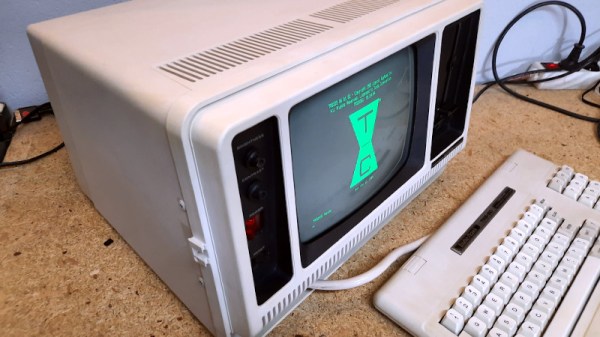
We know, we know. A lot of you don’t like projects that consist of gutting a vintage computer (or anything else, for that matter) and replacing its internals with modern electronics. But can you really look at the clunky Compaq LTE 286 laptop that [Dmitry Brant] hacked a Raspberry Pi into and honestly say it’s a machine worthy of historical preservation? The 30+ year old laptop had all the design cues of a saltine cracker, and the performance to match. At least now with a Pi under the hood, you can play some newer games on the thing.

Besides, [Dmitry] says the machine was damaged beyond the point of economical repair anyway. The only stock hardware that’s left beyond the case itself is the keyboard, which he was able to get talking USB thanks to a Teensy microcontroller. It’s not immediately clear if any attempt has been made to get the switches above the keyboard working, but we imagine it wouldn’t be too hard to tie them into some spare GPIO pins on the MCU for a bit of added authenticity.

The bottom half of the machine was cleared out to the point of it literally being a husk of its former self, which gave him plenty of room to hold the Pi 3B and the HDMI driver board that controls the new 9-inch TFT display. Speaking of which, the new panel was a close enough match to the original’s aspect ratio that only minor bezel modifications were required to get it to fit. The modern LCD makes for a massive improvement over the original, without looking too conspicuous.

While there’s still plenty of available space inside the Compaq, [Dmitry] has opted not to include an onboard battery at this time. Instead, power is provided to the Pi and associated hardware through a bulkhead mount USB connector on the side of the machine. It looks like it wouldn’t be too much trouble to add support for an off-the-shelf USB battery bank, as we recently saw with a particularly well engineered retro-futuristic folding cyberdeck, but far from us to tell a hacker what they should do with their bespoke computer.

Hackaday Podcast 162: Hackaday Prize Is On, Thermal Printers Are So Hot These Days, Cloud Chambers Are Super Cool, And Batteries Must Be Replaceable

Join Hackaday Editor-in-Chief Elliot Williams and Managing Editor Tom Nardi for your weekly review of the best projects, hacks, and bits of news that we can cram into 45 minutes or so. We’ll look at the latest developments in DIY air-powered engines, discuss the whimsical combination of GitHub’s API and a cheap thermal printer, and marvel at impressive pieces of homebrew biology equipment. We’ve also got an exceptionally polished folding cyberdeck, a bevy of high-tech cloud chambers, and some soda bottles that are more than meets the eye. Finally we’ll go over the pros and cons of today’s super-smart cameras, and speculate wildly about what a new EU law means for our battery powered gadgets.

Take a look at the links below if you want to follow along, and as always, tell us what you think about this episode in the comments!

Direct download, and listen whenever you like.


Continue reading “Hackaday Podcast 162: Hackaday Prize Is On, Thermal Printers Are So Hot These Days, Cloud Chambers Are Super Cool, And Batteries Must Be Replaceable”

Retro Portable Computer Packs Printer For The Trip

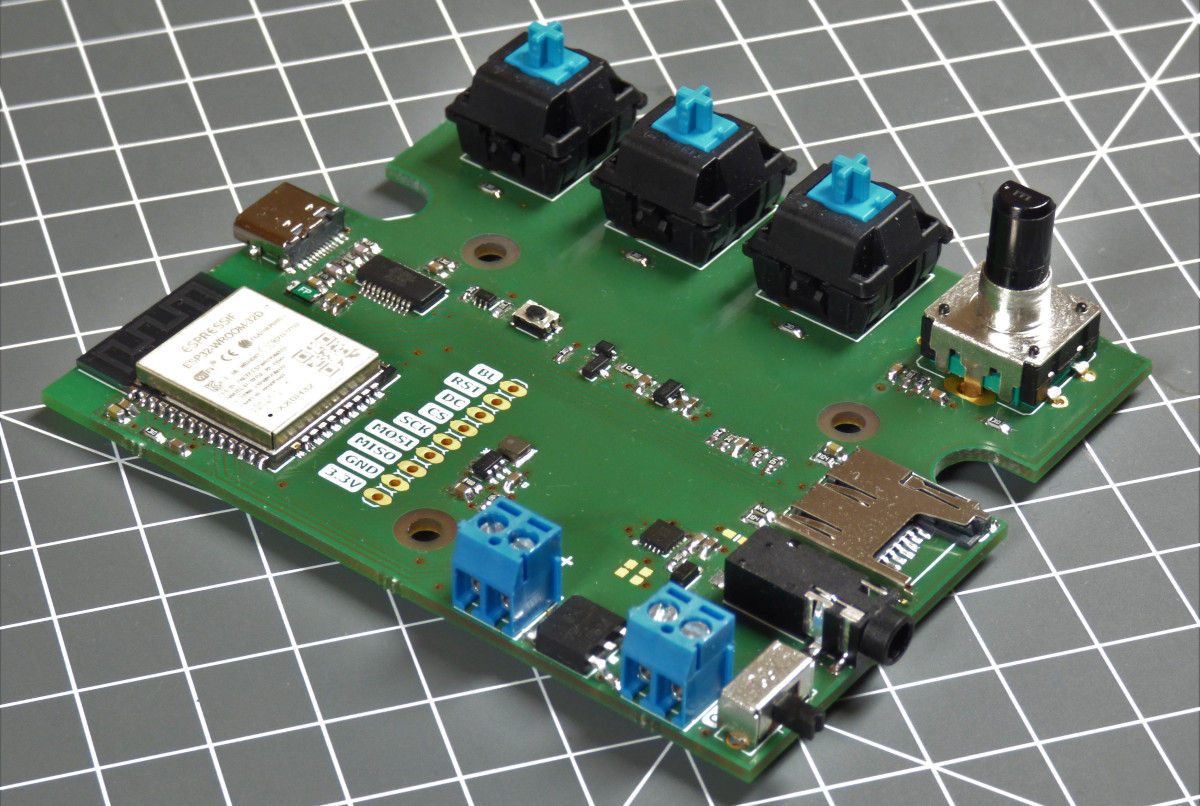
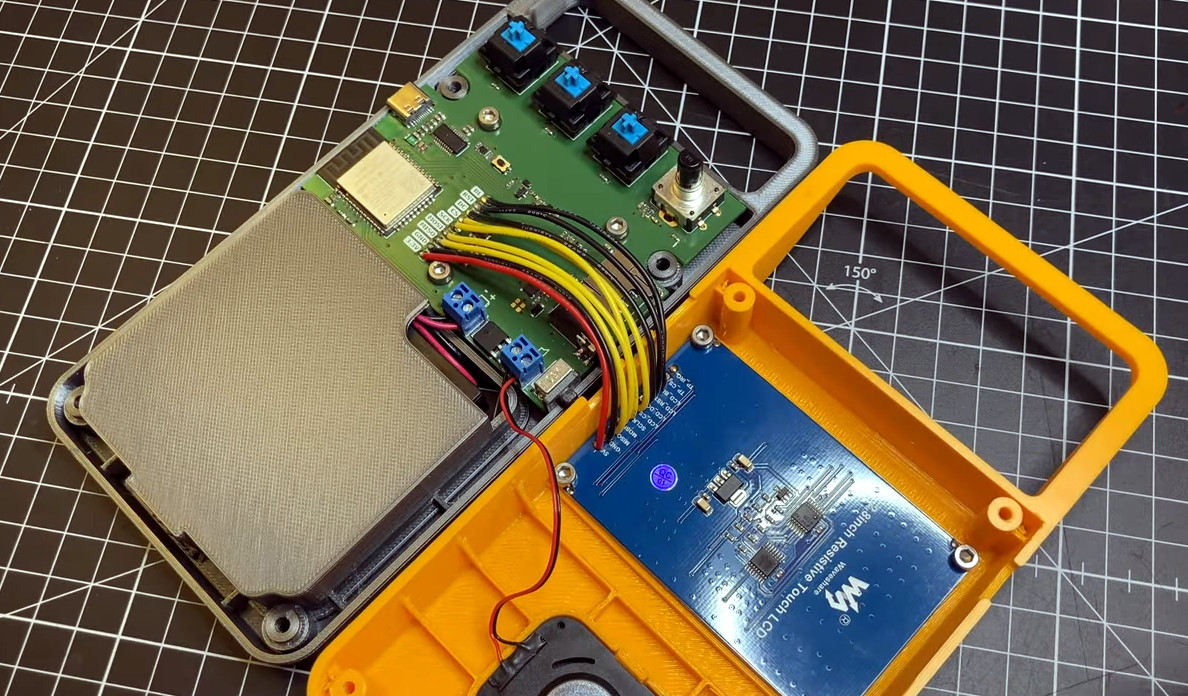
Looking like it dropped out of an alternate reality version of the 1980s, the Joopyter Personal Terminal is a 3D printed portable computer that includes everything you need for life in the retro-futuristic fastlane: a mechanical keyboard, a thermal printer, and the obligatory tiny offset screen. It’s a true mobile machine too, thanks to it’s onboard battery and a clever hinge design that lets you fold the whole thing up into something akin to a PLA handbag. You won’t want to leave home without it.

This gorgeous machine comes our way from [Gian], and while the design isn’t exactly open source, there’s enough information in the GitHub repository that you could certainly put together something similar if you were so inclined. While they might not serve as documentation in the traditional sense, we do love the faux vintage advertisements that have been included.

The upper section of the Joopyter holds a Raspberry Pi Zero W (though the new Pi Zero 2 would be a welcome drop-in upgrade), an Adafruit PiTFT 2.8″ display, a CSN-A2 panel mount thermal printer, and a Anker PowerCore 15600 battery to keep it all running. On the opposite side of the hinge is a hand wired keyboard powered by a Raspberry Pi Pico running KMK.

Speaking of that printed hinge, [Gian] says it comes on loan from [YARH.IO], which Hackaday readers may recall have produced a number of very slick 3D printed portable Linux machines powered by the Raspberry Pi over the last couple of years.

Continue reading “Retro Portable Computer Packs Printer For The Trip”

NASA Continues Slow And Steady Pace Towards Moon

It’s often said that the wheels of government turn slowly, and perhaps nowhere is this on better display than at NASA. While it seems like every week we hear about another commercial space launch or venture, projects helmed by the national space agency are often mired by budget cuts and indecisiveness from above. It takes a lot of political will to earmark tens or even hundreds of billions of dollars on a project that could take decades to complete, and not every occupant of the White House has been willing to stake their reputation on such bold ambitions.

In 2019, when Vice President Mike Pence told a cheering crowd at the U.S. Space & Rocket Center that the White House was officially tasking NASA with returning American astronauts to the surface of the Moon by 2024, everyone knew it was an ambitious timeline. But not one without precedent. The speech was a not-so-subtle allusion to President Kennedy’s famous 1962 declaration at Rice University that America would safely land a man on the Moon before the end of the decade, a challenge NASA was able to meet with fewer than six months to spare.

Unfortunately, a rousing speech will only get you so far. Without a significant boost to the agency’s budget, progress on the new Artemis lunar program was limited. To further complicate matters, less than a year after Pence took the stage in Huntsville, there was a new President in the White House. While there was initially some concern that the Biden administration would axe the Artemis program as part of a general “house cleaning”, it was allowed to continue under newly installed NASA Administrator Bill Nelson. The original 2024 deadline, at this point all but unattainable due to delays stemming from the COVID-19 pandemic, has quietly been abandoned.

So where are we now? Is NASA in 2022 any closer to returning humanity to the Moon than they were in 2020 or even 2010? While it might not seem like it from an outsider’s perspective, a close look at some of the recent Artemis program milestones and developments show that the agency is at least moving in the right direction.

Continue reading “NASA Continues Slow And Steady Pace Towards Moon”