The Back And Forth Of Windshield Wipers And Patent Lawsuits

Who among us hasn’t dreamed of having some brainstorm idea, prototyping it, and then have some huge company put it into worldwide production? The problem is, that’s not really as easy as it sounds in most cases. Take the case of Robert Kearns. Never heard of him? You use the result of one of his patents pretty often; Kearns invented the intermittent windshield wiper.

If he had sold the patent to one of the big carmakers, this would be a short article. Not that he didn’t try. But it didn’t go very well and while, in the end, he prevailed, it was a very expensive victory.

Continue reading “The Back And Forth Of Windshield Wipers And Patent Lawsuits”

Program Guesses Your Regular Expression

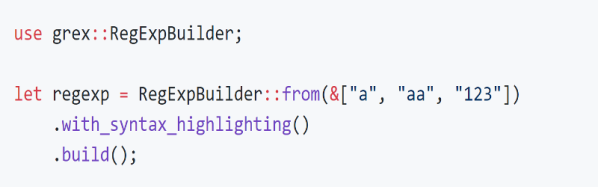
We aren’t sure how we feel about [pemistahl’s] grex program. On the one hand, we applaud a program that can take some input samples and produce a regular expression. On the other hand, it might be just as hard to gather example data that produces the correct regular expression. Still, it is an interesting piece of code.

Even the author suggests not to use this as an excuse to not learn regular expressions, since you’ll need to check the program’s output. It is certain that the results will match your test cases, but it isn’t certain that it won’t accept things you didn’t expect. Bad regular expressions have been the source of some deeply buried bugs.

Continue reading “Program Guesses Your Regular Expression”

Tubes Have Character With A Tek 570

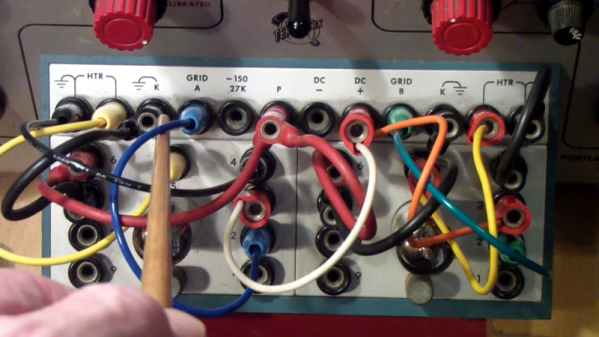
When tubes were king, you could go to a drugstore with a box full of them from your TV. There would be a tester that would tell you what tubes were bad and, of course, you could buy the replacements for them. That kind of tube tester was pretty simple. If you wanted to really know how to design with a tube or test its parameters, you were much better off with a curve tracer like the Tektronix 570 that [tomtektest] shows off in two recent videos that you can see below.

That piece of kit fell into [Tom’s] lap thanks to an observant delivery driver. The 1955 instrument is very similar to a semiconductor curve tracer but, of course, has the ability to provide much higher voltage for the tubes. The basic idea is that the X axis sweeps from a few volts up to 100s of volts. The vertical scale will show the plate, screen, or grid current. From those curves you can learn a lot about the characteristics of the tube.

Continue reading “Tubes Have Character With A Tek 570”

Magnetic Bubble Memory Farewell Tour

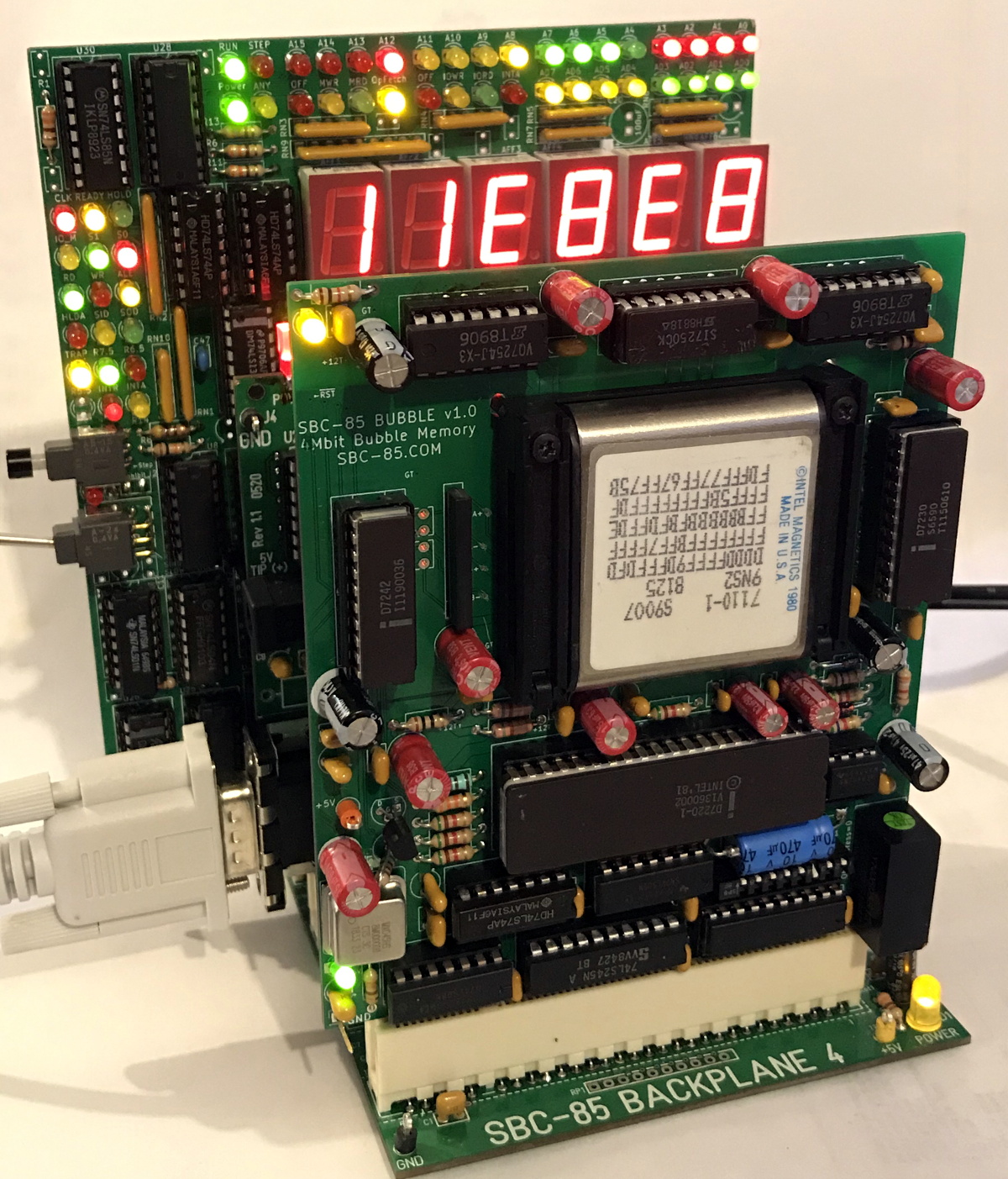
There’s something both satisfying and sad about seeing an aging performer who used to pack a full house now playing at a local bar or casino. That’s kind of how we felt looking at [Craig’s] modern-day bubble memory build. We totally get, however, the desire to finish off that project you thought would be cool four decades ago and [Craig] seems to be well on the way to doing just that.
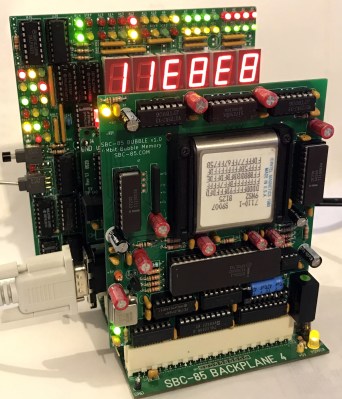
If you don’t recall, bubble memory was going to totally wipe out the hard drive industry back in the late 1970s and early 1980s. A byproduct of research on twistor memory, the technology relied on tiny magnetic domains or bubbles circulating on a thin film. Bits circulated to the edge of the film where they were read using a magnetic pickup. Then a write head put them back at the other edge to continue their journey. It was very much like the old delay line memories, but with tiny magnetic domains instead of pressure waves through mercury.

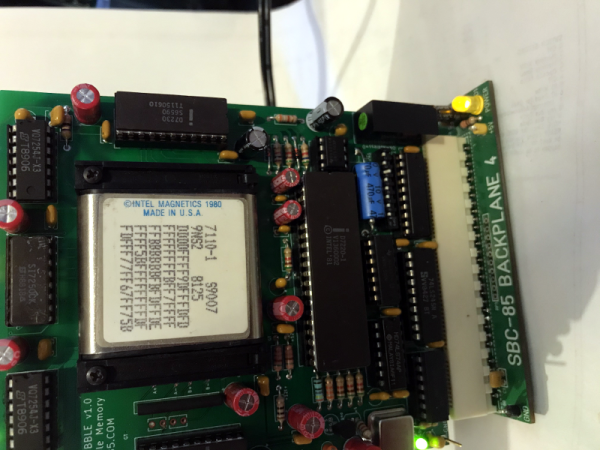
We don’t know where [Craig] got his Intel 7110 but they are very pricey nowadays thanks to their rarity. In some cases, it’s cheaper to buy some equipment that used bubble memory and steal the devices from the board. You can tell that [Craig] was very careful working his way to testing the full board.

Because these were state-of-the-art in their day, the chips have extra loops and would map out the bad loops. Since the bubble memory is nonvolatile, that should be a one time setup at the factory. However, in case you lost the map, the same information appears on the chip’s label. [Craig’s] first test was to read the map and compare it to the chip’s printed label. They matched, so that’s a great sign the chip is in good working order and the circuit is able to read, at least.

We’ve talked about bubble memory before along with many other defunct forms of storage. There were a few military applications that took advantage of the non-mechanical nature of the device and that’s why the Navy’s NEETS program has a section about them.


Econet – Britain’s Early Educational Network

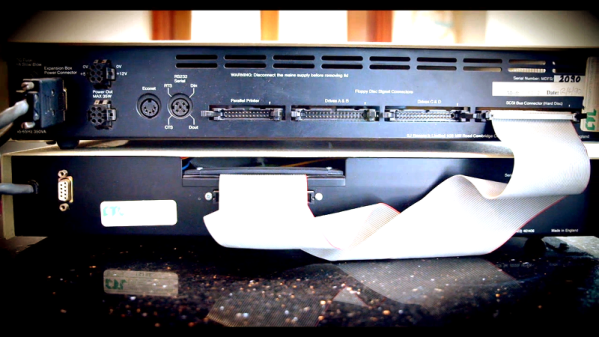
If you compare the early PC market for the US and the UK, you’ll notice one big difference. While many US schools had Apple computers, there were significant numbers of other computers in schools, as well. In the UK, pretty much every school that had a computer had an Acorn BBC Micro. [RetroBytes] takes us down memory lane, explaining how and why the schools went with Econet — an early network virtually unknown outside of the UK. You can see the video, which includes an interview with one of the Acorn engineers involved in Econet.

Nowadays, you don’t have to convince people of the value of a network, but back then it wasn’t a no brainer. The driver for most schools to adopt networking was to share a very expensive hard disk drive among computers. The network used RS-422, a common enough choice in Apple computers, spacecraft, and industrial control applications.

Continue reading “Econet – Britain’s Early Educational Network”

Robot Arm Sucks In A Good Way

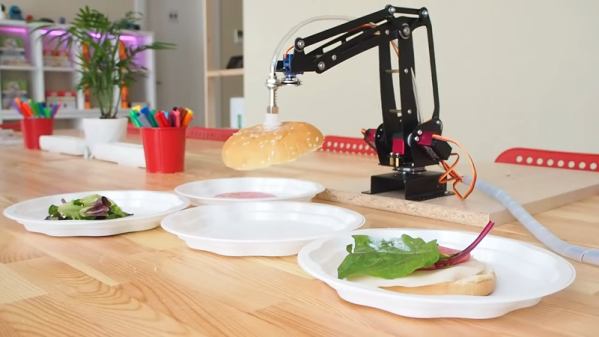
Building a robot arm is fun, but no longer the challenge it once was. You can find lots of plans and kits, and driving the motors is a solved problem. However, there is always one decision you have to make that can be a challenge: what effector to put on the end of it. If you are [MertArduino] the answer is to put suction at the end. If you need to grab the right things, this could be just the ticket for reliably lifting and letting go. You can see a video of the arm in action, below.

The arm itself is steel with four servo motors and comes in a kit. The video shows the arm making a sandwich under manual control. We suspect he might have put it under Arduino control but there’s no sudo for making sandwiches.

Continue reading “Robot Arm Sucks In A Good Way”

Pluto Might Not Be A Planet, But It Is An SDR Transceiver

Many of the SDR projects we see use a cheap USB dongle. They are great, but sometimes you want more and — especially — sometimes you want to transmit. The Analog Devices ADALM-Pluto SDR is easily available for $200 and sometimes as low as $100 and it both transmits and receives using an Analog AD9363 and a Zynq FPGA. Although you normally use the device to pipe IQ signals to a host computer, you can run SDR applications on the device itself. That requires you to dig into the Zynq tools, which is fun but a topic for another time. In this post, I’m going to show you how you can use GNU Radio to make a simple Morse code beacon in the 2m ham band.

I’ve had one on my bench for quite a while and I’ve played with it a bit. There are several ways to use it with GNU Radio and it seems to work very well. You have to hack it to get the frequency range down a bit. Sure, it might not be “to spec” once you broaden the frequency range, but it seems to work fine. Instead of working from 325 MHz to 3,800 MHz with a 20 MHz bandwidth, the hacked device transceives 70 MHz to 6,000 MHz with 56 MHz bandwidth. It is a simple hack you only have to do once. It tells the device that it has a slightly better chip onboard and our guess is the chips are the same but sorted by performance. So while the specs might be a little off, you probably won’t notice.

Continue reading “Pluto Might Not Be A Planet, But It Is An SDR Transceiver”